
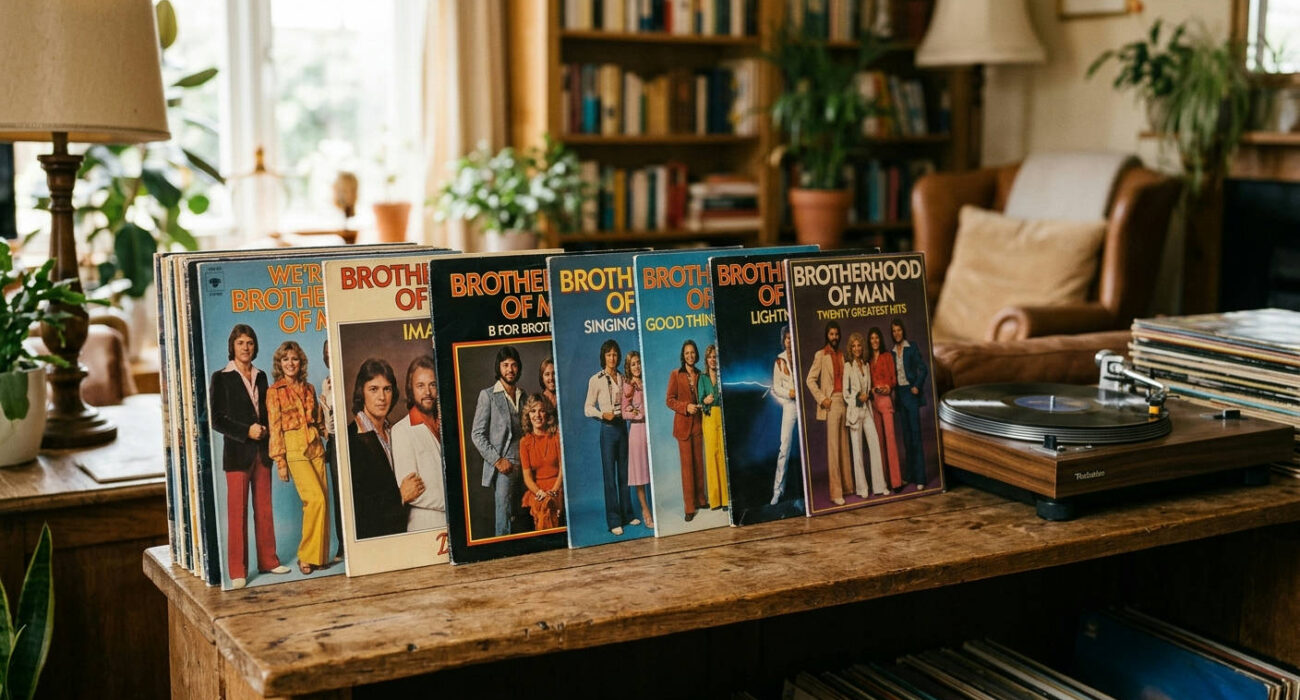
Let’s cut right to it. When you think of Brotherhood of Man, your mind probably jumps straight to a certain Eurovision-winning, foot-tapping mega-hit from 1976. But to stop there is to miss the whole story. The group’s discography is a fascinating journey through ’70s pop, full of hidden gems, shifting line ups, and brilliant song writing. Here at Vinyl Gold UK, we believe it’s high time for a proper, no-nonsense dive into the complete collection of Brotherhood of Man studio albums.
This isn’t just about “Save Your Kisses for Me.” It’s about the sunshine pop beginnings, the chart-dominating peak, and the evolution of a band that left a much bigger mark on British pop than they’re often given credit for. So, grab a fresh sleeve for that turntable, because we’re about to explore the records that defined their career.
The Early Years: More Than One Brotherhood
Before the classic four-piece lineup became a household name, the Brotherhood of Man was an entirely different beast. Conceived by songwriter and producer Tony Hiller, the original group was a revolving door of session singers, fronted by the voice of Tony Burrows on their biggest early hit.
United We Stand (1970)
The first of the Brotherhood of Man studio albums is a world away from their later work. United We Stand is a slice of late-60s/early-70s sunshine pop, brimming with lush arrangements and optimistic, harmony-drenched anthems.
The title track was a fluke, a monster hit that became a global anthem for unity. It stormed the top 20 in the UK and, incredibly, hit #13 on the Billboard Hot 100 in the US – a feat the later line up never managed. The album itself is a cohesive listen, filled with tracks like “Where Are You Going to My Love” that showcase the era’s signature blend of orchestral pop and soft rock. For collectors, an original pressing of this is a fantastic snapshot of a band finding its identity.
We’re the Brotherhood of Man (1972) & The World of… (1973)
Things get a bit murky here. The follow-up albums saw more line up changes as Hiller struggled to assemble a stable touring group. We’re the Brotherhood of Man continued the pop-rock feel but failed to produce a hit of the same magnitude.
By 1973, Hiller had decided a complete reset was needed. He held auditions and put together the “classic” line up that would soon conquer the world: Martin Lee, Lee Sheriden, Nicky Stevens, and Sandra Stevens. This marked the end of the first chapter and the beginning of the legend.
The Classic Quartet’s Ascent: Chart Domination
With a new, permanent line up and a renewed focus on a specific brand of polished pop, the band was reborn. This era produced the songs everyone remembers and the albums that defined ’70s British pop music.
Good Things Happening (1974)
This album was the quartet’s mission statement. The sound was tighter, the harmonies were sharper, and the song writing, now largely handled by Hiller, Lee, and Sheriden, was laser-focused on creating chart magic.
The single “Lady” was a modest hit, signalling that something was brewing. The album is packed with potential hits, showcasing a clear influence from bands like ABBA but with a distinctly British sensibility. It’s a crucial stepping stone, the sound of a band warming up for the main event. Listening to it now, you can hear the confidence building with every track.
Love and Kisses (1976)
This is the big one. The album that made them international superstars. It all hinged on one perfectly crafted, three-minute pop song: “Save Your Kisses for Me.” After winning the Eurovision Song Contest in 1976 with a record-breaking score, the single went on to become one of the best-selling of all time.
“To dismiss the album as a one-track wonder is a mistake. It’s a masterclass in mid-70s pop production. The arrangements are immaculate, the vocals are layered to perfection, and the song writing is relentlessly catchy. It’s the sound of a band at the absolute peak of its powers.”
Tracks like “I Give You My Love” and “Cry Thief” prove this album had depth beyond its lead single. It’s a joyous, celebratory record that perfectly captures the moment the band went stratospheric. If you’re starting a collection of Brotherhood of Man studio albums, this is the undeniable, essential starting point.
Looking for a copy? You can often find reissues and compilations featuring these tracks. Start your hunt on Amazon: Search for Brotherhood of Man Love and Kisses on Amazon.
## A Deep Dive into the Brotherhood of Man Studio Albums Post-Eurovision
Winning Eurovision is both a blessing and a curse. The pressure to follow up such a colossal success is immense. How did Brotherhood of Man handle it? By getting straight back to work and releasing a string of hit-laden albums.
Oh Boy! (1977)
The band struck gold again with Oh Boy!. The title track, with its infectious, sing-along chorus, was another huge hit. But the real treasure here was “Angelo,” a dramatic, story-driven ballad that shot to Number 1 in the UK.
“Angelo” proved they weren’t a one-trick pony. The song writing team of Hiller, Sheriden, and Lee had an uncanny ability to craft perfect pop narratives. The album itself is slick and confident, leaning into the lush production that had become their trademark. It’s a testament to their work ethic and pop sensibilities.
B for Brotherhood (1978)
By 1978, the musical tides were starting to turn. While B for Brotherhood delivered another classic Number 1 single with the jaunty “Figaro,” there were hints of disco creeping into the arrangements.
The album is a fascinating listen, balancing their signature pop sound with the four-on-the-floor rhythms that were dominating the charts. Tracks like “Beautiful Lover” have a distinct disco sheen, showing the band was willing to adapt. This album demonstrates their versatility and determination to stay relevant.
### The Definitive Guide to Brotherhood of Man Studio Albums
For any collector, the period from 1976 to 1978 represents the group’s imperial phase. The trio of albums – Love and Kisses, Oh Boy!, and B for Brotherhood – are essential. When hunting for vinyl, look for original Pye Records pressings. They often have a warmer, more dynamic sound than later reissues. Check the condition of the sleeve and the vinyl itself; these records were played to death at parties back in the day!
Higher Than High (1979) & Singing a Song (1979)
As the ’70s drew to a close, the band’s commercial fortunes began to wane. Higher Than High was a solid pop record, but its singles didn’t reach the same chart heights. Singing a Song, released the same year, felt like a band caught between their established sound and the new wave that was about to crash over the music industry.
These albums are often overlooked but contain some excellent tracks for dedicated fans. They show a band grappling with a changing world, still capable of producing top-tier pop but finding it harder to cut through the noise.
The 1980s: New Decade, New Challenges
The 1980s were a tough time for many ’70s pop acts. Brotherhood of Man faced the decade with a series of albums that saw them experimenting and consolidating their legacy.
Good Fortune (1980)
Good Fortune was a mature, polished pop album. The lead single, “Honey Don’t Throw Our Love Away,” is a wonderfully crafted piece of pop, but it struggled in a chart now filled with synths and post-punk attitude.
The album reflects this shift. While the song writing remains strong, the production feels slightly less bombastic than their ’70s peak. It’s a more restrained affair, an underrated gem in the catalogue of Brotherhood of Man studio albums.
Sing 20 Number One Hits (1981)
This was an interesting move. Instead of new material, the band released a double album covering 20 classic number-one hits, performed as a non-stop medley. Commercially, it was a smart play, appealing to a broad audience.
Creatively, it’s a bit of a curiosity. It showcases their incredible vocal talent and ability to interpret any song, but it also felt like a step away from original artistry. These kinds of medley albums were hugely popular in the early ’80s, and this one is a high-quality example of the trend. For a fun, party-starting record, it’s a great find. The production has that early ’80s crispness, a different feel from the lush ’70s sound, and is an interesting study in the evolution of pop production, a field heavily influenced by figures like Phil Spector.
Lightning Flash (1983)
This stands as the final studio album of original material from the classic line up. Lightning Flash saw the group fully embrace the sounds of the ’80s, with prominent synthesizers and electronic drums.
It’s a fascinating listen for this reason alone. You can hear them trying to fit into a new sonic environment. Unfortunately, the album and its singles failed to chart, and the band decided to call it a day soon after, though they would reunite for live performances which continue to this day. For completists, Lightning Flash is a must-have, a document of a beloved band’s final creative chapter.
The Song writing and Production Engine
You can’t discuss the Brotherhood of Man studio albums without paying respect to the creative team behind the hits. The core song writing partnership of Tony Hiller, Martin Lee, and Lee Sheriden was a pop powerhouse.
The Hiller/Lee/Sheriden Formula
Their genius was in their simplicity. They wrote songs with universal themes – love, loss, joy, nostalgia – and wrapped them in unforgettable melodies. Their structures were classic pop: verse, chorus, verse, chorus, bridge, double chorus. No messing about.
They understood the power of a strong hook and a story. Songs like “Angelo” and “Figaro” aren’t just collections of catchy lines; they are mini-dramas played out in three minutes. This narrative approach gave their music a depth that many of their contemporaries lacked.
Studio Craft and Vocal Harmony
The band’s secret weapon was their vocal blend. The combination of two male and two female voices allowed for rich, complex harmonies that elevated their songs. Nicky and Sandra’s voices, in particular, created a signature sound that was instantly recognizable.
The production, especially during their peak with producer Tony Hiller, was lush and layered. They used orchestral arrangements, multi-tracked vocals, and the best studio technology of the day to create a big, polished sound that was perfect for radio. It was a maximalist approach to pop that has aged surprisingly well.
Legacy and Collector’s Guide for 2026
Fifty years on from their Eurovision triumph, how should we view the Brotherhood of Man studio albums? Far from being a novelty act, they were a highly professional, incredibly successful pop group with a catalogue of expertly crafted songs.
More Than a Eurovision Winner
In the UK, the band scored three Number 1 singles and had a string of Top 10 hits that lasted for years. This is not the career of a one-hit wonder. They were a consistent presence in the charts, delivering quality pop music year after year.
“The modern reappraisal of ’70s pop has been kind to Brotherhood of Man. Critics and fans in 2026 are looking past the sequins and recognizing the sheer craft involved. It’s pure, unapologetic pop music made to the highest standard, and there’s a timeless appeal in that.”
Why Vinyl Collectors are Buying Their Records
In an age of streaming, the tangible experience of vinyl is more appealing than ever. The albums of Brotherhood of Man are perfect for vinyl collectors for several reasons:
- Warm, Analogue Sound: The original pressings capture the warmth and richness of the ’70s studio recordings in a way that digital files often can’t.
- Affordability: Unlike some ’70s giants, their original albums are still widely available and affordable, making it easy to build a complete collection.
- Nostalgia and Discovery: For those who grew up with them, it’s a trip down memory lane. For new listeners, it’s the discovery of a treasure trove of pop gems.
When buying second-hand, always check the record for scratches and the sleeve for wear. But a little bit of patina is part of the charm of owning a piece of music history. To discover more about the joys of vinyl collecting, check out the other articles on our blog.
Ready to start your own collection? You can’t go wrong with a greatest hits compilation on vinyl to get all the key tracks in one place. Try a search to see what’s available: Search for Brotherhood of Man vinyl on Amazon.
The body of work left behind by this group is a celebration of pop in its purest form. From the early anthems to the Eurovision glory and beyond, the Brotherhood of Man studio albums offer a rewarding journey for any music lover. It’s time to give them another spin.