
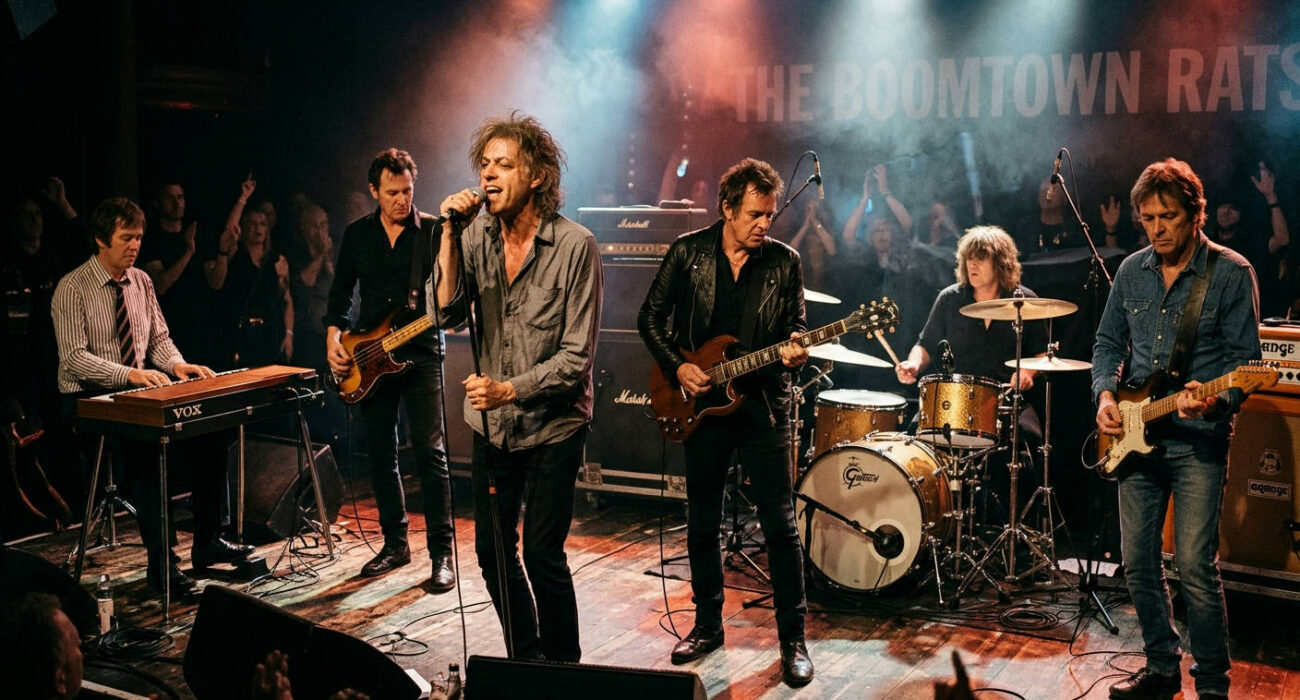
Forget the one-hit-wonder tags and the overshadowing legacy of Live Aid for a moment. To truly understand the ferocious energy and sharp-witted cynicism of The Boomtown Rats, you have to go back to the source. We’re talking about the raw, unfiltered chemistry of the Boomtown Rats original members, the six guys from Dún Laoghaire who crashed the UK music scene with a point to prove. This wasn’t a band fronted by a charismatic singer; it was a tight, explosive unit where every single player was essential to the volatile sound that made them legends.
This is the definitive guide to that classic line-up. We’ll break down who they were, what made them tick, and why their collective genius still echoes decades later. From the pubs of Dublin to a worldwide number one, this is the story of the original six.
Meet the Six-Piece: The Definitive Boomtown Rats Original Members
A band’s magic often lives and dies with its founding line-up. The initial creative spark between a specific group of musicians is a unique, unrepeatable event. For The Boomtown Rats, this was a six-way collision of personality and talent that defined their entire career, even after the line-up began to change.
Bob Geldof (Vocals, occasional guitar)
You can’t talk about The Boomtown Rats without the irrepressible force of nature that is Bob Geldof. He was the band’s mouthpiece, a snarling, articulate frontman who spat out lyrics with a venom and intelligence that set them apart from the punk pack.
Geldof wasn’t just a singer; he was a lyricist, a social commentator, and a born showman. His stage presence was a chaotic mix of Jagger-esque preening and punk rock aggression. He understood that a great rock song needed a narrative, and he delivered tales of alienation, suburban boredom, and political frustration that resonated with a generation. His voice wasn’t technically perfect, but it was dripping with character and conviction, the perfect vehicle for his sharp-tongued observations.
Garry Roberts (Lead Guitar)
Garry Roberts was the band’s sonic architect and its heart. While Geldof grabbed the headlines, Roberts laid down the powerful, driving guitar riffs that were the backbone of every classic Rats track. His style was economical, powerful, and incredibly effective.
He wasn’t a flashy shredder. Instead, Roberts was a master of tone and texture, influenced by the likes of Mick Ronson and Keith Richards. He could deliver a jagged, angry riff for a track like “Lookin’ After No. 1” and then switch to a more melodic, atmospheric line on a song like “Diamond Smiles.” His tragically early passing in 2022 left a massive hole in the heart of Irish rock music, a testament to his foundational role in the band’s sound.
Johnnie Fingers (Keyboards, vocals)
The secret weapon of The Boomtown Rats was arguably Johnnie Fingers (born John Moylett). His distinctive keyboard and piano work gave the band a melodic and harmonic sophistication that many of their punk and new wave contemporaries lacked. He was the colour in their black-and-white punk picture.
Think about the iconic, haunting piano intro to “I Don’t Like Mondays.” That’s all Fingers. His contributions elevated the band beyond simple three-chord rock, adding layers of pop sensibility, vaudevillian flair, and classical influence. He also famously wore pyjamas on stage, a visual quirk that perfectly matched his eccentric and vital musical input.
Pete Briquette (Bass, vocals)
Every great rock band needs a locked-in rhythm section, and Pete Briquette (born Patrick Cusack) was the anchor. His bass lines were melodic, inventive, and always served the song. He and drummer Simon Crowe formed an underrated and formidable partnership.
Briquette was more than just a root-note player. He wove intricate lines around Roberts’ guitar and Fingers’ keyboards, creating a deep, funky groove that gave tracks like “Rat Trap” their unstoppable momentum. Post-Rats, he became an accomplished producer, a clear indication of his deep musical understanding which was always present in his bass work.
Gerry Cott (Rhythm Guitar)
The often-overlooked original member, Gerry Cott’s role as the second guitarist in the early days was crucial. He provided the thick, rhythmic chunk that allowed Garry Roberts the freedom to explore more melodic lead lines. This two-guitar attack gave the early Rats albums a powerful, wall-of-sound quality.
Cott was a key part of the band’s formative years and their rise to fame. His presence on the first four albums, including their most commercially successful work, is integral to their sound. His departure in 1981 marked the first and most significant change to the original line-up.
Simon Crowe (Drums, vocals)
The engine room of The Boomtown Rats was powered by Simon Crowe. A powerful and precise drummer, Crowe drove the band’s energy with a no-nonsense style. He knew exactly when to hit hard and when to pull back, providing the dynamic shifts that made their songs so compelling.
His drumming on “Rat Trap” is a masterclass in building tension and release, perfectly mirroring the song’s narrative arc from despair to defiance. Crowe was the unwavering pulse, the reliable beat that the rest of the band could build their chaotic and beautiful noise upon.
Forging a Sound: How the Original Line-up Defined The Boomtown Rats
The sound of The Boomtown Rats wasn’t born in a vacuum. It was hammered into shape by six distinct musical personalities clashing, collaborating, and competing within the confines of a Dublin rehearsal room. This dynamic is what made their music so vibrant.
From Dublin Pub Rock to New Wave Pioneers
They started life as The Nightlife Thugs, a rhythm and blues cover band. But the explosion of punk in the UK gave their raw energy a focus. They absorbed the attitude and aggression of punk but filtered it through their broader musical influences, thanks in large part to the diverse tastes of the Boomtown Rats original members.
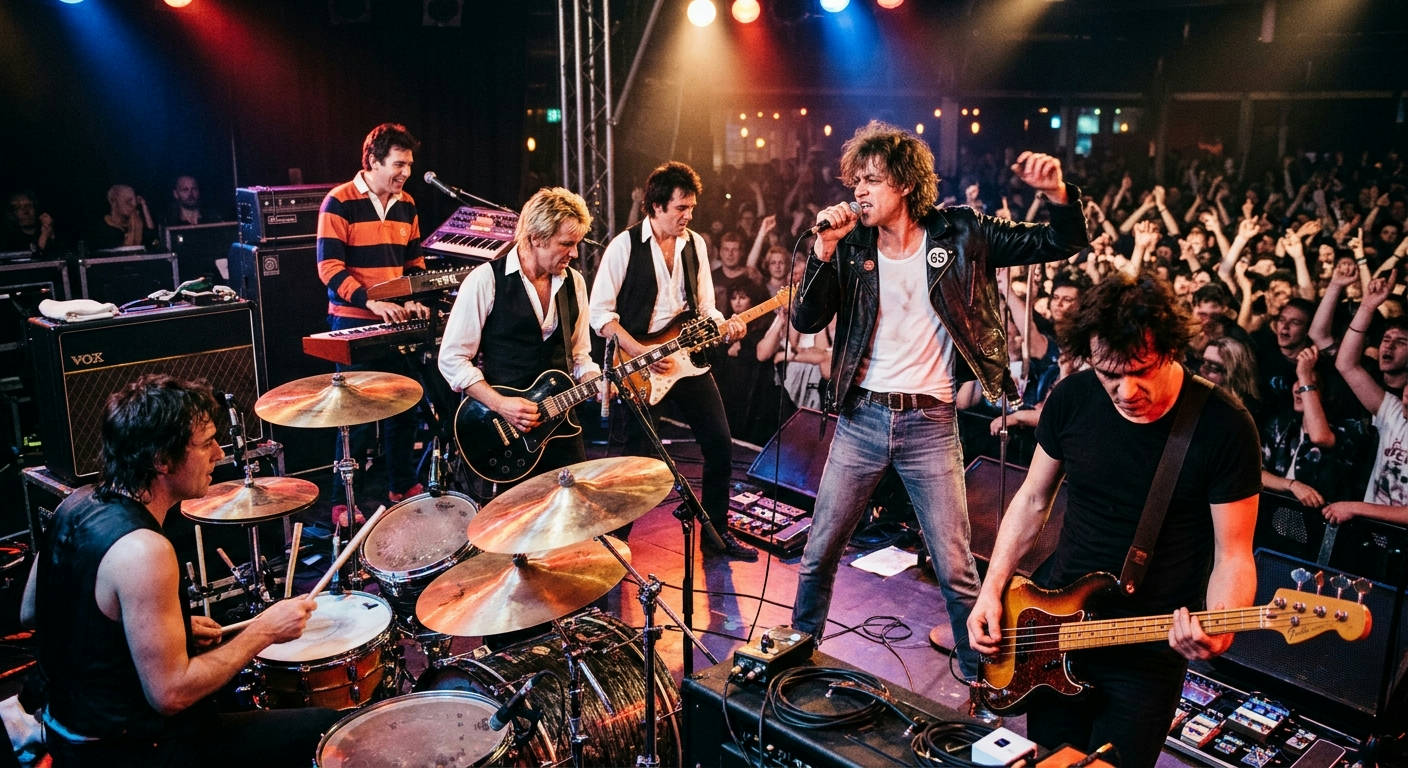
This is why they never fit neatly into the “punk” box. Johnnie Fingers’ keyboards brought in a pop and even classical sensibility. Pete Briquette’s bass had a funk and reggae feel. Garry Roberts’ guitar work owed as much to 70s glam rock as it did to The Ramones. It was a potent, unique brew. They were less about pure anarchy and more about articulate anger, a key distinction that set them on the path to stardom.
The Creative Tension: Geldof’s Lyrics Meets the Band’s Musicianship
The band’s creative process was a study in dynamic tension. Geldof would often arrive with a complete set of scathing, narrative-driven lyrics, and the band would be tasked with putting them to music. This could be a contentious process, but it yielded incredible results.
“We were six individuals, six big egos, all pushing and pulling. That’s what made it work. It was a creative fight, and the song was the winner.”
The music had to be as dramatic and impactful as the words. A song like “Rat Trap,” the first-ever “new wave” track to hit number one in the UK charts, showcases this perfectly. The band builds a cinematic arrangement that perfectly matches Geldof’s story of a young man desperate to escape his dead-end town. It’s a rock and roll opera in four minutes, a feat only achievable by a band where every member is firing on all cylinders.
Deeper Cuts from the Original Six
Everyone knows “I Don’t Like Mondays,” but the true genius of the original six-piece is found on the album tracks. To really appreciate their chemistry, you need to dig into the records.
- “Joey’s on the Street Again” (from The Boomtown Rats, 1977): A sprawling, Springsteen-esque epic that shows off the band’s pub-rock roots and their ability to craft a compelling narrative.
- “She’s So Modern” (from A Tonic for the Troops, 1978): A perfect slice of nervy, new wave pop. It’s driven by a killer riff from Roberts and a bouncy keyboard line from Fingers.
- “When the Night Comes” (from The Fine Art of Surfacing, 1979): A darker, more atmospheric track that demonstrates their musical maturity. Briquette’s melodic bass line is the star here.
Listening to these tracks reveals the intricate interplay between the musicians. It’s a conversation, with each member adding their own voice to the story.
The First Fracture: Gerry Cott’s Departure and Its Impact
No band lasts forever. The first crack in the foundation of the Boomtown Rats original members appeared in 1981 when rhythm guitarist Gerry Cott decided to walk away at the height of their fame. His exit had a profound effect on the band’s dynamic and sound.
Why Did Cott Leave The Boomtown Rats?
Cott grew disillusioned with the band’s musical direction. He felt they were moving into a more pop-oriented territory and away from the harder rock edge of their earlier work. There were also the classic “musical differences” and the strain of constant touring and recording.
His departure was amicable but decisive. He was the first of the original six to leave, and it signalled a significant shift. The tight-knit gang from Dublin was beginning to fray.
The Band as a Five-Piece: A Shift in Sound and Dynamic
Losing a rhythm guitarist forced a change in the band’s sonic approach. Garry Roberts now had to cover all the guitar parts, which subtly altered the texture of their music. The dense, two-guitar attack was gone, replaced by a sparser sound that often put more emphasis on Johnnie Fingers’ keyboards and synthesizers.
This new dynamic pushed them further into the new wave and synth-pop sounds of the early 80s. While they still produced great music, the raw, rock and roll power of the original six-piece formation was undeniably diminished. They became a different band, sonically and visually.
The Post-Cott Albums: ‘V Deep’ and ‘In The Long Grass’
The two albums recorded as a five-piece, V Deep (1982) and In the Long Grass (1984), are fascinating listens. They contain standout tracks like “House on Fire” and “Dave,” but the overall feel is different from their predecessors. The context of the time is important here; by 1984, the music world had changed dramatically, and The Rats were changing with it. That year saw artists like Frankie Goes to Hollywood and Wham! dominate the charts, as you can see in a look back at what was number 1 in 1984, and the Rats’ sound reflected this shift.
These albums are a testament to their ability to adapt, but for many purists, they lack the specific fire that only the original six could generate together. You can explore these later albums by grabbing a copy on vinyl. Check out the availability of In The Long Grass on vinyl from Amazon.
Where Are They Now? The Journeys of the Original Members Post-Breakup
After the band’s initial split following their 1986 performance at Self Aid, the members went their separate ways, embarking on fascinating and varied paths. The story didn’t end when the music stopped.
Bob Geldof: Activist, Icon, and Knight
Geldof’s post-Rats journey is the most well-documented. He had already masterminded the charity supergroup Band Aid and the monumental Live Aid concerts in 1985, events which would define his public life forever.
He was knighted in 1986 for his charity work and continued to be a vocal and often controversial political activist. He also maintained a solo music career, releasing several albums. While his music never reached the commercial heights of The Boomtown Rats, his status as a global figure was cemented.
Life After the Rats: The Musical Paths of Briquette, Crowe, Fingers, and Roberts
The other members continued to work in music, albeit with less public fanfare.
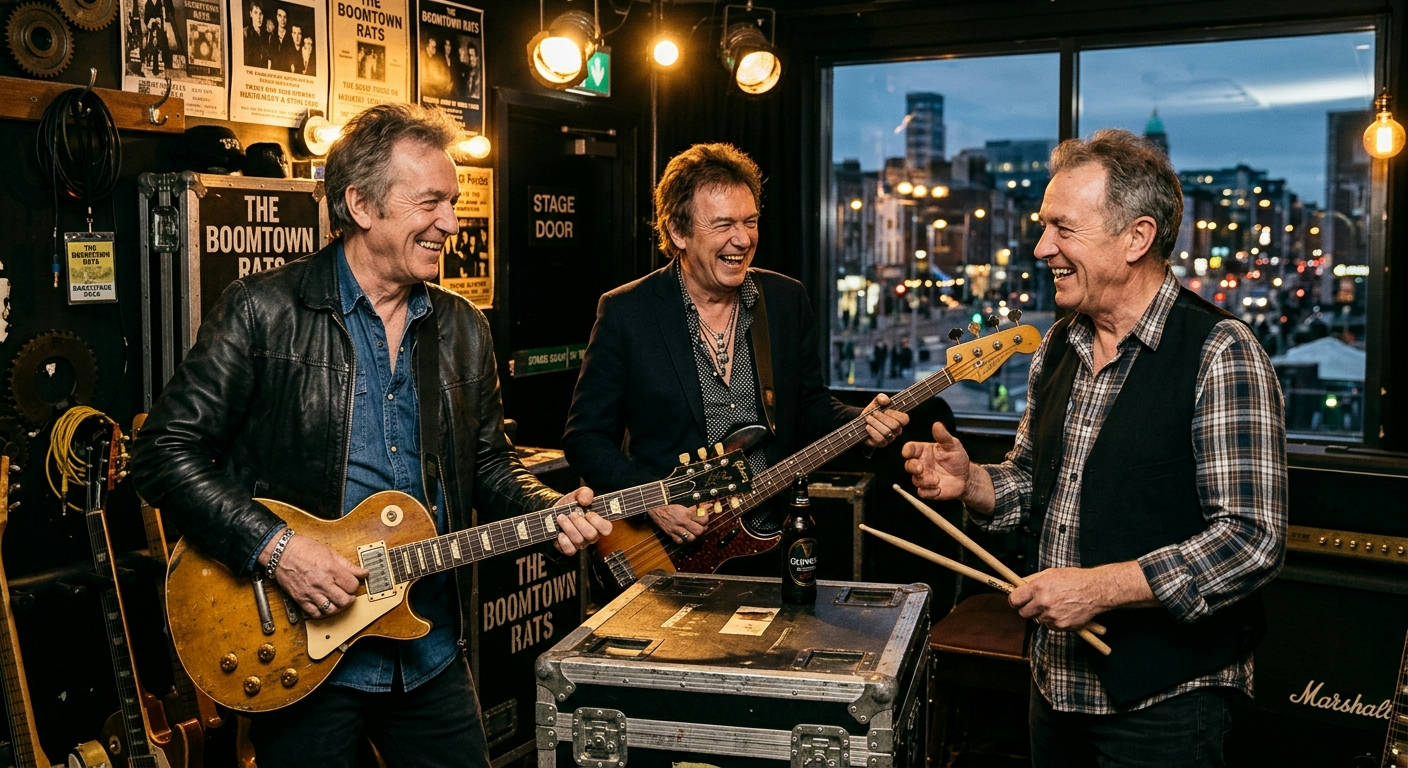
- Pete Briquette became a highly respected producer and studio owner, working with a wide range of artists. He and Geldof continued to collaborate on Geldof’s solo projects, maintaining a long-standing musical partnership.
- Simon Crowe also played on Geldof’s solo records and was involved in various other musical projects, including the band Jiggerypipery.
- Garry Roberts spent over a decade as a financial advisor before returning to music, playing in a rhythm and blues band with Simon Crowe.
- Johnnie Fingers moved to Japan and became a successful record producer for the Japanese rock band Greengate, and also formed the band Gung~Ho.
Gerry Cott’s Different Direction
After leaving the band, Gerry Cott took the most different path. He stepped away from the music industry almost entirely. He famously went on a trek through the Himalayas and eventually settled down to a life outside the limelight, a stark contrast to the world of rock and roll he had left behind.
The Reunion: Reassembling the Boomtown Rats Original Members (Almost)
In 2013, the impossible happened: The Boomtown Rats announced they were reforming for a tour, including a high-profile slot at the Isle of Wight Festival. The news electrified fans, but it wasn’t quite the full reunion everyone had hoped for.
Back on the Road: The 2013 Comeback
The reformed line up consisted of Geldof, Briquette, Roberts, and Crowe. The four took to the stage with a renewed fire, tearing through their classic hits with the same venom and energy they had in 1978. The tour was a success, proving that the core chemistry of the band was still very much alive.
“When we play, it’s a pleasure to be in the company of these musicians again. We’re older and maybe a bit uglier, but the noise we make is still glorious.” – Bob Geldof on the reunion.
The reunion wasn’t just a nostalgia trip. It was a reaffirmation of the power of their music and the enduring bond between the core members.
The Missing Pieces: Why Johnnie Fingers and Gerry Cott Weren’t Part of It
Gerry Cott’s absence was expected, given his long departure from the music business. The absence of Johnnie Fingers, however, was more contentious. Public statements from both sides revealed disagreements over the reunion, with Fingers expressing his disappointment at not being included.
This meant that the classic keyboard sounds, so integral to many of the band’s biggest hits, were missing from the initial reunion shows. The lineup that hit the road was a powerful rock quartet, but it lacked the specific melodic flavour that Fingers had brought to the original six-piece.
‘Citizens of Boomtown’ (2020): New Music and a Final Goodbye
The reformed four-piece eventually released a new album in 2020, Citizens of Boomtown, their first in 36 years. The album was accompanied by a documentary and a book, all celebrating the band’s incredible legacy. It was a solid return, full of the wit and energy fans had come to expect.
Tragically, just two years later, guitarist Garry Roberts passed away. His death marked the true end of an era. While the band may continue in some form, the prospect of seeing the key members of the Boomtown Rats original members on stage together is now gone forever, making his contributions on those classic records even more precious.
The Essential Collection for Vinyl Lovers
For any serious record collector, the discography of The Boomtown Rats’ original line up is a must-have. The raw energy and intricate musicianship are best experienced on a turntable. Here at Vinyl Gold UK, we believe these records are cornerstones of any new wave collection.
### Must-Have Albums from the Boomtown Rats Original Members Era
If you’re starting your collection, these three albums are non-negotiable. They represent the absolute peak of the original six-piece.
- ‘The Boomtown Rats’ (1977): Their debut is a raw, aggressive blast of energy. It’s the sound of a hungry band with something to prove. You can find pressings of The Boomtown Rats debut on Amazon.
- ‘A Tonic for the Troops’ (1978): A more polished and confident album, it features hits like “She’s So Modern” and “Rat Trap.” This is the sound of the band hitting their stride and conquering the charts.
- ‘The Fine Art of Surfacing’ (1979): Their commercial zenith, containing the worldwide smash “I Don’t Like Mondays.” It’s a masterful album that balances pop sensibility with dark, intelligent songwriting. A pristine copy of The Fine Art of Surfacing on vinyl is a true gem.
Finding the Best Pressings: A Quick Guide
When hunting for these records, aim for original UK pressings on the Ensign or Mercury labels. These first pressings often have a dynamic range and warmth that can be lost in later reissues. Check the dead wax for matrix numbers to help identify them.
Look for copies with the original inner sleeves, which often featured lyrics and artwork that add to the overall package. A little surface noise is acceptable for a record from the late 70s, but try to avoid anything with deep scratches that will cause skips.
Caring for Your Rats Vinyl
Once you’ve got these classics, you need to take care of them. A good quality turntable is essential to not only get the best sound but also to preserve your records for years to come. A poorly set up tonearm or a worn-out stylus can permanently damage your vinyl.
If you’re looking to upgrade your setup without breaking the bank, consider exploring some of the best turntables under £300 in the UK. A solid deck is the best investment you can make for your collection.
The legacy of the Boomtown Rats original members is etched into every groove of those early albums. It’s a story of six musicians from Ireland who, for a brilliant period, caught lightning in a bottle. Their chemistry was volatile, their talent was undeniable, and their music remains as vital and confrontational in 2026 as it was when it was first unleashed. They were more than just a band; they were a cultural force, and it all started with those six guys.