
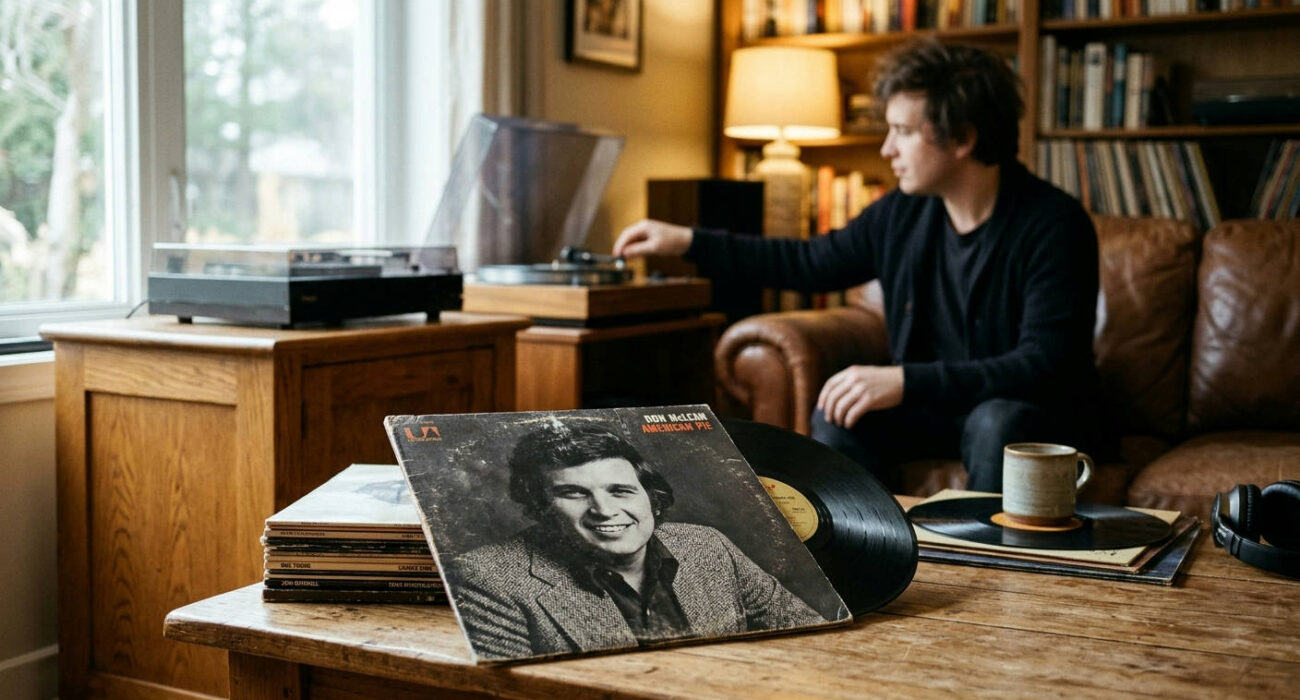
Some records are just records. Others are cultural events frozen in time, waiting for a needle to drop and release their magic all over again. The Don Mclean American Pie album is firmly in the latter category. Released in 1971, it’s far more than just the 8-and-a-half-minute title track that everyone knows. It’s a complete, masterful statement from a songwriter at the peak of his powers, a melancholic and beautiful snapshot of a generation grappling with loss and change. At Vinyl Gold UK, we believe this is an essential piece of vinyl for any serious collection, and it’s time to dig deep into why.
This isn’t just another look at the cryptic lyrics. We’re going to pull apart the entire album, from the production and the deep cuts to its lasting impact and what you, as a collector, should be looking for in 2026. This is your definitive guide to a true masterpiece.
The Genesis of a Folk-Rock Epic
You can’t understand the Don Mclean American Pie album without understanding the world it was born into. The optimism of the 60s was fading, replaced by the cynicism of the 70s. The Vietnam War raged on, and the cultural heroes of a generation were gone. This album channels that feeling of a dream deferred.
The “Day the Music Died”
The catalyst for the entire project is, of course, the 1959 plane crash that killed Buddy Holly, Ritchie Valens, and J.P. “The Big Bopper” Richardson. For a young Don McLean, a paperboy at the time, this was a profound and formative loss. He famously dubbed it “The Day the Music Died,” a phrase that would become legendary.
This single event became the anchor for the album’s title track, a sprawling allegory for the loss of innocence in both rock and roll and America itself. It wasn’t just about Holly; it was about the death of a certain kind of hope, a theme that resonates through every groove of the record.
From ‘Tapestry’ to ‘American Pie’
McLean’s debut album, Tapestry (not to be confused with the Carole King classic), was a commercial flop. He was dropped by his label and was essentially a struggling folk singer. This rejection and struggle fuelled the creation of American Pie. He poured all his disillusionment, his musical obsessions, and his lyrical genius into this one project.
He found a home at United Artists Records and a producer, Ed Freeman, who understood his vision. Freeman’s production is a key, often overlooked, element. He managed to take what were essentially folk songs and build them into something grander, with lush arrangements that never overwhelm McLean’s raw, emotional vocals and intricate guitar work.
The Instant Phenomenon
Upon its release in late 1971, the album wasn’t just a hit; it was a cultural tidal wave. The single “American Pie” was so long it had to be split across both sides of a 7-inch single. Radio stations didn’t care. They played the full version, and listeners were captivated.
The album shot to number one on the Billboard charts in early 1972 and stayed there for seven weeks. It captured the zeitgeist perfectly. People weren’t just listening to it; they were studying it, trying to decipher every reference in the title track, from the “jester” to the “king” and “queen.” The Don Mclean American Pie album became a national obsession.
A Track-by-Track Journey Through the Grooves
The title track is a giant, but to truly appreciate the Don Mclean American Pie album, you have to listen to the whole thing. It’s a cohesive work of art, with each song contributing to the overall mood of reflective melancholy and fleeting beauty.
Side One: The Overture and Its Aftermath
Side one is a masterclass in album sequencing. It kicks off with the epic title track, an impossible act to follow. Yet, McLean does it perfectly by immediately shifting the tone.
- “American Pie”: The 8-minute, 42-second epic. It’s the mission statement, a dense, allegorical history of rock and roll and the loss of American innocence. We’ll dig into the lyrics later, but musically, it’s a journey in itself, building from a simple folk song to a full-blown rock anthem before fading out.
- “Till Tomorrow”: After the storm of the opening track, this is the quiet aftermath. A gentle, almost apologetic ballad, it’s a song about moving on, even when you’re not sure how. The arrangement is sparse, focusing on McLean’s voice and acoustic guitar.
- “Vincent (Starry, Starry Night)”: Another massive hit, but one with a completely different energy. This beautiful, haunting tribute to Vincent van Gogh is a testament to McLean’s empathy as a songwriter. He connects the artist’s misunderstood genius with the album’s broader themes of beauty and sorrow. It’s a perfect, poignant comedown.
- “Crossroads”: A more traditional folk-rock tune that feels like a personal reflection on a failed relationship. It’s a palate cleanser, demonstrating McLean’s versatility and grounding the album in more personal, relatable emotions before the final track of the side.
- “Empty Chairs”: A devastatingly sad and beautiful album closer for side one. It’s a quiet, intimate song about loneliness and memory, with a melody so heartbreakingly gorgeous it’s rumoured to have inspired the Killing Me Softly With His Song”. It leaves the listener in a state of quiet contemplation, perfectly setting the stage for flipping the record.
Side Two: Love, Loss, and a Glimmer of Hope
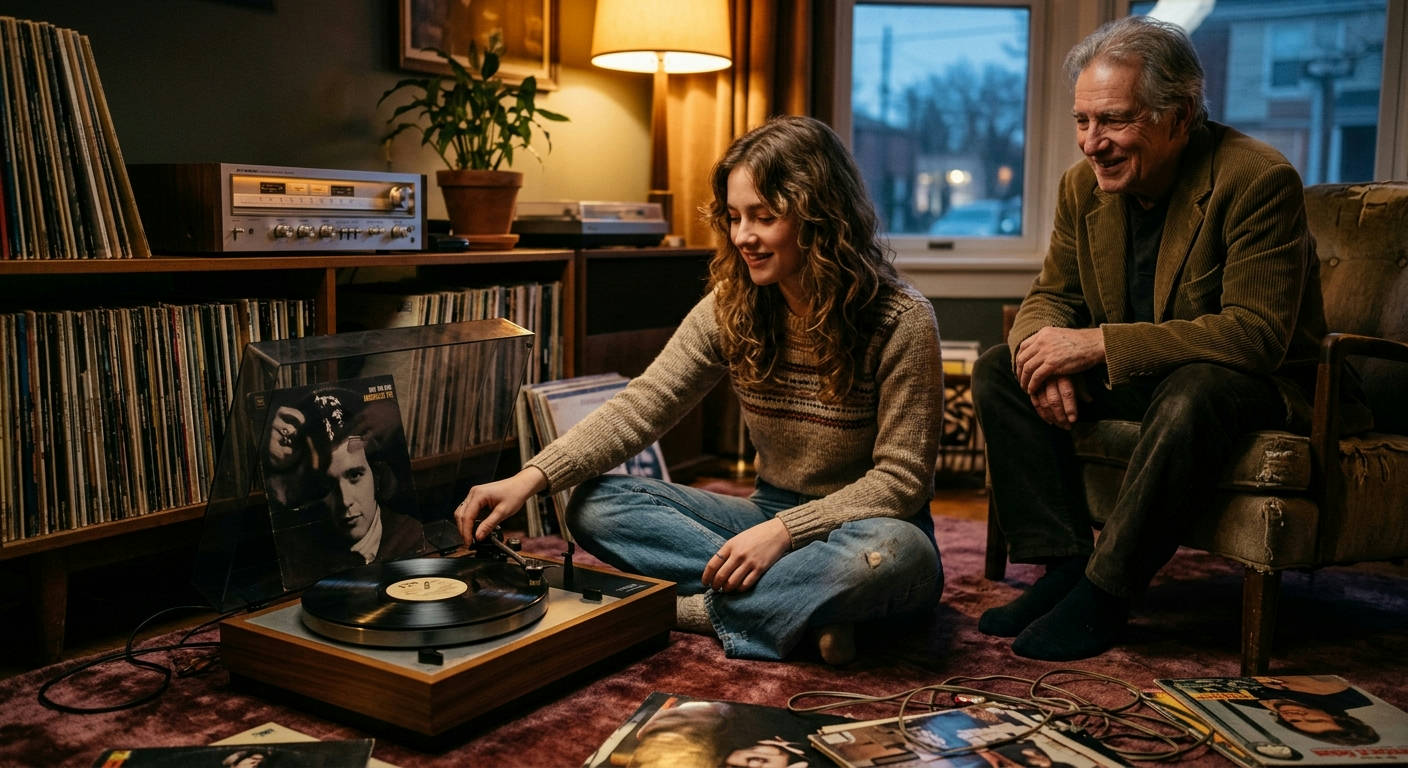
Side two is often overlooked, but it contains some of the album’s most powerful and musically diverse moments. It expands on the themes of love and loss, exploring them from different angles.
- “Everybody Loves Me, Baby”: Kicking off the side with a surprising bit of swagger. This is a bluesy, almost cynical track about the emptiness of fame. It’s a stark contrast to the vulnerability of the previous songs and shows a different side of McLean’s song writing.
- “Sister Fatima”: A mysterious, narrative-driven song with a slightly more psychedelic folk feel. The lyrics are cryptic, but the track adds a layer of mystical intrigue to the album’s overall texture.
- “The Grave”: Perhaps the most powerful anti-war song of the era that wasn’t a protest anthem. Written from the perspective of a dead soldier, it’s a harrowing, gut-wrenching piece of music that directly confronts the human cost of conflict, a major undercurrent of the early 70s.
- “Babylon”: A traditional canon, arranged by McLean and Lee Hays of The Weavers. It’s an almost spiritual interlude, a moment of communal singing that feels both ancient and timely. It’s a brilliant piece of sequencing, providing a brief respite before the album’s final statement.
- “Mother Nature”: A plea for environmental consciousness that was years ahead of its time in 2026. The track is a gentle, flowing piece that ends the album not with a bang, but with a quiet, reflective question about our place in the world. It’s a hopeful, if slightly sombre, conclusion.
The Vinyl Experience: Why the ‘American Pie’ Album is an Analog Essential
In an age of streaming, you might wonder why you need a physical copy. The Don Mclean American Pie album is a prime example of an album that benefits immensely from the vinyl format. It’s about the ritual, the sound, and the tangible connection to the music.
The Warmth and Detail of the Original Pressing
The original 1971 United Artists pressings sound incredible. Ed Freeman’s production is warm, rich, and full of detail that gets lost in digital compression. The acoustic guitars shimmer, the bass is round and full, and McLean’s voice is right there in the room with you.
Hearing the transition from the raucous finale of “American Pie” to the delicate fingerpicking of “Till Tomorrow” without a digital gap is part of the intended experience. The act of flipping the record after “Empty Chairs” is a physical pause that the artist and producer built into the album’s flow.
“The ‘American Pie’ album was designed as a complete thought, from the cover art to the sequence of the songs. It tells a story. The vinyl record is the book that tells that story.”
This is an album meant to be absorbed as a whole, and the vinyl format encourages that kind of deep listening. It’s not a playlist; it’s a cohesive piece of work. For the best experience, you’ll want to play it on a decent setup. If you’re looking to get started or upgrade, exploring the best turntables under £300 is a fantastic way to ensure you’re hearing every detail as intended.
Collector’s Guide: Finding the Right Vintage Copy
Hunting for an original pressing can be part of the fun. Here’s what to look for:
- The Label: Look for the tan United Artists Records label (UAS-5535). First pressings are generally considered the best sounding.
- The Cover: The iconic cover with the thumb print is a piece of art in itself. Check for ring wear, seam splits, and corner dings. A clean cover significantly increases the value.
- The Vinyl: Look for a copy with minimal scratches and scuffs. A “Near Mint” (NM) or “Very Good Plus” (VG+) copy is what you want. Always inspect the vinyl under a bright light before buying.
- The Inner Sleeve: Original copies came with a custom inner sleeve with lyrics. Having this intact is a big bonus for collectors.
What About Modern Reissues of the Don Mclean American Pie Album?
Since its release, the Don Mclean American Pie album has been reissued many times. Are any of them worth it? The answer is a solid “maybe.”
Some audiophile pressings from recent years are excellent, often remastered from the original tapes and pressed on heavy, 180-gram vinyl. They can offer a cleaner, quieter noise floor than a 50-year-old original. However, they can sometimes sound a bit sterile compared to the warmth of a vintage copy.
Our advice at Vinyl Gold UK? If you can find a clean original 1971 pressing for a reasonable price, grab it. It’s the most authentic way to experience this album. If you want a pristine, brand-new copy, a high-quality modern reissue is a great second choice.
The Lyrical Labyrinth of “American Pie”
No discussion of this album is complete without diving into the title track’s notoriously cryptic lyrics. McLean himself has been famously tight-lipped for decades, preferring to let the song speak for itself. He once said, “It means I’ll never have to work again.”
While a full, line-by-line decoding is a rabbit hole for another day, understanding the main players and themes is crucial to appreciating the song’s genius. The song uses the history of rock and roll as a metaphor for the social and political changes in America from the late 1950s to the early 1970s.
The Key Players and Theories

Over the years, a general consensus has formed around some of the key references, though nothing is officially confirmed.
- The Jester: Widely believed to be Bob Dylan. The line “with a coat he borrowed from James Dean” could refer to the cover of The Freewheelin’ Bob Dylan.
- The King: Almost certainly Elvis Presley, “in a thorny crown” referencing his decline from his rebellious peak.
- The Quartet: The Beatles, who “practiced in the park” and later “sergeants played a marching tune.”
- The Rolling Stones: “Jack Flash sat on a candlestick” is a clear nod to “Jumpin’ Jack Flash,” with the verse describing the tragic events of the Altamont Free Concert where a fan was killed by Hells Angels.
These are just the tip of the iceberg. The song is packed with references to sock hops, Chevy Levees, and cultural shifts that all contribute to the narrative of paradise lost. The Rock & Roll Hall of Fame has extensive materials on the song’s cultural importance, noting its role as a “touchstone for a generation.”
The Lasting Legacy in 2026 and Beyond
Why are we still obsessing over the Don Mclean American Pie album more than five decades after its release? Because its themes are timeless, and its craftsmanship is undeniable.
### An Anthem for Every Generation
While the song “American Pie” is rooted in a specific time, its core message of disillusionment and the end of an era is universal. Every generation experiences its own “day the music died.” The song’s ability to be reinterpreted by new listeners is a huge part of its enduring power.
It has become a campfire singalong, a pub anthem, and a piece of cultural shorthand understood across the globe. It’s one of those rare songs that has transcended its origins to become a modern folk standard.
Influence on the Art of Song writing
McLean demonstrated that a pop song could be long, complex, and literary without sacrificing commercial appeal. He paved the way for artists like Bruce Springsteen and Billy Joel to write their own sprawling, narrative-driven epics.
“The ‘American Pie’ album showed me that a song could be a novel. It could be a movie. It didn’t have to be three minutes of ‘I love you, you love me.'” – A quote often attributed to various modern songwriters.
The album’s blend of personal reflection and grand social commentary set a new standard for what a singer-songwriter could achieve. It’s a masterclass in storytelling, a benchmark that artists still aspire to in 2026.
Your Copy of the Don Mclean American Pie Album
Ready to add this masterpiece to your collection? Whether you’re hunting for a vintage gem or a brand-new pressing, the Don Mclean American Pie album is a cornerstone of any serious vinyl library. Its emotional depth and sonic richness demand to be heard on a proper turntable.
You can start your search for the definitive vinyl pressing right now. This is one record that will give back every time you drop the needle.
- Find your copy of the Don Mclean American Pie album on vinyl: Search on Amazon
Final Thoughts on a Timeless Classic
The Don Mclean American Pie album is more than just a record; it’s a time capsule. It captures a moment of profound cultural shift with honesty, intelligence, and breath taking beauty. From the epic, generation-defining title track to the quiet, heart breaking introspection of “Empty Chairs” and “Vincent,” it is a complete and unflinching work of art.
For us at Vinyl Gold UK, this isn’t just an album we recommend; it’s an album we believe is fundamental to understanding the singer-songwriter movement and the evolution of popular music. It’s a record that rewards deep listening and continues to reveal new layers even on the hundredth spin.
Don’t just stream it. Own it. Feel the weight of the record in your hands, study the cover art, and experience it the way it was meant to be heard. It’s an investment in your musical education and a treasure for your collection that will only grow in significance. Long live the Don Mclean American Pie album.