
Phil Spector didn’t just produce records — he built sonic cathedrals. From his teenage years crafting doo-wop hits to his turbulent work with rock royalty, Phil Spector transformed popular music forever. His revolutionary “Wall of Sound” technique turned the recording studio into an instrument, layering dozens of musicians into dense, magnificent tapestries of noise. This guide reviews every major album Phil Spector produced, charting his genius, his excess, and his enduring legacy.
Everything You Need to Know About Phil Spector
What was the “Wall of Sound” technique?
The Wall of Sound was Phil Spector’s signature production method, developed primarily at Gold Star Studios in Hollywood. Rather than recording instruments separately, Spector crammed large ensembles — multiple guitarists, pianists, horn sections, and string players — into a small room simultaneously. The resulting sound was dense, reverberant, and enormously powerful. Crucially, it was designed specifically for AM radio, where compression and limited frequency range meant that only the biggest, most layered recordings would cut through. The technique made singles like “Be My Baby” and “You’ve Lost That Lovin’ Feelin'” sound like nothing else on the radio. It remains one of the most influential production philosophies in recording history.
Which artists did Phil Spector produce?
Phil Spector worked with an extraordinary range of artists across six decades. His most celebrated work came with girl groups in the early 1960s, particularly The Ronettes and The Crystals. He also produced The Righteous Brothers, delivering some of blue-eyed soul’s defining moments. Later, he moved into rock royalty, working with The Beatles on the controversial Let It Be sessions, and subsequently with both John Lennon and George Harrison on landmark solo records. His catalogue also includes left-field collaborations with Leonard Cohen, the Ramones, Dion, and Yoko Ono — demonstrating a restless, if unpredictable, creative range.
Why was Phil Spector in prison?
In February 2003, actress and hostess Lana Clarkson was found shot dead at Phil Spector’s Alhambra mansion. Spector claimed the shooting was accidental, but prosecutors argued otherwise. After a first trial ended in a hung jury, a second trial in 2009 found Phil Spector guilty of second-degree murder. He received a sentence of 19 years to life. He died in prison in January 2021 at the age of 81, having never been released. His conviction cast a long shadow over his musical legacy, forcing a difficult cultural reckoning with the separation — or otherwise — of art from its creator.
Did Phil Spector produce the Beatles?
Yes, though the story is complicated. In 1970, the surviving tapes from the Beatles’ fractious Get Back sessions were handed to Phil Spector to salvage. He added orchestral overdubs and choral arrangements to several tracks, most controversially to Paul McCartney’s “The Long and Winding Road.” McCartney was furious, famously writing a letter of protest that was largely ignored. The result, the Let It Be album, remains a source of contention to this day. In 2003, McCartney released Let It Be… Naked, a stripped-back version restoring the tracks closer to their original form. Spector’s involvement with the Beatles stands as one of rock history’s great what-ifs.
The Albums: A Complete Guide
| Year | Album Title | Artist | Key Track |
|---|---|---|---|
| 1959 | The Teddy Bears Sing | The Teddy Bears | “To Know Him Is to Love Him” |
| 1962 | Twist Uptown | The Crystals | “Uptown” |
| 1963 | He’s a Rebel | The Crystals | “He’s a Rebel” |
| 1963 | Zip-A-Dee-Doo-Dah | Bob B. Soxx & Blue Jeans | “Zip-a-Dee-Doo-Dah” |
| 1963 | A Christmas Gift for You | Various Artists | “Christmas (Baby Please Come Home)” |
| 1964 | Presenting the Fabulous Ronettes | The Ronettes | “Be My Baby” |
| 1966 | River Deep – Mountain High | Ike & Tina Turner | “River Deep – Mountain High” |
| 1969 | Love Is All We Have to Give | Sonny Charles & Checkmates | “Black Pearl” |
| 1970 | Let It Be | The Beatles | “The Long and Winding Road” |
| 1970 | All Things Must Pass | George Harrison | “My Sweet Lord” |
| 1970 | John Lennon/Plastic Ono Band | John Lennon | “Mother” |
| 1971 | Imagine | John Lennon | “Imagine” |
| 1971 | The Concert for Bangladesh | George Harrison & Friends | “Bangla Desh” |
| 1972 | Some Time in New York City | John Lennon & Yoko Ono | “Woman Is the Nigger of the World” |
| 1975 | Rock ‘n’ Roll | John Lennon | “Stand By Me” |
| 1975 | Born to Be with You | Dion | “Born to Be with You” |
| 1977 | Death of a Ladies’ Man | Leonard Cohen | “Memories” |
| 1980 | End of the Century | Ramones | “Do You Remember Rock ‘n’ Roll Radio?” |
| 1981 | Season of Glass | Yoko Ono | “Goodbye Sadness” |
| 2003 | Silence Is Easy | Starsailor | “Silence Is Easy” |
1959 — The Teddy Bears Sing | The Teddy Bears
Phil Spector co-wrote and performed on this debut release as a member of The Teddy Bears. The standout track, “To Know Him Is to Love Him,” became a number-one hit in 1958, drawing its title from the inscription on Spector’s father’s gravestone. The song revealed his instinct for melody and emotional resonance at just seventeen years old. Even at this early stage, Phil Spector demonstrated a producer’s ear rather than a performer’s ego. The album itself is modest by later standards — simple arrangements, gentle vocals, and teenage charm. However, it marks an essential origin point. Without this record, there is no Wall of Sound, no Ronettes, no legacy. Listeners today hear an artist on the threshold of something enormous. The album is historically invaluable, even if it sounds closer to sock hop than sonic revolution. Ultimately, it planted the seed that would reshape pop music entirely.
1962 — Twist Uptown | The Crystals
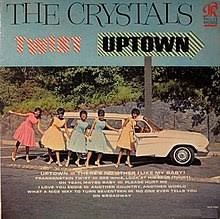
Twist Uptown introduced The Crystals to a mass audience and signalled the beginning of Phil Spector’s golden era. The key track, “Uptown,” blended urban storytelling with lush string arrangements, creating a deeply emotional pop single. Spector’s production here demonstrated his gift for matching a singer’s vulnerability to an orchestral backdrop. The album arrived at the height of the Twist craze, though Spector’s ambitions extended well beyond dance trends. Instead, he used the moment to establish The Crystals as artists capable of genuine emotional depth. The recording sessions at Gold Star Studios showcased his developing Wall of Sound approach. Layered guitars and swooping strings filled every inch of sonic space. Consequently, the album sounds simultaneously of its era and ahead of it. For fans exploring the roots of Phil Spector’s genius, Twist Uptown is essential listening and an important milestone in early-sixties pop.
1963 — He’s a Rebel | The Crystals
He’s a Rebel is one of Phil Spector’s most fascinating productions, largely because of the deception behind it. Spector recorded the title track using The Blossoms — not The Crystals — yet released it under The Crystals’ name. The gamble paid off spectacularly: “He’s a Rebel” reached number one in 1962. Beyond the controversy, the album showcases Phil Spector’s instinct for defiant, empowering pop. The title track pulses with energy and attitude, presenting a female narrator who champions her unconventional boyfriend without apology. The Wall of Sound production is thick and thrilling. Moreover, the album captures the cultural shift happening in early-sixties America — youth beginning to push against conformity. Surrounding tracks sustain the energy admirably. Altogether, He’s a Rebel remains a landmark recording in girl group history. It confirmed Phil Spector’s commercial mastery and his willingness to bend rules to get the result he wanted.
1963 — Zip-A-Dee-Doo-Dah | Bob B. Soxx & Blue Jeans
Phil Spector created Bob B. Soxx & Blue Jeans specifically as a vehicle for his production ideas. The group — assembled rather than organic — gave Spector freedom to experiment. The joyful title track, a reworked Disney standard, became a surprise hit, demonstrating his ability to transform familiar material into something fresh. Phil Spector’s arrangement turned the song into a sprawling, euphoric celebration. The album blends pop, soul, and R&B with an easy-going confidence. Bobby Sheen’s lead vocals bring warmth and charisma throughout. Additionally, the inclusion of Darlene Love on backing vocals adds significant depth and texture. The record stands as a testament to Spector’s curatorial instincts — he assembled talent brilliantly. While it lacks the emotional intensity of his Ronettes or Crystals work, the album remains a joyful, underrated entry in his catalogue. It rewards discovery and demonstrates the playful, lighter side of his Wall of Sound vision.
1963 — A Christmas Gift for You | Various Artists
A Christmas Gift for You is perhaps the finest Christmas album in pop history, and Phil Spector produced every note of it. Released on the same day as the Kennedy assassination, the record initially struggled commercially. Nevertheless, it has since become an annual essential. Phil Spector applied his full Wall of Sound arsenal to classic Christmas standards, transforming them into cinematic pop masterpieces. Darlene Love’s “Christmas (Baby Please Come Home)” stands as the album’s undisputed peak — a volcanic vocal performance atop a thunderous arrangement. The Ronettes and Crystals contribute equally memorable versions of seasonal favourites. Crucially, the album never sounds camp or cynical; instead, it radiates genuine warmth and festive joy. Spector’s own spoken outro, wishing listeners a merry Christmas, adds an unexpectedly touching personal note. Decades later, this record defines Christmas pop at its most ambitious and its most joyful.
1964 — Presenting the Fabulous Ronettes | The Ronettes
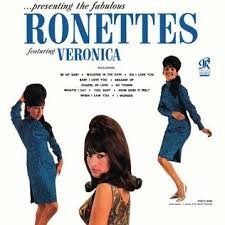
This album represents the commercial and artistic peak of Phil Spector’s girl group era. “Be My Baby” — one of the greatest pop singles ever recorded — opens the record and sets an impossibly high standard. Ronnie Spector’s voice is extraordinary: vulnerable, sensual, and achingly romantic. Phil Spector surrounded her with the most elaborate Wall of Sound arrangements of his career. Every track feels cinematic, every chorus overwhelming in the best sense. Beyond the singles, album cuts like “Baby, I Love You” and “Walking in the Rain” demonstrate consistent quality throughout. Furthermore, the album captures a very specific emotional world — teenage longing stretched across vast orchestral soundscapes. Phil Spector never quite replicated this magic again, even in his later celebrated work. Consequently, this record stands as his masterpiece of the form. For anyone exploring his legacy, this is the essential starting point and an enduring monument to pop production.
1966 — River Deep – Mountain High | Ike & Tina Turner
River Deep – Mountain High is one of music’s great what-ifs. Phil Spector invested enormous energy and money into this production, considering it his finest work. The title track is genuinely staggering — Tina Turner delivers one of rock’s greatest vocal performances over Spector’s most ferociously layered Wall of Sound yet. Yet the album flopped in America upon release, a commercial failure that deeply wounded Phil Spector and contributed to his withdrawal from the industry. In the UK, however, the single reached the top five, and critics eventually recognised its genius. Decades of reappraisal have confirmed it as a landmark recording. The production is relentless and magnificent; moreover, Tina Turner matches it every step of the way. This album asks what might have happened had Spector continued working at this level. Instead, its failure silenced one of pop’s most original voices, at least temporarily.
1969 — Love Is All We Have to Give | Sonny Charles & The Checkmates Ltd.
This album marked Phil Spector’s return to active production after his post-River Deep retreat. Working with Sonny Charles and The Checkmates Ltd., Spector delivered a polished soul record that generated a genuine hit in “Black Pearl.” The single reached the top ten, proving that Phil Spector could still connect with mainstream audiences. The Wall of Sound approach translates effectively into late-sixties soul, adding grandeur to already emotive performances. Sonny Charles brings a charismatic lead vocal throughout, and the backing arrangements shimmer with craftsmanship. Additionally, the album reflects the changing musical landscape of 1969, incorporating psychedelic touches alongside Spector’s signature orchestration. However, the record has largely faded from general consciousness, overshadowed by his subsequent work with the former Beatles. Nevertheless, it deserves reappraisal as a confident, warm, and genuinely enjoyable soul record — evidence that Phil Spector’s commercial instincts remained sharp.
1970 — Let It Be | The Beatles
The Let It Be album stands as one of rock history’s most controversial productions, and Phil Spector sits at the centre of the storm. Handed the chaotic Get Back tapes, Spector added orchestral overdubs and choir arrangements to several tracks. Paul McCartney reacted with fury, particularly regarding “The Long and Winding Road,” which Spector buried beneath strings and choral voices. John Lennon and George Harrison approved the changes; McCartney did not. Phil Spector’s production choices remain genuinely divisive. Defenders argue he rescued an unreleasable mess; critics insist he smothered raw, honest performances. Both positions contain truth. Regardless, the album documents the Beatles’ painful disintegration with uncomfortable intimacy. The title track and “Get Back” retain enormous power, even beneath Spector’s additions. Furthermore, the 2003 Let It Be… Naked release confirmed that McCartney’s stripped-back vision was equally valid. Phil Spector’s involvement here guaranteed immortality, though perhaps not the kind he intended.
1970 — All Things Must Pass | George Harrison
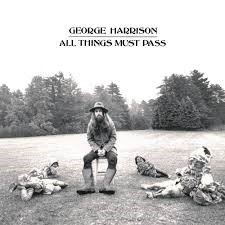
All Things Must Pass announced George Harrison’s arrival as a major solo artist, and Phil Spector co-produced every track. The album is monumental in every sense — a triple LP overflowing with spiritual searching, melodic brilliance, and lavish orchestration. Together, Harrison and Phil Spector created a sound that felt both intimate and cosmic. “My Sweet Lord” became a global number one, its devotional simplicity cutting through the Wall of Sound grandeur surrounding it. Tracks like “Isn’t It a Pity” and “What Is Life” confirm Harrison’s songwriting had been criminally overlooked during the Beatles years. Phil Spector’s production is appropriately grand, matching Harrison’s ambitions without overshadowing his voice. Additionally, the famous “mud” of the original mix has been addressed in subsequent remasters, revealing even greater depth. This album represents one of Phil Spector’s finest achievements — a record where his instinct for scale served the artist rather than consuming him.
1970 — John Lennon/Plastic Ono Band | John Lennon
John Lennon/Plastic Ono Band is the most emotionally raw record in Lennon’s catalogue, and Phil Spector’s production wisely gets out of its way. Shaped by Lennon’s engagement with primal therapy, the album strips everything back to bare bones — piano, drums, bass, guitar, and one of rock’s most exposed vocal performances. Phil Spector resisted the temptation to apply his signature Wall of Sound, instead serving the songs with unusual restraint. “Mother” opens the record with tolling bells and a primal scream; consequently, nothing sounds quite like it in pop music. “Working Class Hero” and “God” continue the unflinching self-examination. The production is skeletal and deliberate. Furthermore, Spector’s willingness to subordinate his own aesthetic marks this as a mature, confident collaboration. The album remains Lennon’s most uncompromising artistic statement, and Phil Spector deserves credit for understanding exactly what it required.
1971 — Imagine | John Lennon
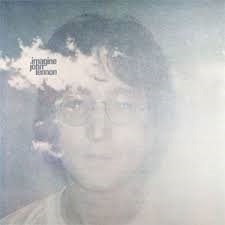
Imagine remains John Lennon’s most beloved solo album, and Phil Spector co-produced it with characteristic ambition. Where the previous Plastic Ono Band album embraced austerity, Imagine leans into orchestral warmth and accessibility. The title track is one of the twentieth century’s defining songs — deceptively simple, yet immensely powerful. Phil Spector’s production adds lushness without sacrificing emotional directness. Tracks like “Jealous Guy” and “Oh My Love” demonstrate Lennon’s melodic genius at full stretch. Additionally, the harder-edged “How Do You Sleep?” channels anger into something genuinely gripping. The album achieves a rare balance: it is simultaneously Lennon’s most commercially accessible record and one of his most politically charged. Phil Spector understood that accessibility and substance need not conflict. Consequently, Imagine endures as a masterwork — a record that reached millions of people with an uncompromising message wrapped in irresistible sound.
1971 — The Concert for Bangladesh | George Harrison & Friends
The Concert for Bangladesh documented one of rock history’s first large-scale charity events, and Phil Spector co-produced the live recording. Harrison organised the concert in response to the humanitarian crisis following Bangladesh’s independence war. The resulting triple album captures performances from Ringo Starr, Bob Dylan, Eric Clapton, and Ravi Shankar. Phil Spector faced the considerable challenge of making a massive live recording sound coherent and polished. The result is a warm, dynamic document that balances fidelity to the live experience with listenable production values. “Bangla Desh” remains the centrepiece, Harrison’s passionate appeal ringing clearly across the decades. Furthermore, Dylan’s rare live appearance generates genuine excitement even on record. Phil Spector’s restraint here mirrors his work on the Plastic Ono Band — he serves the event rather than reshaping it. Altogether, this album stands as an important historical document and a genuinely enjoyable live record.
1972 — Some Time in New York City | John Lennon & Yoko Ono
Some Time in New York City represents the most overtly political chapter in Phil Spector’s collaboration with John Lennon. The album tackles issues including the Irish Troubles, women’s liberation, and prison reform with blunt directness. Phil Spector’s production matches the material’s urgency — raw, occasionally rough, deliberately unpolished. Critics at the time dismissed the record harshly, finding the politics heavy-handed and the music underdeveloped. However, subsequent reappraisal has treated it more generously. “Woman Is the Nigger of the World” remains a provocative, powerful statement. Furthermore, the live bonus disc captures Lennon in passionate, freewheeling performance. Phil Spector navigated a difficult brief — producing an album designed to agitate rather than soothe. The result is imperfect but honest. It captures Lennon and Ono at their most committed and most unguarded, and Phil Spector’s production gives that commitment a platform without softening its edges.
1975 — Rock ‘n’ Roll | John Lennon
Rock ‘n’ Roll had one of the most turbulent gestation periods in recording history. Phil Spector and John Lennon began recording the album together in 1973, during Lennon’s notorious “Lost Weekend” period. The sessions quickly descended into chaos — excess, unpredictability, and creative tension derailed progress repeatedly. Phil Spector eventually disappeared with the original tapes, and Lennon completed the album independently in 1974. The finished record is a warm, affectionate tribute to the rock and roll songs that shaped Lennon’s childhood. “Stand By Me” became a minor hit and remains the album’s emotional centrepiece. Despite the turbulent background, the record exudes genuine love for its source material. Additionally, Lennon’s voice sounds relaxed and joyful throughout. Phil Spector’s surviving contributions added texture to the early sessions. Altogether, the album succeeds as a heartfelt celebration of rock and roll’s origins, even if its creation almost broke both men involved.
1975 — Born to Be with You | Dion
Born to Be with You is one of Phil Spector’s most underrated and eccentric productions. Spector applied his full Wall of Sound methodology to Dion’s veteran voice, creating something gloriously unusual. The title track becomes an eight-minute sonic journey — layered, hypnotic, and utterly unlike anything in Dion’s previous catalogue. Phil Spector seemed energised by the creative freedom the sessions afforded. The album flopped commercially on release, confusing audiences expecting something more conventional from both artist and producer. Nevertheless, critics have subsequently elevated it to cult status. Furthermore, the album’s willingness to push pop structure to its absolute limits feels genuinely ahead of its time. Dion’s voice carries a weathered authority that contrasts fascinatingly with Spector’s maximalist production. Phil Spector rarely sounded this adventurous or this uncompromising in his later career. Consequently, Born to Be with You rewards patient, open-minded listening and stands as a genuinely surprising late-career highlight.
1977 — Death of a Ladies’ Man | Leonard Cohen
Death of a Ladies’ Man remains the most startling collision in Phil Spector’s discography. Leonard Cohen — sparse, literary, and intimate — met Phil Spector’s maximalist Wall of Sound, and the results were predictably divisive. Cohen himself later expressed significant discomfort with the finished album, feeling his voice had been overwhelmed. Phil Spector reportedly took considerable control in the studio, pushing sessions in directions Cohen found difficult. Yet the album has genuine moments of bizarre brilliance. “Memories” swaggers with a knowing irony that both artists seemed to share. Furthermore, tracks like “Don’t Go Home with Your Hard-On” achieve a knowing absurdism that feels almost intentional. Phil Spector’s production is characteristically enormous, smothering Cohen’s intimacy beneath layers of orchestration. The tension between the two visions never fully resolves. Nevertheless, the album fascinates precisely because of that tension — an irresolvable clash of two enormous artistic personalities, preserved for posterity.
1980 — End of the Century | Ramones
End of the Century is the most unlikely pairing in Phil Spector’s career — and one of his most fascinating. The Ramones, champions of stripped-back punk minimalism, submitted themselves to Spector’s legendary studio control. Phil Spector reportedly held the band at gunpoint during sessions — an account they corroborated — demanding repeated takes and enforcing his creative vision with alarming authority. The resulting album is polished, melodic, and far removed from the Ramones’ characteristic rawness. “Do You Remember Rock ‘n’ Roll Radio?” is genuinely brilliant — a nostalgic anthem produced with bombastic precision. Additionally, their cover of “Baby, I Love You” became the band’s highest-charting UK single. Critics and fans remain divided: some consider it a fascinating experiment, others a betrayal of punk values. Phil Spector clearly relished the challenge of bending the Ramones to his will. Regardless of one’s view, End of the Century demands attention as a genuinely extraordinary cultural collision.
1981 — Season of Glass | Yoko Ono
Season of Glass arrived just months after John Lennon’s murder in December 1980, and Phil Spector co-produced this deeply personal record. Yoko Ono channelled grief, anger, and survival into the album’s stark, often difficult music. The controversial cover — depicting Lennon’s bloodstained glasses — announced the record’s unflinching emotional honesty. Phil Spector’s production here demonstrates sensitivity and restraint, supporting Ono’s vision without overwhelming it. “Goodbye Sadness” offers a moment of fragile beauty amid the pain. Furthermore, the album functions as both a grieving document and a declaration of intent — Ono asserting her own artistic identity in the aftermath of unimaginable loss. Phil Spector navigated difficult personal terrain here, given his own complex relationship with the Lennon legacy. The album is not always easy to hear, but its honesty demands respect. Ultimately, Season of Glass stands as one of the most emotionally courageous records in Phil Spector’s production catalogue.
2003 — Silence Is Easy | Starsailor
Silence Is Easy marked Phil Spector’s final production credit, contributing to two tracks on this British rock band’s second album. By 2003, Phil Spector’s personal life overshadowed everything — the Lana Clarkson shooting occurred during the same period as these sessions. The title track is the album’s standout, featuring Spector’s trademark orchestral density applied to Starsailor’s post-Britpop sound. The collaboration yielded something genuinely interesting: a contemporary rock record momentarily elevated by a master’s touch. However, the sessions were reportedly tense, with band members expressing discomfort at Spector’s behaviour in the studio. Additionally, his subsequent arrest and conviction effectively ended any discussion of a broader creative resurgence. Phil Spector’s contribution to Silence Is Easy consequently feels like a coda — a final glimpse of his production instincts applied to modern material. It is a bittersweet final chapter for one of music’s most gifted and most troubled figures.
A Legacy Written in Sound
Phil Spector’s career spans six decades, two murder trials, and some of the most extraordinary recordings in pop history. From a teenage hit-maker crafting doo-wop on the cusp of the rock and roll era, to the architect of the Wall of Sound, to a controversial collaborator with the world’s biggest artists — Phil Spector lived a life utterly inseparable from music’s greatest moments and its darkest impulses.
His productions shaped The Beatles’ final chapter, helped George Harrison announce himself to the world, and gave John Lennon a platform for both his most vulnerable and most ambitious work. His girl group recordings remain benchmarks of emotional pop production. His late-career collaborations — with Cohen, the Ramones, Dion — demonstrate a restless creativity that refused easy categorisation.
None of this erases the devastating reality of his crimes. Phil Spector died in custody, convicted of murder, his final years defined by legal proceedings rather than studio sessions. The music, however, endures — complex, magnificent, and impossible to ignore. Approaching this catalogue demands both an honest reckoning with his actions and a clear-eyed recognition of his genius. Those two truths coexist uncomfortably, as they must. That discomfort is part of the legacy now.