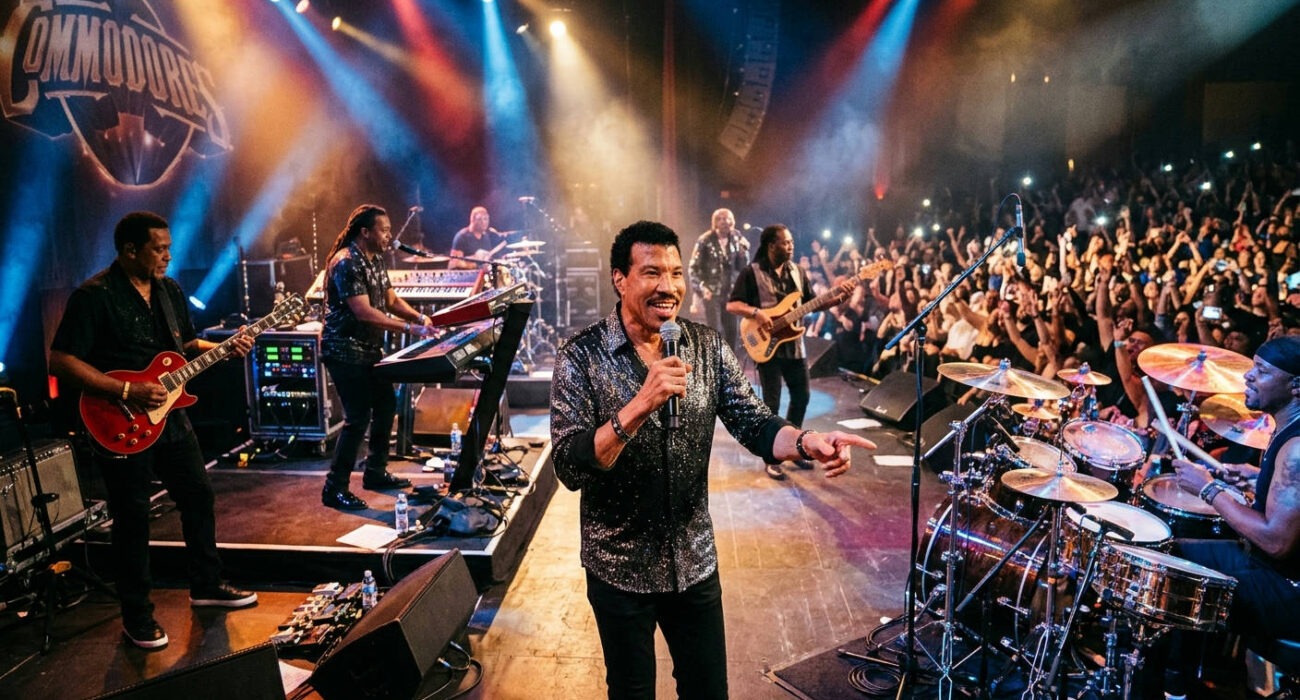
You can’t talk about funk and soul without talking about the stage. For some bands, the studio is where the magic happens. For others, the real alchemy, the raw energy, and the undeniable connection happen under the hot lights in front of a screaming crowd. This is the story of The Commodores live performances—a masterclass in showmanship, musicianship, and pure, unadulterated entertainment that set a standard for decades.
From their earliest days as a high-octane funk machine to their evolution into global ballad superstars, the live show was always the band’s true north. It was where six musicians from Tuskegee, Alabama, became a singular, unstoppable force.
The Genesis of a Live Juggernaut: The Early Years
Before the sequins and the worldwide tours, The Commodores were a group of university students honing their craft. Their journey from campus gigs to international arenas was a trial by fire that forged one of the tightest live acts in music history.
From Tuskegee to Motown: Honing Their Craft
The band’s story begins at Tuskegee University in the late 1960s. This wasn’t just a casual jam session; it was a crucible. The members—Lionel Richie, Thomas McClary, Milan Williams, William King, Walter Orange, and Ronald LaPread—were dedicated musicians who rehearsed relentlessly.
Playing campus events and local clubs, they built a reputation for their dynamic energy and musical precision. They were a self-contained unit, writing their own material and arranging complex horn lines. This foundation of intense practice and tight-knit collaboration was the bedrock of the electrifying live shows that would later stun audiences around the world.
The Jackson 5 Opening Act: Trial by Fire
The big break came when Motown legend Suzanne de Passe signed them after seeing them perform. Their first major tour was as the opening act for The Jackson 5. Imagine the pressure: every night, you have to warm up a crowd that is there to see the biggest pop phenomenon on the planet.
This experience was invaluable. It taught them how to win over a massive, and sometimes impatient, audience. They learned stagecraft, pacing, and how to command an arena. Night after night, they hit the stage with explosive energy, determined to make a name for themselves. This period was crucial in shaping the powerhouse that defined early The Commodores live performances.
Defining the Funk-Rock Stage Show
In these early days, The Commodores were a funk-rock beast. Their shows were loud, aggressive, and relentlessly groovy. Thomas McClary’s searing guitar solos brought a rock edge that set them apart from many of their Motown peers.
They were a spectacle of motion and sound. Dressed in coordinated, often flamboyant outfits, their choreography was sharp and powerful. Walter “Clyde” Orange, a phenomenal drummer, would often step out from behind the kit to deliver raw, gritty lead vocals, creating a dynamic focal point. This raw power was the engine of their early success.
The Anatomy of Unforgettable The Commodores Live Performances
What made a Commodores show so special? It wasn’t just one thing. It was a perfect storm of individual talents coming together to create a singular, cohesive experience that was greater than the sum of its parts.
The Dual-Frontman Dynamic: Lionel Richie and Walter Orange
At the heart of their live appeal was the brilliant contrast between their two primary lead singers. You had Lionel Richie, the smooth, charismatic crooner who could melt hearts with a ballad. His effortless charm and connection with the audience made songs like “Easy” and “Three Times a Lady” into unforgettable, personal moments.
Then you had Walter “Clyde” Orange. From behind his drum kit or prowling the front of the stage, Clyde was the funk engine. His powerful, raspy voice drove the band’s funkiest anthems. He was the voice of “Brick House,” a force of nature that demanded you get up and dance. This duality allowed them to pivot from a sweaty funk jam to an intimate love song on a dime, a feat few bands could ever pull off.
Musicianship That Set Them Apart
Don’t let the showmanship fool you; The Commodores were serious musicians. Every member was a master of their instrument. Ronald LaPread’s bass lines weren’t just foundational; they were melodic, inventive, and incredibly funky. William King’s trumpet and Milan Williams’ keyboards added layers of texture and sophistication.
They were a band in the truest sense of the word. They wrote, they played, they arranged—all of it. It wasn’t a singer with a backing track; it was a living, breathing musical unit, and you felt that power every single second they were on stage.
This self-contained structure meant their live arrangements could be fluid and exciting. They could extend a solo, break down a groove, or vamp on a chorus, feeding off the energy of the room. This level of improvisational chemistry is what separates good live bands from legendary ones.
The Iconic Choreography and Stage Presence
A Commodores show was a visual feast. They were famous for their synchronized dance moves—the spins, the slides, the sharp, coordinated steps that were executed with military precision. This wasn’t just dancing for dancing’s sake; it amplified the music’s rhythm and energy.
Their stage outfits were equally iconic, evolving from matching funk-era jumpsuits to the glitzy, sequined attire of their superstar years. Every element was designed for maximum impact, ensuring that even the fans in the last row of the arena felt like they were part of the action. Their command of the stage was absolute, turning every concert into an event.
The Golden Era: Arena-Rocking Funk and Soul (Mid-to-Late 70s)
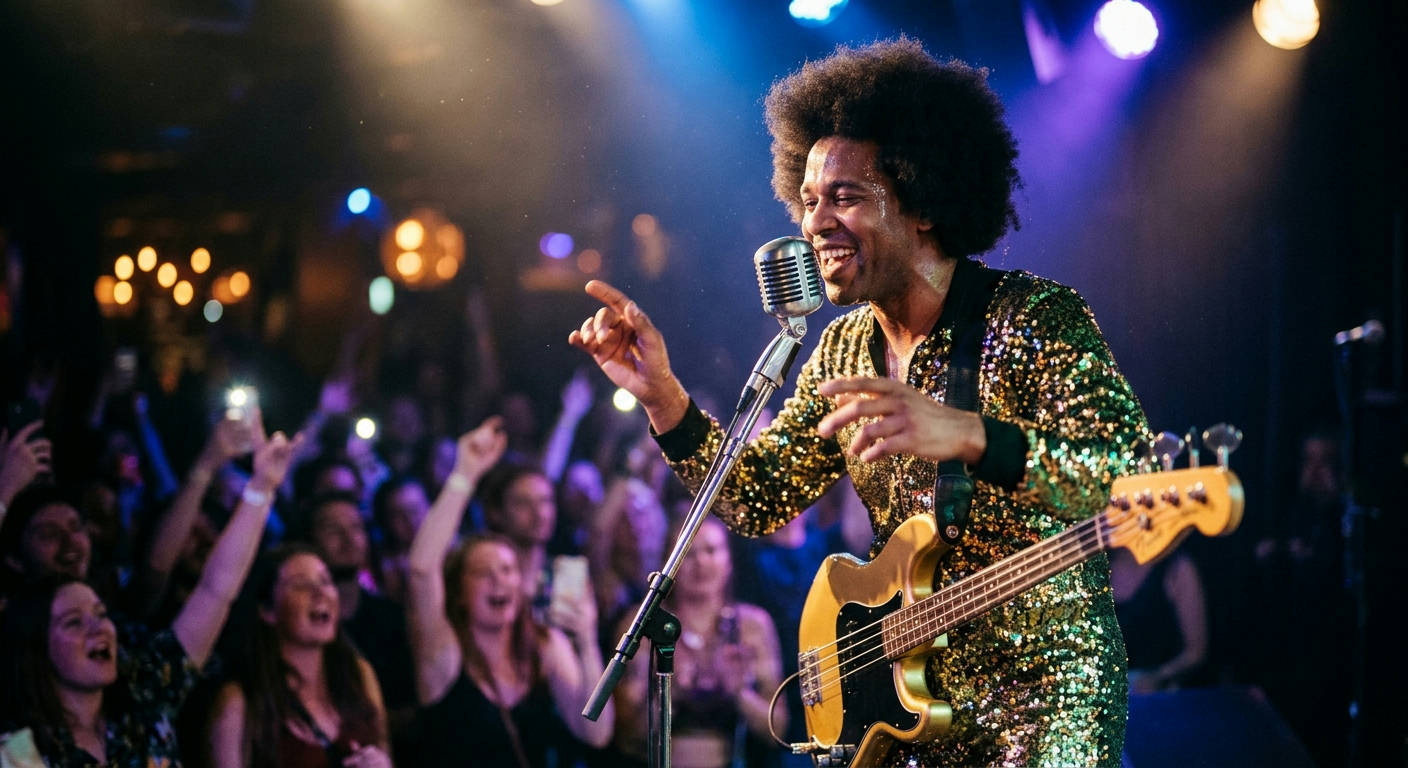
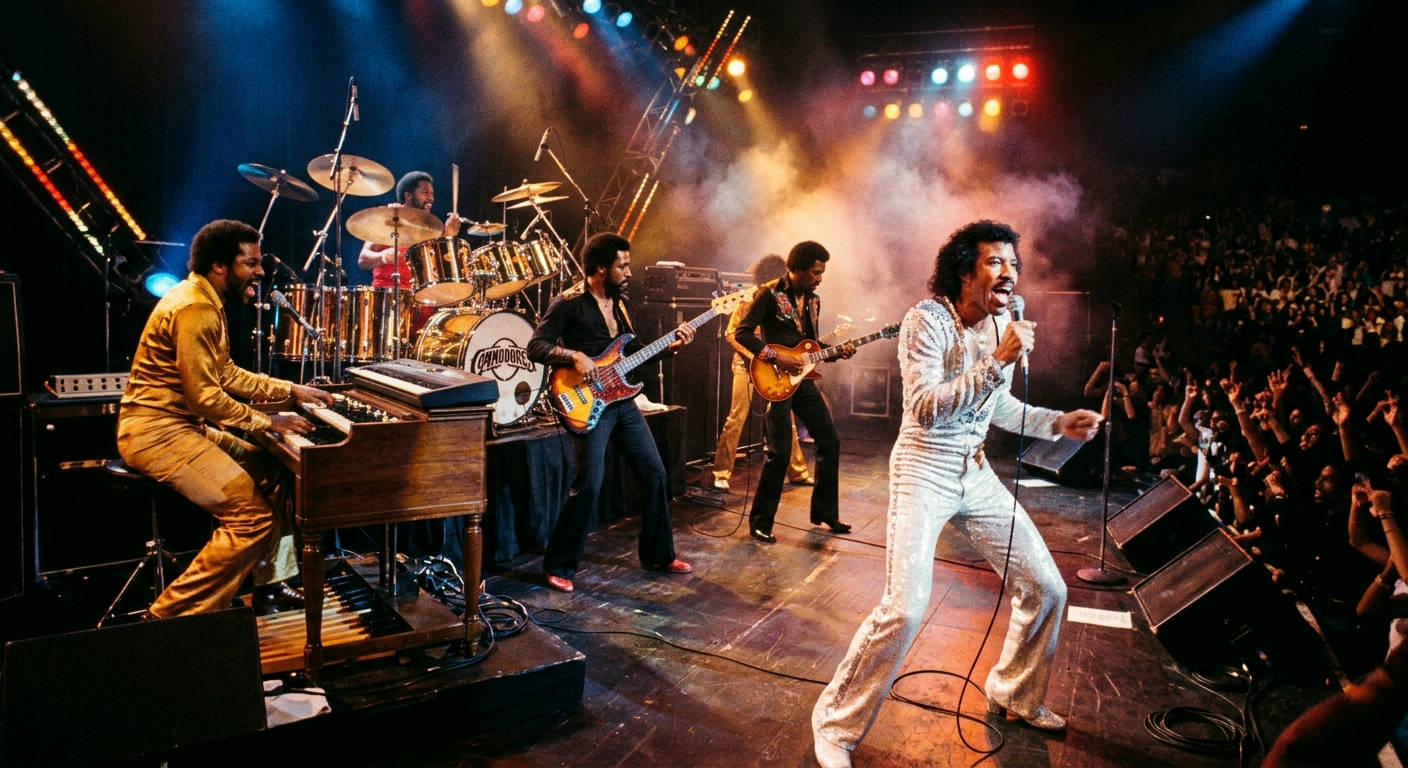
This was the period when everything came together. The Commodores weren’t just an opening act anymore; they were the headliners, selling out arenas worldwide. Their live shows became legendary, blending explosive funk, rock power, and soulful ballads into a seamless, two-hour spectacle.
“Machine Gun” and the Instrumental Powerhouse
Long before they were known for ballads, The Commodores announced their arrival with “Machine Gun,” a blistering instrumental funk track. In a live setting, this song was an absolute monster. It was a showcase for their raw musical talent, particularly Milan Williams’ clavinet work, which mimicked the percussive fire of the song’s namesake.
Opening a show with this track was a statement of intent. It told the audience to buckle up. It proved they were more than just a vocal group; they were a formidable band capable of creating a sonic storm.
From “Slippery When Wet” to “Brick House”: The Funk Anthems
When The Commodores dropped the funk, the entire venue would transform. Songs like “Slippery When Wet,” “Fancy Dancer,” and the immortal “Brick House” were the core of their high-energy sets. These weren’t just songs; they were communal experiences.
Walter Orange would command the crowd, his “owwws” and ad-libs driving the energy to a fever pitch. The extended live versions of these tracks gave every member a chance to shine, with long, improvisational jams that made each performance unique. This was the kind of funk that was designed to create the perfect party atmosphere, getting thousands of people on their feet simultaneously.
The Ballad Takes Center Stage: “Easy” and “Three Times a Lady”
The genius of The Commodores live performances was their mastery of pacing. Just as the energy reached its peak, they could bring it all down for a moment of pure, emotional connection. When the opening piano chords of “Easy” or “Three Times a Lady” echoed through the arena, a sea of lighters (and later, phone screens) would illuminate the dark.
Lionel Richie had an incredible ability to make a 20,000-seat arena feel like an intimate club. These ballads weren’t just slow songs; they were show-stopping moments of shared emotion. This ability to master both the party-starting funk and the heart-wrenching ballad in the same set is what elevated them to superstardom. This dynamic is also why many of their ballads became top choices for a wedding first dance, capturing that raw emotion perfectly.
Capturing Lightning in a Bottle: The Official Live Albums
For those who couldn’t witness the spectacle in person, the band’s live albums offered a thrilling taste of the experience. These records weren’t just concert recordings; they were documents of a band at the absolute height of their powers.
‘The Commodores Live!’ (1977): A Snapshot of Peak Power
Released in 1977, the double album The Commodores Live! is an essential document. It captures the band on tour supporting their hit album, Commodores. The track list is a perfect representation of their set at the time, seamlessly blending ferocious funk (“I Feel Sanctified”), soulful mid-tempos (“Just to Be Close to You”), and powerhouse ballads (“Easy”).
The energy crackles from the speakers. You can hear the crowd roaring, the band feeding off that energy, and the pure joy in their performance. The extended version of “Brick House” is a highlight, but the entire album serves as a definitive statement of who they were on stage: a powerful, versatile, and utterly captivating live act.
Comparing Studio Cuts to Live Renditions
Listening to The Commodores Live! reveals how the songs transformed on stage. Studio recordings are polished and contained, but the live versions are explosive and expansive. “Too Hot ta Trot” becomes a frantic, percussive workout. “Sweet Love” is delivered with even more passion and soul.
This is where you can truly appreciate their musicianship. The bass is funkier, the guitar solos are longer and more fiery, and the vocals are raw and unfiltered. It’s a powerful reminder that for a band like The Commodores, the studio version was just the blueprint; the stage was where the song truly came alive.
Finding These Gems on Vinyl Today
For vinyl enthusiasts, securing a copy of The Commodores Live! is a rite of passage. Original pressings from 1977 are widely available and offer a warm, authentic listening experience. At Vinyl Gold UK, we believe nothing beats dropping the needle on a classic live album.
When searching for a copy, look for one with the original gatefold sleeve and inner sleeves intact. You can find both vintage and reissued versions online. A great place to start your search for this classic is on Amazon.
The Post-Richie Era: Forging a New Live Identity
When Lionel Richie left for a solo career in 1982, many wrote the band off. How could they possibly continue without their primary songwriter and co-frontman? The remaining members faced an immense challenge, but they refused to let the legacy end.
The Challenge of Moving On
The departure of a figure as prominent as Lionel Richie would have destroyed most bands. The Commodores, however, were built on a collective foundation. They regrouped, recruiting singer and multi-instrumentalist J.D. Nicholas in 1984.
The initial years were tough. They had to prove to audiences and the industry that they were still a vital creative force. Their live shows became their proving ground, where they demonstrated that the heart and soul of the band—the funk, the musicianship, the energy—was still very much intact.
“Nightshift”: A Live Anthem for a New Generation
Their perseverance paid off spectacularly with the 1985 hit “Nightshift.” The song, a poignant tribute to Marvin Gaye and Jackie Wilson, was a global smash and won the band their first and only Grammy Award. Sung by Walter Orange and J.D. Nicholas, it was a beautiful, soulful ballad that redefined their sound for a new decade.
In concert, “Nightshift” became an emotional centrepiece. It was a song that honoured musical legends while simultaneously proving that The Commodores themselves were survivors. It became a powerful moment in their new setlist, a testament to their resilience and enduring talent.
The Modern Commodores Experience (2026 and Beyond)
Fast forward to 2026, and The Commodores are still a touring force. Led by original members William “Wak” King and Walter “Clyde” Orange, along with J.D. Nicholas, the band continues to bring their legendary catalogue to audiences around the world.
A modern Commodores show is a celebration of an incredible musical legacy. While the acrobatic choreography might be toned down, the musical fire is not. The grooves are as tight as ever, and the vocals are soulful and powerful. It’s a chance to hear timeless classics performed by the men who created them.
How to Experience The Commodores Live Performances in 2026
Seeing a legendary band live is an experience every music fan should have. If you get the chance to see The Commodores, take it. Here’s how to make it happen.
Finding Tour Dates and Tickets
The best way to find official tour dates is through the band’s official website or reputable ticketing platforms. Be wary of unofficial resellers, as prices can be inflated. Signing up for fan newsletters can also give you early access to pre-sales.
What to Expect at a Modern Show
Expect a night of pure nostalgia and joy. The setlist is packed with wall-to-wall hits. You’ll hear “Brick House,” “Easy,” “Three Times a Lady,” “Nightshift,” “Lady (You Bring Me Up),” and many more.
The crowd is a wonderful mix of original fans who have been there since the 70s and younger generations who have discovered their music. The vibe is celebratory and full of love for the timeless songs that have become the soundtrack to so many lives.
Building the Ultimate Pre-Show Playlist
To get yourself properly hyped for the show, curate a playlist that covers all their eras. Start with the raw funk of “Machine Gun,” move into the party anthems, cool it down with the classic ballads, and finish with the resilience of “Nightshift.” Listening to a comprehensive compilation is a great way to prepare.
The Enduring Legacy on Stage
The impact of The Commodores’ live show extends far beyond their own concerts. They set a new standard for what a funk and soul band could achieve on stage, and their influence is still felt today.
Influence on Modern Funk and R&B Acts
Watch any modern act that combines tight musicianship with dynamic showmanship—from Bruno Mars & The Hooligans to Anderson .Paak & The Free Nationals—and you’ll see the DNA of The Commodores. The synchronized moves, the multi-instrumentalists, the ability to switch between genres effortlessly—it’s all part of the blueprint they helped write.
They showed that you could be incredible instrumentalists and incredible entertainers. You didn’t have to choose. That fusion of substance and style is their most enduring gift to live music.
They proved that a band could be a self-contained, multi-talented entertainment machine, a lesson that has inspired countless artists who followed.
More Than Just a Band: An Entertainment Institution
Within the Motown system, there were many incredible live acts, such as their contemporaries The Four Tops, who were masters of vocal performance and sophisticated choreography. The Commodores took that foundation and expanded upon it, adding a level of instrumental firepower and rock-show bravado that was all their own.
They weren’t just playing their hits; they were putting on a full-scale production. They understood that an arena show needed to be a larger-than-life experience, and they delivered it every single night.
Why The Commodores Live Performances Still Matter
In an age of backing tracks and manufactured pop, the legacy of The Commodores live performances is more important than ever. They represent an era of authentic, raw musical talent and unparalleled showmanship. They were a real band, playing real instruments, and connecting with a real audience.
Their music is timeless, and their impact on the art of live performance is undeniable. Whether you’re dropping the needle on their classic 1977 live album or lucky enough to see them on stage in 2026, you are connecting with a legacy of pure entertainment. They are, and always will be, a true testament to the power of a great live band.