
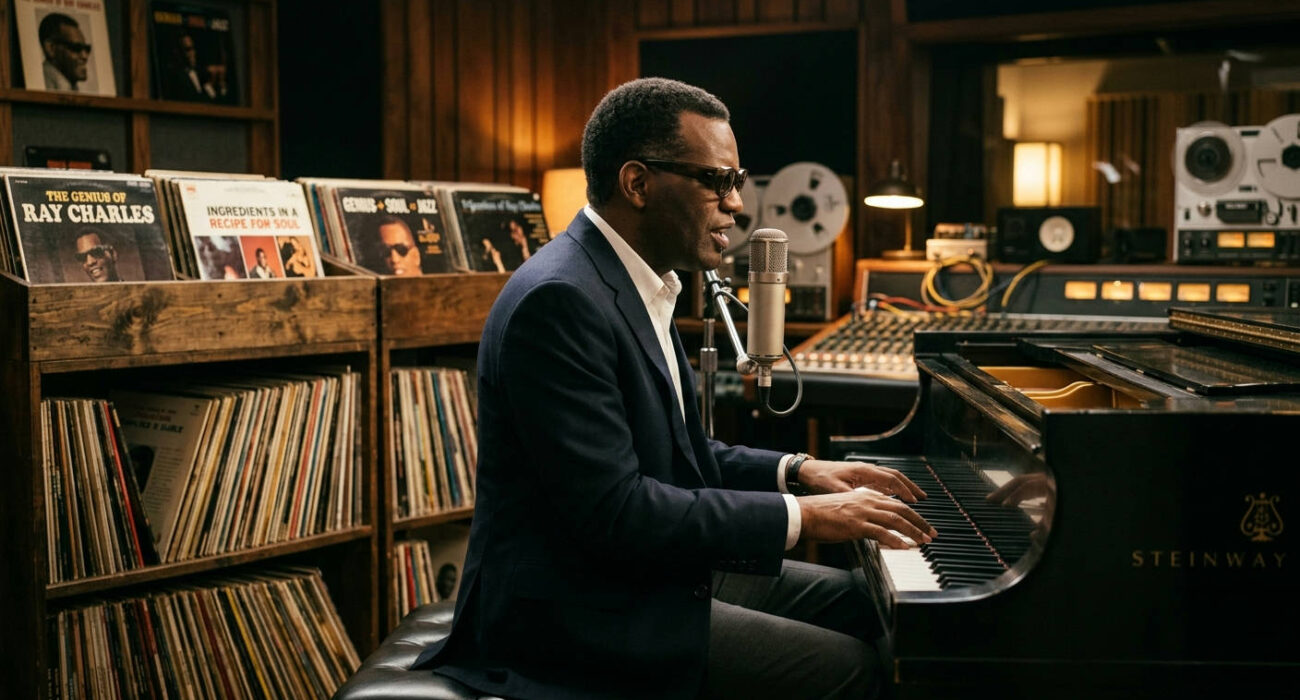
Trying to grasp the sheer scale and influence of Ray Charles’ work can feel like trying to bottle lightning. The man wasn’t just a musician; he was a musical force of nature who tore down genre walls with his bare hands. While his live performances were legendary, the true measure of his genius is etched into the grooves of the Ray Charles solo studio albums. These records are where he conducted his boldest experiments, blended styles no one thought could mix, and laid the foundation for soul music itself. This isn’t just a discography; it’s a roadmap of 20th-century popular music, dictated by one of its chief architects.
At Vinyl Gold UK, we live for these deep dives. We believe that to truly understand an artist, you have to spend time with their studio creations—the meticulously crafted statements they intended to be their legacy. Forget the greatest hits compilations for a moment. We’re going on a journey through the essential studio LPs that made Ray Charles “The Genius.”
The Atlantic Records Era: Forging Soul from Gospel and Blues
Before Ray Charles became a global superstar with complete creative control, he was at Atlantic Records, honing his craft and, in the process, inventing a new kind of music. The Ray Charles solo studio albums from this period are raw, electric, and utterly ground-breaking. This is where the magic started.
The Foundation: The Great Ray Charles (1957)
While many earlier recordings were singles collections, The Great Ray Charles was one of his first LPs conceived as a cohesive instrumental jazz album. It showcased a side of him that sometimes gets lost in the shadow of his vocal hits: Ray, the formidable pianist and arranger.
The album is a masterclass in trio and septet settings. Tracks like “The Ray” and “My Melancholy Baby” demonstrate his incredible command of the keyboard, blending cocktail jazz elegance with a hard-swinging, bluesy undercurrent. This record proved he was more than a rhythm and blues shouter; he was a sophisticated musician with deep jazz roots.
Perfecting the R&B Formula: Ray Charles (Self-Titled, 1957)
Released the same year, his self-titled LP was the polar opposite and a perfect complement. This was the collection that put his revolutionary vocal style front and centre. It features the track that truly broke the mould: “I Got a Woman.”
By taking the melody and fervour of a traditional gospel song and setting it to secular, romantic lyrics, Charles committed what many at the time considered sacrilege. What he actually did was create the blueprint for soul music. The album is packed with now-classic R&B cuts like “Hallelujah I Love Her So” and “A Fool for You,” each one simmering with a mix of spiritual ecstasy and earthly desire that was entirely new.
The Landmark Achievement: The Genius of Ray Charles (1959)
This is the album that cemented his nickname. Working with lush, sweeping string arrangements and a full big band conducted by Quincy Jones, Ray took on the Great American Songbook. It was a bold move that signalled his ambition to be seen not just as an R&B star, but as a premier interpreter of song, on par with Frank Sinatra.
His rendition of “Come Rain or Come Shine” is definitive, a perfect storm of vocal power and nuanced emotion. The album showed that the raw, gospel-infused grit of his earlier work could coexist with sophisticated, high-fidelity production. It was a declaration that his “soul” could be applied to any genre he chose.
A Deep Dive into the Seminal Ray Charles Solo Studio Albums
Certain albums in his catalogue aren’t just great; they’re cultural touchstones that fundamentally altered the direction of music. These are the records that prove why dissecting the Ray Charles solo studio albums is so essential for any serious music fan. They weren’t just collections of songs; they were revolutionary statements.
What’d I Say (1959): The Call and Response Heard ‘Round the World
Though often seen as a collection built around its massive hit single, the album What’d I Say is a crucial document of his late Atlantic period. The title track itself, a nearly seven-minute-long improvised jam, became one of the most important records in rock and roll history.
The song’s raw, suggestive call-and-response between Ray and The Raelettes was banned by radio stations, which only made it more popular. It perfectly captured the uninhibited energy of his live shows on a studio recording. The rest of the album is a tour de force of blues and R&B, from the slow-burning “You Be My Baby” to the swinging “Tell Me How Do You Feel.”
### The True Genius of the Ray Charles solo studio albums: Genius + Soul = Jazz (1961)
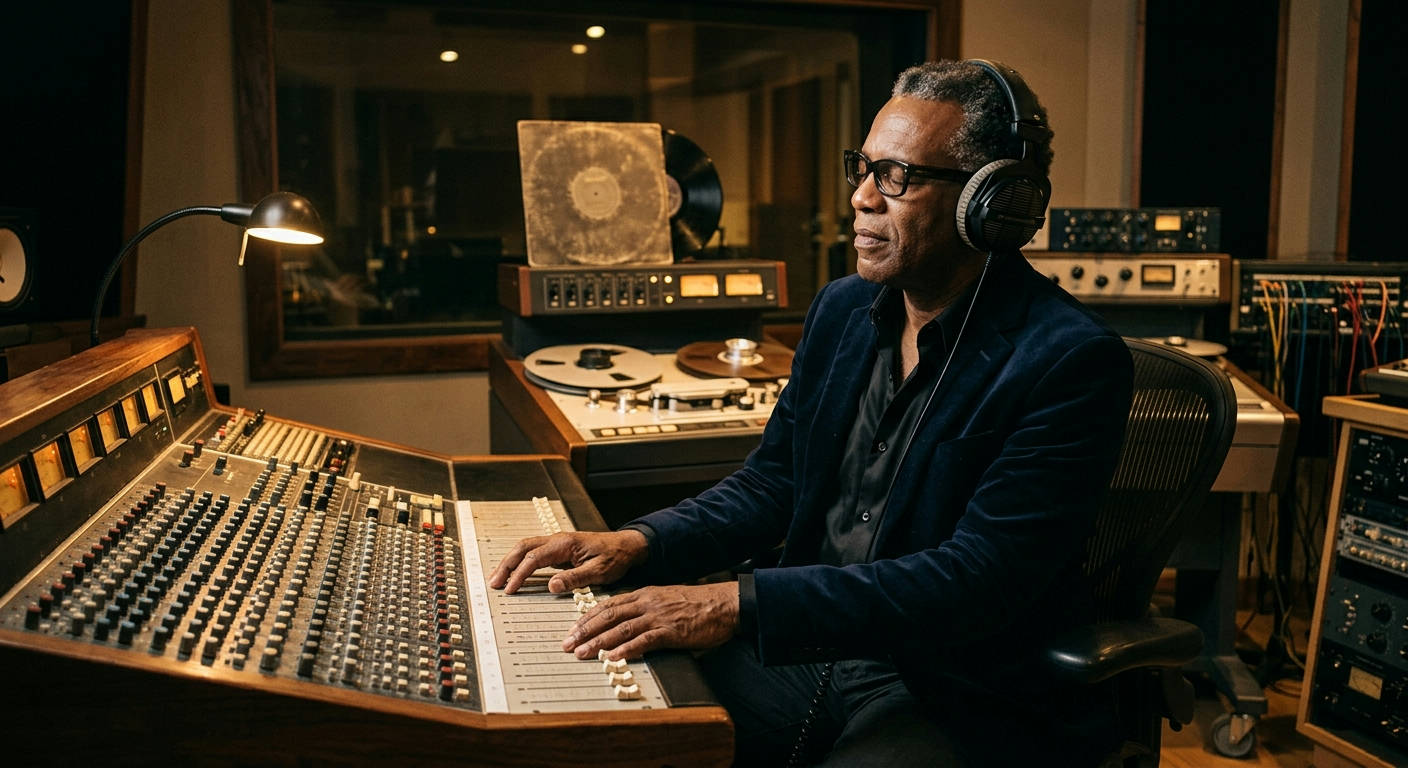
After leaving Atlantic for the unprecedented creative and financial freedom of ABC-Paramount, Ray immediately put his new resources to use. Genius + Soul = Jazz is an explosive, instrumental-heavy masterpiece that paired him with the powerhouse Count Basie Orchestra.
On this album, Ray focuses on the Hammond B-3 organ, and his playing is simply breath taking. The arrangements, handled by Quincy Jones and Ralph Burns, are tight, brassy, and full of swagger. Tracks like “One Mint Julep” became jazz standards, showcasing his ability to lead one of the world’s greatest big bands from the organ bench. It’s a testament to his pure musicianship, separate from his iconic voice.
The Underrated Masterpiece: Ingredients in a Recipe for Soul (1963)
Sandwiched between his more famous country and pop albums, Ingredients in a Recipe for Soul is often overlooked, but it’s one of his most personal and cohesive statements. This is pure, unadulterated soul music, drenched in heartbreak and blues.
His cover of “You’ll Never Walk Alone” transforms the show tune into a secular hymn of staggering emotional weight. The album feels like a return to his roots after the grand experiments of Modern Sounds, but with a newfound maturity and production polish. It’s a showcase for Ray the vocalist, the ultimate soul man pouring every ounce of experience into each line.
The ABC-Paramount Revolution: Tearing Down the Walls
The deal Ray Charles signed with ABC-Paramount in 1959 was unheard of at the time. It gave him ownership of his master tapes, a huge annual salary, and complete artistic control. He used that power not to play it safe, but to make the most audacious music of his career.
“I was born with music inside me. Music was one of my parts. Like my ribs, my kidneys, my liver, my heart. Like my blood. It was a necessity for me-like food or water.” – Ray Charles
This freedom led directly to his most commercially successful and creatively daring projects. He was no longer just an R&B artist; he was simply a Ray Charles artist, and that could mean anything.
The Game-Changer: Modern Sounds in Country and Western Music (1962)
You cannot overstate the impact of this album. In 1962, at the height of the Civil Rights Movement, one of the most successful Black artists in the world decided to record an entire album of country songs. It was a radical act that defied all industry logic and social convention.
Executives at ABC were terrified it would alienate his entire fanbase and ruin his career. Instead, it became a phenomenon. Ray took songs by icons like Hank Williams and Don Gibson and, backed by lush strings and a big band, transformed them. He revealed the universal heartbreak and soul that lay at the core of these country tunes. “I Can’t Stop Loving You” became a global #1 hit, proving that great music transcends all boundaries.
The Follow-Up: Modern Sounds in Country and Western Music, Volume Two (1962)
Released just six months later to capitalize on the stunning success of the first, Volume Two is just as essential. While it follows a similar formula, it features arguably even stronger song choices, including a heart breaking version of “You Are My Sunshine” that strips the song of all its cheerful innocence and exposes the desperate plea at its heart.
Together, these two albums didn’t just sell millions of copies; they introduced country music to a new, diverse audience and demonstrated that the lines between American musical genres were entirely artificial. They are perhaps the most important Ray Charles solo studio albums in terms of cultural impact.
The Tangerine and Crossover Years (Late 60s – 70s)
By the mid-1960s, Ray had his own record label, Tangerine Records, distributed through ABC. This gave him even more freedom to explore different sounds as pop music continued to evolve around him. This era is marked by a slicker production style and a deeper engagement with contemporary pop and soul.
Embracing Contemporary Sounds: A Portrait of Ray (1968)
This album is a perfect snapshot of where Ray was in the late 60s. He tackles pop hits of the day like “Yesterday” by The Beatles and “Eleanor Rigby,” completely reimagining them in his own image. His version of “Eleanor Rigby” is a soulful, funky workout that stands as one of the all-time great Beatles covers.
The album shows him comfortably adapting to the changing times, incorporating more electric elements and a grittier, funk-influenced rhythm section. It proved he could remain relevant and innovative two decades into his recording career.

A Social Statement: A Message from the People (1972)
As the 70s dawned, Ray turned his attention to the social and political turmoil in America. A Message from the People is one of his most powerful and underrated works. It opens with a stunning, gospel-infused rendition of “Lift Every Voice and Sing,” often called the Black national anthem.
The centerpiece is his iconic version of “America the Beautiful.” He transforms the patriotic standard into a soulful, bluesy, and deeply moving plea for the country to live up to its ideals. It’s a profound political statement made through pure musicality. This album, along with others from the decade, showcases his versatility and fits right into the rich musical tapestry of the era, which we explore in our guide to the Best Albums Of The 1970s.
The Later Career: An Elder Statesman of Sound
From the 1980s until his passing, Ray Charles settled into a role as a beloved musical icon. His studio output became more focused on collaborations and interpretations, but his genius for blending genres never faded.
The Return to Country: Friendship (1984)
Two decades after Modern Sounds, Ray returned to the country well with Friendship, an album of duets with the biggest country stars of the day. He paired up with Johnny Cash, Willie Nelson, George Jones, and Hank Williams Jr., among others.
The highlight is the smash hit “Seven Spanish Angels,” a dramatic story-song performed with Willie Nelson that became a massive crossover success. The album reaffirmed his deep connection to country music and introduced him to a new generation of fans. It’s a warm, engaging record that shows the immense respect his fellow musicians had for him.
The Final Bow: Genius Loves Company (2004)
Released just two months after his death in 2004, Genius Loves Company became the biggest commercial success of his entire career. The duets album paired him with a diverse array of contemporary stars, including Norah Jones, Elton John, Van Morrison, and James Taylor.
The recordings are intimate and heartfelt, a fitting final testament to his collaborative spirit. The album swept the 2005 Grammy Awards, including Album of the Year, providing a poignant final chapter to an unparalleled career. It’s a beautiful, bittersweet listen and a must-have for any comprehensive collection of Ray Charles solo studio albums.
Collecting Ray Charles Solo Studio Albums on Vinyl
Building a collection of Ray Charles on vinyl is one of the most rewarding things a music lover can do. His catalogue is vast, and the sound quality of original pressings, particularly from the Atlantic and ABC-Paramount years, is often astounding.
According to the Rock & Roll Hall of Fame, which inducted him in its inaugural class in 1986, Charles’ “pioneering synthesis of gospel, jazz, and R&B… provided the foundation for soul music.” Holding a first pressing of an album that created a genre is a special feeling.
Where to Start for New Collectors
If you’re just starting, don’t get overwhelmed. The best place to begin is with the absolute cornerstones of his work.
- For the Birth of Soul: Start with a good reissue of The Genius of Ray Charles. It’s a stunning hi-fi recording that sounds incredible on a quality turntable. You can search for available pressings here: Find The Genius of Ray Charles on vinyl via Amazon.
- For the Cultural Impact: You must own Modern Sounds in Country and Western Music. It’s a landmark album, and hearing those lush string arrangements on vinyl is a transformative experience. Check for Modern Sounds vinyl pressings on Amazon.
- For Raw Power: An early pressing or quality reissue of What’d I Say is essential. The raw energy of the title track just explodes off the vinyl. Search for What’d I Say on vinyl via Amazon.
Understanding Mono vs. Stereo Mixes
For his albums from the 1950s and early 1960s, you’ll find both monaural (mono) and stereo pressings. In the early days of stereo, the technology was new, and the mixes can sometimes sound awkward, with instruments hard-panned to one speaker or the other.
For albums like The Great Ray Charles and The Genius of Ray Charles, many collectors and audiophiles swear by the original mono mixes. These were the mixes that the producers and Ray himself focused on. They are often punchier, more direct, and present the music as a powerful, cohesive whole. If you have the choice, grabbing a clean mono pressing of his Atlantic-era work is highly recommended.
The journey through the Ray Charles solo studio albums is a deep and fulfilling one. It’s an exploration of an artist who was constantly pushing, innovating, and refusing to be defined. From the raw R&B that birthed soul music to the genre-shattering country experiments and sophisticated jazz excursions, his studio recordings are a treasure trove. They are the definitive documents of a true American genius, and they belong in every serious record collection. Spin one today and hear for yourself how one man changed music forever.