
Hank Williams didn’t just record songs — he rewired the DNA of American music. In a career that lasted barely a decade, he created a body of work that still echoes through every honky-tonk, every heartbreak ballad, and every dusty country road playlist today. His voice carried the full weight of human suffering and joy, and his pen produced some of the most enduring lines in popular music history. This discography review walks you through his albums — from his debut LP to the essential posthumous collections — so you can understand not just what he recorded, but why it still matters.
What You Need to Know First
How did Hank Williams die? Hank Williams died of heart failure on New Year’s Day, 1953, aged just 29. He was travelling in the back of his Cadillac to a show in Canton, Ohio, when he passed away. His driver discovered him somewhere along the road, already gone. The cause was a combination of a congenital heart defect and years of heavy drinking and prescription drug use. His death shocked the country music world, arriving just as his star was at its absolute brightest. He left behind a catalogue that would only grow more influential with time.
What was Hank Williams’ first #1 hit? “Lovesick Blues” became Hank Williams’ first chart-topper in 1949, spending an extraordinary 16 weeks at number one on the Billboard country charts. The song was not even his own composition — he adapted it from an earlier pop tune — but his performance made it entirely his own. The yodelling vocal break and raw emotional delivery were unlike anything country radio had heard. It launched him into stardom and secured his place on the Grand Ole Opry stage, where he received an unprecedented seven encores on his debut performance.
Who is “Luke the Drifter”? Luke the Drifter was the pseudonym Hank Williams used for his spoken-word, moralistic, and religious recordings — a separate artistic identity he kept distinct from his commercial country output. He used this alias partly to protect his honky-tonk image and partly because these reflective, sermon-like pieces occupied genuinely different emotional and spiritual territory. Luke the Drifter recordings deal in themes of redemption, poverty, loneliness, and moral conscience. They reveal a philosophical and deeply religious side of the man that his dance-floor hits rarely showed.
How many albums did Hank Williams record? Only two studio albums were released during Hank Williams’ lifetime — Hank Williams Sings (1951) and Moanin’ the Blues (1952). The LP format was still relatively new, and most of his music reached audiences through singles and radio. After his death, however, dozens of posthumous collections, compilations, and archival releases have ensured his music remains in constant circulation. Some of the most important releases came years or even decades after 1953, drawing on demos, live recordings, and radio transcripts.



The Albums: A Complete Review
Hank Williams Sings (1951)
| Detail | Info |
|---|---|
| Released | 1951 |
| Label | MGM Records |
| Format | 10-inch LP |
Hank Williams delivered his debut LP at a time when the album format was still finding its footing in country music. Hank Williams Sings functions largely as a curated snapshot of his biggest MGM singles, including the swaggering “Move It On Over” — a track that many rock historians cite as a direct ancestor of early rock and roll. Furthermore, the record captures him at a moment of genuine commercial momentum. Each track crackles with the stripped-back simplicity that became his signature: acoustic guitar, fiddle, steel guitar, and that unmistakable voice. Additionally, the album introduced mainstream audiences to the idea that country music could carry genuine literary weight. Hank Williams was not writing novelty songs — he was documenting working-class American life with honesty and precision. This debut remains essential listening for anyone tracing the roots of modern country. Consequently, it stands as a foundational document of the genre. For newcomers, it is the ideal entry point into his studio work.
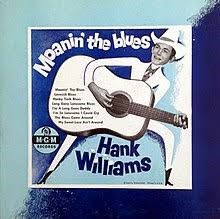
Moanin’ the Blues (1952)
| Detail | Info |
|---|---|
| Released | 1952 |
| Label | MGM Records |
| Format | 10-inch LP |
Moanin’ the Blues represents Hank Williams at his most emotionally raw and musically direct. The title track alone justifies the album’s legendary reputation — a performance of such ragged, aching honesty that it practically invented the template for the “drinking song” as a vehicle for existential despair. Moreover, the honky-tonk sound here is fully formed: the weeping steel guitar, the shuffle rhythm, the voice pitched somewhere between a cry and a confession. The album digs deeper into the blues tradition than his debut, revealing the African-American musical influences that shaped Hank Williams profoundly but rarely received acknowledgement at the time. Consequently, this record feels bolder and more searching than Hank Williams Sings. Beyond its raw sound, the album demonstrates his remarkable range — tenderness one moment, desolation the next. Additionally, its production remains deliberately unvarnished. No orchestral polish softens the edges here. For purists, Moanin’ the Blues is often regarded as his definitive studio statement.
Beyond the Sunset (1953) — The Luke the Drifter Collection
| Detail | Info |
|---|---|
| Released | 1953 |
| Label | MGM Records |
| Note | Released posthumously |
Released shortly after his death, Beyond the Sunset gathers the spoken-word recordings Hank Williams made under his Luke the Drifter alias. This album occupies entirely different emotional territory from his country hits. Rather than dance rhythms and heartbreak, it offers moral parables, religious meditations, and compassionate social observations. Tracks like “The Funeral” and “Too Many Parties and Too Many Pals” read almost like sermons set to gentle musical backdrops. Furthermore, they reveal a man who thought seriously about sin, redemption, and human frailty — themes he clearly drew from his own turbulent life. Hank Williams used the Luke the Drifter persona to explore ideas that would have seemed out of place on his regular releases. Consequently, this collection functions as a portrait of his inner life. Additionally, it complicates any attempt to reduce him to a simple honky-tonk archetype. For listeners who know only his radio hits, Beyond the Sunset offers a genuinely surprising and moving alternative dimension.
Essential Posthumous Albums
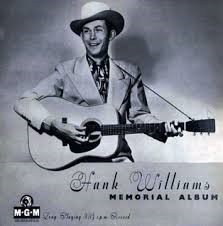
Memorial Album (1953)
| Detail | Info |
|---|---|
| Released | 1953 |
| Label | MGM Records |
| Significance | First major posthumous release |
Memorial Album arrived within weeks of his death and instantly became one of the fastest-selling country records of its era. MGM assembled it rapidly, drawing on existing singles and recordings. Nevertheless, it captures something essential about the cultural moment — the shock and grief of a music world that had just lost its most vital voice. Hank Williams was barely cold when this record hit shelves, yet it already felt like a document of something irreplaceable. Moreover, the track selection leans into his most emotionally direct material, amplifying the sense of loss listeners were already feeling. The album also established a commercial template for posthumous releases that the industry would follow for decades. Additionally, it introduced his music to listeners who had not encountered him during his lifetime. Consequently, Memorial Album carries both historical and emotional weight. Understanding his legacy properly means understanding the immediate, near-desperate response this album represented. Hank Williams had become, almost overnight, a myth.
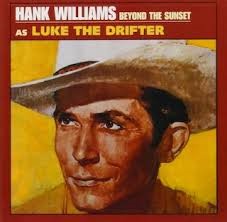
Hank Williams as Luke the Drifter (1954)
| Detail | Info |
|---|---|
| Released | 1954 |
| Label | MGM Records |
| Focus | Complete pseudonymous recordings |
This compilation gathers every recording Hank Williams made under the Luke the Drifter name into a single, coherent listen. Where Beyond the Sunset offers a selection, this album provides the full picture — and that completeness changes how you hear the persona. Taken together, the Luke the Drifter recordings reveal a consistent moral worldview: one preoccupied with humility, the dangers of pride, and the redemptive power of suffering. Furthermore, the spoken-word format allows Hank Williams to slow down entirely, dropping the rhythmic propulsion of his country tracks in favour of quiet, deliberate reflection. Tracks like “Men with Broken Hearts” carry a raw philosophical weight that still resonates. Additionally, the album highlights his gift for plain language — he never reached for complexity when simplicity would cut deeper. Consequently, this collection is essential for any serious student of his work. Moreover, it demonstrates that his artistry extended well beyond the three-minute country single. This is Hank Williams as thinker, preacher, and moral witness.
The Unforgettable Hank Williams (1959)
| Detail | Info |
|---|---|
| Released | 1959 |
| Label | MGM Records |
| Controversy | Overdubbed orchestral strings added |
The Unforgettable Hank Williams arrived in 1959 with a controversial twist: MGM had overdubbed several recordings with orchestral strings, smoothing out the original rough edges of his sound. For casual listeners, the result is undeniably lush and accessible. For purists, however, it represents a significant distortion of his artistic intent. Hank Williams recorded in a deliberately spare, uncluttered style — the honky-tonk sound depended on space and rawness. Consequently, the added strings feel, to many ears, like a kind of historical revisionism. Nevertheless, the album sold exceptionally well and introduced him to audiences who found his original recordings too stark. Additionally, it reflects the late-1950s industry habit of “sweetening” country recordings to compete with pop. Moreover, the underlying performances remain extraordinary — no amount of orchestration can fully obscure that voice. Hank Williams transcends the production choices made around him. Approach this album with curiosity rather than reverence, and treat it as a fascinating, if flawed, cultural artefact.
40 Greatest Hits (1978)
| Detail | Info |
|---|---|
| Released | 1978 |
| Label | Polydor/MGM |
| Status | Gold Standard compilation |
Decades after his death, 40 Greatest Hits arrived and promptly became the definitive single-volume collection of Hank Williams‘ work. If a listener owns only one record, this is the one. The track selection covers every essential phase of his career: the early swagger of “Move It On Over,” the heartbreak of “I’m So Lonesome I Could Cry,” the spiritual yearning of “I Saw the Light,” and the bitter wit of “Your Cheatin’ Heart.” Furthermore, the sequencing is thoughtful, guiding the listener through his emotional range without feeling like a random grab-bag. Additionally, the audio quality represents a significant upgrade over earlier compilations. Consequently, 40 Greatest Hits functions both as an introduction and as a reliable reference point for experienced listeners. Hank Williams receives exactly the presentation his catalogue deserves here — comprehensive, respectful, and deeply listenable. Moreover, its enduring sales figures demonstrate that new generations continue to discover and embrace his music. This is the place to start, and often the place to return.
The Complete Hank Williams (1998)
| Detail | Info |
|---|---|
| Released | 1998 |
| Label | Mercury/Universal |
| Format | 10-disc box set |
The Complete Hank Williams is exactly what its title promises: every commercial recording, demo, radio performance, and surviving transcript, gathered across ten discs. This is an archival project as much as a listening experience, and its audience is the committed enthusiast rather than the casual fan. Nevertheless, it rewards patience extraordinarily. Hank Williams emerges across these discs as a more complex, restless, and experimental artist than the greatest-hits narrative suggests. Moreover, the demos and radio recordings reveal his working process — how songs evolved, how he interacted with his band, and how his voice changed over the years. Additionally, the set includes recordings that never received wide release, offering genuine discoveries even for long-time devotees. Consequently, The Complete Hank Williams functions as both a monument and a research tool. The liner notes are extensive and scholarly. Hank Williams left behind a far richer and stranger archive than most listeners realise. For the avid collector, this box set is not optional — it is essential.
Why Hank Williams Still Matters
Hank Williams lived fast, recorded prolifically, and died young — and yet the sheer volume and quality of what he left behind continues to astound. His influence runs through artists as varied as Bob Dylan, Kris Kristofferson, Beck, and Beyoncé. The emotional directness he brought to country music — the refusal to dress up pain in polite language — remains the genre’s most durable and powerful inheritance. His albums, taken together, document not just a career but an entire way of experiencing and articulating the world. Whether you begin with the stripped-back honesty of Moanin’ the Blues, the moral depth of the Luke the Drifter recordings, or the sweep of 40 Greatest Hits, you will find an artist who had something true and urgent to say. Hank Williams didn’t invent country music — but he gave it its soul, and that soul has never stopped singing.