
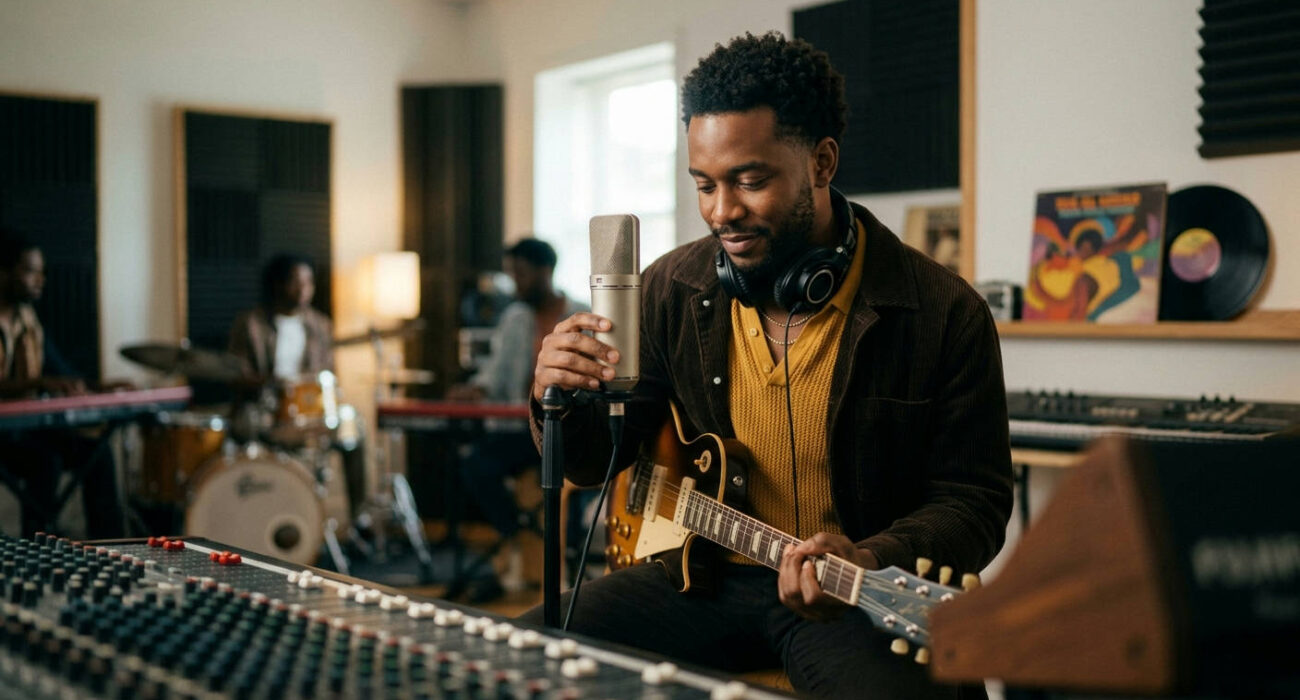
You can’t talk about R&B in 2026 without talking about Marvin Gaye. It’s that simple. His ghost isn’t just haunting the genre; it’s actively writing the sheet music for its biggest stars. To trace the DNA of today’s sound—from the quiet storm confessionals of Daniel Caesar to the political fire of Childish Gambino—is to map the sprawling, complex, and utterly essential Marvin Gaye influence on modern R&B. He’s the source code, the spiritual godfather, and the benchmark against which every smooth falsetto and socially conscious lyric is measured.
Decades after his peak, Gaye’s innovations in production, songwriting, and vocal performance are not just revered; they are actively replicated, remixed, and reinterpreted by a new generation. He provided the blueprint for the artist as a vulnerable soul, a political activist, and a sonic pioneer, all at once.
The Sonic Architect: How Marvin Gaye’s Production Echoes in 2026
Marvin Gaye didn’t just sing on his records; he built worlds with sound. His later work, in particular, moved beyond the tight formulas of early Motown and into something more orchestral, atmospheric, and deeply intentional. This approach to production is a cornerstone of modern R&B.
Layered Vocals and the Modern R&B Choir
Long before digital audio workstations made it easy, Gaye was a master of vocal layering. He would multi-track his own voice, creating lush, intricate harmonies that acted as a one-man choir. He wasn’t just singing lead; he was his own background singers, his own ad-lib man, his own counterpoint.
This technique is everywhere today. Listen to the dense, ethereal vocal arrangements on a Frank Ocean or The Weeknd track. When they build a chorus not with synths, but with a dozen interwoven tracks of their own voice, they are working directly from the Marvin Gaye playbook. He taught R&B that the human voice could be an entire orchestra in itself.
The Groove as a Narrative Tool
On his magnum opus, What’s Going On, the instrumentation is as crucial as the lyrics. The iconic bassline from James Jamerson, the mournful sax solos, the gentle patter of congas—they aren’t just background music. They are characters in the story, expressing the confusion, sorrow, and hope of the era. The groove itself had a message.
Modern artists like H.E.R. and SZA have absorbed this lesson completely. Their production is rich with detail and texture, where a lazy guitar lick or a syncopated drum pattern can convey an emotion just as powerfully as a sung lyric. The beat isn’t just for dancing; it’s for feeling. That all started with Marvin.
From Motown Polish to Raw Funk
Gaye’s career is a study in evolution. He started within the polished, pop-oriented “Motown Sound,” a world he shared with contemporaries like The Four Tops, who helped define that classic era. But he eventually broke free, embracing the grittier, sweatier sounds of funk and disco in tracks like “Got to Give It Up.”
This duality gives today’s artists a rich palette to draw from. An artist can channel the sophisticated “uptown” soul of his early years on one track, then dive into the raw, percussive funk of his later period on the next. He proved that an R&B artist could be both smooth and raw, polished and primal.
The Unfiltered Voice: Lyrical Honesty and Vulnerability
Before Marvin Gaye, mainstream R&B lyrics often stuck to safe, universal themes of love and dance. Gaye shattered that mould, using his platform to delve into topics that were deeply personal, politically charged, and unflinchingly honest.
Conscious Soul and Political Commentary
The release of What’s Going On in 1971 was a seismic event. It was a concept album that tackled the Vietnam War, poverty, environmental destruction, and social injustice. Motown founder Berry Gordy famously hated it, calling it the worst thing he’d ever heard. The public disagreed.
“To be an artist is to be a witness to your time in history.”
This quote, often attributed in spirit to the thinkers of his era, perfectly captures Gaye’s mission with that album. He transformed the R&B single into a protest song and the album into a political statement. The lineage from “What’s Going On” to Childish Gambino’s “This Is America” or Kendrick Lamar’s R&B-infused album To Pimp a Butterfly is direct and undeniable. Gaye gave R&B a conscience.
The Confessional: Love, Lust, and Heartbreak
If What’s Going On was his public statement, 1978’s Here, My Dear was his private diary, set to music. Recorded to pay for his divorce settlement, the album is a brutally honest, song-by-song account of the dissolution of his marriage. It’s painful, petty, sad, and breathtakingly raw.
This level of radical vulnerability is now a staple of the genre. When Drake airs his romantic grievances over a sparse beat, or when Summer Walker details her insecurities with aching clarity, they are channelling the confessional spirit of Here, My Dear. Marvin proved that heartbreak wasn’t just a topic for a sad song; it could be the subject of an entire artistic thesis.
Spiritual and Sensual Duality
Marvin Gaye was the son of a preacher, and that spiritual background never left him. Yet, he was also one of music’s most potent sensualists. He famously blended these two worlds, most notably in “Sexual Healing,” a song that frames physical intimacy as a form of spiritual redemption.
This fusion of the sacred and the profane is a powerful theme in modern R&B. Artists like Daniel Caesar and Frank Ocean consistently explore the intersections of love, sex, and spirituality in their work, treating them not as opposites, but as interconnected facets of the human experience. Gaye showed them how to sing from the bedroom and the pulpit in the same breath.
A Definitive Look at the Marvin Gaye Influence on Modern R&B Vocal Styles
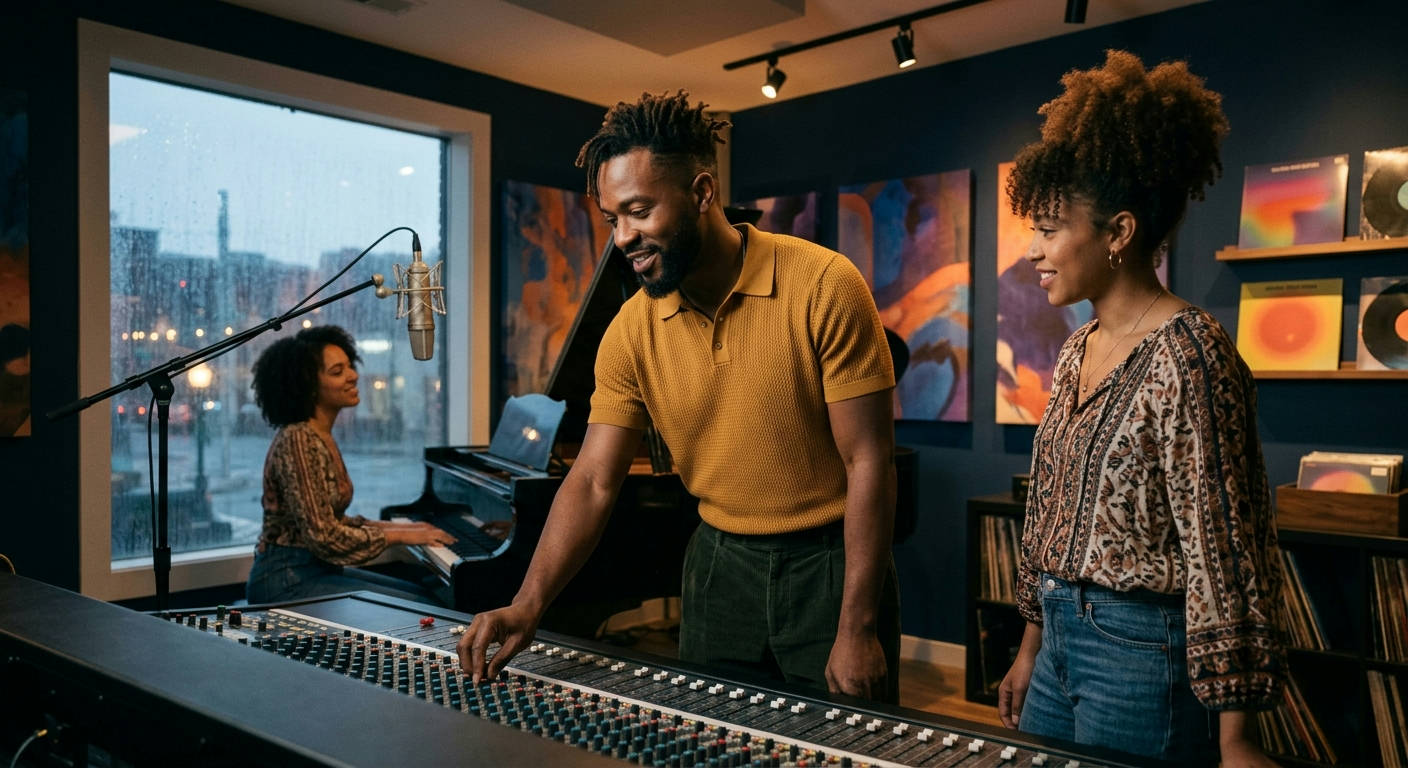
You can often identify a singer’s influences just by listening to their phrasing, tone, and technique. For a huge swath of modern R&B and soul singers, the primary influence is, without a doubt, Marvin Gaye. His vocal toolkit was so diverse and expressive that different artists have built entire careers by mastering just one piece of it.
The Smooth Falsetto and Its Descendants
Marvin Gaye’s falsetto was a thing of beauty—effortless, angelic, and capable of conveying incredible tenderness and yearning. It wasn’t just a high note; it was an entire emotional vocabulary. You can hear its echo in the bedroom soul of Maxwell, the genre-bending work of Prince, and, more recently, the signature sound of The Weeknd.
When Abel Tesfaye (The Weeknd) glides into his upper register, he’s using a tool perfected by Gaye. It has become a signifier in R&B for seduction, vulnerability, and intimacy. That smooth, floating sound is one of Gaye’s most enduring vocal gifts to the genre.
Raspy Power and Melismatic Freedom
But to only focus on his smoothness is to miss the other side of his voice: the raw, gospel-trained power. Gaye could transition from a silky croon to a gritty, raspy shout in a heartbeat, injecting his performances with a sense of passionate urgency. This technique, born from the church, gave his singing a powerful emotional weight.
Furthermore, his use of melisma—singing multiple notes on a single syllable—was masterful. He used vocal runs not just for showmanship, but to add emotional texture. Modern vocal powerhouses like Usher and Chris Brown, known for their intricate runs and powerful delivery, owe a significant debt to the dynamic range and gospel-infused fire that Gaye brought to mainstream R&B.
Conversational Delivery: The Singer as Storyteller
One of Gaye’s most subtle yet influential techniques was his conversational phrasing. He often sang with a relaxed, almost behind-the-beat cadence that made it feel like he was having a direct, intimate conversation with the listener. It wasn’t about perfect, metronomic timing; it was about conveying a feeling with natural, human rhythm.
This style is foundational to the subgenre of trap-soul. Artists like Bryson Tiller and 6LACK, with their hybrid talk-singing delivery, are modern masters of this conversational approach. They create a sense of intimacy and immediacy that pulls the listener right into their stories, a technique Gaye pioneered decades ago.
The Concept Album as an R&B Staple
In the 1960s and early 1970s, the R&B world was dominated by hit singles. The album was often just a collection of songs, with a couple of hits surrounded by filler. Marvin Gaye, taking cues from rock and jazz, helped pioneer the idea of the R&B concept album—a cohesive work of art where the whole was greater than the sum of its parts.
What’s Going On: The First Soul Opus
What’s Going On is more than just an album; it’s a 35-minute, uninterrupted suite of music. The songs flow seamlessly into one another, creating a continuous narrative from the perspective of a Vietnam veteran returning to a country in turmoil. This structure was revolutionary for soul music.
It established that an R&B album could be a profound, album-length statement, on par with any literary work or film. Its ambition and thematic unity make it a titan of the format, and it is rightly celebrated as one of the Best Albums Of The 1970s. Gaye raised the bar for what an R&B album could be.
Here, My Dear: The Divorce Album as Art
If What’s Going On was a public protest, Here, My Dear was a public vivisection of a private life. The double album chronicles his entire relationship and bitter divorce from Anna Gordy Gaye. The songs follow a narrative arc, from courtship to collapse to bitter aftermath.
It’s a difficult but essential listen, and it created a template for the autobiographical “breakup album.” You can see its DNA in landmark projects like Beyoncé’s Lemonade, SZA’s Ctrl, and Usher’s Confessions. These artists use the album format to tell a deeply personal, chapter-by-chapter story, a form of musical therapy that Gaye made legitimate.
The Legacy of Thematic Cohesion in 2026 R&B
Thanks in large part to Gaye’s pioneering work, the concept album is now a celebrated tradition in R&B. Artists are expected to deliver more than just a playlist of potential singles. The Weeknd’s after-dark cinematic universe, Janelle Monáe’s Afrofuturist sagas—these ambitious, world-building projects are a direct extension of the artistic freedom Gaye fought for. He showed that an album could be a novel, a film, or a political treatise.
Deconstructing Specific Tracks: Modern Anthems with a Gaye Ghost
The Marvin Gaye influence on modern R&B isn’t always a broad, abstract concept. Sometimes, it’s so specific you can hear the ghost of one of his songs directly inside a modern hit. By breaking down a few key examples from recent years, we can see his sonic fingerprints all over the crime scene.
The Weeknd’s “Save Your Tears” and the Ghost of “Got to Give It Up”
Listen to the four-on-the-floor beat, the party-chatter atmosphere in the background, and the sense of joyful melancholy in The Weeknd’s 2020s hits. The spirit of Gaye’s late-70s disco-funk period, particularly the infectious energy of “Got to Give It Up,” is undeniable.
Gaye’s track wasn’t just a beat; it captured a feeling—the sound of a crowded room, the pressure to let loose, the communal joy of the dance floor. The Weeknd has masterfully updated this for the 21st century, blending that live-party feel with modern synth-pop production, but the foundational groove is pure Marvin.
Frank Ocean’s “Thinkin Bout You” and the Falsetto’s Pain
The emotional centrepiece of Frank Ocean’s “Thinkin Bout You” is his soaring, vulnerable falsetto. When he sings, “Or do you not think so far ahead? / ‘Cause I been thinkin’ ’bout forever,” the choice to use that specific vocal texture is crucial. It’s a sound loaded with history.
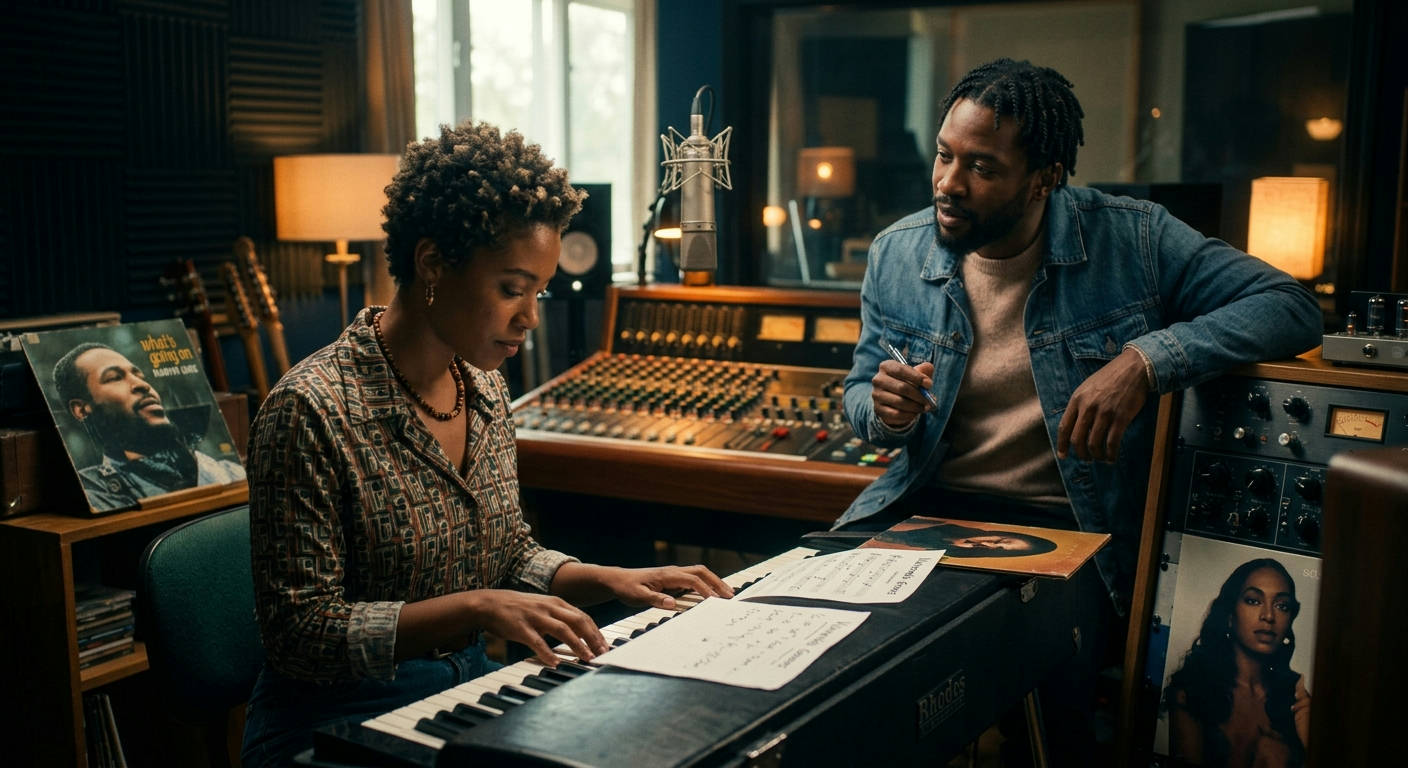
It’s the same tender, almost fragile falsetto Marvin Gaye used on tracks like “Distant Lover.” It’s a tool for expressing a love so deep it’s painful, a yearning that feels almost too private to share. Ocean, a true music historian, uses this Gaye-ism not as a gimmick, but as an emotionally resonant tool to connect with a deep legacy of soul-baring.
Childish Gambino’s “Redbone” and the Funk-Soul Revival
“Redbone” is perhaps the most overt modern homage to the funk-soul era of the 1970s. From the iconic, slinky bassline to the warm Rhodes piano and Donald Glover’s heavily-filtered falsetto, the track practically sweats the influence of artists like Bootsy Collins, Sly Stone, and, of course, Marvin Gaye.
The specific combination of raw funk instrumentation with a smooth, high-register vocal is a direct nod to Gaye’s experimental mid-70s period on albums like I Want You. It’s a perfect example of how modern artists can take a vintage sound and make it feel urgent and new in 2026.
The Business of Soul: Gaye’s Fight for Artistic Control
Marvin Gaye’s influence extends beyond the recording studio. His career-defining battle for creative freedom fundamentally changed the power dynamics between R&B artists and their labels, setting a precedent that benefits artists to this day.
Battling the Motown Machine
The story is legendary. After the massive success of his duet work and “I Heard It Through the Grapevine,” Gaye wanted to make a political album. Berry Gordy and the Motown machine, a hit factory built on apolitical pop, refused. Gaye held his ground, refusing to record anything else until they released “What’s Going On.”
He eventually won, and the album’s monumental success proved him right. As detailed by sources like the Rock & Roll Hall of Fame, this standoff was a critical moment. It was a Black artist demanding the right to speak his truth, control his narrative, and define his own art within a system designed for commercial conformity.
### The Enduring Marvin Gaye Influence on Modern R&B Artists as Entrepreneurs
That battle for autonomy echoes loudly in the 2020s. When artists like Frank Ocean masterfully exit their major label contracts to release music independently, or when Chance the Rapper builds a massive career without ever signing to a major, they are walking a path that Gaye helped clear.
“Marvin Gaye was the first to really show that you could be a part of a system but still be your own man. He fought for his art, and that gave the rest of us the courage to do the same.”
His struggle legitimized the idea of the R&B artist as an auteur with a singular vision, not just an interchangeable voice for hire. He demonstrated that commercial success and artistic integrity did not have to be mutually exclusive. This mindset is now the default for any serious artist in the genre.
Owning the Narrative: From Musician to Auteur
In his later career, Gaye took on the roles of producer, songwriter, and arranger for his own projects. He wasn’t just performing the music; he was creating it from the ground up. He controlled the entire artistic statement.
This is the model for the modern R&B superstar. Look at artists like Beyoncé or The Weeknd—they are executive producers of their own careers, meticulously controlling every aspect of their work, from the music videos to the stage design to the final mix. They are auteurs, not just singers, a standard of creative control that Marvin Gaye fought and won for them decades ago.
Acquiring the Sound: Building Your Marvin Gaye Vinyl Collection
Reading about Marvin Gaye’s influence is one thing. Hearing it for yourself, especially on the warm, rich medium of vinyl, is another entirely. At Vinyl Gold UK, we believe these records are essential historical documents. Here’s where to start.
The Essential Starting Point: What’s Going On
This is the non-negotiable cornerstone of any serious record collection. Hearing the seamless transitions and lush orchestration on a quality turntable is a revelatory experience. The depth of the bass, the clarity of the percussion—it’s how this masterpiece was meant to be heard. It’s an album you don’t just listen to; you absorb it.
Get your foundational copy here: Find Marvin Gaye’s What’s Going On on Vinyl via Amazon
For the Lover: Let’s Get It On and I Want You
To understand Gaye’s impact on romantic R&B and the “quiet storm” radio format, these two albums are essential. Let’s Get It On is the iconic statement of sensuality, a perfect record from start to finish. I Want You, with its layered, almost hypnotic grooves, is a more complex and atmospheric exploration of desire.
Add these sensual classics to your crate: Find Marvin Gaye’s Let’s Get It On on Vinyl via Amazon
The Deep Cut: Here, My Dear
This is not a party record. This is a complex, emotionally draining, and artistically brilliant album for the serious listener. For anyone who appreciates the raw, confessional song-writing of modern R&B, Here, My Dear is the sacred text. Owning it on vinyl is like owning a piece of brutally honest art.
For the dedicated collector: Find Marvin Gaye’s Here, My Dear on Vinyl via Amazon
Marvin Gaye is more than just an oldies artist. He is a living, breathing force in music. The Marvin Gaye influence on modern R&B is not a matter of debate; it’s a foundational truth of the genre. His work provides the emotional, political, and sonic vocabulary that artists in 2026 continue to use to tell their own stories. From the way they sing and produce to the way they conduct their careers, the Prince of Soul’s reign is far from over. His music is a ghost in the machine, a whisper in the harmony, and the enduring soul of modern R&B.