
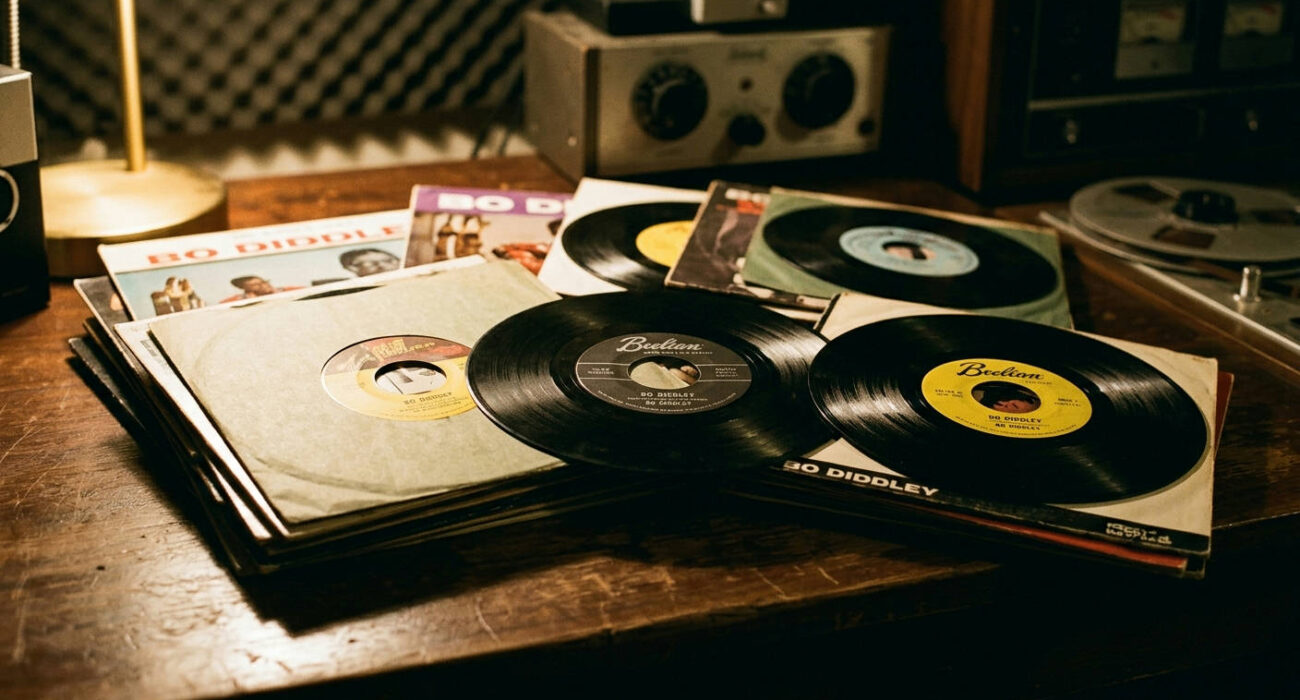
Trying to pin down the complete list of Bo Diddley studio albums release dates can feel like chasing a ghost. With countless compilations, live albums, and reissues clouding the picture, getting a clear timeline of his official studio output is a must for any serious collector. At Vinyl Gold UK, we cut through the noise to give you the definitive guide, helping you track the evolution of the man who put the “rock” into rock and roll. This guide serves as a comprehensive reference for the Bo Diddley studio albums release dates, ensuring you have every detail at your fingertips.
For those keen on the historical significance, knowing the Bo Diddley studio albums release dates is essential for understanding the trajectory of rock music.
The Foundational Chess Records Era: 1958-1960
Bo Diddley didn’t just play music; he built it from the ground up with a rhythm that would shake the world. His early years at Chess Records weren’t about crafting cohesive, thematic LPs in the modern sense. They were about capturing lightning in a bottle, usually by packaging his ground breaking singles into a 12-inch format.
Bo Diddley (1958)
Released in September 1958, this self-titled debut is less an album and more a greatest hits collection of his first three years of recording. It’s a raw, explosive package containing “I’m a Man,” “Bo Diddley,” and “Pretty Thing.” This is the ground zero of his sound, and an original mono pressing is a holy grail for collectors.
Go Bo Diddley (1959)
Following up a year later in July 1959, Go Bo Diddley continued the formula. It collected more killer singles like “Say Man” and “Crackin’ Up.” The album solidified his signature “Bo Diddley Beat,” a syncopated rhythm that was unlike anything else on the airwaves.
Have Guitar Will Travel (1960)
Hitting shelves in January 1960, this record is famous for its iconic cover featuring Bo on a scooter with his custom guitar. Musically, it showcases a tighter, more confident artist. Tracks like “Cops and Robbers” prove his storytelling was just as sharp as his rhythm.
In the Spotlight (1960)
Released in October 1960, this was his second studio album of that year, a testament to his prolific output. It features the incredible “Road Runner,” a track that would be endlessly covered by British Invasion bands just a few years later.
A Complete Guide to Bo Diddley Studio Albums Release Dates
Keeping track of the Bo Diddley studio albums release dates can enhance your appreciation of his music and its impact over the decades.
The early 1960s saw Diddley churning out records at an astonishing pace. He was experimenting, collaborating, and cementing his status as a true original. This period is a goldmine for vinyl hunters, but knowing the precise Bo Diddley studio albums release dates is crucial to understanding his creative arc.
Understanding the Bo Diddley studio albums release dates is vital for any music aficionado wanting to explore the depths of his artistry.
The Early 1960s Prolific Run
- Bo Diddley Is a Gunslinger (November 1960): His third album in a single year. The Wild West theme was a gimmick, but the music, especially the title track, was pure, unfiltered Bo Diddley.
- Bo Diddley’s a Twister (January 1962): Capitalizing on the “Twist” dance craze, this record shows Chess Records trying to market their unique artist to a mainstream audience. It still contains gems like “Detour.”
- Bo Diddley (August 1962): Another self-titled album, which can cause confusion. This LP is essential for “You Can’t Judge a Book by the Cover,” a Willie Dixon-penned classic that became one of Bo’s signature songs.
- Bo Diddley & Company (January 1963): This album is notable for the inclusion of female guitarist Peggy Jones (aka Lady Bo), whose contributions were vital to his sound during this period.
- Surfin’ with Bo Diddley (June 1963): A clear attempt to ride the surf rock wave, this album is often seen as a novelty. Listen closer, though, and you’ll hear Bo’s unmistakable guitar tone bending the genre to his will.
The Mid-to-Late ’60s: Blues, Soul, and Supergroups
As the 1960s wore on, Bo Diddley’s output became more experimental. He collaborated with his contemporaries and explored new sonic textures, proving his versatility beyond his signature beat.
- Two Great Guitars (with Chuck Berry) (August 1964): A legendary summit between two of Chess Records’ biggest stars. Side one is Chuck, side two is Bo. It’s a must-have for any fan of rock and roll’s architects.
- Hey! Good Lookin’ (May 1965): Here, Bo started to lean into a more soul-inflected sound, a sign of the changing times. The production is a bit slicker, but the raw energy is still there.
- 500% More Man (November 1965): The title says it all. This is a hard-driving, confident record that feels like a powerful restatement of his core musical identity.
- The Originator (December 1966): Another aptly named album, this collection served as a reminder of his foundational role in popular music, even as new sounds were emerging.
- Super Blues (with Muddy Waters & Little Walter) (June 1967): A blues supergroup session that is as gritty and essential as it sounds. Hearing these three titans trade licks is a masterclass in American music.
- Super Super Blues Band (with Muddy Waters & Howlin’ Wolf) (January 1968): A follow-up to the Super Blues concept, this time swapping Little Walter for the ferocious Howlin’ Wolf. The results are electrifying.
Beyond Chess: The Later Years and Label Changes
In 1970, Bo Diddley left Checker Records (a Chess subsidiary) and entered a new, often overlooked, phase of his career. His work in the 70s is ripe for rediscovery, showcasing an artist refusing to be a nostalgia act.
The Black Gladiator (1970): A Psychedelic Funk Masterpiece
Released in May 1970 on Cadet Records, The Black Gladiator is a jaw-dropping departure. Drenched in psychedelic soul and raw funk, it features Bo trading his signature guitar licks for heavy, fuzzed-out riffs.
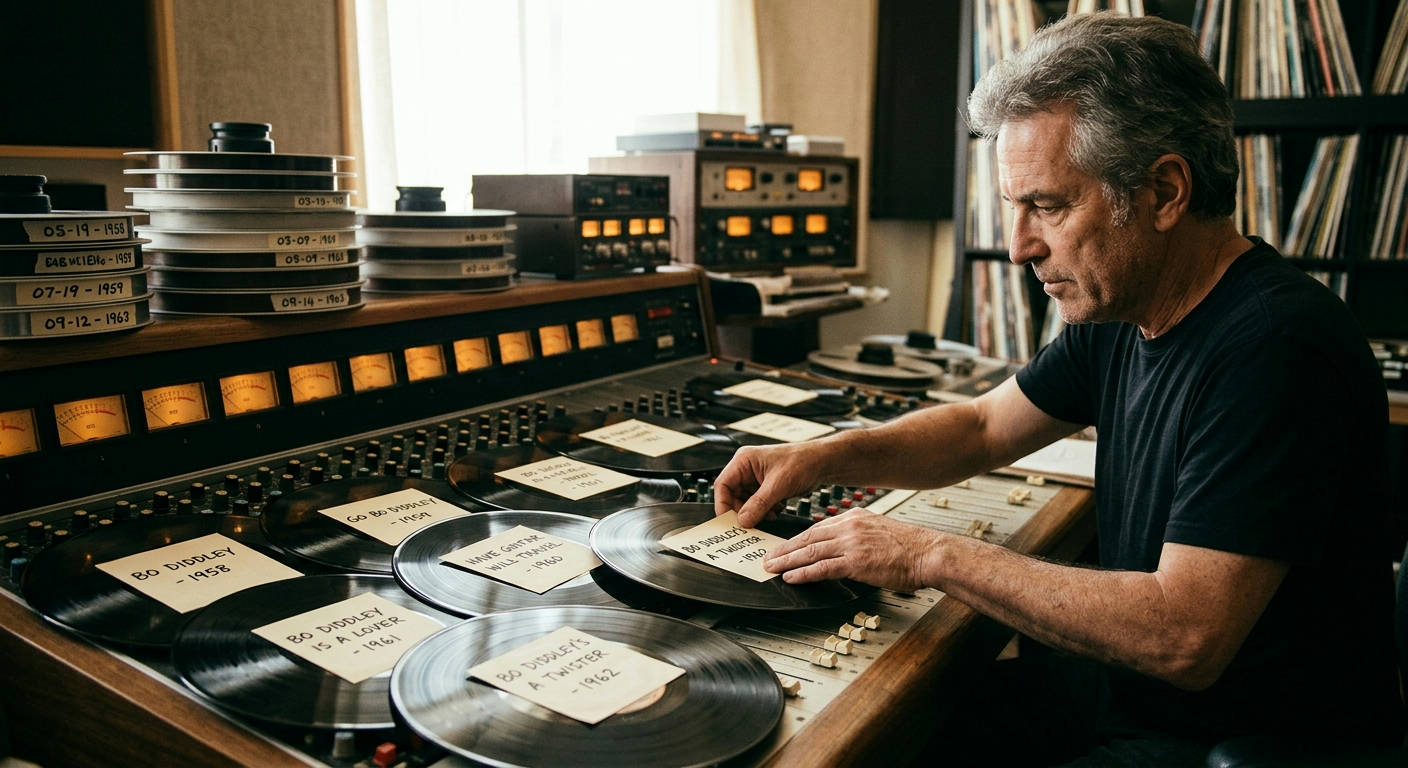
Tracks like “Elephant Man” and the socially conscious “You, Bo Diddley” are startlingly modern. This album found a new audience decades later, sampled by hip-hop artists and celebrated by fans of raw funk. It’s an essential piece of the puzzle for anyone exploring the complete Bo Diddley studio albums release dates.
It’s fascinating to note how the Bo Diddley studio albums release dates align with significant moments in music history.
Navigating the ’70s and Beyond
- Another Dimension (April 1971): Continuing on Cadet, this album featured Moog synthesizers and a more polished production, but Bo’s powerful voice and rhythmic core remained.
- Where It All Began (1972): This album, with a cover paying homage to The Godfather, was a solid return to a more straightforward rock and roll sound.
- The London Bo Diddley Sessions (1973): Following the trend of bluesmen recording in the UK with rock stars, this album saw Bo jam with a host of British session players. It’s a mixed bag but has some fascinating moments.
- 20th Anniversary of Rock ‘n’ Roll (1976): A celebratory album that saw Bo re-recording many of his classic hits with a 70s rock production style.
- A Man Amongst Men (May 1996): His final studio album, featuring guest spots from Keith Richards and Ron Wood of The Rolling Stones, was a powerful and fitting end to his recording career.
Why Original Pressing Dates Matter
The significance of the Bo Diddley studio albums release dates extends beyond mere chronology; it encapsulates a rich musical legacy.
Knowing the release dates is about more than trivia. For a vinyl collector, it’s the key to understanding an album’s value, authenticity, and intended sound.
“When you hold a first pressing from 1958, you’re holding a physical piece of history. The label, the weight of the vinyl, the mono mix—it’s how people first heard the revolution Bo Diddley started.”
Identifying First Pressings vs. Reissues
Use the Bo Diddley studio albums release dates as your starting point. A 1958 copy of Bo Diddley will have a specific Chess Records label design (often the black label with silver print). Reissues from the 60s, 70s, and today will have different labels, catalogue numbers, and cover art variations. Check the dead wax for matrix numbers; online databases like Discogs can help you match these to a specific pressing.
When collecting vinyl, being aware of the Bo Diddley studio albums release dates can greatly influence your choices and the value of what you collect.
The Sound Quality Debate: Mono vs. Stereo
Most of Bo Diddley’s iconic 50s and early 60s material was recorded and mixed for monaural playback. The mono mixes are punchy, direct, and powerful. Many of the later stereo re-mixes are awkward, with instruments panned unnaturally to the left or right. For the authentic experience, an early mono pressing is almost always the superior choice.
The “Bo Diddley Beat”: More Than Just Albums
Bo Diddley’s influence cannot be measured by album sales alone. His true legacy is a rhythm—a syncopated, five-accent clave pattern that became a fundamental building block of rock music.
The Rhythm That Changed Everything
The “Bo Diddley Beat” is deceptively simple and endlessly versatile. It can be heard in everything from Buddy Holly’s “Not Fade Away” to U2’s “Desire.” It’s a primal, driving force that instantly makes you want to move, making it perfect for creating a vibrant party atmosphere.
The Rock & Roll Hall of Fame rightfully inducted him in its second class in 1987, citing him as “one of rock and roll’s true founding fathers.”
A Legacy That Echoes Through Generations
The beat was a clarion call for young musicians in the UK. Bands like The Rolling Stones and The Yardbirds built their early sound on the foundation of Bo Diddley’s rhythm and blues. His aggressive guitar style and innovative use of effects like tremolo and reverb also inspired countless guitarists.
Your Guide to Collecting Bo Diddley Vinyl
Ready to start your collection? Here’s where we at Vinyl Gold UK recommend you begin.
The Essential First Three Albums
- Bo Diddley (1958): Start at the beginning. This album is a non-stop barrage of his most important early singles. It’s the purest distillation of his genius.
- Go Bo Diddley (1959): The perfect follow-up. It shows he was no one-trick pony and could consistently deliver groundbreaking material.
- The Black Gladiator (1970): Jump ahead a decade to hear his wild, funky reinvention. This record proves his artistry ran deeper than many gave him credit for.
Finding Quality Pressings in 2026
When buying vintage records, condition is everything. Look for pressings graded as “Very Good Plus” (VG+) or better to avoid excessive surface noise and skips. Always check for warps by laying the record on a flat surface. Don’t discount modern audiophile reissues from reputable labels; they can offer a clean, high-quality listening experience, especially if you’re spinning them on one of the best turntables under £300.
Bo Diddley was more than a musician; he was an inventor. He created a new rhythmic language that would be spoken by generations of artists. Understanding the chronology of his work through the Bo Diddley studio albums release dates is the first step to truly appreciating the depth and breadth of his incredible journey. Dive in, explore the records, and let the beat take over.
By familiarising yourself with the Bo Diddley studio albums release dates, you gain insight into not just his work, but also the evolution of rock music itself.