
Some bands exist to make history. Others accidentally stumble into it. The Yardbirds did both — and they did it with three of the greatest guitarists who ever lived. Born in the sweaty clubs of early 1960s London, they bridged the gap between raw American blues and the explosive rock revolution that followed. Their story is short, turbulent, and absolutely essential. Over just a few years, The Yardbirds launched careers that would reshape popular music forever. This guide covers everything you need to know — from their electrifying debut to their unlikely comeback decades later.
The Questions Everyone Asks About The Yardbirds
Who were the three famous guitarists in The Yardbirds?
The three legendary guitarists were Eric Clapton, Jeff Beck, and Jimmy Page — each one a titan in his own right. Clapton joined the band in 1963, bringing a deeply soulful, blues-purist sensibility that earned him the nickname “Slowhand.” When the band shifted toward pop, Clapton walked. Beck replaced him in 1965 and immediately pushed the sonic boundaries of what a guitar could do, using fuzz tones, feedback, and sheer unpredictability as his tools. Page came aboard in 1966, initially as a bassist before moving to lead guitar. What makes this remarkable is not just their individual genius — it is that one band served as the proving ground for all three, in succession.
What was The Yardbirds’ biggest hit?
“For Your Love” holds that title, and the irony runs deep. Released in 1965, the song became their biggest commercial success — reaching number two in the UK and number six in the US. Yet it was precisely this song that drove Eric Clapton out of the band. Clapton felt the track was too pop, too far removed from the blues roots he loved. He refused to record it and left shortly after its release. Jeff Beck stepped in, and the band entered an entirely new creative chapter. The song that defined their commercial peak simultaneously fractured their identity — a defining moment in rock history.
Is The Yardbirds still a band?
Yes — in a meaningful sense. After the original band dissolved in 1968, The Yardbirds lay dormant for decades. Then, in the 1990s, original members Jim McCarty and Chris Dreja reformed the group, recruiting new musicians to carry the name forward. This reformation was not a nostalgia cash-grab. McCarty and Dreja treated the band’s legacy seriously, continuing to tour and record. The line-up has shifted over the years, but the spirit remains intact. They released a new studio album in 2003 and have remained an active live act since, introducing their influential catalogue to entirely new generations of rock fans.
Did Jimmy Page and Jeff Beck play in The Yardbirds at the same time?
Yes — briefly, and brilliantly. In 1966, both guitarists appeared together in The Yardbirds, a rare and electrifying overlap. The most documented evidence of this pairing is the single “Happenings Ten Years Time Ago,” a track that showcased dual lead guitars in a way that felt genuinely ahead of its time. The arrangement was experimental, almost chaotic, and completely thrilling. The dual-guitar line-up did not last long — Beck departed later that year, reportedly after collapsing on stage during a US tour. However brief, the collaboration offered a tantalising glimpse of what might have been, and cemented the song as one of the band’s most forward-thinking recordings.
The Albums: A Complete Guide
1. Five Live Yardbirds (1964)

Five Live Yardbirds is where everything begins — and it begins with a roar. Recorded live at the Marquee Club in London, this debut captures The Yardbirds at their most primal and unfiltered. Eric Clapton drives every track with a blues authority far beyond his years. The energy is relentless, the performances urgent, and the crowd reaction tells you everything. This was not polished stadium rock — it was something rawer and more honest than that.
The “rave-up” style The Yardbirds pioneered here became enormously influential. A rave-up was essentially a musical explosion — a moment where the song would stretch out, accelerate, and push toward near-chaos before pulling back. Clapton used these passages to demonstrate his extraordinary feel for the blues idiom. Consequently, the album stands as a primary document of the British R&B movement.
Additionally, the track selection reflects their deep reverence for American blues. Songs by Howlin’ Wolf, Bo Diddley, and Chuck Berry appear throughout, filtered through the band’s distinctly British energy. Furthermore, this record reveals how disciplined their chaos actually was — they understood structure even as they seemed to be dismantling it.
For collectors and music historians, Five Live Yardbirds is indispensable. It marks the moment before commercial pressures reshaped the band’s direction. Moreover, it captures a young Clapton at the precise point before fame changed everything. As a result, every serious student of British rock should treat this album as required listening. It is not merely a debut — it is a declaration.
2. For Your Love (1965 – US Release)

For Your Love marks a seismic shift in the story of The Yardbirds — and it tells two stories simultaneously. On one hand, it documents the band’s commercial breakthrough. On the other, it captures the moment their founding guitarist walked away. The album is a US compilation built around the hit single of the same name, drawing together tracks that span the Clapton and early Beck eras.
Eric Clapton appears on several tracks, delivering the blues-drenched performances that defined the band’s early identity. However, the title track itself belongs to a different sonic world — harpsichord-driven, pop-oriented, and deliberately accessible. Clapton found this direction artistically unacceptable. Therefore, he exited, and Jeff Beck stepped into the role with remarkable confidence.
Beck’s contributions on this album are immediately distinguishable. His tone is sharper, his ideas more restless. Consequently, the album feels like two distinct chapters compressed into one release. That tension, rather than undermining it, actually makes the record fascinating. Furthermore, it gives listeners a rare chance to hear the transition happen in real time.
As a result, For Your Love functions as both a commercial document and a historical hinge point. The US market embraced the poppier direction enthusiastically. Additionally, the album introduced Beck to a wide audience who had no idea what was coming next. Indeed, this transitional record laid the commercial foundation that allowed The Yardbirds to take greater artistic risks in the albums that followed. It rewards careful listening from start to finish.
3. Having a Rave Up with The Yardbirds (1965)
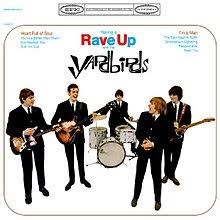
Having a Rave Up with The Yardbirds splits its identity cleanly down the middle — and that division is precisely what makes it compelling. The first half consists of live recordings featuring Eric Clapton, crackling with the raw energy that defined the Marquee Club performances. The second half moves into studio territory with Jeff Beck leading the charge, and the contrast is revelatory.
Beck’s studio contributions here represent some of his most inventive early work. Most notably, “Heart Full of Soul” arrives with a guitar tone unlike anything heard before in mainstream rock. Beck used a fuzz-tone pedal to replicate the sound of a sitar — an idea born from practical necessity after the band struggled to work with an actual sitar player. The result sounds genuinely psychedelic. Furthermore, it anticipated the Eastern influences that would flood British rock later in the decade.
The Yardbirds were clearly evolving at speed. Consequently, this album captures them mid-transformation — still rooted in R&B but already reaching toward something more experimental. Additionally, Beck’s willingness to treat the guitar as a sonic laboratory rather than merely a melodic instrument foreshadowed the innovations of Hendrix, Townshend, and eventually Page himself.
Moreover, the live Clapton tracks provide essential context. They remind listeners just how dramatically the band’s identity shifted within a single year. As a result, Having a Rave Up is not simply a great album — it is a case study in creative evolution. Both halves reward attention equally, and together they make this one of the most historically important releases in The Yardbirds’ catalogue.
4. Roger the Engineer (1966)

Roger the Engineer stands apart from everything else in The Yardbirds’ catalogue — and most critics agree it represents their artistic peak. It is the only UK studio album the band recorded consisting entirely of original compositions. That distinction matters enormously. Instead of reworking American blues standards, The Yardbirds trusted their own creative instincts — and the result is extraordinary.
Jeff Beck delivers his most adventurous guitar work here. He bends, scrapes, and sculpts sounds that had no real precedent in 1966. Additionally, the song writing across the album reflects genuine ambition. Tracks shift from melodic experimentation to outright psychedelic abstraction, sometimes within the same song. Furthermore, the production captures a band operating with unusual creative freedom — something record labels rarely granted at this stage of the decade.
The album’s title references the band’s actual recording engineer, Roger Cameron, whose hand-drawn portrait appears on the cover. This small, self-aware gesture signals the band’s growing artistic confidence. Consequently, Roger the Engineer feels less like a commercial product and more like a statement of intent.
Moreover, its influence extended well beyond the band’s own career. The experimental guitar textures Beck pioneered here clearly informed the psychedelic and hard rock movements that followed. Additionally, Jimmy Page later cited this period as foundational to his own developing approach. As a result, the album functions as a crucial bridge between mid-sixties pop and the heavier sounds of the next decade. For anyone seeking to understand The Yardbirds at their creative zenith, this album is the essential starting point. It remains a landmark of British rock.
5. Little Games (1967)

Little Games occupies a fascinating and sometimes underappreciated place in The Yardbirds’ story. By 1967, Jeff Beck had departed and Jimmy Page had stepped into the lead guitarist role — a position he held as the band moved through its final chapter. This album captures that transitional moment with remarkable clarity.
Page’s approach differs from both Clapton and Beck in telling ways. Where Clapton channelled deep blues feeling and Beck embraced sonic chaos, Page brought a more architectural sensibility. He constructed guitar parts with unusual deliberateness. Consequently, Little Games carries a different energy — more controlled, more textured, and, at moments, heavier than anything The Yardbirds had previously recorded.
The psychedelic influences are unmistakable throughout. Furthermore, producer Mickie Most pushed the band toward a pop-friendly sound that did not always serve their strengths. As a result, the album received a mixed critical reception upon release. However, retrospective listening reveals considerably more depth than early reviewers acknowledged.
Additionally, Page’s emerging compositional ideas point unmistakably toward what came next. The heavier passages and drone-based guitar textures clearly foreshadow the sound he would develop with Led Zeppelin — originally formed under the name “The New Yardbirds.” Moreover, the album’s experimental moments prove that The Yardbirds were still genuinely searching for new sounds, even in their final months. Therefore, Little Games deserves reassessment as both a creative document and a historical bridge — connecting one of rock’s most important bands to the decade that followed.
6. Birdland (2003)
Birdland arrives thirty-five years after The Yardbirds last released a studio album — and it arrives with something to prove. The reformed band, anchored by original members Jim McCarty and Chris Dreja, recruited a new generation of musicians and invited some of rock’s biggest names to join them. The result is a blues-rock revival record that takes the band’s legacy seriously without simply replicating it.
The guest appearances alone make this album remarkable. Steve Vai, Slash, and Joe Satriani each contribute, bringing their own stylistic fingerprints to material that clearly honours its roots. Consequently, Birdland feels like a celebration rather than a retreat. Each guest adds personality without overshadowing the band itself. Furthermore, McCarty and Dreja ensure that the album retains a coherent identity despite its all-star construction.
The production is modern, clean, and deliberately accessible. Additionally, the song writing balances nostalgia with forward momentum — a difficult tightrope that the album mostly navigates successfully. Moreover, the blues influences that shaped The Yardbirds in the 1960s remain audible throughout, providing continuity across the decades.
As a result, Birdland does exactly what a great comeback record should do — it reintroduces the band to listeners who missed them and rewards long-term fans with something genuinely new. Furthermore, it demonstrates that the spirit animating The Yardbirds was never simply about specific musicians. It was about a commitment to pushing guitar music forward. Therefore, this album stands as meaningful proof that the band’s creative impulse survived everything — including thirty-five years of silence.
The Yardbirds gave the world three guitar legends, a handful of genuinely revolutionary albums, and a blueprint for how rock music could evolve without losing its soul. They existed at a unique crossroads — between blues and psychedelia, between raw energy and deliberate experimentation. Each guitarist who passed through their line-up left the band changed, and left music changed as a result. Clapton proved the blues could burn with British fire. Beck demonstrated that the guitar was an instrument of limitless invention. Page pointed the way toward a harder, heavier future. No other band in history can claim that kind of succession. The Yardbirds were not simply a stepping stone — they were the stage on which rock’s next half-century was first rehearsed.