
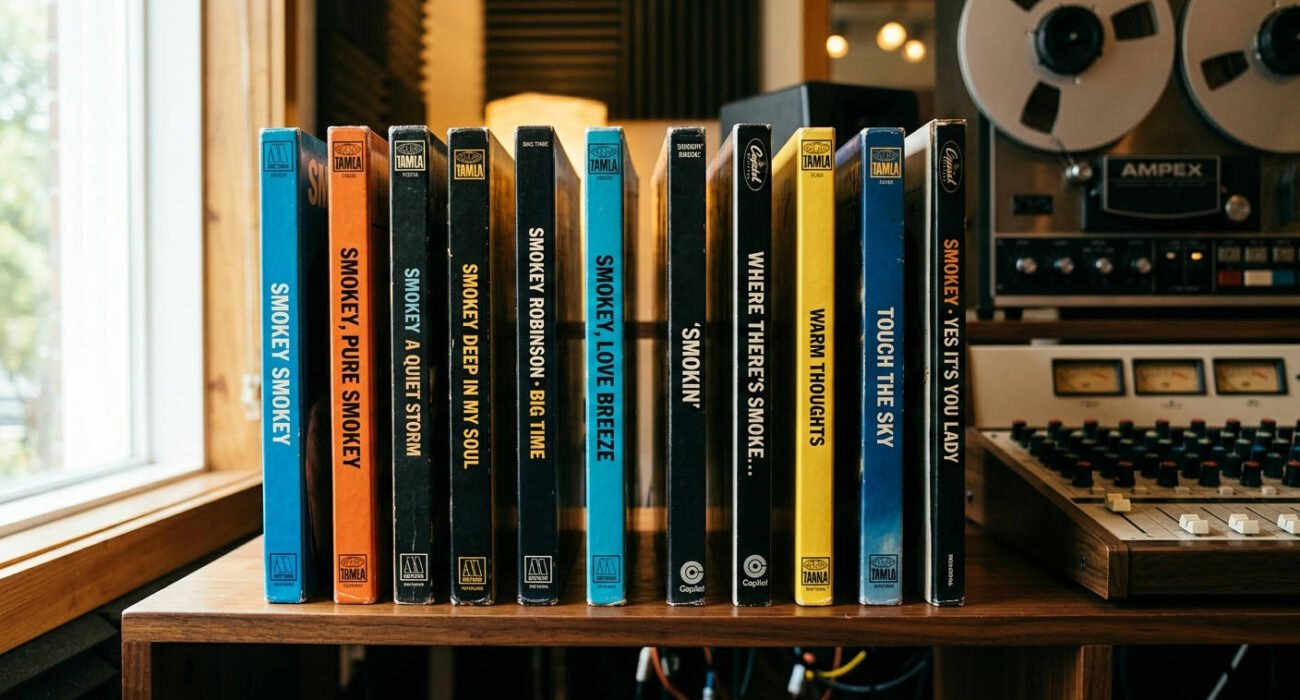
Trying to trace the genius of William “Smokey” Robinson Jr. is a journey every soul and R&B fan must take. To truly understand his evolution from a Motown wunderkind to a solo elder statesman of soul, you need the full map. That’s why we at Vinyl Gold UK have put together the definitive guide to the Smokey Robinson studio albums chronological order, cutting through the noise of countless compilations to focus on the core artistic statements.
This isn’t just a list. It’s a timeline of innovation, heartbreak, and pure poetic brilliance. From the early days crafting hits with The Miracles to defining an entire radio format with his solo work, tracking the Smokey Robinson studio albums chronological order is like watching a master painter perfect his craft over six decades. Get ready to dive deep into one of the most important discographies in modern music.
The Miracles Era: Building the Motown Machine
Before Smokey was a solo icon, he was the frontman and chief songwriter for The Miracles. This period is foundational. You simply cannot appreciate the solo work without understanding where he came from. The group’s name changed over time, from The Miracles to Smokey Robinson & The Miracles, reflecting his growing star power.
The albums from this time are a masterclass in the Motown sound—tight arrangements from The Funk Brothers, pristine production, and Smokey’s impossibly smooth tenor floating over the top. These records weren’t just collections of singles; they were cohesive projects that set the standard for R&B LPs.
From ‘Hi, We’re The Miracles’ to ‘Four in Blue’
The journey begins with Hi, We’re The Miracles (1961). It’s a raw, energetic starting point containing their first smash, “Shop Around.” Listening to this, you hear the blueprint for what was to come. The harmonies are locked in, and Smokey’s lyrical prowess is already evident.
As the 60s progressed, the albums became more sophisticated. Going to a Go-Go (1965) is an absolute must-own. The title track is an immortal party starter, but the album cuts like “The Tracks of My Tears” showcase a new level of emotional depth and vulnerability that would become Smokey’s trademark. This is the sound of a group at the absolute peak of their powers.
By Make It Happen (1967), which featured the iconic “The Tears of a Clown,” and Special Occasion (1968), the group was a well-oiled hit factory. These albums demonstrated an incredible consistency, a testament to the brutal quality control at Motown and Smokey’s seemingly bottomless well of creativity. He wasn’t just writing songs; he was crafting miniature, three-minute emotional films.
The Final Chapter with The Miracles
The period from 1969 to 1972 marked the end of an era. Albums like Four in Blue (1969) and A Pocket Full of Miracles (1970) continued their run of success. However, Smokey’s final studio album with the group, Flying High Together (1972), feels like a poignant farewell. It was a conscious step back to let the group continue without him as he prepared for his next chapter.
Exploring these early records is essential for any collector. You can hear the evolution of not just a singer, but of a producer and a songwriter who was instrumental in shaping the sound of a generation. Many of these are available in fantastic vinyl reissues.
The 1970s Solo Leap: A Quiet Storm Is Born
In 1973, Smokey Robinson stepped out on his own. The pressure was immense. How do you follow one of the most successful group careers in history? You do it by completely redefining your sound and, in the process, creating a whole new subgenre of music.
His 1970s solo output is arguably his most influential. He moved away from the dance-floor-focused singles of the Motown heyday and embraced a more mature, sensual, and album-oriented approach. This was music for late nights and intimate moments, filled with lush orchestration and lyrics that were more poetic and introspective than ever before.
‘Smokey’ (1973): The Confident Debut
His first solo album, simply titled Smokey, was a bold statement. It didn’t try to replicate The Miracles. Instead, tracks like “Sweet Harmony” and “Just My Soul Responding” showed a more reflective artist. It was a commercial and critical success, proving that he could thrive outside the group dynamic.
The album established the template for his solo career: impeccable production, sophisticated arrangements, and a focus on love and relationships from a grown-up perspective. This wasn’t teenage crush music anymore; this was the sound of adult romance, with all its complexities.
‘A Quiet Storm’ (1975): Creating a Genre
If you only own one solo Smokey Robinson album, it has to be this one. A Quiet Storm is not just an album; it’s a landmark. The title track, a stunning seven-and-a-half-minute suite, gave its name to the “Quiet Storm” radio format that would dominate R&B airwaves for decades.
“I wanted it to be a concept. I wanted it to be something that you could put on and just let it play, and it would be a whole mood and a whole vibe.”
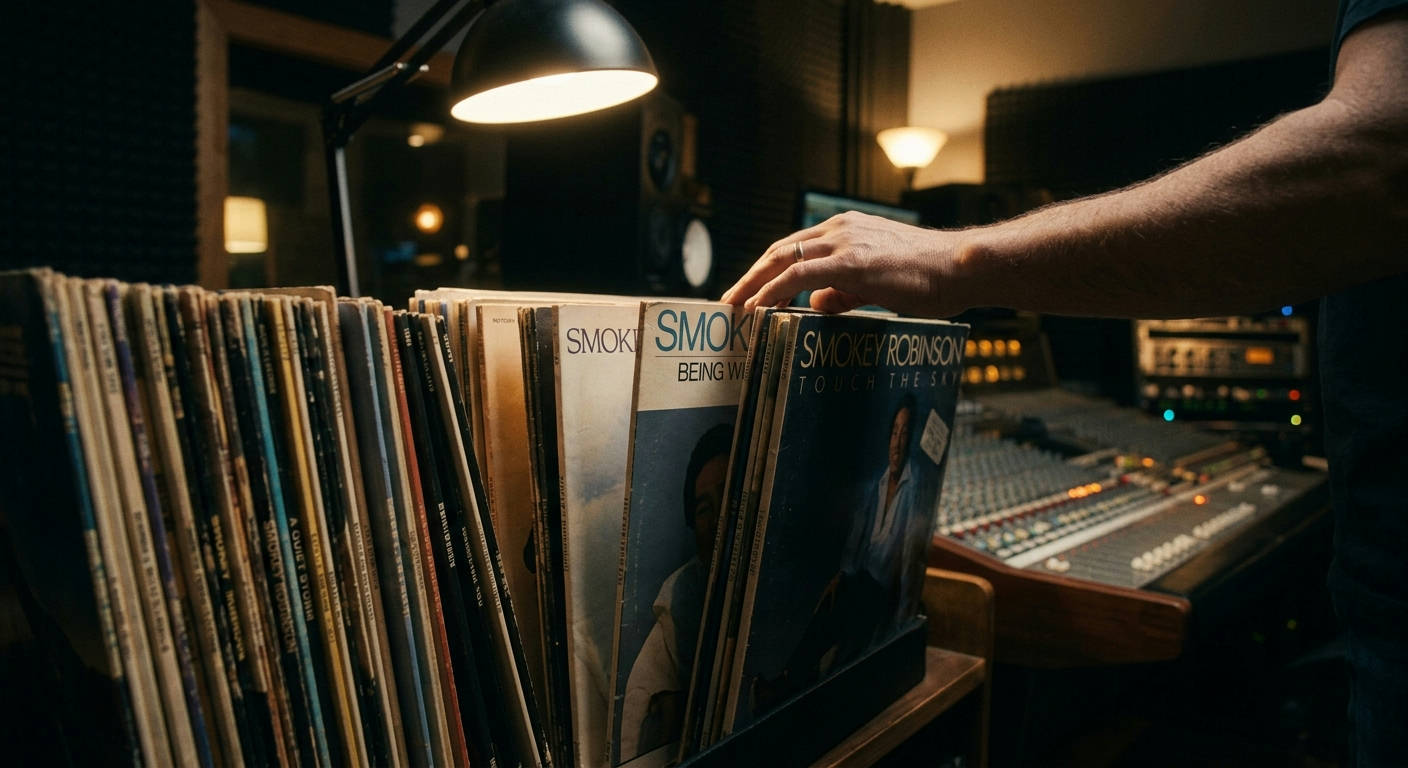
This album perfected the formula: silky-smooth grooves, jazzy undertones, and Smokey’s voice, which had matured into an even more expressive instrument. Songs like “Baby That’s Backatcha” and “The Agony and the Ecstasy” are masterworks of atmosphere and emotion. This record is essential for any vinyl collection.
Ready to experience this genre-defining masterpiece? You can find various pressings of A Quiet Storm right now.
Search for Smokey Robinson’s A Quiet Storm on vinyl on Amazon
Deep Cuts of the 70s: ‘Smokey’s Family Robinson’ and ‘Love Breeze’
While A Quiet Storm gets the most attention, Smokey’s other 70s albums are packed with gems. Smokey’s Family Robinson (1976) continued the lush, romantic vibe, while Deep in My Soul (1977) featured the incredible single “There Will Come a Day (I’m Gonna Happen to You).”
Love Breeze (1978) and Smokey (the 1979 album, often called Smokin’ to avoid confusion with his debut) closed out the decade in fine style. He was on an incredible creative roll, cementing his status as a solo artist of the highest caliber. Following the Smokey Robinson studio albums chronological order through the 70s is a journey into the heart of sophisticated soul.
The Definitive Smokey Robinson Studio Albums Chronological Order
Here it is. No filler, no compilations, just the core studio LPs. This is the essential roadmap for anyone wanting to explore the complete artistic output of a true music legend. We’ve separated his work with The Miracles from his solo career to make the timeline clear.
The Miracles Studio Albums (1961-1972)
This list traces their journey on the Tamla (Motown) label, from their debut to Smokey’s final project with the group he co-founded.
- Hi, We’re the Miracles (1961)
- Cookin’ with the Miracles (1961)
- I’ll Try Something New (1962)
- The Fabulous Miracles (1963)
- The Miracles Doin’ Mickey’s Monkey (1963)
- Going to a Go-Go (1965)
- Away We a Go-Go (1966)
- Make It Happen (1967)
- Special Occasion (1968)
- Four in Blue (1969)
- What Love Has…Joined Together (1970)
- A Pocket Full of Miracles (1970)
- The Season for Miracles (1970)
- One Dozen Roses (1971)
- Flying High Together (1972)
Why the Smokey Robinson studio albums chronological order Matters to Collectors
For vinyl collectors and serious music fans, following the Smokey Robinson studio albums chronological order is crucial. It allows you to hear his musical ideas develop in real-time. You can pinpoint the exact moment he introduces a new lyrical theme or a production technique that becomes a signature. It transforms passive listening into an active, historical exploration. It’s about context, evolution, and appreciating the full arc of his genius.
Solo Studio Albums (1973-Present)
This is the main event for many, tracing his journey from the birth of Quiet Storm to his work in the 21st century.
- Smokey (1973)
- Pure Smokey (1974)
- A Quiet Storm (1975)
- Smokey’s Family Robinson (1976)
- Deep in My Soul (1977)
- Love Breeze (1978)
- Smokin’ (1979)
- Where There’s Smoke… (1979)
- Warm Thoughts (1980)
- Being with You (1981)
- Yes It’s You Lady (1982)
- Touch the Sky (1983)
- Essar (1984)
- Smoke Signals (1986)
- One Heartbeat (1987)
- Love, Smokey (1990)
- Double Good Everything (1991)
- Intimate (1999)
- Food for the Spirit (2004)
- Timeless Love (2006)
- Time Flies When You’re Having Fun (2009)
- Now and Then (2010)
- Smokey & Friends (2014)
- Christmas Everyday (2017)
- Gasms (2023)
Adapting to the 80s: Pop Hits and New Textures
The 1980s presented a new challenge for legacy artists. The slick, synthesized sounds of new wave and electro-funk dominated the charts. Many of Smokey’s peers struggled to adapt, but he navigated the decade with remarkable grace, scoring some of the biggest commercial hits of his entire career.
He achieved this by embracing new production technologies without ever sacrificing his core identity. The poetic lyrics and that unmistakable voice remained front and center, even when backed by drum machines and Yamaha DX7 keyboards.
The ‘Being with You’ Phenomenon
The album Being with You (1981) was a monster hit. The title track was a global smash, reaching number one in the UK and number two in the US. It’s a perfect pop song, blending his classic soul sensibility with a contemporary sheen that felt perfectly at home on 80s radio.
The album itself is a fantastic listen, a testament to his ability to craft timeless melodies that could fit into any production style. It proved that Smokey wasn’t a relic of the 60s and 70s; he was a vital, current artist.
If you’re looking to add this 80s classic to your collection, you can easily find it.
Search for Smokey Robinson’s Being With You on vinyl on Amazon
‘One Heartbeat’ and a Return to the Top
After a few years of solid but less commercially explosive albums like Touch the Sky (1983) and Essar (1984), Smokey came roaring back with One Heartbeat in 1987. The album spawned two Top 10 US hits: “Just to See Her” and the title track.
“Just to See Her” even earned him a Grammy Award in 1988 for Best Male R&B Vocal Performance. It was a huge moment, a validation from the music industry that, more than 25 years into his career, he was still operating at the highest level. The album’s production is quintessentially 80s, but the songwriting is 100% pure Smokey.
The Elder Statesman: 1990s to 2026
From the 1990s onward, Smokey Robinson’s recording output became more sporadic, but his status as a living legend was firmly cemented. He no longer had to chase pop trends. Instead, he made records that felt personal and true to his artistic spirit.
This later period in the Smokey Robinson studio albums chronological order is fascinating. It’s the work of an artist who has nothing left to prove, allowing him to explore different styles, from gospel to the Great American Songbook, with confidence and class.
Concept Albums and Collaborations
The 2000s saw Smokey embracing concept projects. Food for the Spirit (2004) was his first-ever gospel album, a heartfelt project that explored his faith. Timeless Love (2006) saw him tackling classic standards from the 30s and 40s, songs made famous by artists like Cole Porter and the Gershwins. Hearing his voice on these timeless melodies felt completely natural.
In 2014, he released Smokey & Friends, a duets album that paired him with contemporary and classic artists like Elton John, James Taylor, and Mary J. Blige, re-interpreting his greatest hits. The project served as a powerful reminder of how his music has influenced generations of performers across all genres.
As of 2026, his most recent studio album of original material is 2023’s Gasms. The provocatively titled album showed that even in his 80s, his pen is as sharp and his focus on romance is as singular as ever.
Beyond the Albums: The Song writing Titan
You can’t fully grasp Smokey Robinson’s importance just by listening to his own records. He was also one of the chief architects of the Motown sound, writing and producing massive hits for other artists. His fingerprints are all over the label’s golden era.
The list of classics he penned for others is staggering. He wrote “My Girl” for The Temptations, “My Guy” for Mary Wells, “The Way You Do the Things You Do” for The Temptations, “Ain’t That Peculiar” for Marvin Gaye, and “First I Look at the Purse” for The Contours.
According to his Rock & Roll Hall of Fame induction bio, fellow Motown founder Berry Gordy called him “America’s greatest living poet.”
This work is a critical part of his legacy. He wasn’t just a singer; he was a creative engine that powered the success of many of his labelmates, including other vocal groups like The Four Tops who also benefited from the stellar in-house writing teams. When you listen to a Motown compilation, you’re often hearing the sound of Smokey Robinson’s mind at work, even when he’s not the one singing.
Collecting Smokey: A Vinyl Gold UK Guide
Building a collection of Smokey Robinson’s work on vinyl is a deeply rewarding experience. The warmth and depth of the analogue format are perfectly suited to the lush production of his solo work and the raw energy of the early Miracles records. Here’s how to get started.
Your First Three Buys
If you’re new to collecting Smokey, here are the three essential LPs to start with:
- Going to a Go-Go (with The Miracles): This is the peak of their 60s output. It’s packed with hits and showcases the group as an unstoppable force. A must-have for any 60s soul fan.
- A Quiet Storm (Solo): This is the game-changer. It’s a mood, a vibe, and a piece of music history. The sound quality on original pressings is often sublime.
- Being with You (Solo): To understand his 80s resurgence, this is the key. It’s a brilliant pop-soul record that sounds fantastic on a quality turntable.
Mono vs. Stereo and Finding Original Pressings
For the early Miracles albums, you’ll often find both mono and stereo pressings. Many collectors, including us here at Vinyl Gold UK, swear by the mono mixes from this era. They were often the priority mix at Motown, delivering a punchier, more direct sound.
Identifying first pressings of Tamla/Motown records can be tricky, but it’s part of the fun. Look for the “globes” label design on early 60s LPs. Checking the dead wax for matrix numbers and seeking out thick, heavy vinyl are also good indicators. Reissues are often excellent, but there’s a special magic to spinning an original pressing from the 60s or 70s.
The journey through the Smokey Robinson studio albums chronological order is more than just a history lesson. It’s an exploration of one of the most gifted and enduring talents in American music. From the streets of Detroit to global superstardom, his music has been a constant source of joy, comfort, and profound emotional truth. Fire up the turntable, drop the needle on Smokey, and let the master show you how it’s done.