
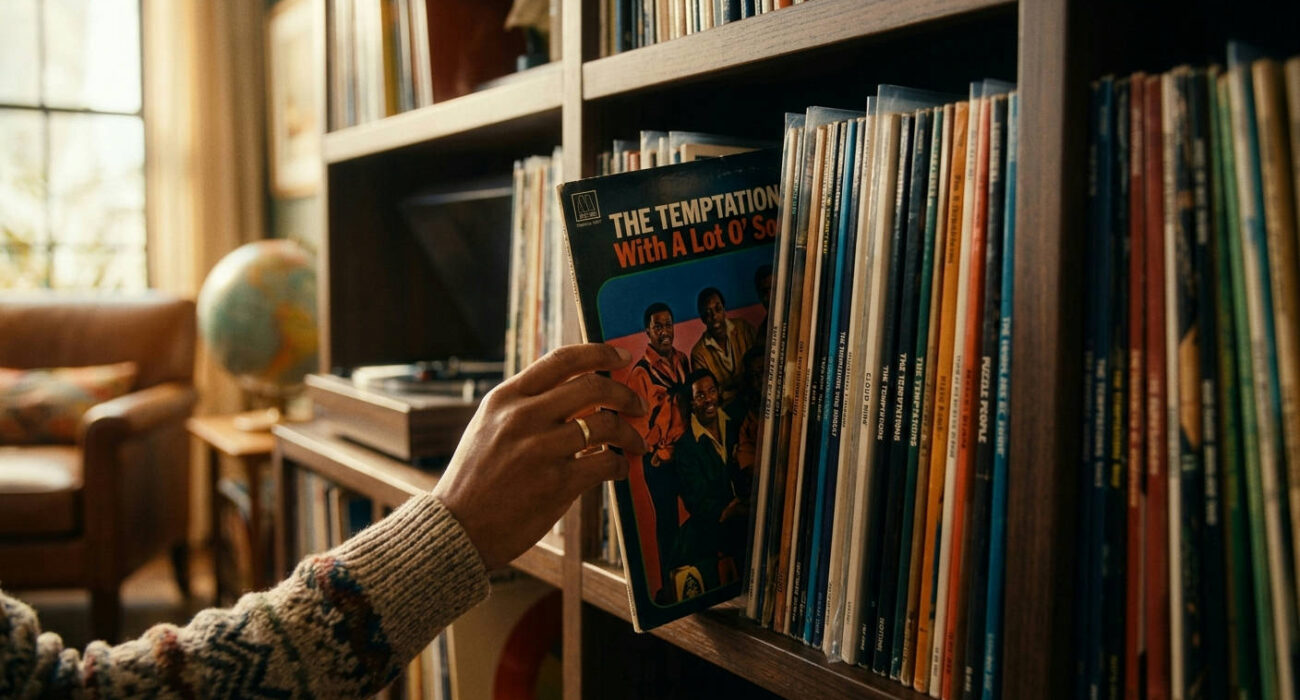
Tracking The Temptations album releases by year is more than just a music history lesson; it’s a journey through the evolution of soul, R&B, and pop itself. For six decades, this Motown institution has defined and redefined the sound of American music, and their vinyl catalogue is a treasure map for any serious collector. At Vinyl Gold UK, we live for this stuff—the crackle of the needle, the weight of the sleeve, and the story behind every track. This is your definitive guide to their sprawling discography.
The “Classic 5” Era: Motown’s Golden Hit Machine (1964–1968)
Before the psychedelic experiments and funk odysseys, there was the “Classic 5” line-up: David Ruffin, Eddie Kendricks, Paul Williams, Melvin Franklin, and Otis Williams. This was the group that conquered the charts with impossibly smooth choreography and harmonies so tight they could cut glass. Their initial run of albums set a standard for vocal groups that is still unmatched today.
Meet the Temptations (1964): The Beginning of a Dynasty
The journey starts here. While the album itself was a collection of their early singles, it laid the groundwork for everything to come. The raw energy is palpable. It was their first Top 100 album, driven by the electrifying success of “The Way You Do the Things You Do,” penned by the legendary Smokey Robinson. This record captures a group finding its voice, full of youthful swagger and undeniable talent.
The Temptations Sing Smokey (1965): A Perfect Partnership
If Meet the Temptations was the spark, this album was the inferno. Handing the song writing reins almost entirely to Smokey Robinson proved to be a stroke of genius. The result was “My Girl,” a song so perfect it feels like it has always existed. The album is a masterclass in mid-60s soul, a flawless blend of sweet melodies and heartfelt vocal performances that cemented their superstar status.
Gettin’ Ready (1966) & With a Lot o’ Soul (1967)
This period saw a crucial shift. With Norman Whitfield taking over more production duties, the sound became grittier and more aggressive. David Ruffin’s raspy, pleading lead on tracks like “Ain’t Too Proud to Beg” and “(I Know) I’m Losing You” introduced a raw emotional depth. These albums showcased a tougher, more dynamic side of the group, proving they were more than just polished pop balladeers.
A Psychedelic Shift: The Norman Whitfield Revolution (1968–1973)
When David Ruffin was replaced by the powerful, gospel-trained Dennis Edwards in 1968, the change was seismic. Producer Norman Whitfield seized the opportunity, pushing the group into uncharted territory. He plugged in the wah-wah pedals, cranked up the fuzztone, and infused their music with the socially conscious, psychedelic energy of the late 60s. This wasn’t just a new sound; it was a new identity.
“We were artists, and we were trying to express ourselves. The world was changing, and we wanted our music to reflect that. Norman [Whitfield] was the catalyst for it all.” – Otis Williams
### The Temptations album releases by year: The Whitfield Era Defined
Cloud Nine (1969) was a statement. The title track, a raw and unflinching look at escapism and poverty, earned Motown its first-ever Grammy Award. This album, along with its follow-up Puzzle People (1969), marked a radical departure. The arrangements were cinematic, the lyrics were topical, and the Funk Brothers, Motown’s house band, were let loose like never before. Exploring The Temptations album releases by year during this phase is witnessing a band completely reinvent itself.
Masterpieces of Social Commentary
The early 70s saw The Temptations release some of the most ambitious music of their career. These weren’t just collections of songs; they were sprawling sonic statements.
- Psychedelic Shack (1970): A full-blown trip. This album is all about atmosphere, with studio effects, panning vocals, and extended instrumental jams creating an immersive, often disorienting, listening experience.
- All Directions (1972): This is the one. It contains the 12-minute magnum opus “Papa Was a Rollin’ Stone,” a dark, funky, and orchestral masterpiece that won them three Grammy Awards. The track is a benchmark in soul music production.
- Masterpiece (1973): Whitfield’s cinematic vision reached its peak with the title track, an epic instrumental that took up the entire first side of the original LP. It was a bold, almost arrogant move that solidified their reputation as musical innovators.
Navigating the Disco Wave & R&B Ballads (Mid-70s to Early 80s)
After the intense creative peak with Norman Whitfield, the mid-70s brought another period of transition. The group parted ways with Whitfield and Motown, searching for a new direction as disco began to dominate the airwaves. This era is often overlooked by casual fans, but it contains some hidden gems for dedicated collectors.
A Song for You (1975): A Polished Departure
Their final album for Motown’s Gordy label (for a time) was a return to a more polished, orchestrated soul sound. Produced by Jeffrey Bowen, it yielded the massive funk hit “Shakey Ground” and the beautiful ballad “A Song for You.” It showcased their versatility and proved they could still craft a hit record without their psychedelic guru.
The Atlantic Years & The Return Home
The group’s brief move to Atlantic Records in the late 70s resulted in a couple of commercially underwhelming albums, Hear to Tempt You (1977) and Bare Back (1978). While not essential, they are interesting curios for completists. The real story was their triumphant return to Motown in 1980 and the subsequent Reunion (1982) album, which brought Ruffin and Kendricks back into the fold and featured the Rick James-produced smash hit “Standing on the Top.”

## The Temptations Album Releases By Year: Modern Era and Legacy (Late 80s to 2026)
Even as line-ups changed and musical trends came and went, The Temptations never stopped. They transitioned gracefully into a legacy act that continued to record new material, tour relentlessly, and win over new generations of fans. This modern chapter is a testament to their incredible endurance.
To Be Continued… (1986) & The Rise of Ali-Ollie Woodson
The mid-80s saw a resurgence thanks to lead singer Ali-Ollie Woodson. His smooth, powerful voice was the perfect fit for the quiet storm R&B sound of the era. The album To Be Continued… featured the timeless classic “Lady Soul,” a song that became one of their signature hits and proved their relevance three decades into their career.
Embracing New Sounds: Phoenix Rising (1998)
By the late 90s, The Temptations once again adapted. Phoenix Rising skilfully blended their classic harmonies with contemporary R&B production. The album went platinum and its lead single, a cover of The Deele’s “Stay,” became a major hit, earning the group another Grammy for Best R&B Vocal Performance. It was a remarkable comeback that showed they were listening to what was current without sacrificing their core identity.
The 21st Century Temptations: Keeping the Music Alive
The group has continued to release quality music well into the new millennium. Albums like Legacy (2004) and the covers album All the Time (2018) showcase their unwavering commitment to their craft. In 2026, they celebrated their history with the release of Temptations 60, an album that both honours their past and looks to the future, solidifying a legacy that few musical acts will ever match. The group’s induction into the Rock and Roll Hall of Fame in 1989 was a mere formality for an institution that has so deeply shaped popular music.
Collecting The Temptations on Vinyl: A Guide for Audiophiles
For us at Vinyl Gold UK, the physical records are where the magic truly lives. Building a collection of Temptations albums is a rewarding pursuit, and knowing what to look for can elevate the experience from casual listening to true audiophile appreciation.
Identifying First Pressings vs. Reissues
Getting your hands on an original 1960s Motown pressing is a special feeling. Here’s what to look for:
- The Label: Early Motown and Gordy LPs feature a “globes” or “map” design. Research the specific label variation for the album you’re hunting.
- The Cover: Original pressings often have thicker, heavier cardboard sleeves.
- The Dead Wax: The space between the last song and the label contains matrix numbers etched by the mastering engineer. These codes can help you pinpoint the exact pressing plant and year.
Essential Albums for Your Collection
If you’re just starting, where do you begin? Here’s a quick list of must-haves that provide a fantastic overview of their career:
- The Temptations Sing Smokey (1965) – For the pure, classic Motown sound.
- Gettin’ Ready (1966) – For Ruffin’s raw, emotional power.
- Cloud Nine (1969) – To experience the beginning of the psychedelic era.
- All Directions (1972) – “Papa Was a Rollin’ Stone” alone makes this essential.
- Reunion (1982) – For the electrifying return of the classic members.
Of course, having these records means you need a solid setup. A quality turntable can make all the difference in hearing the warmth and detail of these original recordings. Finding one of the best turntables under £300 in the UK is a fantastic starting point for any budding vinyl enthusiast.
The Sound Quality: Mono vs. Stereo Mixes
For the 60s albums, this is a hot debate. In that era, the mono mix was the priority. It was what was played on the radio and what most people heard. These mono mixes are often punchier, more direct, and more cohesive. The stereo mixes were sometimes an afterthought, with strange panning choices. For the purist, finding a clean mono copy of an album like Gettin’ Ready is the holy grail.
Beyond the Albums: The Group’s Enduring Impact
You can’t fully appreciate The Temptations album releases by year without acknowledging their monumental influence. They set the template for what a male vocal group could be. Their sharp suits, precise choreography, and commanding stage presence were as revolutionary as their music.
The New York Times once described them as “no less than a national treasure,” a sentiment that feels more accurate with each passing year. Their journey is a cornerstone of American cultural history, as documented by institutions like the Motown Museum.
The Temptations’ Influence on Modern Artists
From the soulful harmonies of Boyz II Men to the funky showmanship of Bruno Mars, The Temptations’ DNA is everywhere. Artists across soul, pop, and hip-hop have sampled their work and cited their performance style as a primary inspiration. They created a blueprint for excellence that continues to guide performers today. When you explore the work of other soul pioneers like Curtis Mayfield, you can feel that shared spirit of innovation and social consciousness that defined the era.
Their catalogue isn’t just a collection of oldies; it’s a living, breathing document of artistic evolution. Each album is a snapshot of its time, capturing the sounds, struggles, and triumphs of the moment. Digging into their discography is one of the most rewarding things a music fan can do. So go ahead, drop the needle, and let the harmonies take you away.