
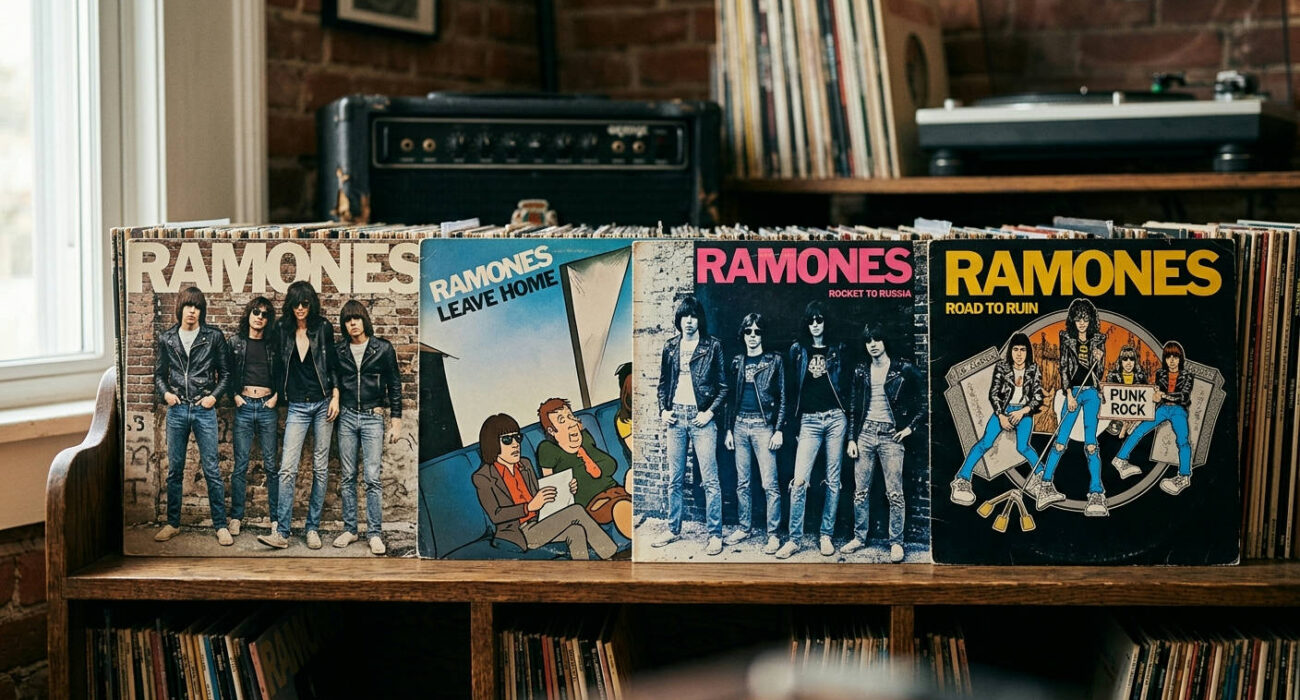
You can’t talk about punk rock without talking about the four brats from Queens. Their influence is baked into the DNA of nearly every rock band that followed. To truly understand their genius, you have to dive deep into The Ramones discography studio albums. This isn’t just about a couple of hits; it’s about a 14-album journey that defined a genre, defied expectations, and delivered some of the most beautifully simple and powerful rock and roll ever recorded.
The Ramones didn’t just play music; they created a blueprint. Three chords, breakneck speed, and lyrics about sniffing glue, beating on brats, and wanting to be sedated. It was a minimalist masterclass that flew in the face of bloated 70s prog rock. Let’s peel back the layers of their studio output, album by album, and see what made these misfits from Forest Hills, Queens, so damn important.
The First Four: A Perfect Run of Punk Rock Power
The period from 1976 to 1978 is untouchable. The Ramones, with their original lineup of Joey, Johnny, Dee Dee, and Tommy, unleashed four albums in rapid succession that formed the very foundation of punk. If you own nothing else by them, these four are non-negotiable.
Ramones (1976)
This is ground zero. Recorded in about a week for a paltry $6,400, their self-titled debut is a 29-minute blast of raw, unfiltered energy. It’s the sound of a band with something to prove and nothing to lose. The album opens with the iconic “Blitzkrieg Bop” and doesn’t let up.
Tracks like “Beat on the Brat,” “Judy Is a Punk,” and “Now I Wanna Sniff Some Glue” were shocking in 1976. They were direct, dumb, and utterly brilliant. Johnny Ramone’s relentless downstroke guitar attack, Dee Dee’s driving bass, and Tommy’s deceptively simple drumming created a wall of sound that Joey’s distinctive, outsider voice cut through perfectly. This album is not just one of the best albums of the 1970s; it’s one of the most important debut albums ever made.
Leave Home (1977)
Released less than a year after their debut, Leave Home doesn’t reinvent the wheel—it just makes it spin faster and smoother. The production is a bit cleaner, the songs a touch more complex, but the core energy is still there. This is the sound of a band honing their craft on the road.
“Gimme Gimme Shock Treatment,” “Pinhead,” and the incredibly catchy “Sheena Is a Punk Rocker” (which was added to later pressings) show a growing pop sensibility bubbling under the surface. They were still writing about weirdos and misfits (“Carbona Not Glue,” “Suzy Is a Headbanger”), but the hooks were sharper than ever. It’s a snapshot of a band at the peak of their creative camaraderie.
Rocket to Russia (1977)
Many fans and critics argue this is their masterpiece. Released in the same year as Leave Home, Rocket to Russia is the perfect synthesis of their punk aggression and their love for 60s bubblegum pop. The production is bigger, the melodies are undeniable, and the result is an album packed with classics.
From “Cretin Hop” and “Rockaway Beach” to the iconic cover of “Do You Wanna Dance?” and the enduring anthem “Sheena Is a Punk Rocker,” this is The Ramones at their most accessible without sacrificing an ounce of their edge. It was their first album to make a real chart impact, yet it failed to deliver the massive commercial breakthrough they desperately wanted.
“To me, punk is about being an individual and going against the grain and standing up and saying ‘This is who I am’.” – Joey Ramone
This quote perfectly captures the spirit that fuels Rocket to Russia. It’s defiantly fun, loud, and uniquely Ramones.
Road to Ruin (1978)
This album marks the first major shift in the band’s history. Drummer Tommy Ramone, tired of the relentless touring, stepped down to focus on production, handing the sticks to Marky Ramone. The change coincided with a conscious effort to break into the mainstream.
Road to Ruin features their first ballad, the classic “Questioningly,” and the first Ramones song to break the three-minute mark, “I Wanna Be Sedated.” Johnny even laid down a guitar solo on “I’m Against It,” a move that was practically blasphemy by their own standards. While it didn’t make them superstars, it’s a fantastic album that showed they could evolve their sound without losing their identity.
Navigating the 80s: Pop, Producers, and Problems
The 1980s were a turbulent time for The Ramones. They chased commercial success, clashed with legendary producers, and battled internal demons. The albums from this era are more varied and often more divisive, but they contain some of their most interesting and underrated work.
End of the Century (1980)
The story behind this album is the stuff of legend. The Ramones teamed up with legendary “Wall of Sound” producer Phil Spector in a bid for a hit record. The collaboration was famously fraught with tension, with Spector’s eccentric and controlling methods clashing with Johnny Ramone’s rigid discipline.
The result is the slickest, most polished-sounding Ramones album ever. Spector layered on strings, horns, and dozens of overdubs, particularly on the cover of The Ronettes’ “Baby, I Love You.” While Johnny hated the final product, the album contains stone-cold classics like “Do You Remember Rock ‘n’ Roll Radio?” and “Rock ‘n’ Roll High School.” It’s an anomaly in their discography, but a fascinating one.
Pleasant Dreams (1981)
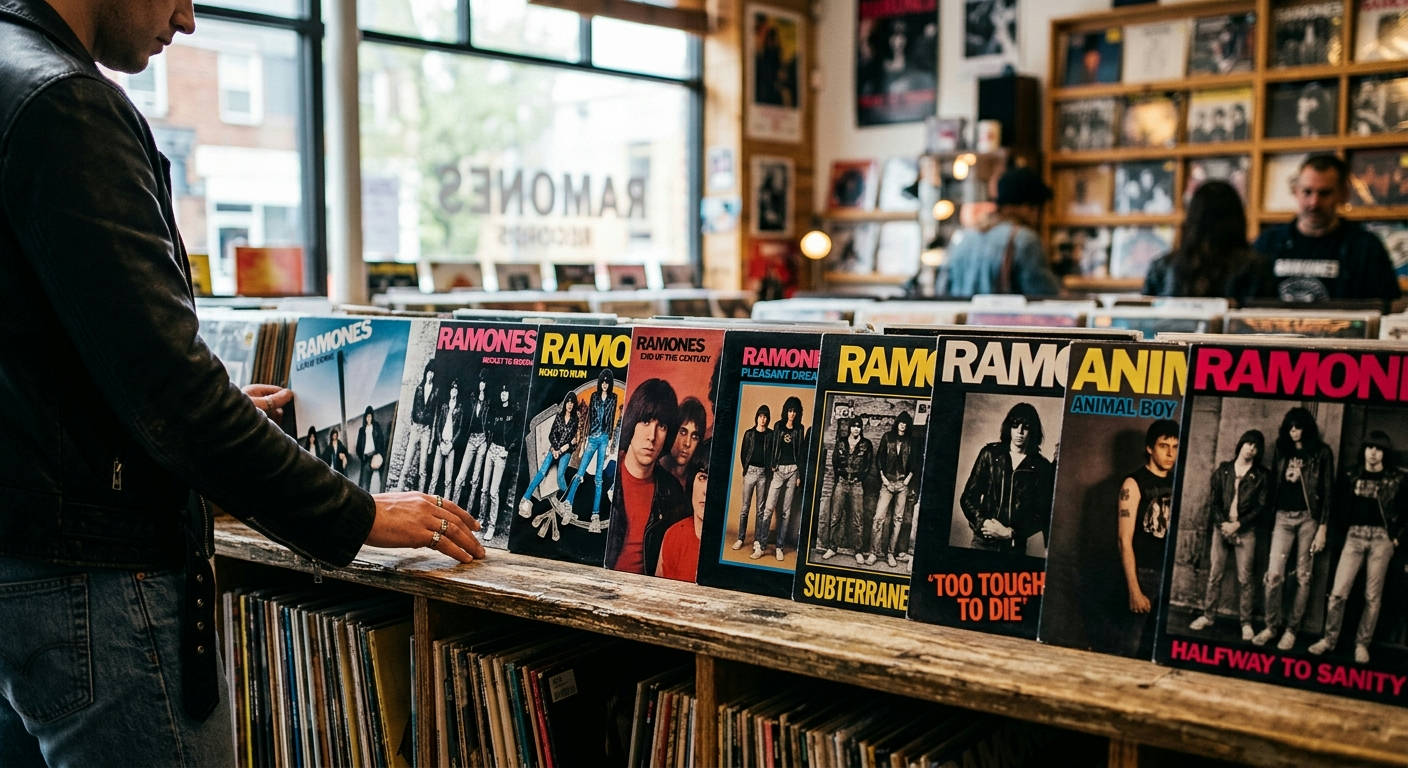
With pop-rock producer Graham Gouldman (of 10cc) at the helm, Pleasant Dreams continued the push towards a more radio-friendly sound. By this point, the creative partnership between Joey and Dee Dee was splintering, and for the first time, they wrote most of their songs separately.
Joey’s contributions, like “The KKK Took My Baby Away,” are pure pop-punk perfection. Dee Dee’s tracks lean harder and darker. The polish of Gouldman’s production gives the album a bright, almost power-pop feel, which alienated some old-school fans but makes for a great listen on its own terms.
Subterranean Jungle (1983)
This album is a messy, raw, and often overlooked entry. Marky Ramone was fired during this period due to his alcoholism, replaced by Richie Ramone. The band was in disarray, and the album reflects that chaos.
Subterranean Jungle feels like a deliberate retreat from the pop gloss of the previous two records. It’s grittier, heavier, and features a trio of cover songs. While it lacks a standout single, tracks like “Psycho Therapy” and “Outsider” show the band could still deliver a punch. It’s a difficult but rewarding listen for dedicated fans.
Too Tough to Die (1984)
This is the comeback. With Richie Ramone firmly established on the drums and original drummer Tommy Erdelyi back in the producer’s chair, The Ramones sound completely reinvigorated. The album was a direct response to the burgeoning hardcore punk scene of the early 80s.
The music is faster, harder, and angrier than anything they’d done in years. The title track, Dee Dee’s “Wart Hog,” and the blistering “Endless Vacation” are pure hardcore aggression. But they didn’t abandon their pop instincts entirely, as evidenced by the brilliant, melodic “Howling at the Moon (Sha-La-La).” Too Tough to Die proved The Ramones were still a vital force in the punk world they helped create.
A Complete Guide to The Ramones Discography Studio Albums
The latter half of The Ramones’ career saw them settle into a role as punk rock elder statesmen. They embraced a heavier, more metallic sound and continued to tour relentlessly, cementing their legacy one show at a time. The albums from this period are often considered less essential than their 70s output, but they are a crucial part of the story.
The Late 80s: Embracing a Heavier Sound
As the 80s wore on, Johnny Ramone’s love for heavy metal began to creep more and more into the band’s sound. The guitars got chunkier, the production got bigger, and the punk-pop gave way to something closer to hard rock.
Animal Boy (1986)
Produced by Jean Beauvoir of the Plasmatics, Animal Boy is one of the most sonically diverse and controversial albums in The Ramones discography studio albums. It features synthesizers, overtly political lyrics (a rarity for the band), and a guest appearance by the B-52’s.
The album is best known for the anthem “Something to Believe In” and its accompanying star-studded, satirical charity video. Dee Dee’s “Love Kills” is a powerful tribute to Sid Vicious, while “My Brain Is Hanging Upside Down (Bonzo Goes to Bitburg)” is a scathing political track written by Joey in protest of Ronald Reagan’s visit to a German military cemetery. It’s a strange, uneven record that captures the band being pulled in multiple directions.
Halfway to Sanity (1987)
Often cited by the band themselves as their least favorite album, Halfway to Sanity is the sound of a band at its breaking point. The production is thin and metallic, and the internal friction is palpable in the music. Dee Dee was struggling with addiction and was about to quit the band to pursue a disastrous rap career as “Dee Dee King.”
Despite the turmoil, there are some great songs here. “I Wanna Live” is a classic Ramones-style track, and “Garden of Serenity” is a surprisingly effective heavy-hitter. It’s an album primarily for the completists, but it’s an important document of a band on the verge of collapse.
Brain Drain (1989)
Brain Drain is a return to form of sorts and a significant album for two reasons: it features the Stephen King-penned hit “Pet Sematary,” and it was Dee Dee Ramone’s last studio album with the band (until he returned as a songwriter).
The production is slick and heavy, very much a product of its time. “I Believe in Miracles” is a standout track, and “Pet Sematary” gave them a welcome late-career boost on MTV. After this album, Dee Dee was replaced by the younger, more energetic C.J. Ramone, breathing new life into the band for their final act.
The Final Chapter: The 90s and the End of the Road
With C.J. Ramone on bass, The Ramones entered the 1990s with a renewed sense of purpose. They were finally getting their due, cited as a primary influence by the new generation of grunge and alternative bands like Nirvana and Pearl Jam who were taking over the charts.
Mondo Bizarro (1992)
Their first album with C.J. is a solid, powerful effort. Mondo Bizarro sounds huge, with a thick, muscular production that puts Johnny’s guitar front and center. It’s a consistently strong collection of songs that feels like a classic Ramones album with a 90s rock sheen.
The opening track, “Censorshit,” is a fiery rant against the PMRC, while “Poison Heart” (written by Dee Dee) became one of their most enduring late-period songs. C.J. takes his first lead vocal on “Strength to Endure,” proving he was more than capable of filling Dee Dee’s massive boots.
Acid Eaters (1994)
Every long-running band seems to do a covers album eventually, and Acid Eaters is The Ramones’ take on the concept. Here, they pay tribute to the 60s garage rock and psychedelic bands that originally inspired them, like Creedence Clearwater Revival (“Have You Ever Seen the Rain?”), The Seeds (“Can’t Seem to Make You Mine”), and Bob Dylan (“My Back Pages”).
It’s a fun, if non-essential, detour. It gives a fascinating insight into their influences and proves that even a stripped-down punk band can tackle the classics and make them their own. The energy is high, and it’s clear the band is having a blast.
¡Adios Amigos! (1995)
Knowing it would be their last, The Ramones went out on their own terms with ¡Adios Amigos!. The album was recorded after the Lollapalooza tour in 1996, which was intended to be their final bow. It serves as a fitting farewell statement.
The album is a mix of classic-sounding Ramones tunes and a few poignant goodbyes. It features several songs written by Dee Dee and a cover of the Johnny Thunders classic “I Don’t Want to Grow Up.” The final track, a cover of Tom Waits’ “I Don’t Want to Grow Up,” feels like a perfect, defiant closing statement from a band that never compromised.
Collecting The Ramones on Vinyl: A Buyer’s Guide
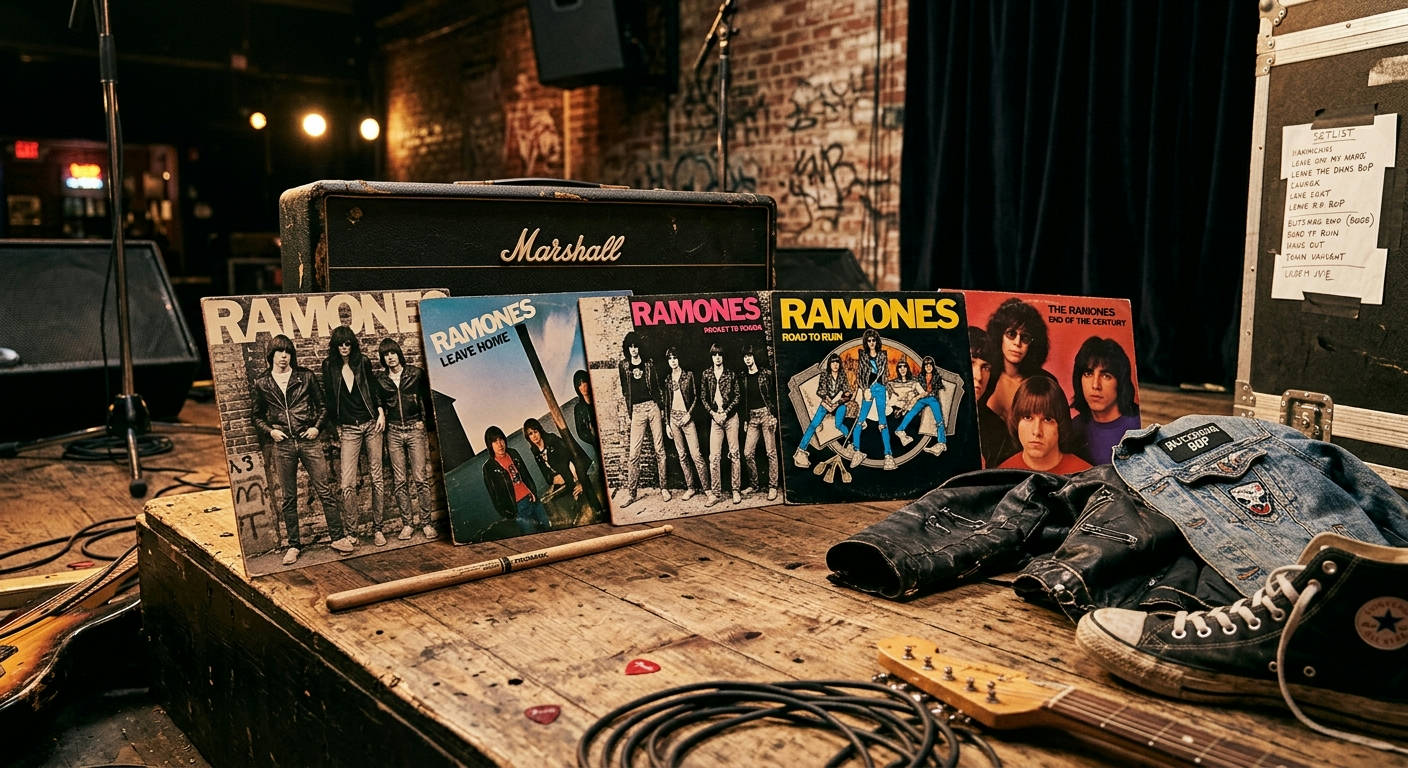
For any serious music fan, exploring The Ramones discography studio albums on vinyl is an essential experience. The raw power of their early work, in particular, just hits differently on a turntable. Here’s what you need to know to start your collection in 2026.
What to Look for in Original Pressings
Original US pressings from the 70s were released on Sire Records. Look for the classic yellow label with the purple “Sire” logo. Early copies of the self-titled debut album will have the address “8255 Sunset Blvd.” on the label. Condition is everything. Finding a clean, near-mint copy of Ramones or Rocket to Russia is a true collector’s prize. Be prepared to pay a premium for them.
“The Ramones were the first kids to come along who had nothing to prove. They were just themselves. And that’s what made them so cool.” – Thurston Moore, Sonic Youth
The Best Modern Reissues (As of 2026)
If you don’t have hundreds of pounds to drop on a first pressing, don’t worry. The recent reissues are fantastic. The 40th Anniversary Deluxe Editions of the first four albums are particularly noteworthy. They feature remastered audio from the original tapes, plus a wealth of B-sides, demos, and live recordings. They often come in beautifully packaged box sets that do justice to the music’s legacy. You can often find great deals on these modern pressings.
For a quality listening experience, a modern 180-gram reissue is a great starting point. You can find the latest edition of their classic debut right here: The Ramones Self-Titled Vinyl on Amazon.
Building Your Collection: Where to Start
The obvious answer is to start at the beginning. Grab their 1976 debut, Ramones. It’s the blueprint. From there, work your way through the first four albums. Once you have that “golden era” covered, you can decide where to go next. If you like their poppier side, grab End of the Century. If you prefer their heavier sound, jump ahead to Too Tough to Die.
Before you drop cash on a first pressing, make sure you have a setup that does it justice. A bad turntable can ruin a great record. Check out our guide to the best turntables under £300 in the UK to get started on the right foot.
The Lasting Impact on Music
It’s impossible to overstate the importance of The Ramones. They didn’t just start a genre; they recalibrated what rock music could be. Their influence is so pervasive that many people don’t even realize they’re hearing it.
How The Ramones discography studio albums changed everything.
Before The Ramones, rock had become bloated and self-important. They brought it back to the garage. They proved you didn’t need to be a virtuoso to make powerful, meaningful music. All you needed was three chords, a good hook, and something to say. Their entire studio output is a testament to this philosophy. This back-to-basics approach empowered countless kids to pick up guitars and start their own bands, a legacy detailed extensively by music historians and even acknowledged by the Rock & Roll Hall of Fame, where they were inducted in 2002.
Beyond Punk: Their Influence on Alternative, Metal, and Pop
Their DNA is everywhere. You can hear it in the pop-punk of Green Day and Blink-182. You can hear it in the speed and aggression of Metallica and Motörhead, both of whom have covered Ramones songs. You can even hear it in the melodic sensibilities of indie and alternative rock bands. They created a universal language of loud, fast, and fun that transcends genre boundaries.
The Ramones’ career is a lesson in perseverance. They never had a gold album or a top 40 hit in the US while they were together. Yet, they toured non-stop for 22 years, playing over 2,200 shows. They built their legacy on the road and through a remarkably consistent body of studio work.
Their music remains as vital and exciting in 2026 as it was in 1976. Gabba Gabba Hey.