
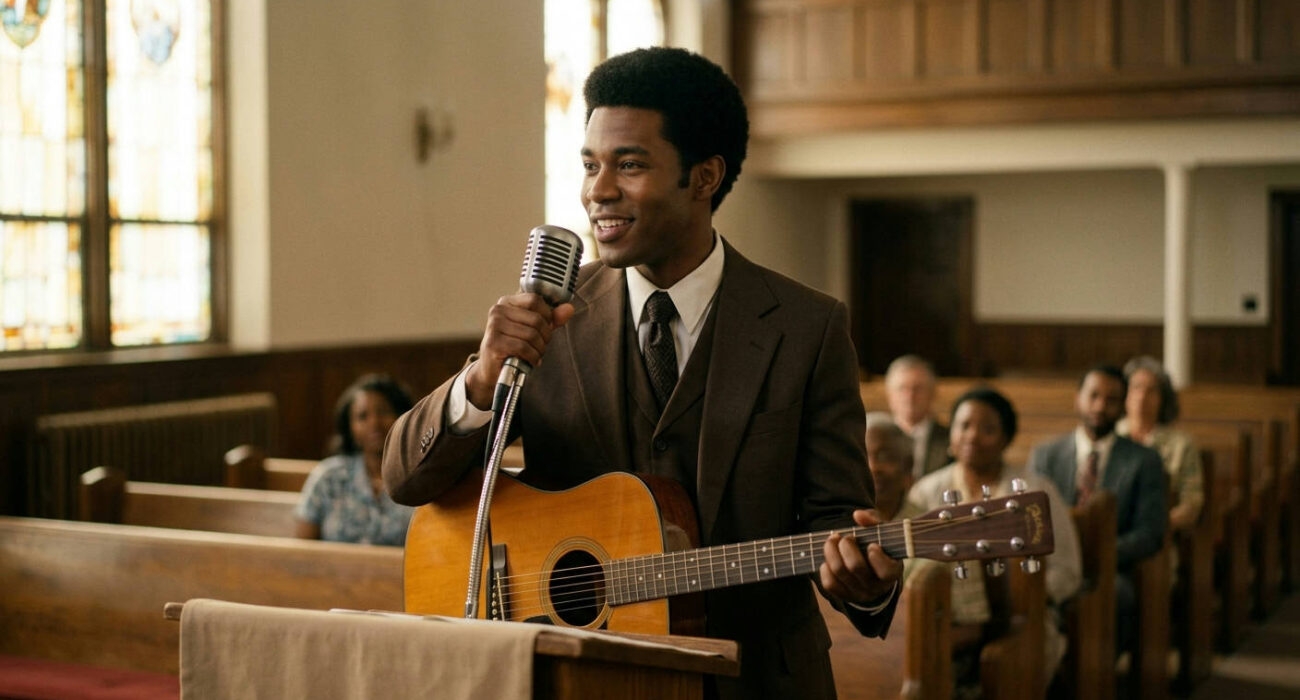
To truly understand the man who would become the King of Soul, you have to go back to the church pews and revival tents. You have to dig into the raw, electrifying, and foundational period that is the Sam Cooke gospel roots early career. This wasn’t just a stepping stone; it was the crucible where his revolutionary vocal style, magnetic stage presence, and storytelling genius were forged. Forget the pop hits for a moment and listen closer—the DNA of “A Change Is Gonna Come” is found in the gospel spirituals he mastered as a young man. The Sam Cooke gospel roots early career shaped not just his music but also the entire genre’s evolution.
Here at Vinyl Gold UK, we believe the full story of an artist is pressed into the grooves of their entire discography, not just the chart-toppers. Sam Cooke’s journey from gospel prodigy to pop icon is one of the most compelling narratives in music history, and it all starts here.
The Formative Years: The Highway QC’s
Before Sam Cooke became a household name, he was Samuel Cook, one of eight children of a Baptist minister in Chicago. Music wasn’t a hobby in the Cook household; it was a way of life. This immersion led to his first real taste of performance.
From Family Group to The Highway QC’s
Cooke’s earliest performances were with his siblings in a group called The Singing Children. But his professional journey began in earnest in 1945 when he joined the teenage gospel quartet, The Highway QC’s. This wasn’t a minor-league gig. The QC’s were a well-respected group on the gospel circuit, and a teenage Sam was already showing signs of the star he would become.
He spent several years with the group, honing his skills as a lead vocalist. This period was his apprenticeship, where he learned the mechanics of quartet singing, call-and-response dynamics, and how to command a stage, all before he was even 20 years old.
The Call Up: Taking the Reins of The Soul Stirrers
In 1950, a seismic shift happened in the gospel world. The legendary R.H. Harris, lead singer of the most celebrated gospel group of the era, The Soul Stirrers, decided to retire. Finding a replacement seemed an impossible task. The group chose the 19-year-old Sam Cook.
The pressure was immense. Harris was a titan, revered for his hard-singing, gritty style. Cooke was young, handsome, and possessed a smoother, more melodic voice. Many purists were skeptical, viewing him as too “pretty” for the raw emotion of gospel.
His transition from the Sam Cooke gospel roots early career to the pop world was marked by profound innovation.
They couldn’t have been more wrong. Cooke didn’t just fill Harris’s shoes; he crafted a new pair entirely. He brought a youthful magnetism and a vocal elegance that fundamentally changed The Soul Stirrers’ sound and brought them an entirely new, younger audience. His tenure with the group marks a definitive chapter in the story of the Sam Cooke gospel roots early career.
The influence of the Sam Cooke gospel roots early career is palpable in every note he sang.
## The Sam Cooke Gospel Roots Early Career Defined by The Soul Stirrers
During his Sam Cooke gospel roots early career, he developed a style that would resonate with audiences for decades.
This six-year period with The Soul Stirrers is where Sam Cooke became a superstar within the gospel community. He wasn’t just a singer; he was an innovator, a composer, and a phenomenon who redefined what a gospel frontman could be.
The Sam Cooke gospel roots early career laid the groundwork for his future success.
### Vocal Innovation: Mastering the Melisma
Sam Cooke’s voice was his ultimate instrument. While his predecessors often relied on pure power and gravelly emotion, Cooke introduced a fluid, graceful style. He was a master of melisma—the art of singing a single syllable of text while moving between several different notes in succession. This technique, often called his “yodel” or “curl,” became his signature.
“He had a way of caressing a lyric, of making it his own. You didn’t just hear the words; you felt them. That came directly from his gospel training, where every line is a testimony.”
Listen to his lead on Soul Stirrers tracks, and you can hear him weaving intricate vocal runs that add layers of emotion without ever sounding forced. It was this smooth, yet deeply soulful, delivery that would later make his transition to pop music feel so effortless and revolutionary.
### Landmark Recordings: “Nearer to Thee” and “Touch the Hem of His Garment”
To grasp the power of Cooke’s gospel work, you need to spin the records. Two tracks in particular stand as towering achievements:
These songs are a testament to the artistry born from the Sam Cooke gospel roots early career.
-
- “Nearer to Thee” (1955): This is a masterclass in vocal control and emotional build. Cooke starts with a gentle, almost tender plea, gradually escalating the intensity until the song reaches a fever pitch of spiritual ecstasy.
- “Touch the Hem of His Garment” (1956): Composed by Cooke himself, this song showcases his storytelling genius. He doesn’t just sing about the biblical story of the woman with an issue of blood; he inhabits it. His delivery is cinematic, painting a vivid picture and building suspense. It’s a perfect example of the narrative power he would later bring to pop songs.
Cooke’s storytelling ability traces back to his Sam Cooke gospel roots early career, influencing how he connected with audiences.
### The Gospel Heartthrob
Cooke’s appeal went far beyond his voice. He was charismatic and handsome, and his stage presence was electric. In an era where gospel singers were respected figures, Cooke became a heartthrob. His performances with The Soul Stirrers were legendary, often causing frenzies in the audience, particularly among female fans.
His charm and charisma were products of the Sam Cooke gospel roots early career, captivating audiences wherever he went.
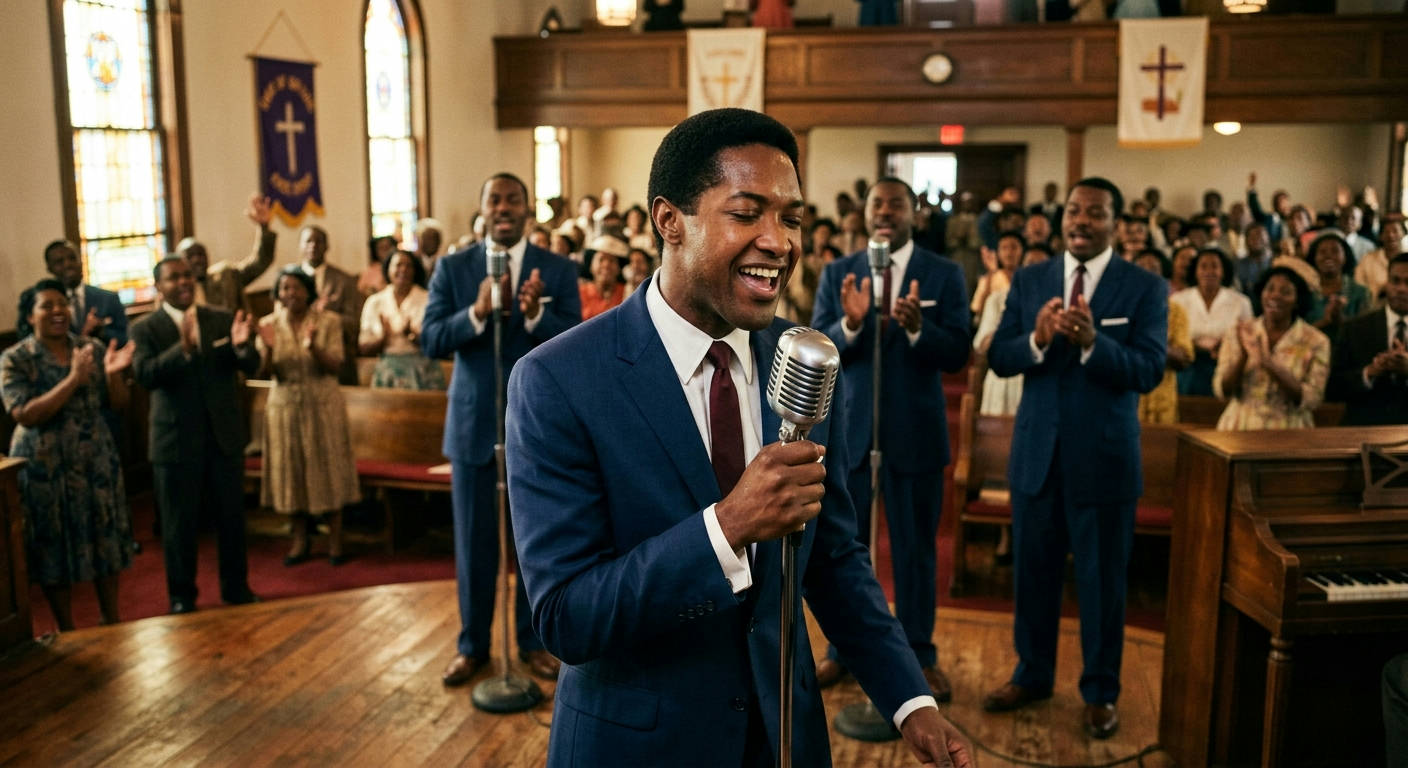
This ability to connect intimately with a crowd, to make every person in the room feel like he was singing directly to them, was a skill perfected on the gospel circuit. It would serve him well when he crossed over and faced secular audiences on stages like the Copacabana.
The Gospel Toolkit: Techniques for Pop Domination
Sam Cooke didn’t abandon his gospel techniques when he went pop; he repurposed them. The tools he sharpened in the church became his secret weapons in conquering the pop charts. Understanding this is key to appreciating his genius.
Understanding the techniques honed in his Sam Cooke gospel roots early career is essential to appreciating his pop success.
Call and Response
A cornerstone of African American church services and gospel music, call and response is a pattern where a lead singer’s phrase is answered by a chorus. Cooke brilliantly adapted this for secular music. The most famous example is “Chain Gang” (1960), where the “huh, ha” grunt of the workers is a direct response to his lead vocal. It creates a sense of community and participation straight out of a Sunday service.
Ad-Libbing and Vocal Runs
The “woah-oh-ohs” in “Twistin’ the Night Away” or the soaring runs in “Bring It On Home to Me” aren’t just catchy additions. They are the secular evolution of the gospel ad-lib. In church, a singer might improvise vocally to express the movement of the spirit. Cooke translated that spiritual ecstasy into expressions of joy, love, and heartbreak, adding a layer of raw, unscripted emotion to his pop records.
These vocal techniques were honed during his Sam Cooke gospel roots early career and laid the foundation for his later work.
The Controversial Leap: From Saint to Secular Star
By 1956, Cooke was at the pinnacle of the gospel world, but he felt constrained. He had creative ambitions and a keen business sense that pointed toward the larger, more lucrative world of pop music. The transition, however, was fraught with risk.
The drive to explore beyond his Sam Cooke gospel roots early career was a bold step into uncharted waters.
The “Dale Cooke” Deception
To test the waters without alienating his devoted gospel audience, Cooke released his first pop single, “Lovable,” under the pseudonym Dale Cooke. The attempt at anonymity failed spectacularly. His voice was too distinctive, and fans and industry insiders immediately knew who it was.
The backlash was swift and severe. He was accused of betraying his faith and “singing the devil’s music.” Art Rupe, the head of his gospel label, Specialty Records, was furious and dropped him. According to Peter Guralnick’s definitive biography “Dream Boogie: The Triumph of Sam Cooke”, this was a moment of profound personal and professional crisis for Cooke.
Why the Crossover Was Inevitable
His gospel beginnings, encapsulated in the Sam Cooke gospel roots early career, provided the emotional depth he would later explore.
Despite the criticism, the move was necessary for Cooke. He was not only a gifted singer but also a brilliant songwriter and aspiring entrepreneur. The gospel circuit, for all its passion, had a financial and creative ceiling. Pop music offered him the platform to achieve global stardom and, just as importantly, control his own career and start his own record label, SAR Records.
Why the Gospel Years Matter to Vinyl Collectors in 2026
For anyone building a serious vinyl collection, understanding the Sam Cooke gospel roots early career is non-negotiable. It provides the essential context for his entire body of work. Owning his pop LPs without his gospel recordings is like reading the last chapter of a book first.
### The Enduring Influence of the Sam Cooke Gospel Roots Early Career
The Sam Cooke gospel roots early career remains a vital chapter in understanding his lasting influence on music.
You cannot fully appreciate the political and emotional weight of “A Change Is Gonna Come” without hearing the spiritual yearning in “Nearer to Thee.” The joyous abandon of “Twistin’ the Night Away” makes more sense when you hear the unbridled spirit of his live gospel performances. His early work is the Rosetta Stone for his later masterpieces. It’s a journey many of the greats took, from the polished crooning of Nat King Cole to the sanctified soul of Aretha Franklin.
For collectors, look for compilations of his work with The Soul Stirrers on the Specialty label. These pressings capture the raw energy of the period. Finding original 78s is a challenge, but high-quality vinyl reissues from recent years, especially those released around 2026, offer pristine sound that brings this vital music to life on a good turntable.
Collectors should note that the Sam Cooke gospel roots early career is an essential component of his musical legacy.
“To listen to Sam with the Soul Stirrers is to hear the birth of soul music. It’s all there: the phrasing, the emotion, the connection. It’s the blueprint.” – a quote attributed to Jerry Wexler, renowned music producer.
The Ultimate Legacy: More Than a King of Soul
More than just a King of Soul, his Sam Cooke gospel roots early career illustrate his role as a pioneering artist.
Sam Cooke’s legacy is that of a pioneer who built a bridge. He took the foundational elements of gospel—its emotional honesty, vocal freedom, and narrative depth—and used them to construct the very framework of soul music. He didn’t just cross over; he brought the spirit of the church with him to the pop charts, changing popular music forever.
His influence is immeasurable, paving the way for artists like Otis Redding, Al Green, and Marvin Gaye, all of whom walked the path he blazed. The Rock & Roll Hall of Fame inducted him as part of its inaugural class in 1986, cementing his status as a true architect of modern music.
His journey from the Sam Cooke gospel roots early career to pop icon shows the evolution of musical expression.
So, the next time you drop the needle on a Sam Cooke record, listen a little deeper. Beneath the smooth pop production, you’ll hear the voice of a young man in The Highway QC’s, the passion of a star leading The Soul Stirrers, and the timeless sound of a genius who never forgot where he came from. The gospel roots weren’t just the start of his career; they were the soul of it.
Ultimately, the Sam Cooke gospel roots early career was not just a beginning; it defined the essence of his artistry.