
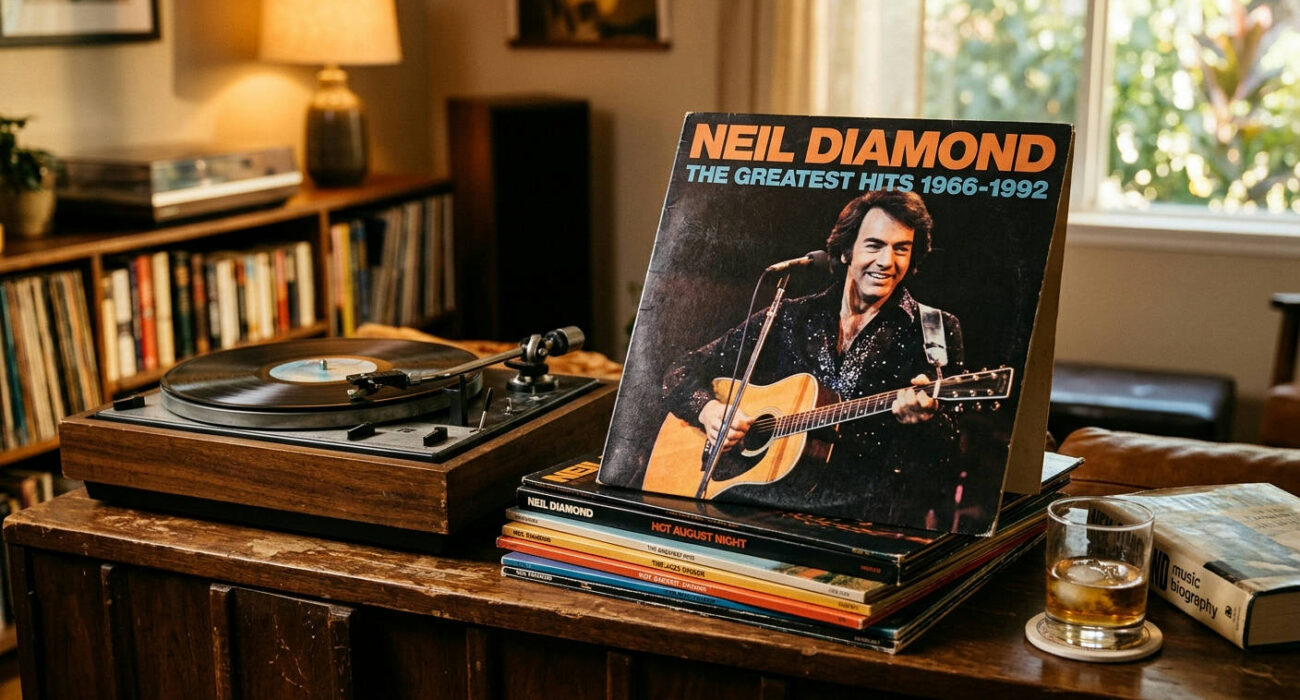
Trying to find the one perfect Neil Diamond greatest hits album is a mission. You type it into a search bar and are hit with a tidal wave of options. His 12 Greatest Hits, The Greatest Hits: 1966–1992, All-Time Greatest Hits, The Very Best of Neil Diamond… the list is endless and, frankly, confusing. This isn’t an accident. Decades of career moves across different record labels created a fractured discography, leaving fans drowning in choice. This guide is your lifeline. We’re cutting through the noise to tell you which compilations are essential, which are forgettable, and how to choose the right collection of Diamond’s classics for your shelf.
The Compilation Conundrum: Why Are There So Many?
The sheer volume of Neil Diamond compilations isn’t a marketing gimmick; it’s a direct result of his long and label-hopping career. To understand which greatest hits album you need, you first have to understand the three distinct eras of his recording history. Each one is owned by a different entity, all eager to cash in on his iconic back catalogue.
The Bang Records Foundation (1966-1968)
This is where it all began. In a short but explosive period, Neil Diamond, working with songwriters Jeff Barry and Ellie Greenwich, churned out a series of raw, energetic pop-rock hits. These tracks have a distinct garage-rock feel that’s very different from his later, more polished work.
Key tracks from this era include:
- “Solitary Man”
- “Cherry, Cherry”
- “I Got the Feelin’ (Oh No, No)”
- “You Got to Me”
- “The Boat That I Row”
- “I’m a Believer” (The Monkees’ version is more famous, but he wrote and recorded it first)
Because Bang Records holds the rights to these masters, you’ll often find compilations dedicated only to this period. If a Neil Diamond greatest hits album seems suspiciously short or cheap, check the track list. If it ends around 1968, you’re looking at a Bang-era-only collection. It’s a fantastic snapshot of his beginnings, but it’s not the whole story.
The Uni/MCA Ascent (1968-1972)
After a dispute over creative control, Diamond left Bang and signed with Uni Records (which later became part of MCA). This is where the sequined-shirt, sensitive singer-songwriter persona we know and love was truly forged. The arrangements became more ambitious, the lyrics more introspective, and the hits became global anthems.
This is arguably his most celebrated period, producing a torrent of timeless classics:
- “Sweet Caroline”
- “Holly Holy”
- “Cracklin’ Rosie”
- “I Am… I Said”
- “Song Sung Blue”
- “Play Me”
- “Shilo” (re-recorded from the Bang era)
This era culminated in the legendary 1972 live album, Hot August Night. Many compilations lean heavily on this period, and for good reason. It’s the quintessential sound of Neil Diamond hitting his creative and commercial peak.
The Columbia Records Juggernaut (1973-Present)
In 1973, Diamond signed a monumental deal with Columbia Records, one of the biggest in history at the time. This phase saw him transition into a true adult contemporary superstar. The sound became smoother, often incorporating lush orchestration and grand, cinematic themes.
The Columbia years are packed with massive hits that defined the late ’70s and ’80s:
- “Longfellow Serenade”
- “You Don’t Bring Me Flowers” (with Barbra Streisand)
- “September Morn”
- “Love on the Rocks”
- “Hello Again”
- “America”
- “Heartlight”
Compilations focusing on this era will have a completely different feel—more ballads, more duets, and more soundtrack hits. Understanding these three distinct phases is the key to decoding any tracklist and finding the collection that truly represents the Neil Diamond you want to hear.
The Ultimate Guide to Finding the Best Neil Diamond Greatest Hits Album
Now that you know why it’s so complicated, let’s make it simple. We’ve sorted through the endless options to give you our definitive 2026 recommendations. Whether you’re a brand new fan or a seasoned collector, this is where you’ll find your perfect match.
For the Casual Fan Who Wants It All: All-Time Greatest Hits
If you only buy one Neil Diamond greatest hits album, this is it. Released in 2014, All-Time Greatest Hits is one of the few compilations that successfully licenses tracks from all three major eras of his career. It’s the most complete single-package overview you can get without investing in a multi-disc box set.
You get the Bang-era energy of “Cherry, Cherry,” the Uni-era singalongs of “Sweet Caroline” and “Cracklin’ Rosie,” and the Columbia-era power ballads like “You Don’t Bring Me Flowers.” The track sequencing is thoughtful, creating a listening experience that flows through his evolution as an artist. It’s available on CD and a fantastic-sounding 2-LP vinyl set. It is, for all intents and purposes, the modern standard.

“I’m a performer. I’m a singer. I’m a songwriter. I’m a musician. And I’m a good one, and I’m very proud of it.” – Neil Diamond
This collection is a testament to that pride, showcasing every facet of his incredible talent. It’s the perfect starting point and, for many, the only collection they’ll ever need.
- Find it on Amazon: Search for Neil Diamond All-Time Greatest Hits on vinyl or CD
For the Vinyl Enthusiast: His 12 Greatest Hits (The Original 1974 Pressing)
For those of us at Vinyl Gold UK, there’s something special about owning a piece of history. While newer compilations might be more comprehensive, the original 1974 MCA release, His 12 Greatest Hits, is a perfect vinyl artefact. This album was a staple in record collections throughout the ’70s and focuses entirely on his monumental Uni/MCA period.
The tracklist is flawless, a dozen songs of pure gold from “Sweet Caroline” to “I Am… I Said.” What makes an original pressing special is the all-analogue warmth. The sound is rich, punchy, and authentic to the era. It’s the way these songs were meant to be heard. Finding a clean, first-press copy is a rewarding dig for any vinyl collector. When you spin this on a quality setup, like one of the best turntables under £300 in the UK, you’re not just listening to music; you’re experiencing a moment in time.
The Definitive Neil Diamond Greatest Hits Album for the Deep Diver: In My Lifetime Box Set
This is the holy grail. The In My Lifetime 3-CD box set, originally released in 1996, is a completist’s dream. It’s not just a collection of hits; it’s a meticulously curated musical biography. It features all the essential singles, but its real value lies in the deep cuts, alternate takes, and previously unreleased demos.
You’ll hear the raw potential in early song writing demos and gain a new appreciation for his craft. The accompanying booklet is filled with detailed liner notes and rare photos, providing context that a standard compilation simply can’t offer. If you want to move beyond just the radio staples and truly understand the artist behind the anthems, this is the investment to make. It tells the story from his beginnings as a struggling writer in the Brill Building to his status as a global icon.
- Find it on Amazon: Search for Neil Diamond In My Lifetime box set
What to Look For: Deconstructing the Track list
When you’re standing in a record shop or browsing online, you need to be able to quickly assess a compilation’s worth. Here’s a quick-fire guide to what makes or breaks a Neil Diamond greatest hits album.
The Non-Negotiable Anthems
Any collection calling itself “greatest hits” is fraudulent if it doesn’t include these tracks. They are the pillars of his career and the songs that have woven themselves into the fabric of popular culture. Check for them first.
- Sweet Caroline: The ultimate singalong. A global phenomenon that transcends generations.
- Cracklin’ Rosie: His first US #1 hit. A joyous, stomping classic.
- I Am… I Said: Perhaps his most profound and personal song. A masterpiece of introspection and melodrama.
- America: An epic, patriotic anthem from The Jazz Singer that has become a standard.
- Song Sung Blue: A deceptively simple, infectiously optimistic chart-topper.
- Solitary Man: The moody, brilliant debut that started it all.
If any of these are missing, you should probably put the record down and walk away, unless it’s a specific, era-focused collection.
Essential Deep Cuts That Signal a Quality Compilation
The presence of a few fan-favourite deep cuts is often the sign of a thoughtfully curated collection. When you see these tracks alongside the big hits, you know the compilers dug a little deeper.
- Brooklyn Roads: A deeply personal and autobiographical song about his childhood. A fan favourite for its raw honesty.
- Shilo: An early track about an imaginary friend that he later re-recorded. Its inclusion shows an understanding of his artistic journey.
- Holly Holy: A powerful, gospel-infused track that showcases the spiritual intensity of his Uni-era work.
- Play Me: A tender, acoustic ballad that demonstrates his mastery of the singer-songwriter form. It’s a perfect companion piece to his work’s grandiosity. Seeing this track indicates a well-rounded selection. If you enjoy this side of Diamond, you might also appreciate the masterful song writing of an artist like James Taylor.
Live vs. Studio: The Hot August Night Dilemma
Be vigilant about the version of the song you’re getting. Neil Diamond is a legendary live performer, and his 1972 album Hot August Night is one of the greatest live recordings of all time. The performances on it are electric, passionate, and often more powerful than their studio counterparts.
Some compilations, especially older ones, will substitute a live version for a studio hit. For example, you might get the Hot August Night version of “Cherry, Cherry” instead of the original Bang Records single. There’s no right or wrong answer here—some people prefer the raw energy of the live tracks. Just be sure to check the track list for “(Live)” notations so you know exactly what you’re buying.
The Format Showdown: Experiencing Neil’s Hits
How you listen to music matters. For an artist with such a textured voice and grand arrangements, the format can dramatically change the experience of hearing a Neil Diamond greatest hits album.

The Unmatched Warmth of Vinyl
We’re biased, but for good reason. Hearing Neil Diamond on vinyl is the definitive experience. The analogue format brings a warmth and richness to his voice that digital can sometimes sterilize. The strings on “September Morn” feel fuller, the acoustic guitar on “Play Me” sounds more intimate, and the explosive chorus of “Cracklin’ Rosie” hits with a physical punch.
Beyond the sound, there’s the tactile joy of the vinyl record. The large-format album art, the act of placing the needle on the record—it’s a ritual that connects you more deeply to the music. Modern 180-gram pressings of compilations like All-Time Greatest Hits offer superb audio fidelity, combining modern mastering with the classic analogue feel.
The Clean Convenience of Digital (CD & Streaming)
There’s no denying the convenience of digital formats. CDs and high-resolution streaming services offer pristine, crystal-clear sound. Many of Diamond’s albums have been remastered for the digital age, often bringing out details that were buried in older mixes.
For listening on the go or for those who prioritize clinical clarity over analogue character, a well-mastered CD or a lossless stream is a perfectly valid choice. It allows you to carry his entire catalogue in your pocket, something unimaginable in the 1970s.
Our Final Take: Spin the Black Circle
While we appreciate all formats, the soul of Neil Diamond’s music lives in the grooves of a record. The grand, sweeping emotions of his best work are best served by the grand, sweeping experience of vinyl. It encourages active listening, turning a collection of songs into an event.
Life After the Hits: Your Next Neil Diamond Album
Once you’ve absorbed the greatest hits, you’ll inevitably get curious about the albums they came from. Diving into his studio LPs reveals a deeper, more nuanced artist. Here are three essential albums to explore after you’ve mastered the hits.
The Jazz Singer (1980)
You can’t talk about Neil Diamond’s career without mentioning The Jazz Singer. While the film itself received mixed reviews, the soundtrack was a colossal success. It’s practically a greatest hits album in its own right, featuring three of his most enduring ’80s anthems: “America,” “Love on the Rocks,” and “Hello Again.” The album perfectly captures the slick, powerful sound of his Columbia era and is an essential piece of his discography.
Moods (1972)
Released at the absolute peak of his creative powers, Moods is a masterclass in song writing. It contains the massive hit “Song Sung Blue” and the fan-favourite ballad “Play Me,” but the entire album is a cohesive and brilliant statement. It showcases his ability to shift from upbeat pop to heartfelt introspection seamlessly. This is the quintessential Neil Diamond singer-songwriter album.
Beautiful Noise (1976)
For something a little different, seek out Beautiful Noise. Produced by Robbie Robertson of The Band, this album has a grittier, more organic sound than much of his other Columbia-era work. It’s a tribute to his Tin Pan Alley song writing roots, with a raw energy that’s incredibly compelling. The title track and “If You Know What I Mean” are highlights on an album that reveals a different, less-polished side of the superstar.
The Enduring Legacy of a Song Shine Man
Neil Diamond’s impact on music is immeasurable. He’s one of the best-selling musicians of all time, with a career built on a foundation of elite song writing. His journey is a fascinating one, from a behind-the-scenes writer to a global performance icon.
From Brill Building to Stage God
Before he was a star, he was a “song craftsman” in the legendary Brill Building, writing hits for others. His induction into the Rock & Roll Hall of Fame in 2011 rightly celebrated his dual identity as both a performer and a foundational songwriter who penned “I’m a Believer” for The Monkees. This background gave him a deep understanding of melody and structure that set him apart from his peers.
A lot of people have a hard time trying to figure me out. They say, ‘He’s a pop singer, he’s a rock ‘n’ roll singer, he’s a folk singer.’ And I say, ‘Well, I’m all of them.’
This versatility is exactly why his music has lasted. He wasn’t confined to a single genre. He could deliver a tender ballad, a rock anthem, and a folk-inspired story all on the same album. He was also inducted into the Songwriters Hall of Fame back in 1984, a testament to his peers’ respect for his writing abilities long before he was seen as a legacy act.
The Timeless Power of Neil in 2026
Decades on, the music still resonates. You hear it in movies, you see it referenced in pop culture, and you feel it when 50,000 people at a stadium spontaneously erupt into a “Sweet Caroline” singalong. His influence is everywhere. He created a unique brand of emotionally charged, melodramatic pop that was entirely his own.
Finding the right Neil Diamond greatest hits album is your entry point into this incredible world. It’s about more than just a collection of songs; it’s about connecting with a body of work that has brought joy, comfort, and catharsis to millions.
So, stop scrolling endlessly through confusing options. For most people, the All-Time Greatest Hits collection is the definitive, all-in-one answer. For the vinyl purists, an original pressing of His 12 Greatest Hits is a treasure. Choose your weapon, drop the needle, and let the music speak for itself. For more deep dives into the icons of music, check out our other articles on the Vinyl Gold UK blog.