
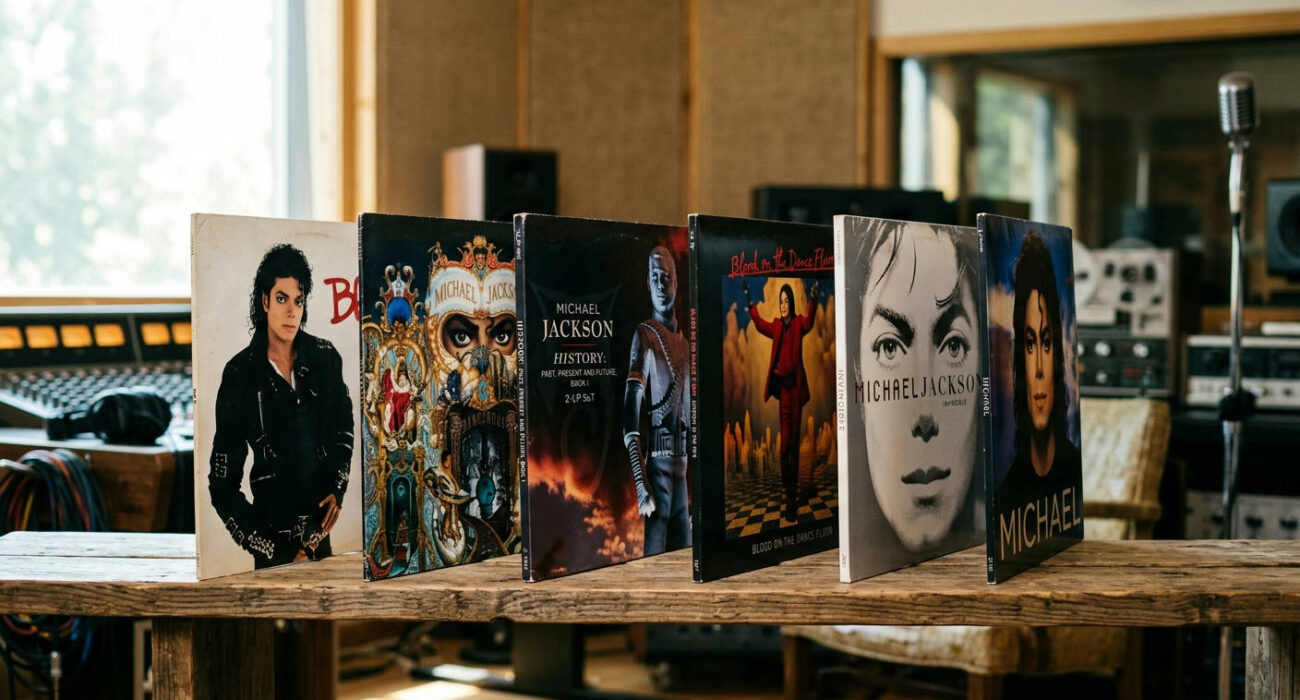
Let’s get one thing straight. Judging Michael Jackson’s career by the impossible standard of Thriller is like judging every mountain by Everest. You miss the entire range. The truth is, the Michael Jackson post Thriller studio albums represent his most fascinating, complex, and artistically daring work. This was the era where the Peter Pan of pop became a defiant king, grappling with a level of fame no human had ever experienced, and he channeled it all into the music.
These records—Bad, Dangerous, HIStory, and Invincible—are not just sequels or afterthoughts. They are the sound of an artist refusing to be a museum piece. They are bold, often angry, and sonically lightyears ahead of their time. For anyone serious about music, and especially for vinyl collectors, this is where the real story gets deep.
## The Impossible Follow-Up: Decoding the Pressure After Thriller
Thriller didn’t just sell records; it reshaped pop culture itself. Released in 1982, its fusion of pop, rock, and R&B, coupled with revolutionary music videos, created a global phenomenon that, even by 2026, remains the best-selling album of all time. The pressure to follow that was unimaginable.
The Five-Year Wait for Bad
Five years. In today’s music cycle, that’s an eternity. Between 1982 and 1987, the world waited. The media speculation was relentless, building a mythos around Jackson that was equal parts awe and absurdity. Could he do it again? Would he even try?
This period saw his public image shift dramatically. He was no longer just the supremely talented kid from The Jackson 5. He was an enigma, a global icon whose every move was scrutinized. This intense pressure cooker environment directly informed the tone of the album that was to come.
Evolving His Sound: The Birth of a Harder Edge
Jackson knew he couldn’t simply make Thriller Part 2. The only way forward was to evolve. Working again with legendary producer Quincy Jones, the mission for the next album was to create something tougher, edgier, and more confrontational.
The disco-funk sheen of his earlier work was sandblasted away, replaced by aggressive synth basslines, rock guitar riffs, and a percussive drive that felt more urgent. This wasn’t just a musical shift; it was a statement of intent. The world wanted to define him, so he decided to define himself, and the sound was going to be unapologetically bold.
## Bad (1987): The Defiant Masterpiece
When Bad finally dropped in August 1987, the immediate narrative was about sales. Did it beat Thriller? No. But that’s the most boring question you could ask. Artistically, Bad is a triumph—a muscular, confident, and incredibly focused album that proved Jackson was far from a one-trick pony.
It’s an album that sounds magnificent on a good turntable, with Quincy Jones’ production providing a masterclass in dynamic range. The punch of the drums on “Bad” and the sweeping synths on “Man in the Mirror” feel alive on wax.
A Record-Breaking Run of Singles
Let’s talk about dominance. Bad made history as the first album ever to spawn five consecutive number-one singles on the US Billboard Hot 100. It was a feat of chart supremacy that silenced any doubters.
The singles showcased his incredible range:
- “I Just Can’t Stop Loving You”: A classic, soaring duet.
- “Bad”: An aggressive, synth-funk anthem of self-assertion.
- “The Way You Make Me Feel”: A pure, joyous pop-R&B masterwork with an irresistible shuffle.
- “Man in the Mirror”: A powerful, gospel-infused call for social change.
- “Dirty Diana”: A hard-rock stomper featuring a blistering solo from Billy Idol’s guitarist, Steve Stevens.
“I’m starting with the man in the mirror, I’m asking him to change his ways. And no message could have been any clearer: if you want to make the world a better place, take a look at yourself and then make a change.”
This run of hits demonstrated a versatility that few artists in history could ever hope to match. It was a clinic in pop song writing and performance.
Lyrical Maturity and Darker Themes
Beneath the polished hits, Bad explored a much more complex emotional palette. “Leave Me Alone,” a bonus track on the CD and later pressings, was a direct, furious assault on the media that hounded him. The song’s frantic energy and paranoid lyrics were a raw glimpse into the cost of his fame.
“Smooth Criminal” was a cinematic piece of storytelling, a dark, film-noir fantasy set to a relentless, iconic bassline. This wasn’t just “Don’t Stop ‘Til You Get Enough” anymore. Jackson was using his music to build entire worlds, often with a sinister edge lurking just beneath the surface.
Bad on Vinyl: The Collector’s Perspective
For vinyl enthusiasts, the original 1987 pressing of Bad is a must-have. The gatefold sleeve, featuring the iconic black leather-clad image, is a piece of pop art. Hearing this album on vinyl allows the intricate layers of production to breathe in a way that compressed digital files just can’t replicate.
If you’re looking to add this essential record to your collection, you can start your search for a quality pressing right here. A clean copy is a cornerstone of any serious pop or rock collection.
Find your copy on Amazon: Michael Jackson Bad Vinyl
## Dangerous (1991): The New Jack Swing Revolution

If Bad was an evolution, Dangerous was a revolution. Arriving in 1991, this album was a complete sonic overhaul. Jackson parted ways with Quincy Jones and embraced the future, diving headfirst into the aggressive, beat-heavy sound of New Jack Swing. It was a gamble that paid off spectacularly.
The album’s sound defined the early 90s, a period of rich musical experimentation that also saw the rise of alternative rock. You can explore more of this era’s sound in our guide to Five Alt Rock Albums From The 1990s.
Splitting from Quincy Jones
The decision to move on from Quincy Jones, the producer behind Off the Wall, Thriller, and Bad, was seismic. It was Jackson declaring his creative independence. He wanted a sound that was harder, more street, and reflective of the burgeoning influence of hip-hop.
He found his new partner-in-crime in Teddy Riley, the architect of the New Jack Swing genre. Riley brought a raw, percussive, and sample-heavy approach that completely stripped away the last vestiges of the 80s from Jackson’s music.
The Sound of Dangerous: Industrial, Edgy, and Unpredictable
Listening to Dangerous is a wild ride. The album opens not with a melody, but with the sound of shattering glass on “Jam.” It’s a statement. The production is dense and industrial, filled with metallic clangs, heavy drum machine loops, and digital samples.
Songs like “Why You Wanna Trip on Me” directly address social issues over a hard funk-rock groove. “Remember the Time” is a sophisticated piece of New Jack Swing R&B, while “Give In to Me” features a searing guitar solo from Guns N’ Roses’ Slash, pushing Jackson further into rock territory than ever before. The album closes with the epic, gospel-infused “Will You Be There,” a plea for loyalty and understanding.
The Visuals: Mark Ryden’s Cover and Iconic Videos
The album’s presentation was just as ground breaking as its sound. The cover art, a surreal and complex painting by Mark Ryden, is a visual feast filled with symbolism that fans are still deciphering in 2026. On a 12-inch vinyl sleeve, it’s a piece you can get lost in for hours.
The accompanying short films were, once again, major global events. The “Black or White” video, with its revolutionary morphing technology, was a statement on racial harmony. The “Remember the Time” video, set in ancient Egypt and starring Eddie Murphy and Iman, was a stunning, high-budget spectacle.
Finding Dangerous in 2026
Dangerous has aged remarkably well. Its influence can be heard in the work of countless modern artists, from The Weeknd to Beyoncé. It’s a dense, challenging, and deeply rewarding listen that demands to be heard in a high-fidelity format. The double LP vinyl release is the definitive way to experience its sonic depth.
Search for Dangerous on vinyl: Michael Jackson Dangerous Vinyl
## A Closer Look at the Michael Jackson Post Thriller Studio Albums: HIStory & Invincible
The final two studio albums of Michael Jackson’s lifetime are his most embattled and, in many ways, most personal. This is where the music became a direct response to the chaos of his life, resulting in some of his most raw and uncompromising work.
### HIStory: Past, Present and Future, Book I (1995): The Double Album Declaration
Released in 1995, HIStory was an audacious, two-disc statement. The first disc, “HIStory Begins,” was a greatest hits collection. But the real meat was on the second disc, “HIStory Continues,” a full album of brand-new, blistering material.
This was Michael Jackson at war. The music on “HIStory Continues” is fuelled by rage, paranoia, and a profound sense of injustice following the public allegations made against him in 1993. The production is industrial, cold, and massive.
The album opens with “Scream,” a furious duet with his sister Janet. It’s an explosive attack on the media, with lyrics that pull no punches. This confrontational tone defines the record. As noted by critics and detailed in biographical works like those archived by the Rock & Roll Hall of Fame, this period marked a definitive shift in his public and artistic persona.
“Tired of injustice, tired of the schemes, the lies are disgusting. So what does it mean? Damn it. You’re kicking me down, I got to get up, as jacked as it sounds, the whole system sucks.”
“They Don’t Care About Us” is a protest anthem with a military-style beat, directly confronting systemic racism and prejudice. “Earth Song” is a grandiose, operatic plea for environmental salvation. And “Stranger in Moscow” is a hauntingly beautiful ballad about profound loneliness and isolation, considered by many critics to be one of the finest songs he ever wrote. HIStory is not an easy listen, but it is an essential one.
### Invincible (2001): The Final Chapter
Invincible, released in 2001, stands as his final studio album of original material. The album’s creation was famously fraught with difficulty, costing a reported $30 million and leading to a bitter, public dispute with his record label, Sony Music.
As a result, the album’s promotion was kneecapped almost immediately. Only one major music video (“You Rock My World”) was released, and tour plans were scrapped. This has led to Invincible being unfairly labelled a “flop,” which is factually incorrect. The album debuted at number one in 13 countries and sold millions of copies.
Musically, Invincible is a long, dense R&B and pop record that attempts to bridge the gap between his classic sound and the turn-of-the-millennium production trends. It’s a mixed bag, but the highs are incredibly high. “Unbreakable” is a defiant, beat-heavy statement of resilience featuring a rap from The Notorious B.I.G. “Butterflies” is a silky, soulful R&B track that became a quiet storm classic. And “Whatever Happens” is a stunning, cinematic story-song featuring a flamenco guitar solo from Carlos Santana.
The lack of visual promotion has made it something of a lost classic, an album that fans cherish but the general public largely missed. For those willing to dive in, it reveals the sound of an artist still overflowing with melody and ideas, even at the end of his recording career.

Find the final album on vinyl: Michael Jackson Invincible Vinyl
## The Production and Sonic Evolution
To truly appreciate the Michael Jackson post Thriller studio albums, you have to listen closely to how they were made. This was an artist who was obsessed with sound, pushing studio technology to its absolute limits.
From Quincy’s Polish to Teddy Riley’s Grit
The leap from Bad to Dangerous is one of the most significant sonic shifts in pop music history. Quincy Jones’ production on Bad is the pinnacle of 80s pop perfection—it’s clean, layered, and incredibly precise. Every element has its place, creating a wide, cinematic soundstage.
Teddy Riley’s work on Dangerous, however, is gritty and aggressive. He built the tracks from the rhythm up, using heavy drum machines like the SP-1200 and layering them with syncopated, jarring samples. This gave the music a hard, street-level edge that was completely new for Jackson and perfectly captured the sound of the 90s.
The Rise of the Socially Conscious Anthem
This era also saw Jackson’s song writing become increasingly focused on global and social issues. While “Man in the Mirror” was a call for internal reflection, the songs that followed were more direct and accusatory.
“Heal the World” on Dangerous was a plea for global unity. But by HIStory, his patience had worn thin. “They Don’t Care About Us” and the epic “Earth Song” are not gentle requests; they are furious, desperate demands for change, reflecting a worldview darkened by personal turmoil and global anxieties.
### The Overlooked Gems in the Michael Jackson Post Thriller Studio Albums
Beyond the massive hit singles, these albums are packed with incredible deep cuts that showcase Jackson’s artistry. These are the tracks that true fans and collectors celebrate.
- Bad (1987): “Speed Demon” is a frantic, breathless piece of synth-funk paranoia, while “Liberian Girl” is a lush, atmospheric and beautifully produced ballad.
- Dangerous (1991): “Who Is It” is a masterpiece of dark, percussive pop, detailing a story of betrayal with a stunning vocal performance. “Give In to Me” remains his heaviest rock track.
- HIStory (1995): “Stranger in Moscow” is arguably his most profound and heart-breaking ballad. “Tabloid Junkie” is a rapid-fire assault on yellow journalism, with a beat that feels like a teletype machine gone haywire.
- Invincible (2001): “Break of Dawn” is a smooth, sensual R&B gem. “Whatever Happens” is a brilliant piece of storytelling with a Latin flair that stands out as one of the album’s best moments.
## Collecting the Post-Thriller Era on Vinyl
For us at Vinyl Gold UK, these albums are essential parts of any serious record collection. The care, expense, and artistry poured into them demand a high-fidelity listening experience.
Why Vinyl is the Definitive Format for These Albums
Digital compression simply can’t handle the sheer density of these productions. The industrial soundscapes of Dangerous, the orchestral swells of “Earth Song,” the deep synth bass of Bad—all of it comes to life on vinyl. You hear the separation between the instruments and feel the dynamic impact in a way your phone can’t deliver.
Plus, the large-format artwork is a huge part of the experience. The iconic covers of Bad and HIStory, and especially the intricate Mark Ryden painting for Dangerous, were designed to be held and studied. If you’re getting into vinyl, having a reliable deck is key. We’ve put together a guide on some of the best turntables under £300 in the UK to get you started.
Original Pressings vs. 2026 Reissues
Finding clean original pressings from the 80s and 90s can be a rewarding hunt. They offer the most authentic listening experience. However, don’t sleep on modern reissues. Many have been remastered from the original tapes and pressed on heavy 180g vinyl, offering superb sound quality without the wear and tear of a 35-year-old record.
Picture discs were also popular for these releases, but be aware: they are often more for display than for critical listening, as the format can introduce more surface noise.
## The Enduring Legacy: Why These Albums Matter in 2026
It’s time to stop seeing these albums as the ones that “weren’t Thriller.” It’s time to see them for what they are: a bold, innovative, and deeply personal body of work from an artist at the peak of his power and under the weight of the world.
Influence on Modern Pop, R&B, and Hip-Hop
The influence of the Michael Jackson post Thriller studio albums is everywhere. The percussive, vocal-hiccup style of Dangerous can be heard in the work of Usher, Justin Timberlake, and The Weeknd. The blend of rock, pop, and R&B has become a standard template for modern superstardom.
The autobiographical, confrontational nature of HIStory also laid the groundwork for countless artists to use their music as a platform to control their own narrative and fight back against their critics. The official Grammy awards site often features retrospectives on how Jackson’s boundary-pushing work continues to shape new generations of musicians.
Beyond the Sales Figures
These albums are the sound of an artist who refused to stand still. He took monumental risks, changed his sound, and poured his pain, anger, and hope into his music. They are a testament to his resilience and his relentless creative drive.
To truly understand Michael Jackson the artist—not just Michael Jackson the phenomenon—you have to go past Thriller. The journey through Bad, Dangerous, HIStory, and Invincible is where you find the man behind the mirror. And it’s a journey best taken with a needle in the groove.