
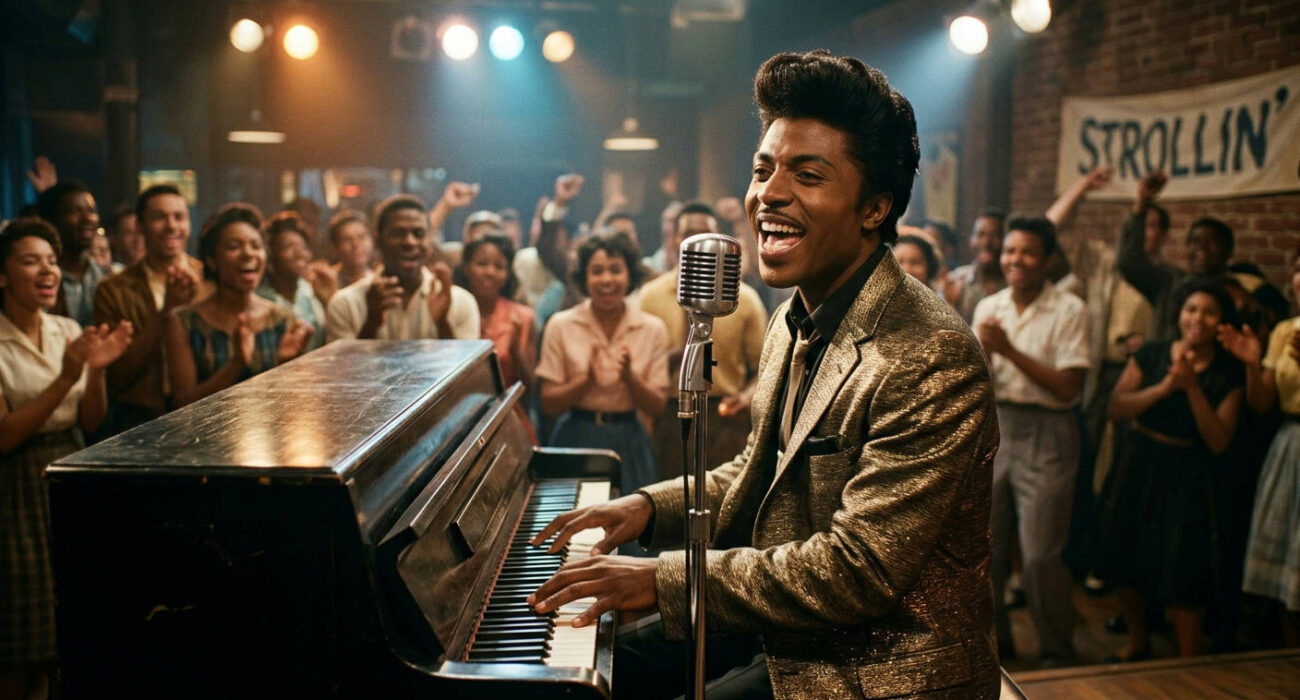
Trying to pin down the Little Richard first album release date is more than a trivia question; it’s about identifying the exact moment a stick of dynamite was thrown into the polite, beige world of 1950s pop music. That date, the one that music historians and vinyl collectors circle in red, is March 1957. This wasn’t just another LP hitting the shelves. This was the release of Here’s Little Richard, the 12-track sonic boom that officially served notice to the world that a new, untameable energy had arrived.
The release of this album marked a turning point. It bundled the anarchic power of his early singles into a single, cohesive statement of intent, a rock and roll manifesto pressed into vinyl. Understanding the context, the content, and the colossal impact of this release is crucial for any serious music fan.
Unpacking the Official Little Richard First Album Release Date
The history of popular music has pivot points, and the release of Here’s Little Richard is undeniably one of them. It was a formal declaration of war on the crooners and schmaltz that dominated the airwaves.
The Month That Changed Everything: March 1957
While the exact day in March 1957 can be fuzzy depending on the source, the month itself is the accepted period for the album’s debut. Specialty Records, the pioneering independent label, unleashed this monster of a record, catalogue number SP-100, onto an unsuspecting public.
This wasn’t a slow burn. The album was built on the back of a string of white-hot hit singles that had already been shaking teenagers to their core for nearly two years. The LP was a way to collect these cultural atom bombs into one place, creating a listening experience that was relentless from start to finish.
Specialty Records: The Label That Took the Gamble
You can’t talk about Here’s Little Richard without mentioning Art Rupe’s Specialty Records. Based in Los Angeles, Specialty had a reputation for finding raw, authentic talent in rhythm and blues. They weren’t trying to polish their artists for mainstream acceptance; they were trying to capture lightning in a bottle.
With Little Richard, they captured a full-blown thunderstorm. The label’s willingness to let Richard be Richard—wild, flamboyant, and screaming his lungs out—was the key. They understood that his power was in his authenticity, a lesson many major labels of the era failed to grasp.
What Music Sounded Like Before This Album Dropped
To truly grasp the album’s impact, consider the charts of early 1957. They were dominated by the smooth vocals of artists like Perry Como, Pat Boone, and Elvis Presley’s more ballad-oriented material. It was safe, predictable, and parent-approved.
Then came Here’s Little Richard. It was the antithesis of safe. It was loud, sexually charged (even in its coded way), and rhythmically insistent. It didn’t ask for permission to be heard; it kicked the door down and announced its presence with a primal “A-wop-bop-a-loo-bop-a-lop-bam-boom!”
Here’s Little Richard: A Revolution in 12 Tracks
The album is a masterclass in controlled chaos. It’s less a collection of songs and more a continuous explosion of energy, meticulously crafted to feel like it’s perpetually on the verge of flying off the rails.
Side One: Non-Stop Hit Parade
The needle drops, and you’re immediately assaulted by the iconic drum intro and piano glissando of “Tutti Frutti.” There’s no gentle build-up. The album’s first side is a murderer’s row of rock and roll standards:
- Tutti Frutti: The cleaned-up version of a bawdy club tune, it still retained a dangerous, winking energy that was utterly new.
- True, Fine Mama: A classic 12-bar blues structure supercharged with Richard’s gospel-inflected shrieks and pounding piano.
- Can’t Believe You Wanna Leave: Showcasing a slightly more soulful, pained side to his vocals, yet still driven by that relentless backbeat.
- Ready Teddy: A pure, unadulterated rock and roll anthem. The lyrics are simple, but the performance is a force of nature.
- Baby: A frantic, almost breathless plea that feels both desperate and joyous.
- Slippin’ and Slidin’ (Peepin’ and Hidin’): The groove on this track is undeniable, a perfect example of the New Orleans rhythm section locking in behind Richard’s piano.
Side Two: Doubling Down on the Pandemonium
Flipping the record over offered no respite. Side Two continues the sonic assault with some of his most enduring and influential tracks.
The second half includes “Long Tall Sally,” a song so fast and furious that Pat Boone’s attempt to cover it was famously left in the dust. You also get the unstoppable “Rip It Up” and the swaggering “She’s Got It,” songs that became foundational texts for generations of rockers. This wasn’t just music; it was a physical event.
The Unsung Architects: The Studio Band
Little Richard was the star, the focal point of charisma and chaos. But the engine room was the incredible studio band, primarily the one assembled by producer Bumps Blackwell at J&M Studio in New Orleans.
Drummer Earl Palmer is often credited with creating the very beat of rock and roll on these sessions—that hard, driving 4/4 that launched a thousand bands. Add in the honking, electrifying saxophone of Lee Allen and the solid bass work of Frank Fields, and you had a band that could not only keep up with Richard’s energy but amplify it.
The Singles That Paved the Way for the Album
In the mid-1950s, the 45 RPM single was king. Albums, especially in the burgeoning rock and roll genre, were often afterthoughts—collections of hits and filler. The path to the Little Richard first album release date was paved with a series of game-changing singles.
The “Tutti Frutti” Detonation of 1955
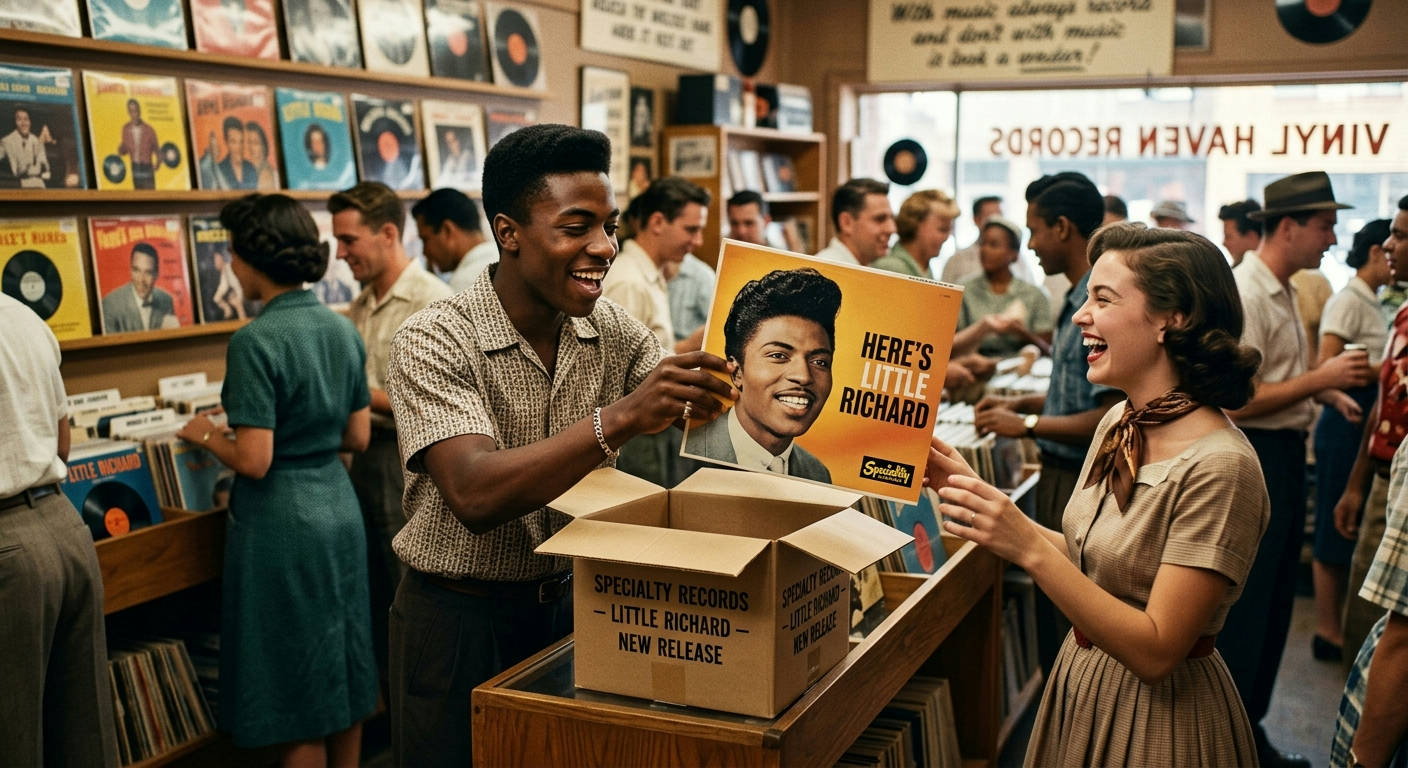
Released in November 1955, “Tutti Frutti” was the initial blast. The story is legendary: during a recording session break, Richard started hammering out a raunchy ditty he played in clubs. Producer Bumps Blackwell heard the electrifying energy and knew it was a hit, tasking a local songwriter, Dorothy LaBostrie, with cleaning up the lyrics for radio.
The result was a cultural phenomenon. It was so potent that major labels rushed to release sanitized cover versions, most famously by Pat Boone. While Boone’s version was a bigger chart hit, Richard’s original was the one that inspired awe and rebellion in young listeners.
“I am the architect of rock and roll! I am the originator!” – Little Richard
This quote, which Richard proclaimed throughout his life, might sound arrogant to some. But when you listen to these early singles, you understand he wasn’t just boasting; he was stating a fact.
The Follow-Up Barrage of 1956
Specialty Records wisely kept the pressure on. Throughout 1956, they released a string of singles that cemented Richard’s status as a top-tier star.
- Long Tall Sally / Slippin’ and Slidin’ (March 1956): This two-sided monster hit proved “Tutti Frutti” was no fluke. “Long Tall Sally” was even faster and wilder.
- Rip It Up / Ready Teddy (June 1956): Another double-barreled smash that showcased his ability to deliver pure, joyful rock anthems.
- She’s Got It / Heeby-Jeebies (October 1956): Continuing the streak, these tracks kept him on the radio and in jukeboxes across the nation.
By the time 1957 rolled around, the demand for a full-length Little Richard album was at a fever pitch. The market was finally ready.
Why an LP Mattered in a Singles’ World
The decision to release Here’s Little Richard was a significant one. For R&B and rock artists, albums were not yet the primary format. The LP was still seen as the domain of jazz, classical, and more “adult” pop singers like Frank Sinatra.
Releasing this album was a statement. It positioned Little Richard not just as a hit-maker, but as a serious artist with a body of work. It treated rock and roll with a new level of respect, packaging its raw energy into a format that demanded to be listened to as a whole.
The Lasting Echo of the Little Richard First Album Release Date
The release of this album wasn’t just a commercial event; it was a cultural one. Its influence spread like wildfire, inspiring countless musicians and reshaping the direction of popular music forever.
### The Sound That Became a Blueprint for the Little Richard First Album Release Date
The sonic elements of Here’s Little Richard became fundamental building blocks for rock music.
- The Pounding Piano: Before this, the piano in rock and roll was often a supporting instrument. Richard made it a percussive, lead weapon, playing with a ferocity that was shocking.
- The Gospel-Fueled Vocals: He brought the ecstatic, uninhibited shrieks and hollers of the black church into secular music, creating a vocal style that was pure, raw emotion.
- The Breakneck Tempo: The speed and drive of tracks like “Long Tall Sally” set a new standard for energy and excitement in pop music.
Crossing the Divide: Race and Culture in the 50s
In a deeply segregated America, Little Richard’s music was a unifying force. His concerts famously drew both black and white teenagers, who, caught up in the music’s frenzy, would often break down the ropes that separated them in venues.
His flamboyant, androgynous persona was revolutionary. He challenged gender norms and conventions decades before it became commonplace, presenting an image of a performer who was utterly and unapologetically himself. This authenticity was a key part of his appeal and his power.
The Architect’s Students: A Legacy of Influence
The list of artists who cite Little Richard as a primary influence is a who’s who of music royalty. A young Paul McCartney spent hours trying to imitate Richard’s “whoo,” a sound that became a signature of early Beatles tracks. The Rolling Stones, James Brown, Otis Redding, and even Curtis Mayfield all took cues from his vocal delivery and showmanship.
Later, artists like Jimi Hendrix (who played in Richard’s backing band), Prince, and Elton John would build their entire personas on the foundation of flamboyance, musical virtuosity, and raw energy that Richard pioneered on this very first album. His impact is immeasurable, as noted by his induction as one of the very first artists into the Rock & Roll Hall of Fame in 1986.
How to Own a Piece of History: Collecting Here’s Little Richard in 2026
For vinyl collectors, Here’s Little Richard is a cornerstone piece. Owning it isn’t just about having the music; it’s about holding a physical artifact of a revolution.
Chasing the Dragon: The Original 1957 Pressing
Finding an original 1957 mono pressing on the black Specialty label (SP-100) is the holy grail for collectors. These are rare and, depending on their condition, can be quite valuable.
When hunting for an original, pay close attention to:
- Cover Condition: Look for strong seams, minimal ring wear, and vibrant colours. The iconic cover photo of a sweaty, joyous Richard is a huge part of its appeal.
- Vinyl Condition: Check for deep scratches, scuffs, and groove wear. A “Very Good Plus” (VG+) or better copy is what most serious collectors aim for.
- Label Details: Ensure it’s the correct black label with silver print used by Specialty during that period.
Modern Reissues: High-Fidelity History
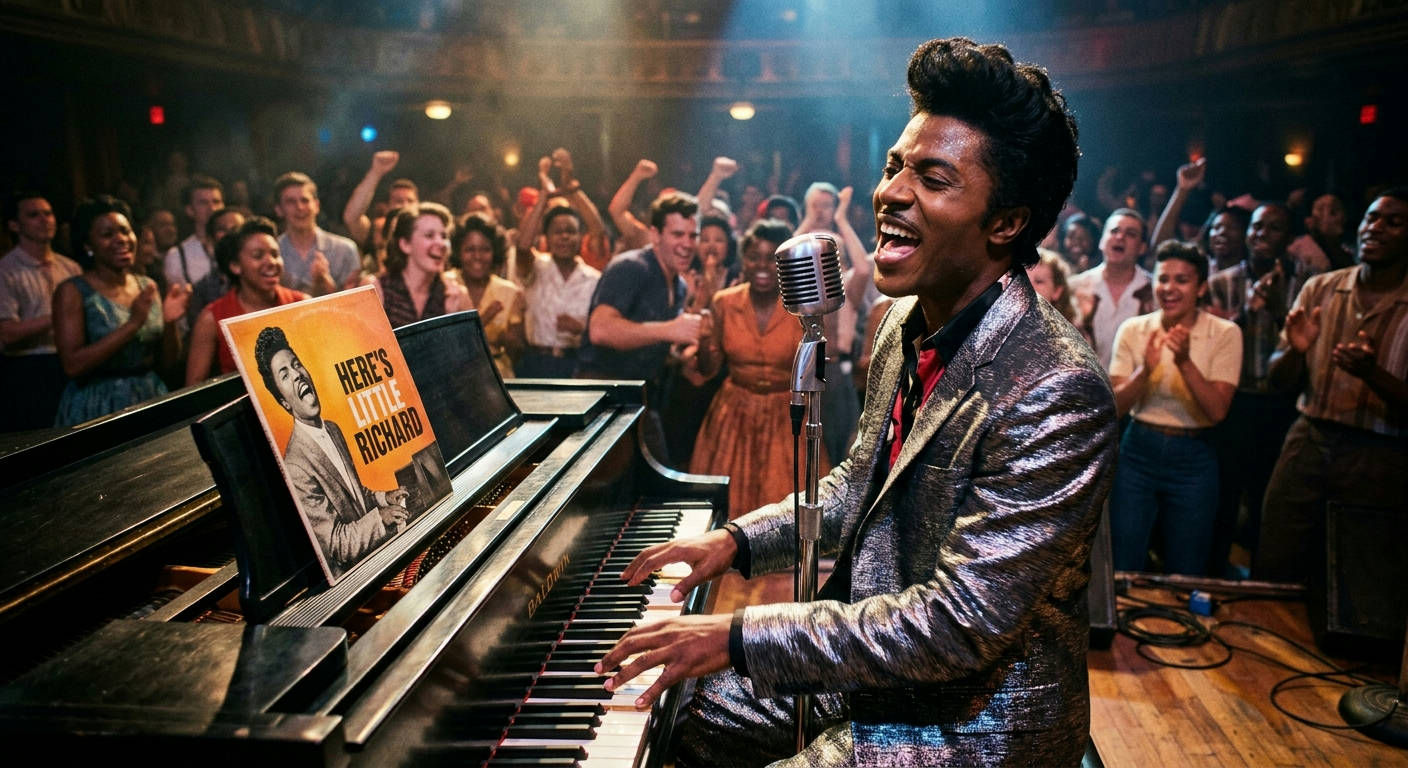
If an original pressing is out of your price range, don’t worry. Here’s Little Richard has been reissued numerous times over the decades, and many modern pressings from reputable labels offer fantastic sound quality.
A high-quality 180-gram reissue can provide a clean, dynamic listening experience that might even surpass a worn-out original. They offer an affordable way to experience this monumental album as it was meant to be heard. You can often find excellent reissues available today.
Find your copy of Here’s Little Richard on vinyl right here: Check for “Here’s Little Richard” Vinyl on Amazon
### A Purist’s Guide: Why Mono is the Only Way for the Little Richard First Album Release Date
This album was recorded and mixed for mono. That was the dominant format, and all artistic decisions were made with a single-channel output in mind. The power of the recording comes from that dense, punchy, focused mono mix.
Later, “electronically re-channelled” stereo versions were created by splitting the frequencies, a process that many audiophiles find unnatural and detrimental to the original recording’s power. For the most authentic and impactful listening experience, a mono pressing is the only way to go.
The Magic Behind the Tapes: The Recording of a Masterpiece
The raw, chaotic energy of Here’s Little Richard feels spontaneous, but it was captured through a specific process in a legendary location, guided by a visionary producer.
Robert “Bumps” Blackwell: The Producer Who Got It
Producer Bumps Blackwell was the perfect foil for Richard’s wild talent. He wasn’t there to tame him but to channel him. He understood that the key was to capture the live-wire energy of Richard’s club performances on tape.
Blackwell’s genius was in creating an environment where Richard could be explosive and then having the technical know-how and the right musicians to get that explosion recorded cleanly and powerfully. He was the bridge between Richard’s raw genius and the technology of the recording studio.
J&M Recording Studio: The New Orleans Sound Factory
Most of the album’s key tracks were recorded at Cosimo Matassa’s J&M Recording Studio in New Orleans. This was no accident. J&M was the epicentre of the New Orleans R&B sound, known for its distinctive, rolling rhythm.
The studio’s house band, which included legends like Earl Palmer, was a well-oiled machine that could lay down an infectious, danceable groove like no other. This New Orleans shuffle, combined with Richard’s Georgia gospel-rock hybrid, created a sound that was entirely new and irresistible. The history of American music was profoundly shaped within the walls of this modest studio.
“Cosimo Matassa’s J&M studio was the birthplace of so many records that shaped the sound of the 50s. The room itself had a sound, and when you combined that with the players, it was pure magic.” – Music Historian, 2026
The combination of the right artist, the right producer, the right band, and the right room at the right time is what makes Here’s Little Richard a perfect storm of a record.
Beyond the Debut: The Legacy of a True Original
While the Little Richard first album release date marks his most significant contribution, his career and influence continued for decades, albeit in a more complex and often contradictory path.
The Self-Titled Follow-Up of 1958
A year later, he released his second album, Little Richard. It was another powerhouse collection featuring classics like “Good Golly, Miss Molly,” “Lucille,” and “The Girl Can’t Help It.” It proved he was no one-trick pony and further solidified his signature sound.
While a brilliant album in its own right, it essentially continued the formula established by the debut. Here’s Little Richard remains the ground breaking initial statement.
The Struggle Between Saturday Night and Sunday Morning
Shortly after his initial burst of fame, Little Richard famously renounced rock and roll in 1957 to pursue a life in the church, enrolling in bible college. He would spend the rest of his life oscillating between the sacred and the secular, returning to rock and roll for various comebacks over the years.
This internal conflict was a huge part of his story, but it also meant that his initial, pure burst of creativity from 1955-1957, captured perfectly on his first two albums, stands as his most potent and influential period.
The Enduring Power of the First Statement
Ultimately, everything comes back to Here’s Little Richard. It is the foundational document. It’s the pure, uncut, 100-proof explosion of talent that the rest of his career, and much of rock music itself, would reference for decades to come. It’s a testament to the power of a singular artistic vision captured at the perfect moment.
The March 1957 release of Here’s Little Richard wasn’t just the release of an album. It was a cultural event that drew a line in the sand. On one side was the past—polite, predictable pop. On the other was the future—loud, liberated, and electrifying. It’s a record that still sounds as vital and thrilling in 2026 as it did nearly seventy years ago.
To truly appreciate its raw power, spin it on a quality system. A good record player can unlock the layers of raw energy pressed into those grooves, letting you hear the revolution exactly as it was intended. If you’re looking to upgrade, finding the right equipment doesn’t have to break the bank; there are plenty of fantastic best turntables under 300 in the UK that can do this timeless album justice.