

Forget what you think you know about Jerry Lee Lewis in the 1960s. Most folks picture the wild, piano-pounding maniac of the 50s, then fast-forward to a hazy image of a country crooner. The decade in between is often treated like a black hole, a career wasteland. That’s a massive mistake. The story of the Jerry Lee Lewis studio albums is one of the most fascinating second acts in music history, a tale of grit, reinvention, and the stubborn refusal to be forgotten. It’s a period where The Killer fought his way back from exile, swapping rockabilly fire for stone-cold country heartbreak, and we’re going to break it all down.
This wasn’t a slump. This was a hostile takeover of a new genre, executed by one of music’s most electrifying and controversial figures. From the vinyl grooves to the production choices, this decade defined the rest of his career.
The Post-Scandal Wilderness: Rebuilding in a New Decade
The 1960s didn’t start well for Jerry Lee. The scandal surrounding his marriage to his 13-year-old cousin Myra Gale Brown in 1958 had made him a pariah. His records were pulled from radio, his fees plummeted, and the man who was once Elvis’s biggest rival was playing in small clubs and beer joints.
But The Killer never quit. The early part of the decade was about survival.
From Sun Records to Smash Records
His legendary run at Sun Records was over. Sam Phillips, the man who discovered him, couldn’t get his records played. In 1963, Lewis made a pivotal move, signing with Smash Records, a subsidiary of Mercury. This label change is the single most important event when discussing the Jerry Lee Lewis studio albums.
The move promised a fresh start, but it came with its own set of problems. Smash didn’t quite know what to do with him. They saw the untamed rock and roller but tried to sand down his edges, hoping to fit him into a more conventional pop mould. The initial results were a mixed bag of re-recordings of his old hits and attempts at new material that often missed the mark.
The British Invasion Effect
Just as Jerry Lee was trying to find his footing, a wave of British bands stormed America. The Beatles, The Rolling Stones, and The Animals revered the first-generation rockers like Lewis, Chuck Berry, and Little Richard. This created a strange ripple effect.
While his US career was stalled, a new, younger audience in Europe was hungry for the real deal. This led to the recording of one of the most ferocious live albums ever made, Live at the Star-Club, Hamburg, in 1964. Though not a studio album, its raw power proved the fire was still there and kept his name alive, reminding the industry that Jerry Lee Lewis was far from finished. It was a bolt of lightning that showed what he was still capable of.
The Definitive Guide to Jerry Lee Lewis Studio Albums 1960s
The studio output during this decade can be split into two distinct, fascinating phases: the search for a new identity and the triumphant arrival as a country superstar. It’s a journey every serious vinyl collector needs to understand.
The Mid-Decade Muddle (1964-1967)
This period is defined by Smash Records throwing everything at the wall to see what would stick. The albums are a whirlwind of styles, from rock and roll rehashes to R&B and soul covers.
- The Golden Hits of Jerry Lee Lewis (1964): Don’t be fooled by the title. This wasn’t a simple compilation. It was a complete re-recording of his Sun classics. The production is slicker, the sound cleaner, but it arguably lacks the dangerous echo and raw energy of the Sam Phillips originals. For collectors, it’s an interesting comparison piece.
- The Return of Rock (1965): Here, the label makes a conscious effort to put The Killer back in his rock and roll box. It’s a solid effort, but it felt like an attempt to recreate a moment that had passed. The cultural mood had shifted, and this album, while energetic, didn’t set the charts on fire.
- Country Songs for City Folks (1965): This is the key. The title is a bit on the nose, but this album was the first major signal of the direction he was headed. He tackles country standards, but he does it his way. His piano is front and center, and he can’t help but inject a shot of soulful energy into tunes like “Detroit City.” It was a tentative step, but the seed was planted.
- Memphis Beat (1966): A detour into a more R&B and soul-inflected sound. Jerry Lee was always a master interpreter of Black American music, and this album shows that side of him. The title track has a great groove, but the album as a whole didn’t provide a clear path forward for his career.

The Country Reinvention (1968-1969)
In 1968, everything changed. Producer Jerry Kennedy finally convinced Lewis and the label to go all-in on country music. No more hedging bets. The result was one of the most successful comebacks in music history.
“I’ve always been a country singer. My rock and roll is just country with a little more rhythm to it.” – Jerry Lee Lewis
This wasn’t a concession; it was a homecoming. Jerry Lee had grown up on the sounds of the Grand Ole Opry. He wasn’t pretending to be a country singer; he was simply stripping away the rock and roll fury to reveal the heartbroken country balladeer that was always there.
- Another Place, Another Time (1968): This is the one. The title track, a story of a man meeting an old flame in a bar, was pure, unadulterated honky-tonk gold. It shot up the country charts and put Jerry Lee Lewis back on the map. The album is filled with tales of cheating, drinking, and regret, delivered with an authority no other artist could match.
- She Still Comes Around (To Love What’s Left of Me) (1968): Wasting no time, he followed up his comeback smash with another winner. The title track was another massive country hit, cementing his new status. The album continued the theme of world-weary regret, a perfect fit for his expressive, slightly menacing vocals.
- Jerry Lee Lewis Sings the Country Music Hall of Fame Hits, Vol. 1 & 2 (1969): To cap off the decade, he released two volumes of him covering country classics. This was a brilliant move. He put his definitive stamp on songs by legends like Hank Williams, solidifying his credentials within the Nashville establishment. He wasn’t just a visitor; he was claiming his territory.
The Sonic Evolution: From Sun to Smash
The sound of the Jerry Lee Lewis studio albums is drastically different from his 1950s work. This shift is about more than just genre; it’s about technology, production philosophy, and the musicians in the room.
Jerry Kennedy: The Architect of the Country Sound
While Sam Phillips was a genius of raw, minimalist production, Jerry Kennedy was a key figure in crafting the polished, layered “Nashville Sound.” At Smash/Mercury in Nashville, Kennedy surrounded Lewis with the city’s finest session musicians, known as the “A-Team.”
Gone was the slap-back echo that defined the Sun sound. In its place came weeping steel guitars, steady, professional drumming from legends like Buddy Harman, and intricate bass lines. The goal was to create records that were radio-friendly for the country market of the late 1960s, and Kennedy succeeded brilliantly.
The Unchanging Core: The Killer’s Piano
Despite the change in genre and production, one thing remained constant: Jerry Lee’s piano. It was still the lead instrument, the driving force of every track.
On the rock and roll numbers, it was as frantic as ever. But on the country ballads, it took on a new role. He used it to play elegant, rolling fills that commented on the lyrics, a style known as “pumping piano.” It was less about wild glissandos and more about providing a rich, rhythmic, and emotional foundation. His piano didn’t just play the chords; it told the story.
Vocal Maturity and Thematic Depth
Listen to “Whole Lotta Shakin’ Goin’ On” from 1957 and then listen to “What’s Made Milwaukee Famous (Has Made a Loser Out of Me)” from 1968. You’re hearing two different men. The youthful bravado is replaced by a profound sense of weariness and lived experience.
His voice in the late 60s carries the weight of his personal and professional struggles. When he sings about loss and regret, you believe every single word. This emotional authenticity is what made his country records so powerful and why they continue to resonate with listeners in 2026. This period is a textbook example of an artist’s life experiences enriching their creative output, a journey well documented by music historians like Peter Guralnick in his works.
A Collector’s Guide from Vinyl Gold UK
Hunting down original pressings of the Jerry Lee Lewis studio albums 1960s is a rewarding experience. These records tell a story not just through their music, but through their physical presence. Here at Vinyl Gold UK, we live for this stuff.
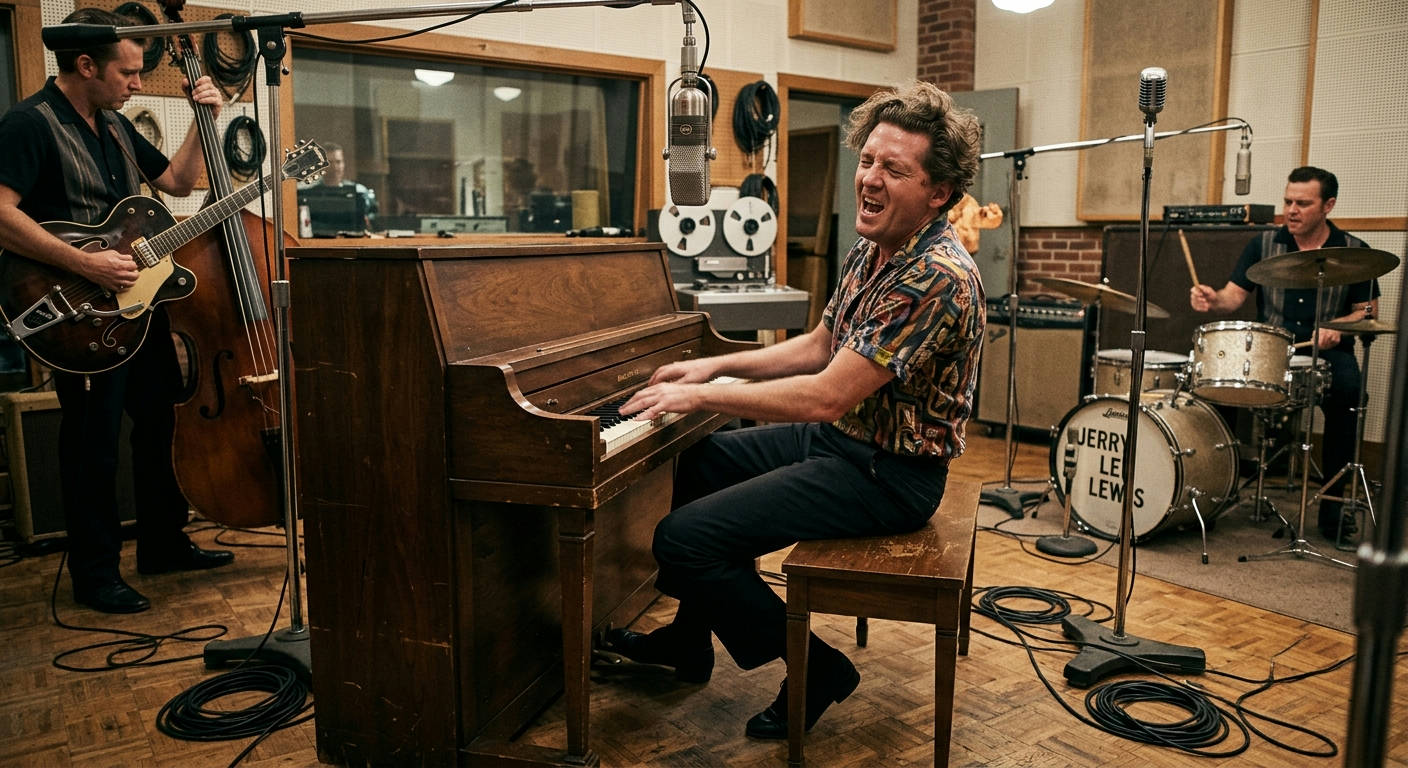
Identifying Original Smash Pressings
Finding a true first pressing is the goal for any serious collector. For his 1960s Smash LPs, here’s what to look for:
- The Label: Early to mid-60s Smash pressings typically feature a red label with the Smash logo in a black and white box at the top. Later 60s pressings, after Mercury fully absorbed the label, might have a red or black Mercury label design.
- Mono vs. Stereo: Many of these albums were released in both mono and stereophonic mixes. For rock and roll, the mono mix is often considered punchier and more authentic. For the lusher country productions, the stereo mixes offer greater separation and detail.
- The Vinyl Itself: Original pressings from this era are often made of thick, heavy vinyl. They feel substantial in your hands compared to the flimsier pressings of later decades.
### Your Essential Jerry Lee Lewis Studio Albums 1960s Checklist
Ready to start your hunt? Here are the must-have studio LPs from this transformative decade. Finding clean copies of these is a true vinyl victory.
- Country Songs for City Folks (1965): The crucial turning point. A fascinating listen to hear him finding his country voice.
- Another Place, Another Time (1968): The comeback. This is a non-negotiable, cornerstone album for any Jerry Lee Lewis collection.
- She Still Comes Around (To Love What’s Left of Me) (1968): Proves the comeback was no fluke. Packed with classic honky-tonk tunes.
- Jerry Lee Lewis Sings the Country Music Hall of Fame Hits, Vol. 1 (1969): Hear The Killer interpret the masters. His version of “I’m So Lonesome I Could Cry” is a masterpiece.
Getting your hands on these records is one thing; playing them properly is another. A poorly maintained or low-quality turntable can damage these vintage treasures. Check out our guide to some of the best turntables under £300 to ensure you’re giving these classic LPs the treatment they deserve.
Finding These Sixties Classics Today
While crate-digging at your local record shop is part of the fun, sometimes you need to turn to the web. Reissues are common, but if you’re looking for specific pressings or just want to explore his catalogue, online retailers are a great resource.
Amazon can be a good starting point to find both original pressings from third-party sellers and modern reissues. Just be sure to read the descriptions carefully.
- Find Another Place, Another Time on vinyl: Search on Amazon
- Find Country Songs for City Folks on vinyl: Search on Amazon
- Find Sings the Country Music Hall of Fame Hits on vinyl: Search on Amazon
The Legacy of The Killer’s “Lost” Decade
The 1960s were not lost for Jerry Lee Lewis. They were formative. The studio albums he released during this time did more than just save his career; they created a second, equally important pillar of his legacy.
The Blueprint for Outlaw Country
Long before Waylon Jennings and Willie Nelson rebelled against the Nashville system, Jerry Lee Lewis was the original country outlaw. He was a rock and roller who crashed the country party on his own terms.
As noted by the Country Music Hall of Fame, his induction in 2022 was a long-overdue recognition of his profound impact on the genre. He brought a raw, unapologetic energy to country music that bent the rules and paved the way for generations of artists who refused to conform.
His sound, which blended honky-tonk tradition with a rock and roll attitude and a touch of bluesy soul, was a potent cocktail. It demonstrated that country music could be both commercially successful and dangerously exciting.
A Masterclass in Artistic Survival
The story of the Jerry Lee Lewis studio albums is ultimately a story of resilience. In an industry that discards artists at a dizzying pace, Lewis refused to be discarded. He weathered public scorn, commercial indifference, and changing musical tastes.
Instead of fading away, he dug deep into his musical roots, embraced a different side of his artistry, and staged a comeback for the ages. It’s a powerful lesson for any artist in any era: authenticity and talent can overcome almost any obstacle. His journey through the 60s proves that a true original can always find a new way to be heard.