
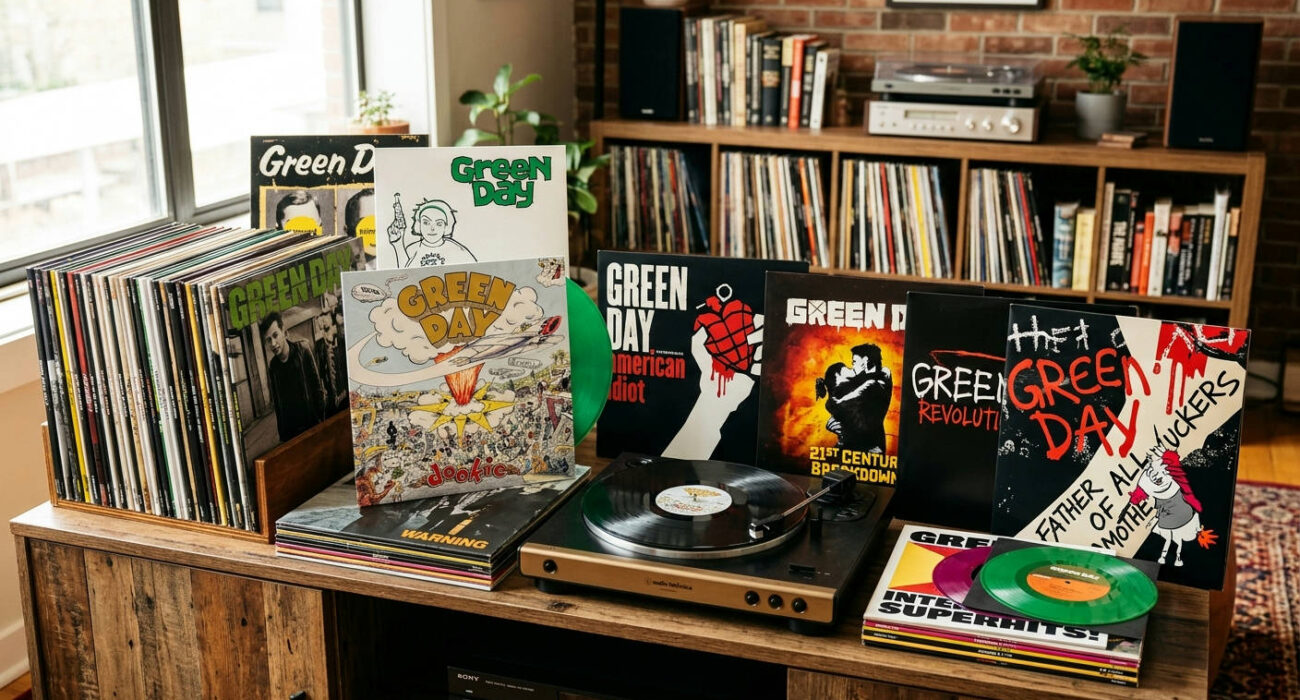
So, you want to collect Green Day’s entire history on vinyl? Smart move. There’s nothing quite like dropping the needle on the raw energy of Kerplunk or the sprawling ambition of American Idiot. But with over three decades of releases, reissues, limited editions, and colour variants, starting this journey can feel overwhelming. That’s why we’ve put together the ultimate Green Day discography vinyl collection guide to help you navigate the punk rock chaos and build a collection that truly rocks.
This isn’t just about owning the music; it’s about owning a piece of history. From their DIY roots on an indie label to their status as stadium-filling legends, their story is told in the grooves of these records. Let’s dig in.
The Raw Beginnings: Hunting for Lookout! Records Gold (1989-1993)
Before Green Day became a household name, they were three kids from the East Bay making a racket on indie label Lookout! Records. These early pressings are the genesis of it all, and for many collectors, they represent the band’s purest form. Finding clean original copies is a challenge, but it’s a rewarding one.
1,039/Smoothed Out Slappy Hours (1991)
This record is technically a compilation, rolling their debut album 39/Smooth and their first two EPs (Slappy and 1,000 Hours) into one glorious, scuzzy package. It’s the foundational text of Green Day.
Original pressings on Lookout! are the prize here. You’ll be looking for the iconic album art with the band’s name in that familiar fuzzy font. Later reissues, especially after they moved to Reprise, are more common and affordable. The key difference is the label logo on the back and the record itself. An original Lookout! pressing feels like holding a piece of punk history.
Kerplunk (1991)
This is the one. Kerplunk was their second and final studio album for Lookout!, and it’s the sound of a band about to explode. It’s sharper, catchier, and hints at the global domination to come. It also marks the first album with Tré Cool on drums, cementing the classic line up.
The true “grail” for Kerplunk collectors is the initial pressing that includes the “Sweet Children” EP on a separate 7-inch. These versions are identifiable by a sticker on the front shrink-wrap mentioning the bonus EP. Finding a complete copy with both the LP and the 7-inch in good condition is a serious find. Subsequent reissues, including a 2009 version on Reprise, are much easier to come by and sound great, but they lack the historical artefact quality of the original.
The Breakthrough Era: Navigating Major Label Mania (1994-2000)
Signing to Reprise Records in 1994 changed everything. Suddenly, Green Day records were being pressed in massive quantities, but that doesn’t make collecting this era any simpler. This period is rife with variations, international pressings, and now, highly sought-after anniversary editions.
Dookie (1994)
What is there to say about Dookie? It’s a generational album that brought punk screaming into the mainstream. The original 1994 vinyl pressing is a must-have. One of the most famous bits of trivia is that early pressings featured a drawing of Ernie from Sesame Street on the back cover, which was later airbrushed out. Finding a copy with Ernie intact is a badge of honour for collectors.
Since its release, Dookie has been reissued countless times. You can find 180-gram audiophile pressings that deliver incredible sound, picture discs for display, and various limited-run colour variants. The 30th Anniversary deluxe box set from 2024 is another beast entirely, packed with demos and live recordings. For pure listening, a modern 180g reissue is fantastic. For collectability, the original 1994 pressing is the target.
Insomniac (1995)
The darker, angrier follow-up to Dookie, Insomniac is a fan favourite. The original 1995 vinyl is less common than its predecessor, as the CD boom was in full swing. The artwork by Winston Smith is a masterpiece in itself and looks stunning in the 12-inch format.
A few years ago, the 25th-anniversary edition was released on translucent orange double vinyl, which included live tracks from their 1996 Prague show. This version is a great pickup for both its unique look and the excellent bonus content. It offers a fantastic sonic punch that does justice to the album’s aggressive tone.
Nimrod (1997)
Nimrod was Green Day’s sprawling, experimental epic, a 2xLP set that gave us everything from skate-punk anthems to the acoustic mega-hit “Good Riddance (Time of Your Life).” The most coveted version is the original 1997 pressing on bright yellow vinyl. It’s a stunning collector’s item and commands a high price today.
More recently, the 25th-anniversary box set (released in 2023) has become a collector’s staple. It includes the original album remastered, a disc of previously unreleased demos, and a live set from the Electric Factory in Philadelphia. For anyone who loves this album, the anniversary edition is an essential purchase, offering a deep dive into its creation. You can still find this essential box set on sites like Amazon: Green Day Nimrod 25th Anniversary Vinyl Box Set.
Warning (2000)
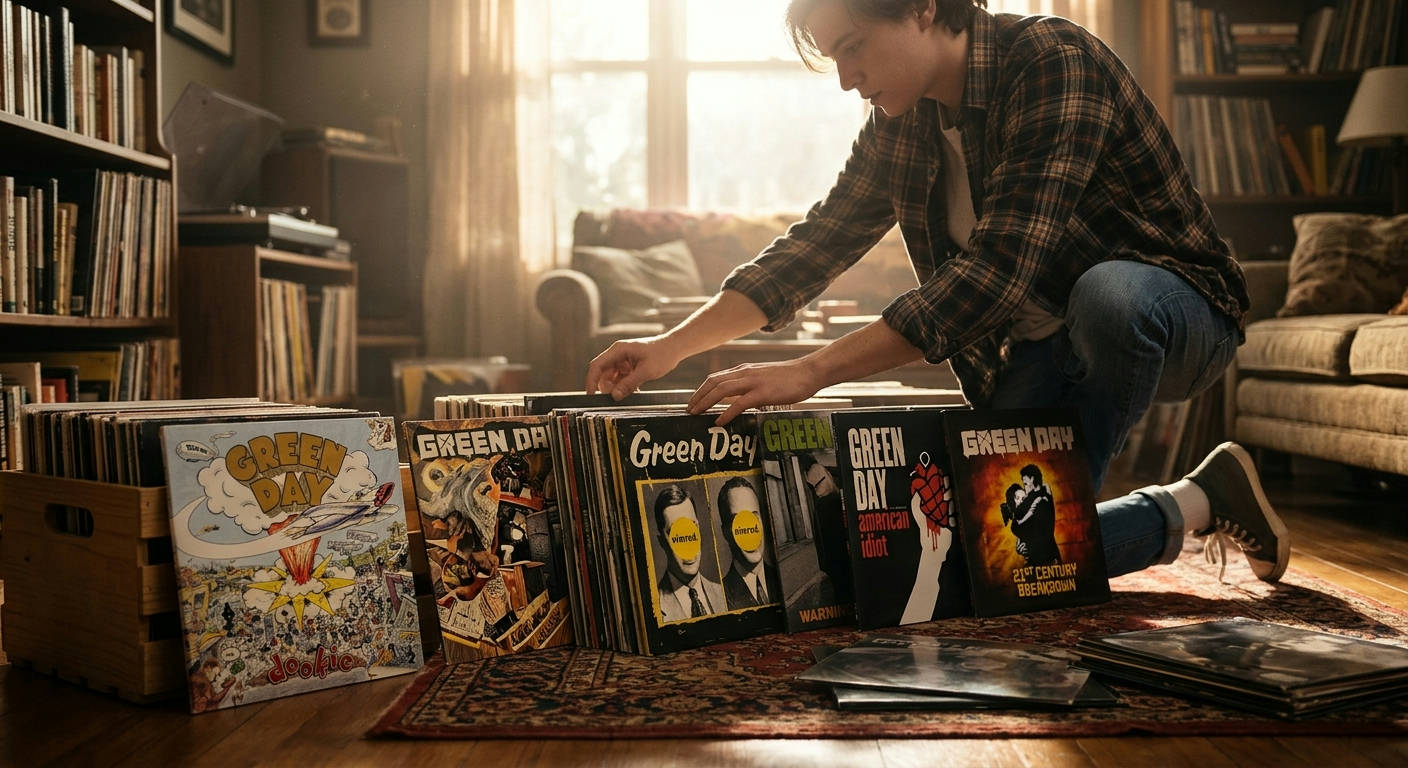
Often considered the band’s most underrated album, Warning saw Green Day leaning into a more acoustic, folk-punk sound. Because it was released in 2000, at the absolute nadir of vinyl’s popularity, original pressings are notoriously scarce and surprisingly valuable.
Finding a clean original copy is a challenge. The album was reissued on vinyl more recently, making it accessible to modern collectors. Warning is an album that benefits immensely from the warmth of vinyl, letting the acoustic guitars and Bob Dylan-esque arrangements breathe. It’s a sleeper agent in any Green Day vinyl collection.
The Rock Opera Revolution: Epic Albums, Epic Vinyl (2004-2012)
This is the era where Green Day went from punk rock superstars to global rock titans. Their albums became grand, conceptual statements, and the vinyl releases reflected that ambition. These are often double LPs with elaborate packaging, essential for any serious collection.
American Idiot (2004)
American Idiot wasn’t just a comeback; it was a cultural phenomenon. The original 2004 2xLP pressing is the definitive version. It captures the album’s dynamic range perfectly, from the explosive title track to the nine-minute opus “Jesus of Suburbia.”
“American Idiot gave a voice to a new generation, channelling the post-9/11 political frustration into a punk rock opera that was both furious and deeply melodic.”
Over the years, numerous variants have been released, including special editions on red and white vinyl, and a comprehensive box set for the Broadway show. For the best audio experience, the original black vinyl or a high-quality 180g reissue is the way to go. The album’s importance was even recognized by institutions like the Rock & Roll Hall of Fame, cementing its place in music history.
21st Century Breakdown (2009)
Following up American Idiot was never going to be easy, but Green Day doubled down on the rock opera concept with 21st Century Breakdown. The vinyl release is a beautiful package, presented as a 3xLP set (divided into the album’s three acts) and housed in a thick gatefold sleeve with a large lyric booklet.
First pressings are the most desirable, but standard black vinyl reissues are readily available and sound immense. The physical packaging is a huge part of the experience, making this a record you’ll want to hold and explore while you listen. It’s a testament to a time when album art and presentation still mattered deeply.
The Trilogy: ¡Uno!, ¡Dos!, ¡Tré! (2012)
Green Day’s ambitious project of releasing three albums in quick succession was divisive, but it produced a mountain of vinyl for collectors. Each album was released individually with its own colour-coded theme: blue for ¡Uno!, pink for ¡Dos!, and yellow for ¡Tré!.
You can hunt down each album individually, often on coloured vinyl corresponding to the artwork. There is also a comprehensive box set titled ¡Quattro! that includes all three albums plus a documentary. For completionists, the box set is the easiest route. For those who prefer to pick and choose, ¡Dos! is often considered the highlight, featuring the raw, garage-rock energy of their Foxboro Hot Tubs side project.
A Comprehensive Green Day Discography Vinyl Collection Guide: Beyond the Studio LPs
A true collection goes deeper than just the main studio albums. Green Day has a rich history of live recordings, B-side compilations, and EPs that are essential for any die-hard fan. These records tell the rest of the story.
Essential Live Albums on Wax
Green Day is, above all else, a phenomenal live band. Capturing that energy on vinyl is a must.
Bullet in a Bible(2005): Documenting their massive show at the Milton Keynes National Bowl, this 2xLP is pure, triumphant stadium rock. The sound is massive, and it’s the perfect companion piece toAmerican Idiot.Awesome as F**k(2011): This live collection cherry-picks performances from the21st Century Breakdownworld tour. It’s a raw, energetic set that proves they never lost their punk rock fire.BBC Sessions(2021): A fantastic archival release, this record collects four sessions recorded for the BBC between 1994 and 2001. It’s a fascinating document of their evolution, and the audio quality is superb.
Compilations and B-Sides
Don’t sleep on the compilations. They often contain non-album tracks and singles that are otherwise hard to find on vinyl.
International Superhits!(2001): Their first greatest hits collection is a great starting point, containing all the singles fromDookiethroughWarning, plus new tracks.Shenanigans(2002): This is the one for the deep divers. A collection of B-sides, covers, and rarities,Shenanigansis full of hidden gems. The vinyl pressing is a must for hearing tracks like the brilliant “Desensitized” in high fidelity.God's Favorite Band(2017): A more current greatest hits package, this one adds hits from their 21st-century albums and the new track “Back in the USA.”
Identifying Pressings and Avoiding Fakes
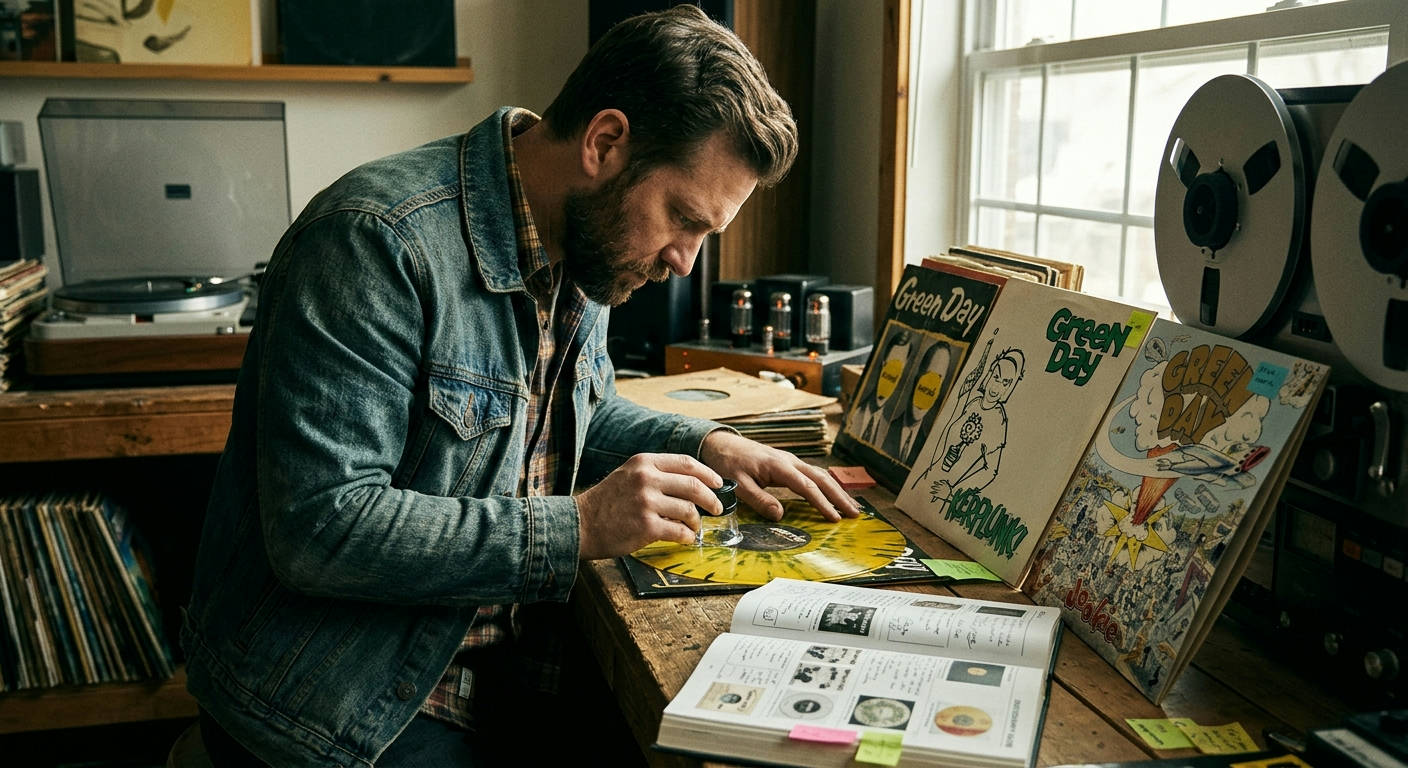
As your collection grows, you’ll want to be sure you’re getting what you pay for. Understanding how to identify original pressings versus reissues or bootlegs is a critical skill for any serious record collector.
Mastering the Matrix: How to Read Runout Grooves
The single most reliable way to identify a specific pressing is by examining the matrix numbers. These are the codes and letters etched or stamped into the blank space on the vinyl near the label (the runout groove).
These sequences contain information about where and when the record was pressed. You can cross-reference these numbers with online databases like Discogs to pinpoint the exact version you have. A first pressing of Dookie will have a different matrix code than a 2017 reissue. Learning to read them is like learning the secret language of vinyl.
Barcodes, Hype Stickers, and Other Clues
Don’t throw away those stickers on the shrink-wrap! “Hype stickers” often indicate a first pressing, a special edition, or a specific feature (like “Includes the hit ‘Basket Case'”). They can be a key identifier and add to a record’s value.
The barcode on the back cover is another crucial piece of the puzzle. Different pressings and regional releases will have different barcodes. Again, Discogs is your best friend here. Also, be wary of bootlegs. They often have blurry artwork, flimsy cardboard sleeves, and sound terrible. If a deal on a rare record seems too good to be true, it probably is.
Your ### Green Day discography vinyl collection guide to Grading
Understanding how to grade a record’s condition is vital. The Goldmine Standard is the most common system used by sellers. It ranges from Mint (M), which is perfect and usually sealed, down to Poor (P), which is basically unplayable.
- Near Mint (NM): The record looks like it just came from the shop. No scuffs, no scratches. The sleeve is pristine.
- Very Good Plus (VG+): Might have a few minor cosmetic scuffs that don’t affect playback. The sleeve may have slight ring wear. This is often the sweet spot for playable, high-quality used records.
- Very Good (VG): Surface noise will be noticeable during quiet passages, but it won’t overpower the music. The cover will have more obvious wear.
- Good (G/G+): Will play through without skipping, but has significant surface noise, scratches, and groove wear. The cover will be heavily worn.
For listening, aim for VG+ or better. For a sealed, top-tier collectible, you’re looking for NM or M.
Building Your Collection: Strategy and Budget for 2026
Alright, you’re fired up and ready to start buying. Where do you begin? A bit of strategy can save you a lot of time and money.
The “Grails” vs. The “Getters”
Every collector has their “grails”—the rare, expensive, hard-to-find records. For Green Day, this could be an original Kerplunk with the 7-inch, a yellow vinyl Nimrod, or a sealed 1994 Dookie. These are long-term goals.
Start with the “getters.” These are the high-quality, widely available reissues of their major albums. You can easily find 180-gram black vinyl pressings of Dookie, American Idiot, and Insomniac for a reasonable price. They sound incredible and will form the solid backbone of your collection. A great turntable setup will make them sing, and you can find excellent options without breaking the bank. If you’re looking for a new setup, check out our guide to the best turntables under £300 in the UK.
Where to Buy: Online and In the Wild
There’s no single best place to buy vinyl. A mix of strategies is your best bet.
- Local Record Stores: Nothing beats the thrill of digging through crates at a brick-and-mortar shop. You can physically inspect the records and you might just stumble upon a hidden gem.
- Online Marketplaces: Discogs is the global marketplace for vinyl and an indispensable tool for tracking down specific pressings. eBay is another option, but be more cautious with sellers.
- Amazon: For new reissues and box sets, Amazon is often a reliable and convenient source. You can usually find the latest 180-gram re-releases of Green Day’s catalogue right there.
“There’s a tangible connection to holding a record, looking at the art, and reading the liner notes that you just don’t get from a streaming service. It’s an active listening experience.”
Caring for Your Green Day Vinyl
Once you have these records, you need to protect your investment. Store your vinyl upright, never flat, in a cool, dry place away from direct sunlight. A simple carbon fibre brush can be used to remove dust before each play. For deeper cleans, there are various cleaning solutions and kits available. A well-cared-for record will last a lifetime.
Building a complete Green Day vinyl collection is a marathon, not a sprint. It’s a deeply rewarding hobby that connects you to the music in a more profound way. Each record you add is a trophy, a piece of punk rock history you can hold in your hands. So get out there, start digging, and enjoy the sonic riot. Happy collecting.