
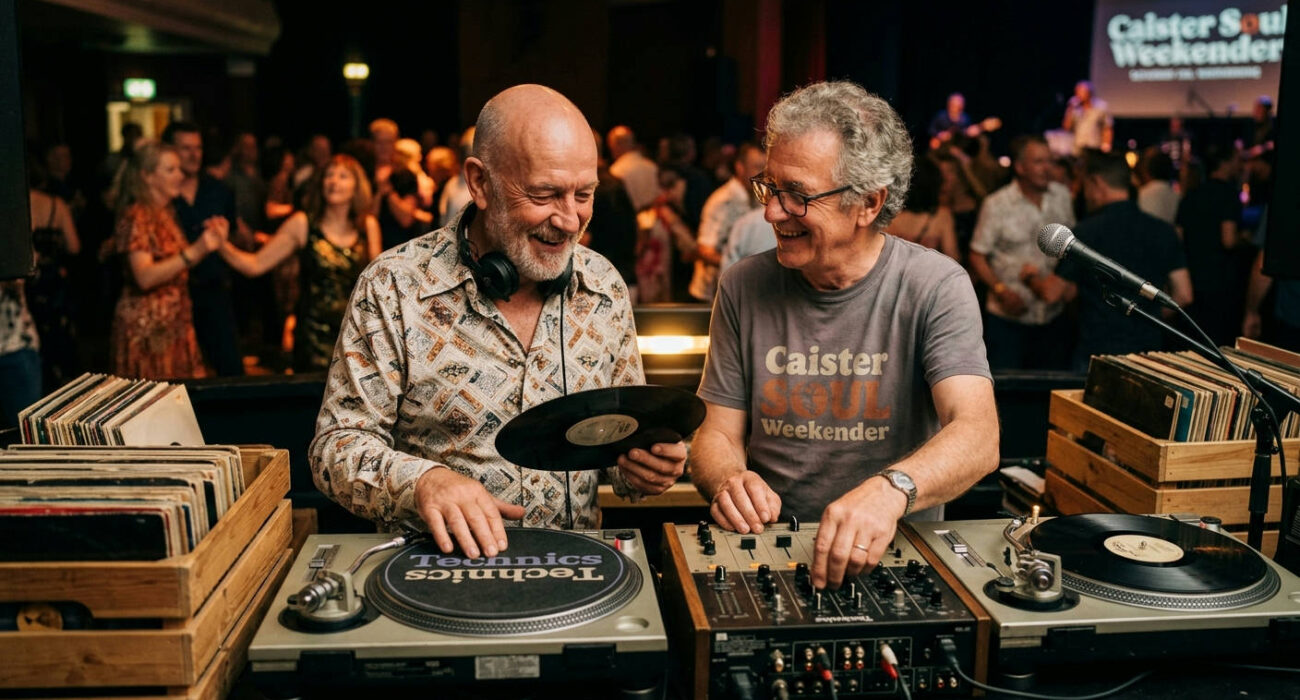
The story of the UK’s soul scene has a spiritual home, and it’s not in a bustling city but in a holiday camp on the Norfolk coast. At the very centre of this story are the Caister Soul Weekender original DJs, the architects of a movement that defined a generation and continues to reverberate through club culture in 2026. These weren’t just selectors playing records; they were tastemakers, community builders, and pioneers who forged an institution from vinyl, sweat, and an unwavering love for soul music.
At Vinyl Gold UK, we live and breathe this history. It’s etched into the grooves of the records we champion. Understanding the origins of Caister is to understand the DNA of modern British clubbing.
The Architects of a Revolution: Who Were the Original DJs?
Before Caister became a legendary brand, it was a radical idea. The concept of taking over a holiday camp for a weekend dedicated purely to soul and jazz-funk was revolutionary in the late 1970s. It was the brainchild of a collective of DJs and promoters who were tired of the confines of one-night club events.
The Soul Mafia: Chris Hill and the First Wave
You can’t talk about the genesis of Caister without saying the name Chris Hill. As the figurehead of the “Soul Mafia”—a collective that also included DJs like Chris Brown, Tom Holland, and Sean French—Hill was the driving force. His sets were theatrical, energetic, and educational, mixing accessible anthems with deep cuts that sent train spotters scrambling for a pen and paper.
The Soul Mafia’s approach was about more than music. It was about creating an event, an experience. They understood that the environment was as important as the tunes. The initial events in 1979 at the Caister-on-Sea holiday camp weren’t just parties; they were gatherings of a tribe that had finally found its home.
Froggy, Robbie Vincent, and the Radio Connection
The influence of radio was immense. DJs like the late, great Froggy (Paul Anderson) brought a technical wizardry to the turntables that was years ahead of its time. Known for his custom-built mixers and seamless beat-matching, Froggy elevated the craft of DJing at Caister, transforming sets into fluid, hypnotic journeys.
Meanwhile, figures like Robbie Vincent, a giant of BBC Radio London, provided the soundtrack during the week for the very people who would make the pilgrimage to Caister. His radio shows were essential listening, breaking many of the tracks that would become Weekender anthems. His presence at Caister lent the event a seal of authority and a direct link to the airwaves, amplifying its importance.
The Musical Philosophy: What Drove Their Selections?
The Caister Soul Weekender original DJs operated on a simple but powerful principle: play undiscovered, quality black American music. This wasn’t about commercial hits. It was about digging deeper. They championed jazz-funk, a genre that was largely ignored by mainstream radio, alongside obscure soul, disco, and early electro.
Their mission was to educate and entertain simultaneously. A DJ like Colin Hudd or Bob Jones wouldn’t just play a record; they would be validating it. Their selections could turn an unknown import single into a scene-defining classic overnight. This crate-digging mentality was the lifeblood of the early Weekenders.
More Than Music: The Culture Crafted by the Pioneers
The genius of the Caister Soul Weekender original DJs was in their understanding that they weren’t just building a playlist; they were building a culture. The event quickly developed its own codes, rituals, and sense of identity that went far beyond the dancefloor.
The “Caister Family” Vibe
From the very first event, a powerful sense of community was fostered. People travelled from all corners of the UK, creating a unique melting pot of soul fans. The chalet-based accommodation meant that the party never really stopped, with after-parties and socialising becoming as integral as the main room sets.
This created the famous “Caister Family” atmosphere. It was a shared experience where lifelong friendships were forged over a shared love for a Roy Ayers B-side or a Brass Construction album track. The DJs were the leaders of this family, approachable and part of the crowd, not locked away in an ivory tower.
Setting the Standard for Music Weekenders
Caister literally wrote the blueprint for the modern music weekender in the UK. The model of taking over a self-contained venue for a multi-day event, with different rooms catering to slightly different tastes, all started here. Every dance music festival that followed, from rave events in the 90s to the boutique festivals of 2026, owes a debt to the Caister format.
The real magic of Caister wasn’t just hearing the music you loved. It was hearing music you were about to love, surrounded by thousands of people feeling the exact same thing at the exact same moment.
This formula proved so potent because it offered total immersion. For three days, the outside world and its musical trends ceased to exist. The only thing that mattered was the unique sonic world curated by the resident DJs.

Fashion, Dance, and Identity
The Caister dancefloors were a spectacle. This was a scene that cared deeply about style. We’re talking about sharp-dressed soul boys and girls, with specific fashions taking hold—from loafers and pegged trousers to particular hairstyles. It was a peacock parade where your clothes were a badge of honour, a sign that you were part of the in-crowd.
The dancing was just as expressive. This wasn’t just shuffling your feet; it was intricate jazz-inspired footwork and expressive moves that were practiced and perfected. The dancefloor was a place of release, competition, and shared joy.
The Sound of ’79: Deconstructing the Original Caister Playlist
To truly appreciate the impact of the Caister Soul Weekender original DJs, you have to dive into the records they championed. Their setlists were a masterclass in curation, blending tempos, moods, and styles with uncanny skill.
Key Tracks That Defined the First Weekenders
Certain records are forever synonymous with the early Caister events. These weren’t just floor-fillers; they were the soundtrack to a movement.
- “Love Is The Message” – MFSB: The ultimate anthem. Its soaring strings and powerful message captured the unity and positivity of the Weekender. Finding a clean 12-inch copy is still a holy grail for collectors.
- “Running Away” – Roy Ayers Ubiquity: The epitome of the cool, sophisticated jazz-funk sound that the Caister crowd adored. Its laid-back groove was pure sunshine.
- “Bourgié Bourgié” – Ashford & Simpson: A classy, aspirational track that spoke to the sharp-dressed nature of the scene. It was elegant, soulful, and incredibly funky.
- “Do You Love What You Feel” – Rufus & Chaka Khan: A pure, explosive blast of disco-funk energy that could ignite any dancefloor. Chaka’s vocals were a force of nature.
Getting your hands on these classics is a must for any soul fan. You can start your search for these gems on vinyl right here:
From Northern Soul to Jazz-Funk: A Sonic Journey
The musical evolution was key. Many of the original attendees and DJs had roots in the Northern Soul scene. However, Caister represented a conscious shift away from the frantic pace of 60s soul towards the more complex, instrumental, and sophisticated sounds of 70s jazz-funk and disco.
This wasn’t a rejection of Northern Soul but an expansion of the palette. The DJs expertly bridged this gap, introducing a new generation to artists like Donald Byrd, Lonnie Liston Smith, and Patrice Rushen. It was a forward-thinking approach that kept the scene vibrant and prevented it from becoming a pure nostalgia trip. As noted by music historians like those at the British Library Sound Archive, these club scenes were vital for introducing new sounds to the UK.
The Enduring Legacy of the Caister Soul Weekender Original DJs
The influence of the first wave of Caister DJs didn’t fade when the 80s arrived. It mutated, evolved, and laid the groundwork for decades of British dance music. Their impact is still felt profoundly in 2026.
How Their Influence Echoes in 2026’s Club Scene
The “rare groove” scene of the mid-80s was a direct descendant of Caister’s crate-digging ethos. DJs like Norman Jay and Gilles Peterson, who became global icons, built their careers on the same principles of unearthing forgotten gems—a technique perfected by the Caister pioneers.
This spirit lives on. The eclecticism of today’s top DJs, their ability to blend genres and eras seamlessly, can be traced back to the open-minded musical policy of the early Weekenders. The idea of a DJ as an educator and a trusted curator started with them.
Why the Caister Soul Weekender Original DJs Still Matter
In an age of streaming algorithms and disposable playlists, the work of the Caister Soul Weekender original DJs feels more important than ever. They championed the album, the B-side, the obscure import. They taught a generation to listen actively, to invest in artists, and to value the physical artifact of a vinyl record. Their legacy is a reminder that great music often lives just beyond the mainstream, waiting to be discovered by those with passion and curiosity.
They weren’t just playing records, they were building a world. A world you could step into for a weekend and forget everything else. That’s a powerful legacy.
The community they built endures. Caister still happens twice a year, attracting new generations alongside the original faithful. While some of the founding DJs have sadly passed on or retired, their spirit is present in every record played.
Recreating the Magic: Building a Caister-Inspired Vinyl Collection
For us at Vinyl Gold UK, the ultimate tribute is to build a record collection that captures the essence of that original Caister spirit. It’s about quality, discovery, and the sheer joy of the physical format.

Essential Albums from the Caister Pioneers
If you want a vinyl library that reflects the Weekender’s golden era, these albums are non-negotiable starting points:
- Maze featuring Frankie Beverly – “Live in New Orleans”: The definitive live soul album. Tracks like “Joy and Pain” were Caister anthems that fostered mass singalongs.
- Earth, Wind & Fire – “I Am”: A masterpiece of slick, sophisticated funk and soul. The production is immaculate, and the songwriting is timeless.
- Donald Byrd – “Places and Spaces”: The pinnacle of jazz-funk. Produced by the Mizell Brothers, this album is the epitome of the cool, intricate sound the Caister crowd loved.
- Chic – “C’est Chic”: Nile Rodgers and Bernard Edwards were gods to this scene. This album contains “Le Freak” but it’s the deeper cuts like “I Want Your Love” that truly defined the Caister sound.
Start your collection with these seminal works:
- Search for Maze Live in New Orleans Vinyl on Amazon
- Search for Donald Byrd Places and Spaces Vinyl on Amazon
Finding the Right Gear: Turntables for That Authentic Sound
You can’t do these records justice on a cheap, tinny setup. The Caister Soul Weekender original DJs were obsessed with audio quality. Replicating that warm, rich, analogue sound is crucial. A solid turntable is the heart of your system.
Investing in a quality deck doesn’t have to break the bank. There are fantastic options that deliver audiophile-grade sound for a reasonable price. For those starting their vinyl journey or looking to upgrade, finding the right equipment is key. We’ve previously covered some of the best turntables under £300 in the UK, providing a great starting point for building a system worthy of these classic records.
Sourcing Rare Soul and Funk Vinyl in 2026
The thrill of the hunt is part of the experience. While online marketplaces are abundant, nothing beats the feeling of flicking through crates at a record fair or a specialist shop. Look for original pressings for the best audio fidelity. Pay attention to the labels—Philadelphia International, Blue Note, CTI, and Salsoul Records are all hallmarks of quality from that era.
A Deep Dive into Key Figures: Profiles of the Icons
While the collective was powerful, the individual personalities and styles of the DJs were what gave Caister its unique flavour. Each brought something different to the decks.
Chris Hill: The Godfather
Chris Hill was the master of ceremonies, the showman. His background in club promotion and his larger-than-life personality made him the natural leader. His sets were famous for their “fun” element, dropping in novelty records or sound effects alongside serious soul cuts. He understood the importance of entertainment and programming a night with peaks and troughs, a skill many modern DJs lack.
Colin Hudd: The Master of the Mix
Colin Hudd was the DJ’s DJ. His technical skills were legendary. While Froggy was known for his custom gear, Hudd was a master of the blend on standard equipment, creating seamless transitions that kept the energy on the dancefloor flowing relentlessly. His knowledge of music was encyclopaedic, and he was renowned for breaking tracks that others wouldn’t dare to play.
Bob Jones: The Purist’s Choice
The late, great Bob Jones was revered for his impeccable taste and deep knowledge, particularly of jazz. A set from Bob Jones was an education. He championed the more complex, instrumental side of the scene, turning crowds onto artists they’d never heard of. His commitment to musical integrity was absolute, and he remained a hugely respected figure in the soul community until his passing. For more on his life and influence, his Wikipedia page offers a glimpse into his incredible career.
The Evolution of Caister: From Holiday Camp to Institution
The journey of the Weekender hasn’t always been smooth. It has faced changes in musical tastes, venue issues, and rival events. Yet, it endures because the foundation laid by the Caister Soul Weekender original DJs was so strong.
Changes in Technology: Vinyl to Digital and Back
The event has navigated the shift from vinyl to CDs and now to digital DJing. However, there has been a significant and welcome return to vinyl in recent years. Many of the DJs, both old and new, have returned to the format, recognising its superior sound and the tangible connection it provides to the music. This reverence for the physical object is a core part of the Caister identity.
The DJs understood how to work a crowd and build a vibe, which is a crucial element for any gathering. This is a timeless skill, whether you’re a world-famous DJ or simply trying to curate music styles to create the perfect party atmosphere for your own event.
The pioneering spirit of the Caister DJs, their dedication to sound, community, and the thrill of discovery, remains the gold standard. They didn’t just play records; they created a legacy that is permanently pressed into the wax of British music history. Their influence is undeniable, and for anyone who loves soul, funk, and the culture that surrounds it, all roads lead back to Caister.