
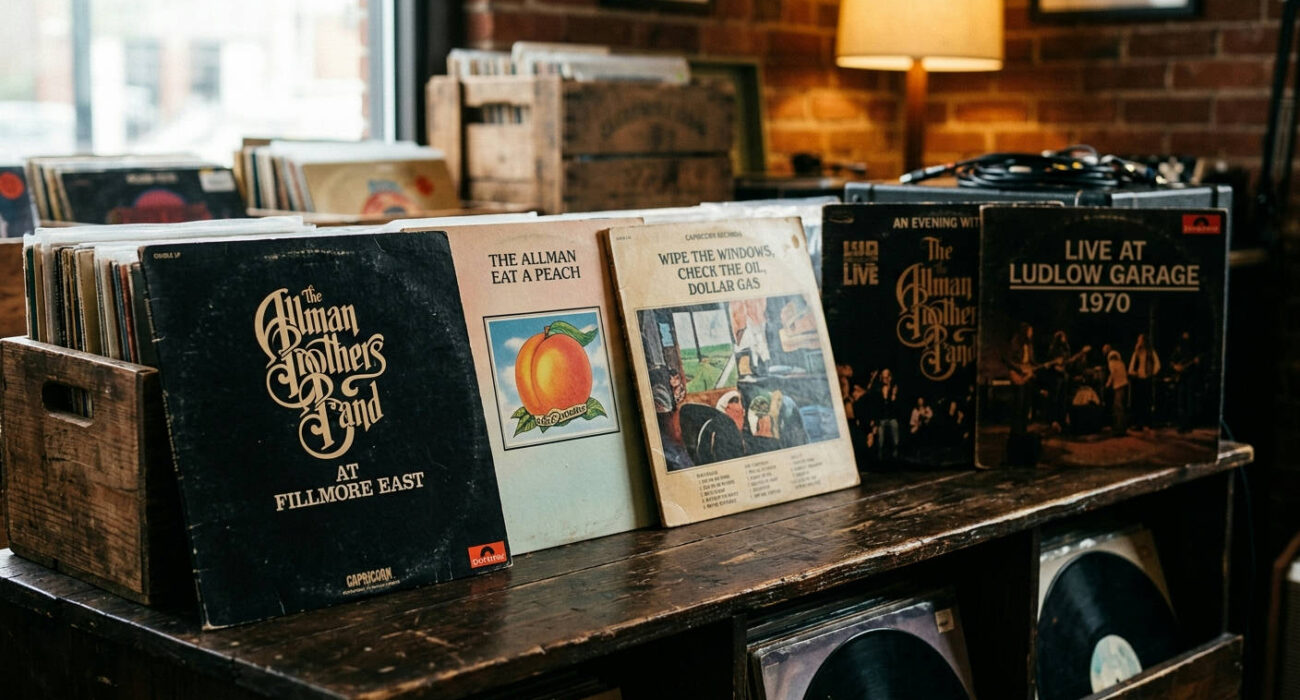
Trying to navigate the vast and often intimidating Allman Brothers live albums discography can feel like a quest for a musical holy grail. It’s not just a list of records; it’s a chronicle of a band that redefined what a live performance could be. They didn’t just play their songs on stage; they reinvented them nightly, turning concert halls into cathedrals of improvisational blues-rock. For any serious music fan, and especially for us vinyl collectors at Vinyl Gold UK, understanding these live recordings is essential. This isn’t just about owning the music; it’s about understanding the moments they captured.
Forget the polished, sterile sound of studio albums. The real magic of The Allman Brothers Band (ABB) was unleashed on stage, in front of a roaring crowd, where twin-lead guitars, a thunderous rhythm section, and soulful vocals fused into something entirely new. This is your definitive guide to their essential live recordings, from the universally acclaimed classics to the deep cuts that every hardcore fan needs to hear.
The DNA of a Legendary Live Band
Before we even spin a record, you need to grasp why this band was a live phenomenon. It wasn’t an accident. It was the result of a perfect storm of talent, chemistry, and a revolutionary approach to rock and roll. Their sound was a potent brew of blues, R&B, country, and jazz, cooked up in the crucible of relentless touring.
The Telepathic Twin Guitars
The initial engine of the ABB was the unprecedented interplay between Duane Allman and Dickey Betts. This wasn’t a standard lead-and-rhythm setup. They were two lead guitarists weaving intricate, harmonised lines that sounded like a single, multi-limbed creature. Duane, with his blistering slide work played on a Coricidin bottle, brought a raw, vocal-like fire. Dickey, with his country and jazz-inflected phrasing, provided a more melodic, structured counterpoint. Their ability to anticipate each other’s moves and build solos to ecstatic peaks is the stuff of legend.
A Rhythm Section with Two Hearts
Most bands have one drummer. The Allman Brothers had two. Butch Trucks, a powerful, driving force, acted as the locomotive, pushing the beat with freight-train intensity. Alongside him, Jai Johanny “Jaimoe” Johanson, a jazz and R&B veteran, added a polyrhythmic, subtle layer of percussion. This dual-drummer attack, anchored by Berry Oakley’s innovative, melodic bass lines, created a rhythm section that didn’t just keep time—it surged, swirled, and propelled the jams into uncharted territory.
The Soul and the Anchor
Then you have Gregg Allman. His voice, weathered and steeped in the blues, was the emotional core of the band. It was a voice that could convey pain, longing, and defiance, often in the same phrase. Behind the Hammond B-3 organ, he was the anchor, laying down the thick, soulful chords that grounded the wild improvisations of the guitars. He wasn’t just the singer; he was the sonic foundation.
“The stage is a real test. You can’t hide behind studio tricks. It’s you, the band, and the audience, and either you have it or you don’t.” – An old roadie’s wisdom.
This unique combination of players meant that a song was never just a song. It was a launching pad. A three-minute studio track could easily become a 20-minute epic exploration on any given night.
The Untouchable Classic: At Fillmore East (1971)
You can’t have a conversation about the greatest live albums of all time without At Fillmore East. It’s not just the pinnacle of the Allman Brothers live albums discography; it’s a landmark in rock history. This double album, recorded in March 1971, captured a band at the absolute zenith of its powers. It was the perfect document of the original lineup’s near-telepathic communication.
How They Bottled Lightning
Producer Tom Dowd knew the band’s natural habitat was the stage. The decision to record a live album was a gamble in 1971, but it was the only way to truly capture their essence. The recordings from New York’s legendary Fillmore East venue perfectly preserved the energy, the improvisation, and the sheer power of the six-piece. The sound is raw, immediate, and honest. You hear the clink of Duane’s slide against the frets, the roar of the crowd, the organic swell of the band hitting a collective peak.
Essential Tracks That Defined a Genre
Every track is a masterclass, but a few stand as monumental achievements. “Statesboro Blues” kicks things off with Duane’s searing slide guitar, an immediate statement of intent. The band’s instrumental, “In Memory of Elizabeth Reed,” becomes a 13-minute journey of cascading guitar harmonies and dynamic shifts.
But the true centrepiece is the side-four behemoth, “Whipping Post.” The 23-minute jam session is a tour de force. It moves through movements like a classical symphony, from Gregg’s anguished opening cry to a full-blown improvisational freak-out that showcases every member’s virtuosity. It’s a definitive moment where rock, blues, and jazz improvisation converged into something entirely new.
Why It Still Matters in 2026
Decades later, At Fillmore East remains the gold standard for live albums. It influenced countless bands and proved that a live recording could be a definitive artistic statement, not just a contractual obligation. It cemented the ABB’s legacy and, tragically, became an epitaph for Duane Allman, who would be killed in a motorcycle accident just months after its release.
Looking to add this masterpiece to your collection? You’re in luck. It has been reissued numerous times, but finding a clean original pressing is a thrill. For a high-quality modern press, you can’t go wrong.

- Find The Allman Brothers Band At Fillmore East on Vinyl: Check Amazon for current pressings
An In-Depth Guide to the ## Allman Brothers Live Albums Discography
While At Fillmore East is the undisputed king, the band’s live catalogue is rich and varied, chronicling their evolution through different lineups and eras. Ignoring the rest would be a massive mistake for any fan.
Surviving Tragedy: Wipe the Windows, Check the Oil, Dollar Gas (1976)
Released after the band’s first breakup, this album compiles performances from 1972-1975, after the tragic deaths of Duane Allman and Berry Oakley. With Chuck Leavell on piano and Lamar Williams on bass, the band’s sound had changed. It was more polished, with a greater emphasis on piano and a slightly less raw edge. Still, tracks like “Jessica” and a heartfelt “Ain’t Wastin’ Time No More” show a resilient band still capable of incredible live power. It’s an essential document of the “second” Allman Brothers era.
The Triumphant Return: The An Evening with Series (1992/1995)
The band’s 1989 reunion was supercharged by the arrival of guitarist Warren Haynes and bassist Allen Woody. This new line up was arguably the most powerful since the original. The two acoustic/electric live albums from this period, An Evening with the Allman Brothers Band: First Set and Second Set, are phenomenal. Haynes proved to be the perfect foil for Dickey Betts, and the band tore through their classic catalogue with renewed vigour. The acoustic renditions of songs like “Melissa” are particularly stunning.
The Modern Powerhouse: Peakin’ at the Beacon (2000)
By 2000, the band featured the incredible young guitar prodigy Derek Trucks (nephew of drummer Butch Trucks). Recorded at their annual residency at New York’s Beacon Theatre, this album is pure fire. Trucks’ slide guitar work is breathtaking, channeling the spirit of Duane while remaining entirely his own man. The interplay between Trucks and Betts is fantastic, and the album shows a veteran band refusing to rest on its laurels, pushing the music forward into a new century.
### The Superfan’s Bible: A Guide to the Allman Brothers Live Albums Discography Archives
For those who want to go deeper, the band has steadily released a treasure trove of archival recordings. These aren’t just for completists; many of them are as essential as the official releases.
- Fillmore West ’71: A raw, explosive companion piece to the East Coast shows. A must-hear.
- SUNY at Stony Brook, NY 9/19/71: One of the last great recordings of the original line up. The energy is off the charts.
- Macon City Auditorium 2/11/72: The first show with Chuck Leavell on piano, showing the band finding its feet after Duane’s passing.
- The Final Note (2020): Features Duane Allman’s last-ever performance. An incredibly poignant and historically significant listen.
Exploring these archives is the next step for any serious fan of the Allman Brothers’ live prowess. Each release offers a unique snapshot of a specific night and line up.
The Unofficial Kingdom: Bootlegs and Tapes
Long before official archival releases were common, the only way to hear different ABB shows was through bootleg tapes. The band had a notoriously open policy towards tapers, which resulted in a massive underground network of fans trading recordings. This culture is a huge part of the band’s legacy and a testament to the fact that no two shows were ever alike.
Why Bootlegs Are So Crucial
Bootlegs capture the nights that weren’t deemed “perfect” enough for an official release, but often contain the most explosive and experimental jams. They provide a ground-level view of the band’s evolution, warts and all. Hearing a flubbed note or a jam that goes off the rails is part of the authentic experience.
Soundboard vs. Audience: Know the Difference
When diving into bootlegs, you’ll encounter two main types of recordings:
- Soundboard (SBD): A direct feed from the mixing desk. The sound is usually clear, balanced, and “dry,” with very little crowd noise. It’s like having the band play directly into your ears.
- Audience (AUD): Recorded from a microphone in the crowd. The quality can range from terrible to surprisingly excellent. A good audience recording captures the ambience and energy of the room in a way a soundboard can’t. You feel like you’re there.
For decades, fans have debated which is better. The truth is, both offer a valuable perspective. The best way to explore this world is through fan communities and archives like the one hosted on the Internet Archive, where thousands of shows are available to stream for free.
The Tools of the Trade: Gear That Shaped the Sound
The iconic sound of The Allman Brothers Band wasn’t just about talent; it was also about the specific instruments and amplifiers they used. For musicians and gearheads, this is sacred ground.

Duane’s Historic Les Pauls
Duane Allman is forever associated with the Gibson Les Paul, particularly his 1959 Cherry Sunburst and a 1957 Goldtop. He played through a 50-watt Marshall Bass head, cranking it to get that signature sustain and sweet, singing tone. His slide was famously a glass Coricidin medicine bottle, which gave him a smoother, more vocal-like sound than a metal slide. This combination was key to his revolutionary slide technique.
Dickey’s Melodic Fire
Dickey Betts also favored Les Pauls, often a 1957 Goldtop he nicknamed “Goldie.” He, too, primarily used 50-watt and 100-watt Marshall amps. His tone was slightly cleaner and brighter than Duane’s, which helped their harmonised lines stand out with distinct clarity.
The Foundation: Bass and Keys
Berry Oakley’s heavily modified Fender Jazz Bass, known as “The Tractor,” was a beast. With an added Guild pickup, he could produce deep, resonant tones and melodic, guitar-like runs that redefined the role of the bass in a rock band. Gregg Allman’s setup of a Hammond B-3 organ played through one or more Leslie 122 speakers is one of the most recognisable sounds in rock. The swirling, doppler effect of the Leslie gave his organ parts a rich, gospel-infused texture that was the perfect sonic glue for the band.
“The road goes on forever… but the party ends.” – A famous line from the band’s inner circle, reflecting their relentless touring life.
Understanding the gear provides a deeper appreciation for how they crafted their unique sonic tapestry on stage every night.
Collecting the Allman Brothers on Vinyl: A Collector’s Guide
For many of us at Vinyl Gold UK, hearing the Allman Brothers live albums discography on wax is the ultimate experience. The warmth, dynamic range, and sheer presence of a good vinyl pressing bring these legendary performances to life. However, collecting their records requires a bit of knowledge.
Originals vs. Reissues
- Original Pressings: An original “pink label” Capricorn Records pressing of At Fillmore East is a true collector’s item. These first pressings, supervised by Tom Dowd, have a raw, immediate sound that many believe is definitive. They can be expensive and hard to find in good condition.
- Modern Reissues: In recent years, companies like Mobile Fidelity Sound Lab and the band’s own label have released high-quality, 180-gram audiophile reissues. These are often cut from the original master tapes and offer stunning clarity and detail. For many, they are the best way to experience the album without the pops and clicks of a 50-year-old record. These reissues are often more affordable and accessible.
When starting your collection, a good turntable is essential to get the most out of your vinyl. If you’re looking for a great entry point, check out our guide to the best turntables under £300 in the UK.
What to Watch Out For
Be wary of counterfeits, especially for high-value records like the Fillmore album. Check the dead wax for matrix numbers and look for the correct label details. Always buy from reputable dealers. A clean record is a happy record; proper cleaning and storage will preserve your investment for years to come.
Where to Find Your Next Vinyl Treasure
- Online Marketplaces: Sites like Discogs are invaluable for finding specific pressings from sellers worldwide.
- Record Fairs: A great way to dig through crates and potentially unearth a hidden gem.
- Your Local Record Shop: Support independent shops! We at Vinyl Gold UK are passionate about helping people find the records they love. Come browse our selection of recent releases and classics.
The Legacy That Endures
The influence of The Allman Brothers Band, particularly their live work, is immeasurable. They didn’t just play concerts; they created communal musical events.
The Godfathers of the Jam Band Scene
Every modern jam band, from Gov’t Mule (which was founded by Warren Haynes and Allen Woody) to Phish and the Tedeschi Trucks Band (led by Derek Trucks and Susan Tedeschi), owes a massive debt to the ABB. The Allmans wrote the playbook for extended, improvisational rock music built on high-level musicianship and a deep respect for the blues. The entire jam band scene is built on the foundation they laid at the Fillmore. The band’s induction into the Rock & Roll Hall of Fame in 1995 was a formal recognition of their foundational role.
The Architects of Southern Rock
While they often resisted the “Southern Rock” label, they undeniably defined its sound. They elevated the genre from a regional curiosity to a global force, proving that music rooted in the American South could be as complex, ambitious, and artistically valid as any other. Bands like Lynyrd Skynyrd, The Marshall Tucker Band, and countless others followed the trail they blazed.
The Allman Brothers Band’s live legacy is not just a collection of albums; it’s a testament to the transcendent power of live music. It’s a story of brotherhood, tragedy, resilience, and the relentless pursuit of a musical vision. Diving into their live discography is to experience one of the greatest rock and roll bands of all time at their most honest, raw, and brilliant. The road, indeed, goes on forever.