
You’re probably here for one of two reasons. You need cd recent releases for a set, or you’ve hit that maddening wall where the track you need either isn’t on streaming, has the wrong version online, or sounds flat once it hits a proper PA. That happens more often than casual listeners realise, especially with weddings, private parties, and corporate jobs around London and Kent where one odd request can define the whole night.
The working DJ answer isn’t glamorous. It’s organised collecting. And for that, CDs still do a job that streaming and vinyl often don’t. They’re cheap to build around, strong on catalogue depth, and full of overlooked reissues and back-catalogue gems that fit real dancefloors, not just collector shelves.
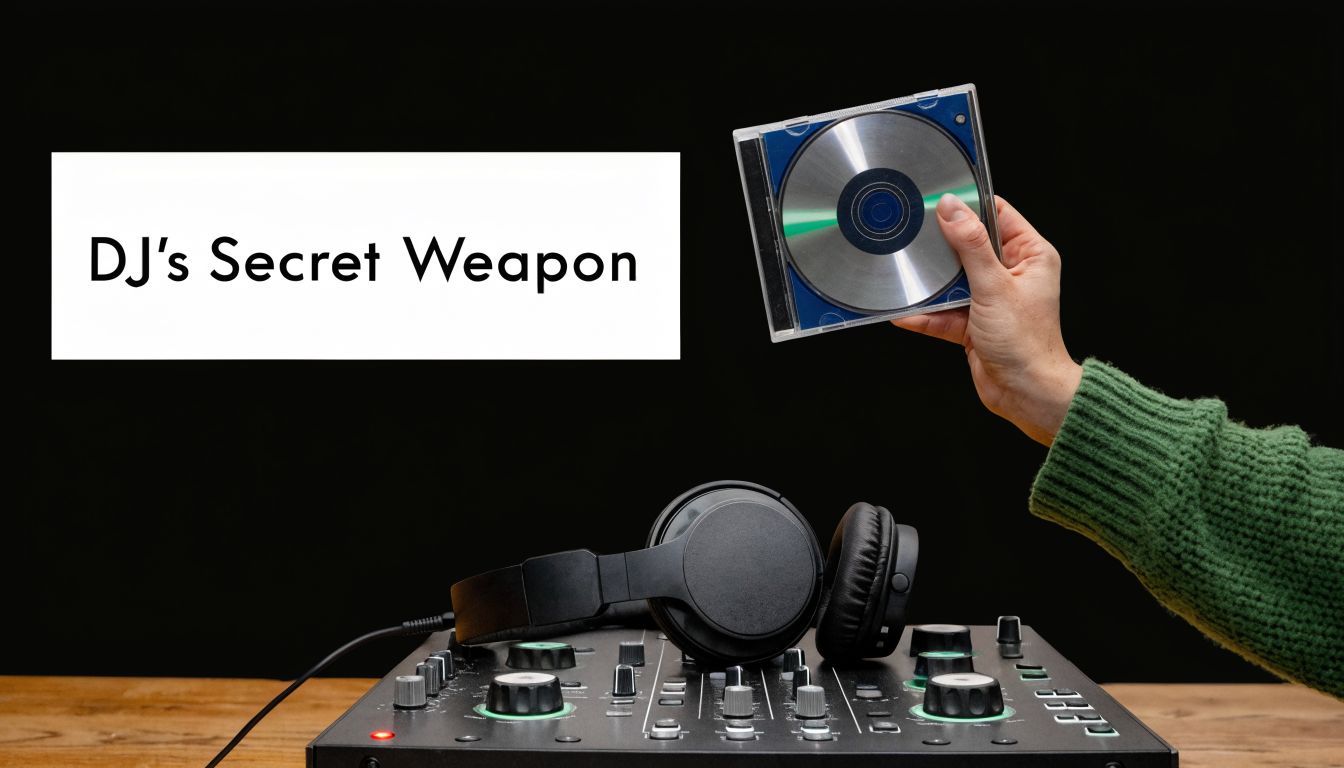
The Modern DJ’s Secret Weapon An Introduction to CDs
A couple ask for a specific 90s funk tune from their uni days. You search the usual platforms. Nothing. Then you find a compilation CD from years back, tucked between plenty of forgettable titles, and there it is. Correct version. Proper intro. No dodgy edit. Problem solved.
That’s why CDs still matter.
For working DJs, especially in weddings and mixed-age events, the value of CDs has very little to do with nostalgia and everything to do with access. The UK physical market has clearly shifted toward vinyl, but CD hasn’t disappeared. It’s become a specialist format for people who need range, reliability, and sensible pricing. In the UK, vinyl now accounts for over 60% of physical album sales, while secondhand CDs in 2025 average £4-6, compared with £25+ for vinyl, according to the Official Charts sales data.
That price gap changes how you collect. On vinyl, every purchase feels like a commitment. On CD, you can take chances on compilations, label samplers, deluxe reissues, and forgotten artist albums that might give you one killer track for the floor and two more for warm-up or dinner service.
Why that matters in London and Kent
A professional set around South East London or Kent rarely stays in one lane. You might start with soul during drinks, move into disco for the first push, then hit R&B, house, singalongs, and crossover pop later on. That demands a library with width.
CDs are brilliant for that kind of programming because they let you buy deep without burning your budget. They also suit DJs who build events around taste rather than trend. That’s the same instinct behind a more personal approach to music-led events, where the soundtrack is shaped around the room, not just whatever’s being pushed hardest online.
The best CD in your bag is often the one no algorithm ever served you.
What recent releases mean on CD now
For collectors and DJs, “recent releases” doesn’t just mean brand-new albums. It also means:
- Fresh reissues of classic albums that have been out of print
- Expanded editions with better masters or useful bonus mixes
- Niche compilations that gather hard-to-find club tracks
- Back-catalogue releases newly pressed again for specialist buyers
That broader view is where CD still wins. If you only treat recent releases as this Friday’s mainstream drop, you’ll miss most of the useful stuff.
Why CDs Still Deliver Superior Value for Professionals
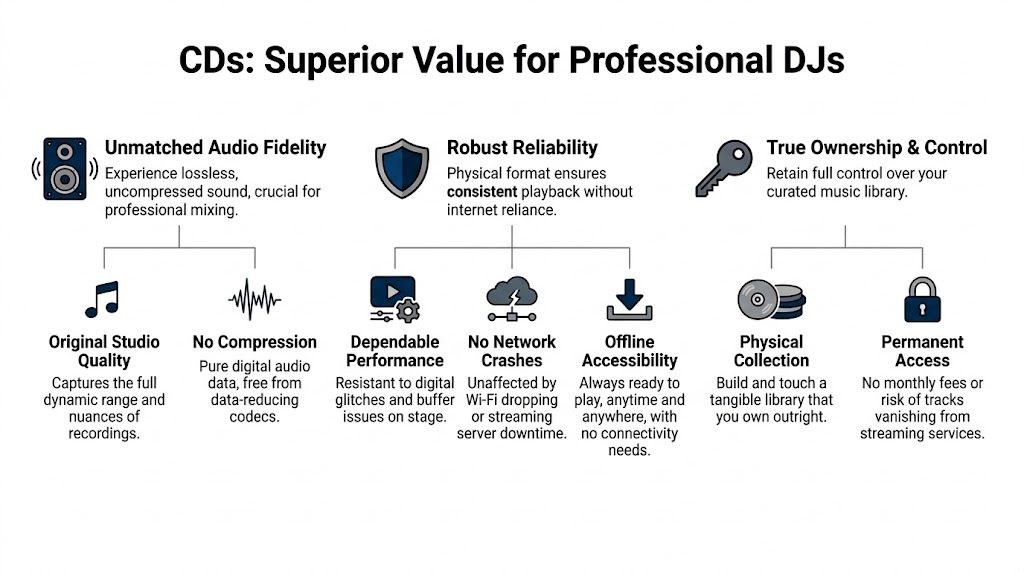
A CD has to earn space in a DJ workflow. Sentiment isn’t enough. The format still makes sense when it gives you better sound, steadier playback, and cheaper access to the music you need.
The technical case is straightforward. Standard audio CDs deliver 1,411 kbps, using 44,100 Hz sampling frequency and 16-bit resolution, and that lossless standard outperforms the compression used by most standard streaming services, according to this report on the compact disc’s format and market resilience. For a lounge listen at home, that difference may not always be dramatic. Through a venue system, especially on a lively dancefloor, it matters more.
Sound you can trust
Streaming is convenient. It isn’t always dependable enough to be the backbone of a paid event. Files vanish. Versions change. Regional rights interfere. Clean edits and explicit edits get mixed up. A CD gives you a fixed, owned source.
That matters when you’re dealing with:
- First dances and ceremony tracks where timing matters
- Corporate playlists that need clean language and consistent edits
- Old-school soul, funk, and house where version differences can wreck a transition
The economics are hard to ignore
The budget angle is where CDs effectively flatten the argument. If you’re building a broad event library, £4-6 secondhand buys a lot of experimentation. You can test compilations, import titles, artist retrospectives, and genre collections without treating every purchase like a luxury item.
Vinyl has its place. It also forces sharper selectivity because each record costs more. For club purists or home collectors, that’s fine. For wedding and event DJs who need breadth, CD is often the more practical spend.
What works and what doesn’t
Here’s the honest trade-off.
-
What works
- Compilation hunting: Great for finding one-off remixes, radio edits, and forgotten crossover cuts.
- Back-catalogue building: Brilliant for 80s, 90s, and early 2000s staples that still fill dancefloors.
- Redundancy: Keep the disc, rip a digital copy, and you’ve got backup built in.
-
What doesn’t
- Blind buying every reissue: Some recent CD releases add packaging hype without adding better audio or better tracklists.
- Ignoring condition: Cheap only works if the disc plays cleanly.
- Assuming all CDs are equal: A poor compilation can still have bad sequencing, weak source material, or pointless edits.
Practical rule: Buy CDs for catalogue depth and event usefulness first. Collectability is a bonus, not the brief.
Why the decline doesn’t kill the format
UK CD sales have fallen sharply over time. That’s real. But decline in the mass market doesn’t mean irrelevance in professional use. It often means a format has moved from casual consumption into specialist hands. That’s exactly where many DJs, archivists, and serious collectors live.
Decoding the Music Release Calendar
If you want the best of cd recent releases, don’t wait until release day and hope a local shop still has stock. The trick is learning the rhythm of how releases appear.
Most bigger titles land on Friday, which is why DJs and collectors watch the end of the week so closely. But the useful material for event work often sits outside the headline album cycle. Reissues can be announced months ahead. Independent labels may open pre-orders well before stock arrives. Artist-run releases sometimes appear with less fanfare but better curation.
What to track each week
A solid release routine is simple:
- Check Friday lists for mainstream titles. This catches bigger albums, anniversary editions, and wider catalogue represses.
- Watch label announcements midweek. That’s often where specialist soul, funk, jazz-funk, disco, and house reissues first surface.
- Review shop newsletters and pre-order pages. They often reveal CD versions that don’t get much editorial coverage.
- Scan specialist discovery tools. If you want a broad view of the latest music releases, that kind of rolling feed helps you spot titles before they disappear into the weekly noise.
How release timing affects buying
A wedding DJ and a home collector should buy differently.
If a release solves a known event problem, such as a hard-to-find slow jam, a dependable clean edit, or a better-mastered catalogue favourite, buy early. If it’s a curiosity title, wait and see whether it holds value for your sets.
Signs a CD release is actually useful
Not every new CD deserves space in the case. The useful ones usually have one or more of these qualities:
- A clear niche such as classic soul, boogie, R&B, house, or crossover disco
- Practical sequencing that suits listening and digging
- Better availability of overlooked tracks than streaming offers
- A sensible price compared with the same material on vinyl
Good release tracking isn’t about buying more. It’s about buying earlier and buying smarter.
Your Guide to Finding CDs in London and Beyond
The best places to buy CDs depend on what sort of job you’re trying to do. If you want current chart titles, almost any mainstream outlet can help. If you need obscure soul reissues, overlooked house compilations, or a recent back-catalogue deluxe edition that still plays nicely at a wedding, you need a different map.
That’s where London and Kent are useful. Independent shops still matter because specialist physical demand hasn’t vanished. In the first half of 2024, UK vinyl sales rose 11.1%, but specialist reissues of classic soul and R&B albums on physical formats saw a 5% uptick, and independent stores across London and Kent saw a 23% rise in retro format bundle sales, according to this discussion of UK retro format demand. For DJs, that points to one thing. The good stock is often in the places casual buyers overlook.
Independent shops
Shops such as Rough Trade and Sister Ray are still worth the trip, but you need to use them properly. Don’t just browse the obvious front racks. Ask staff about reissues, label stock, returns, and recent secondhand intake. Good staff often know what’s come in before it’s been properly filed.
Independent shops are strongest when you need:
- Recent reissues with proper packaging
- Genre-specific recommendations
- Label-led titles you won’t spot in supermarkets or chain-style retail
- The chance to inspect condition in person
The downside is simple. Prices vary, and stock can skew toward what’s fashionable rather than what’s functional.
Online specialists
Online stores earn their keep when you’re hunting niche labels, imports, and lower-profile releases. Boomkat and Norman Records are useful because they often list specialist editions earlier than more general music retail sites. Buying direct from Bandcamp can also help when artists or labels still issue CDs in small runs.
The trade-off is that online buying makes it easier to overpay for something that doesn’t improve your set library. Read tracklists carefully. Check whether the release offers album versions, single edits, remasters, or bonus material that matters to your workflow.
Secondhand markets
Secondhand buying is where a lot of the hidden value sits. Discogs and eBay are obvious, but charity shops, market stalls, and local clearance sellers can still deliver excellent finds, especially for mainstream soul, dance, R&B, and pop compilations from the 90s and 2000s.
Here’s the comparison I use most often:
| Source Type | Best For | Price Range | Selection |
|---|---|---|---|
| Independent record shops | New reissues, staff recommendations, label titles | Mid to higher | Curated, often genre-aware |
| Online specialist stores | Imports, niche releases, pre-orders | Mid to higher | Deep in specialist areas |
| Artist and label direct shops | Limited runs, exclusive editions | Variable | Narrow but distinctive |
| Discogs and eBay | Specific catalogue hunting, out-of-print CDs | Low to variable | Huge, depends on seller quality |
| Charity shops and local secondhand spots | Cheap compilations, older mainstream gems | Low | Unpredictable but often rewarding |
How to buy for gigs, not just shelves
Collectors often buy by artist. DJs should buy by function.
One CD might be worth having because it gives you:
- a killer opener for drinks,
- a dependable singalong for late evening,
- and one forgotten groove that works when the floor needs resetting.
That’s a better purchase than an expensive prestige reissue that never leaves the house.
A smart way to keep your search organised is to maintain a simple shortlist of target genres, labels, and gaps in your library, then save artwork or title references in one place, even if it’s just a browser bookmark folder beside a saved visual reference for your music brand assets. The point is speed. If a CD appears, you’ll know whether it fills a real need.

The secondhand win isn’t finding something rare. It’s finding something useful before everyone else remembers it was useful.
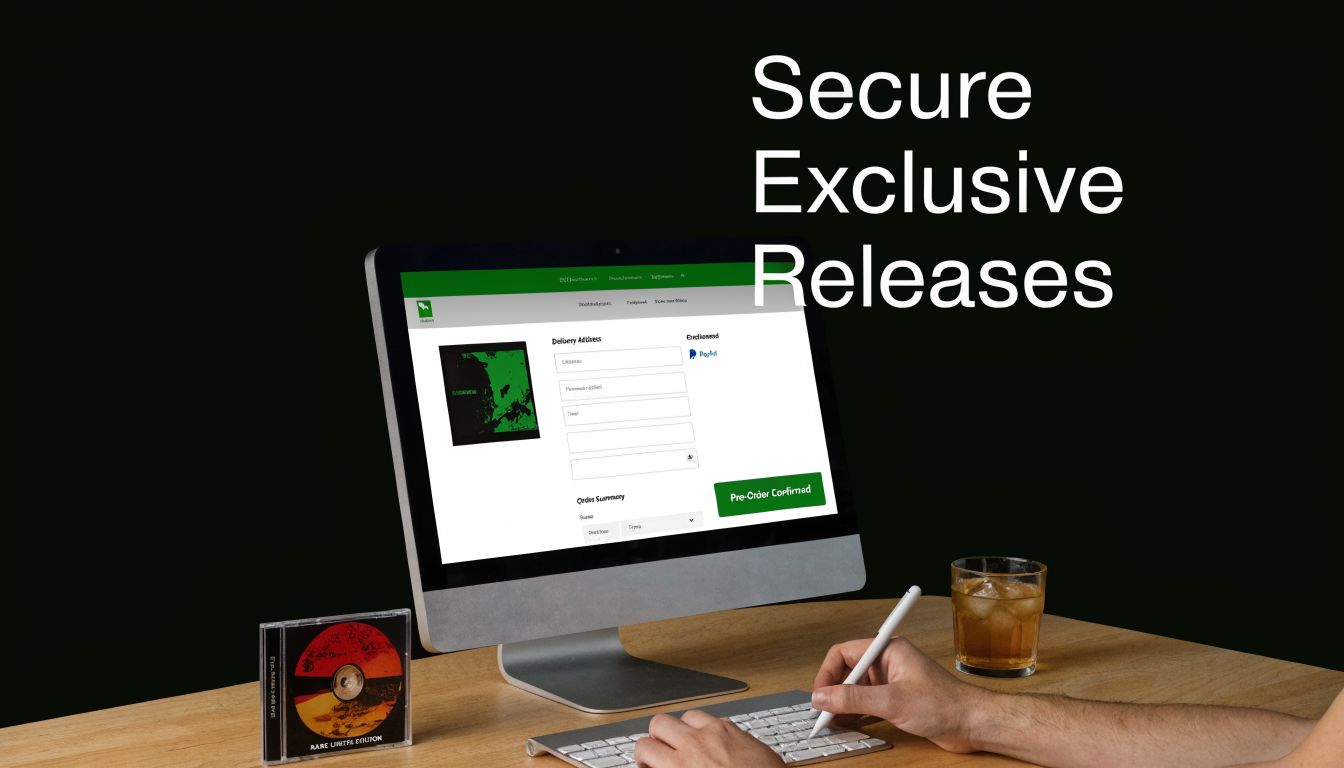
Advanced Tactics for Pre-Orders and Limited Editions
If you wait for social buzz, you’re usually late. The CDs worth owning for event work often don’t trend loudly. They just sell through quietly to people who were paying attention.
Build a proper alert system
The simplest method is still the best. Subscribe to artist newsletters, label mailing lists, and shop alerts for the genres you play. Don’t sign up to everything. Focus on labels that release soul, disco, funk, boogie, house, Balearic, or archival dance music that fits your sets.
Then tighten your process:
- Use one email folder for release alerts so important pre-orders don’t disappear.
- Follow labels, not just artists on Instagram and Bandcamp.
- Save release dates in your calendar if a title looks likely to sell through.
- Check whether the CD version differs from vinyl or download formats.
Know which releases deserve fast action
Move quickly on releases that are likely to matter later:
- anniversary editions of proven catalogue titles
- specialist compilations with licensing that may not be repeated
- label retrospectives
- small-run CD editions from artists with loyal audiences
You can be slower with standard chart albums unless you need them immediately for event requests.
Avoid common pre-order mistakes
A lot of DJs waste money by treating limited editions as trophies. Better tactic. Ask three questions before buying:
- Will this give me tracks I can use?
- Is the CD version likely to include the best sequencing or bonus material?
- Am I buying because it’s scarce, or because it solves a library problem?
That last one saves a lot of shelf space.
Integrating CDs into a Modern Professional DJ Setup
Owning the disc is only half the story. Its true value comes when the CD fits cleanly into a modern DJ system without slowing you down on the night.
For event professionals, compatibility with pro gear matters. New CD reissues and remasters still have a place because some offer 24-bit/96kHz dynamic range, and these can outperform vinyl in club environments. Back-catalogue CD revenue grew 8% in the first half of 2025 to £2.1 million, driven by event DJ demand, and CDs are valued for a playback error rate of under 0.1%, according to this piece on high-quality CD reissues and pro DJ use.
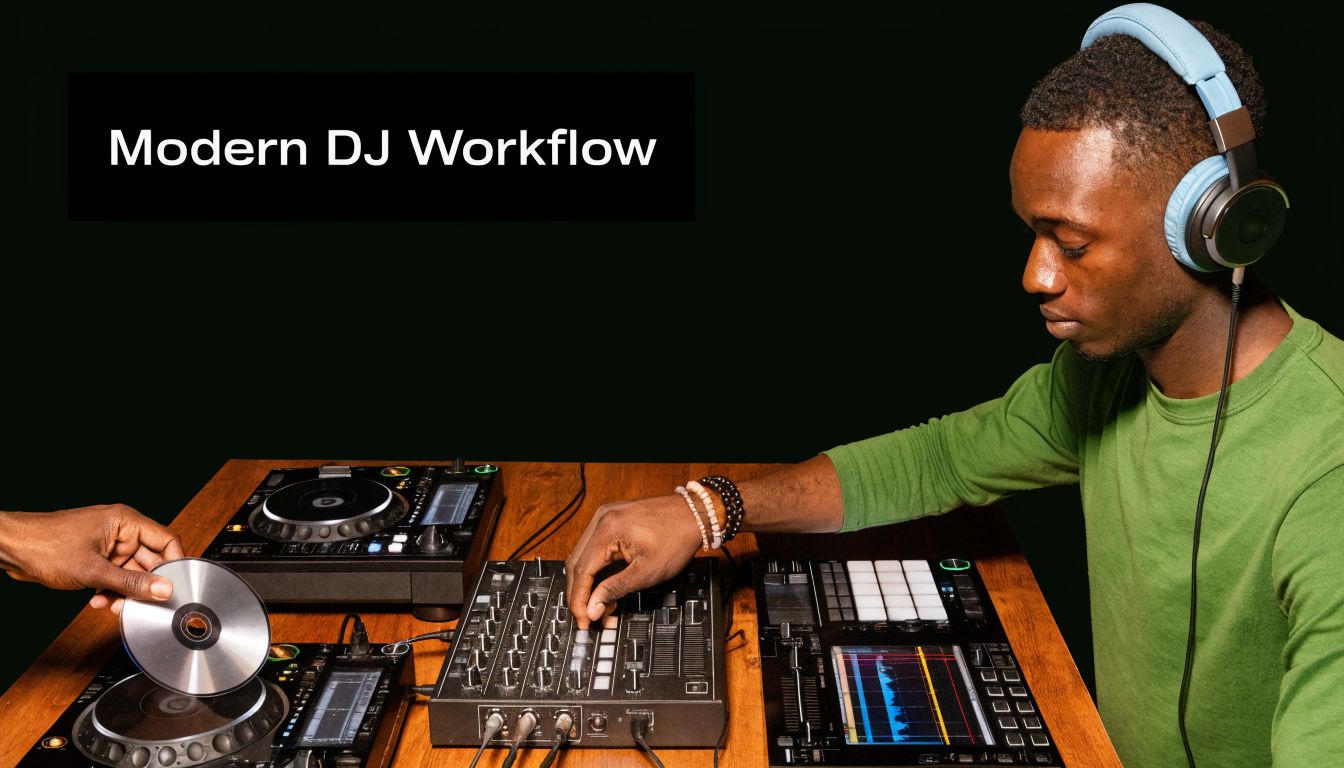
Use CDs as source media and backup
The best workflow for most professional DJs is hybrid.
Keep the original CDs as your archive and backup. Rip them to a lossless digital format for day-to-day prep and library management. That gives you flexibility inside Rekordbox or similar software, while preserving the physical source if files get corrupted, drives fail, or metadata goes wrong.
That approach is especially useful for:
- wedding first dances
- ceremony edits
- rare requests
- retro tracks you can’t trust streaming to deliver consistently
A practical workflow that holds up at gigs
This is the method that tends to work best in real life:
- Step one: Buy the CD and inspect condition straight away.
- Step two: Rip it carefully to a lossless format and tag artist, title, year, genre, and energy notes.
- Step three: Test the file on your home setup before adding it to event playlists.
- Step four: Keep the physical disc filed by genre or event function, not just alphabetically.
- Step five: Carry critical discs or backups for key moments.
A lot of DJs make this harder than it needs to be. Your system should help you find a tune in seconds, not remind you how beautifully organised your shelves look.
Where CDJs still make sense
Pioneer CDJs remain relevant because they bridge old and new workflows. Even when you’re primarily playing from USB or software, the discipline of preparing music from CDs often results in a cleaner, more intentional library. You know your edits. You know your versions. You know which rip came from which source.
That’s part of why CD collecting still suits event professionals. It encourages ownership and preparation.
If you want a visual on modern booth practice and flow, this clip is a useful reference point:
What not to do at a wedding or corporate job
Don’t turn CDs into a novelty prop. They’re a tool.
Avoid these mistakes:
- Ripping in a hurry and ending up with bad metadata
- Trusting one copy only of a vital track
- Assuming every remaster is better than the original issue
- Bringing physical media you haven’t tested on your current setup
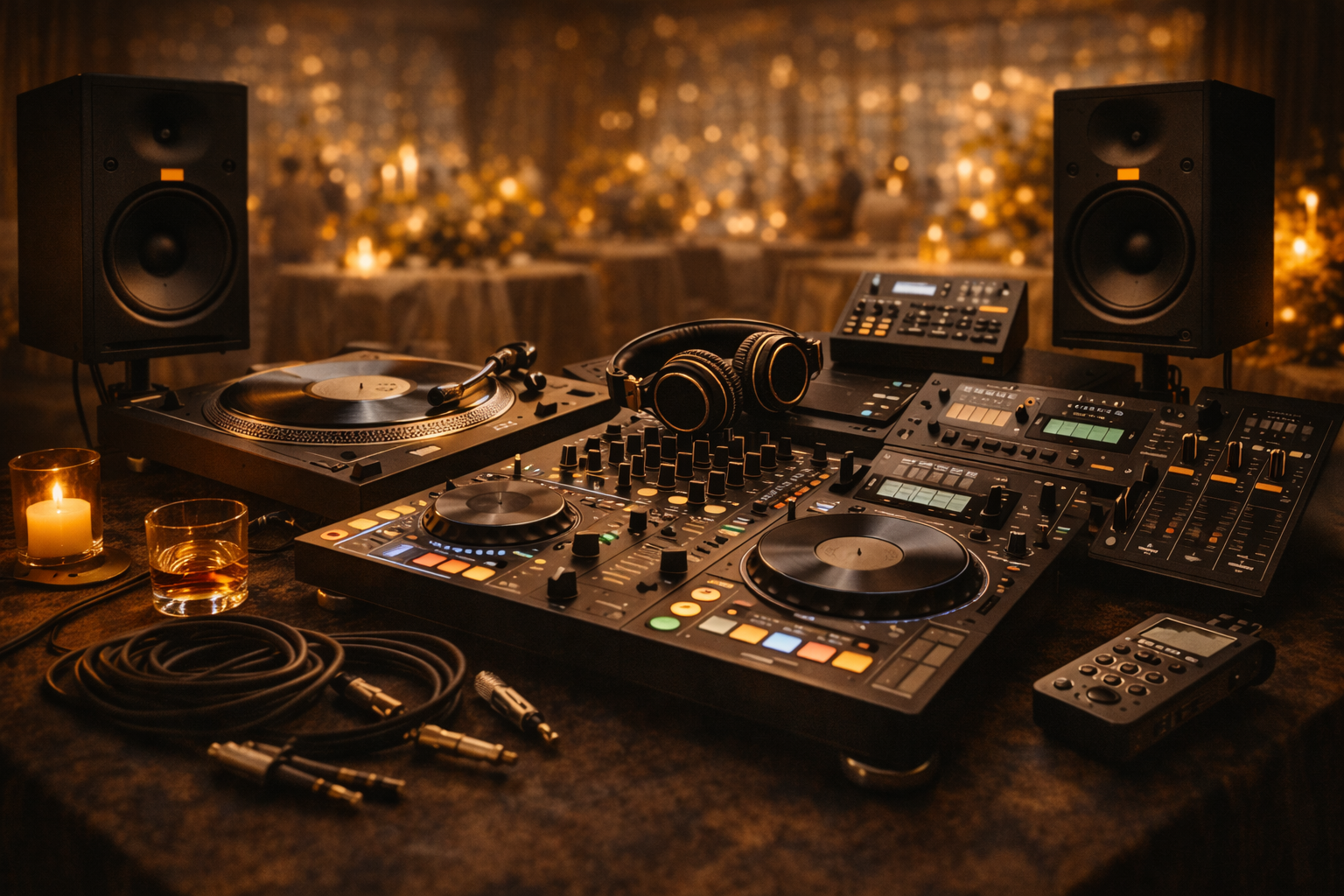
A clean workflow matters more than format evangelism. A tidy digital library built from trusted CDs, supported by reliable hardware and a clear booth routine, still gives DJs a real advantage. Even visually, that disciplined booth mentality is part of the craft, much like the focused atmosphere shown in this DJ booth performance image.
The Enduring Legacy and Future of Physical Formats
The appeal of CDs isn’t only practical, though that’s where they earn their keep. There’s also something important about having a fixed, tangible library, given that access keeps changing. Files vanish. Platforms lose rights. Albums get swapped for different versions. A CD on your shelf stays where you put it.
That permanence matters to DJs more than people think. A good event library isn’t just a pile of songs. It’s a working archive of memories, edits, transitions, and trusted versions gathered over years. Physical media supports that mindset because it encourages deliberate collecting rather than endless casual saving.
Why physical still feels different
Streaming is brilliant for discovery and convenience. Physical formats are better at commitment. When you buy a CD, you listen differently. You pay attention to sequencing, sleeves, credits, bonus tracks, and label context. You remember where you found it and why you bought it.
That matters for crate-diggers because taste isn’t built only from abundance. It’s built from selection.
A strong DJ library doesn’t happen because music is available. It happens because someone chose carefully.
The future isn’t all cloud
Physical media isn’t finished as a concept. New optical storage research proves that. Emerging 3D optical disc technology can store 1.6 petabits, or 200 terabytes, showing that optical formats still have a future in specialist storage, even if mass-market adoption is a long way off because current costs are prohibitive, as noted in this report on new optical disc storage technology.
That doesn’t mean your next DJ set will run from futuristic archive discs. It means something more useful. The logic behind physical storage still holds. Tangibility, ownership, redundancy, and long-term preservation continue to matter.
Where CD fits in that story
CD isn’t the end point. It’s one of the strongest practical chapters in the physical media story. For wedding DJs, private party specialists, and collectors chasing soul, funk, disco, and old-school house, it remains one of the smartest ways to build a dependable library without paying premium-format prices for every title.
If you’re serious about cd recent releases, think bigger than brand-new albums. Watch reissues. Track specialist compilations. Buy with purpose. Keep the discs that solve real problems. Those are the releases that stay useful long after hype has moved on.
If you want a DJ who understands how to turn deep music knowledge into a packed dancefloor, VinylGold brings that crate-digger mentality to weddings, private parties, and corporate events across London and Kent. Expect thoughtful programming, reliable sound, and playlists built around the people in the room, not just the obvious hits.