
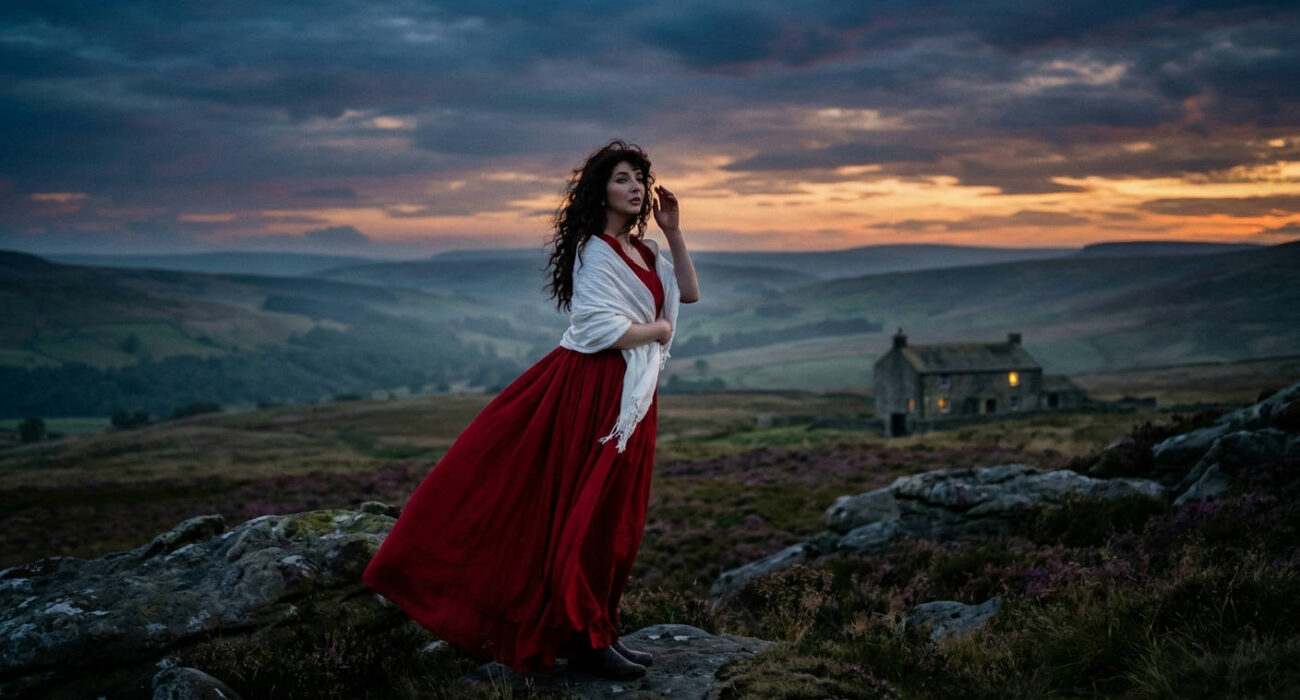
Let’s be honest. You’ve heard it. You’ve probably tried to sing it (we all have), and you’ve definitely felt its strange, ethereal pull. Kate Bush’s “Wuthering Heights” isn’t just a song; it’s a four-and-a-half-minute gothic novel crammed into a pop single. For anyone looking for the Kate Bush Wuthering Heights lyrics explained in a way that goes beyond a simple summary, you’ve landed in the right spot. We’re going to pull apart every ghostly whisper and desperate cry to get to the heart of this masterpiece.
This track, released back in 1978, was the world’s first introduction to a fiercely original artist who refused to play by the rules. It’s a song inspired by a 130-year-old book, sung from the perspective of a ghost, featuring a vocal performance so unique it still sounds like it arrived from another planet. Here at Vinyl Gold UK, we live for this stuff. So, grab a brew, put the record on, and let’s unravel the beautiful madness of “Wuthering Heights.”
The Literary Foundation: Emily Brontë’s Gothic Masterpiece
You can’t even begin to understand the song without first understanding the book. Kate Bush didn’t just skim the summary; she inhaled the very soul of Emily Brontë’s 1847 novel, Wuthering Heights. This isn’t a cheerful romance. It’s a dark, twisted tale of obsession, revenge, and love so destructive it transcends the grave.
Who Are Catherine and Heathcliff? A Quick Primer
The story revolves around two characters: Catherine Earnshaw and Heathcliff. Catherine is a wild, free-spirited girl from a well-to-do family. Heathcliff is an orphan her father brings home, a “dark-skinned gipsy” who is immediately ostracised by everyone but Cathy.
They form an intense, almost feral bond on the desolate Yorkshire moors. They are two halves of the same soul, but their connection is more destructive than romantic. Cathy, torn between her wild love for Heathcliff and her desire for social standing, makes a fateful decision. She chooses to marry the wealthy, gentle Edgar Linton.
This decision shatters Heathcliff. He flees, returning years later as a rich and vengeful man, determined to destroy everyone who he feels wronged him, including Catherine and her new family. Their story is one of pure, unrestrained passion that ultimately consumes them both.
The Novel’s Ghostly Premise
Kate Bush was famously inspired by the final few minutes of a 1970 film adaptation she saw as a teenager. But the song hones in on a very specific, chilling part of the novel. It’s a scene near the beginning where a visitor named Lockwood is staying at Wuthering Heights.
Forced to sleep in Catherine’s old, abandoned room, Lockwood has a nightmare. He dreams of a ghostly hand trying to get in through the window. He hears a voice wailing, “Let me in!” It’s the ghost of Catherine, who died years earlier, now doomed to wander the moors, unable to find rest or reunite with Heathcliff. This is the exact moment Kate Bush captures in her song. She isn’t singing about Cathy’s ghost; she is Cathy’s ghost, clawing at the window, desperate to be let back in.
Why a 19th-Century Novel Resonated with a Teenage Kate Bush
Think about it. In the mid-70s, a teenage girl discovers this story not of polite love, but of raw, uncontrollable emotion, supernatural encounters, and a female protagonist who is deeply flawed yet utterly compelling. It’s a perfect storm for a creative mind like Kate’s.
The themes of Brontë’s novel—the clash between nature and society, passionate rebellion, and a love that defies even death—are incredibly potent. For an artist who would build her career on exploring complex emotional states and unconventional narratives, Wuthering Heights wasn’t just a story; it was a mission statement. It gave her the perfect vehicle to unleash her extraordinary vocal and lyrical talents.
“I’m sure it’s the passions. It’s the unfulfilled passions of the two main characters, Cathy and Heathcliff. And it’s a very, very powerful love story. I’m sure that that’s what people get from it.” – Kate Bush
Kate Bush Wuthering Heights Lyrics Explained: A Verse-by-Verse Breakdown
The genius of the song is how it condenses a 300-page saga of torment into a four-minute pop song without losing an ounce of its emotional weight. Bush achieves this by adopting a first-person perspective, singing as the ghost of Catherine Earnshaw.
Verse 1: “Out on the wiley, windy moors…”
The song opens with an image straight from the novel: “Out on the wiley, windy moors / We’d roll and fall in green.” This is Cathy’s ghost reminiscing about her childhood with Heathcliff, a time of wild freedom before society corrupted her.
“You had a temper like my jealousy / Too hot, too greedy.” She’s not painting a rosy picture. She acknowledges the destructive nature of their bond from the very beginning. They were mirrors of each other’s worst impulses.
“How could you leave me / When I needed to possess you? / I hated you, I loved you, too.” This is the core conflict. Her words drip with the possessiveness that defined their relationship. It wasn’t just love; it was an all-consuming need to own one another. The hate and love are intertwined, inseparable, just as they are in the book.
The Chorus: Cathy’s Plea to Heathcliff
This is one of the most iconic choruses in pop history. Sung in that piercing, otherworldly soprano, it’s the sound of a spirit trapped between worlds.
“Heathcliff, it’s me, I’m Cathy / I’ve come home, I’m so cold / Let me in-a-your window.” This is a direct lift from the novel’s scene. She is literally outside his window, a ghost shivering in the cold of the afterlife, begging for entry. The childlike delivery of “it’s me, I’m Cathy” is haunting, as if she’s reverted to the girl he once knew on the moors.
The line is a direct echo of her tragic choice. In life, she chose the warmth and comfort of Thrushcross Grange with Edgar Linton over the wild, cold moors with Heathcliff. In death, she is eternally “so cold” and can only find warmth by reuniting with the very man she abandoned.
Verse 2: “Bad dreams in the night…”
The second verse delves deeper into her regret. “Bad dreams in the night / They told me I was going to lose the fight / Leave behind my wuthering, wuthering, Wuthering Heights.”
Here, “Wuthering Heights” represents more than just the house. It’s a symbol of her true self, her untamed nature, and her connection to Heathcliff. By marrying Edgar, she left that part of herself behind, a decision that led to her spiritual and eventual physical death. The lyrics suggest she knew, even then, that this choice was a betrayal of her own soul.
### The Bridge and Outro: A Descent into Madness?
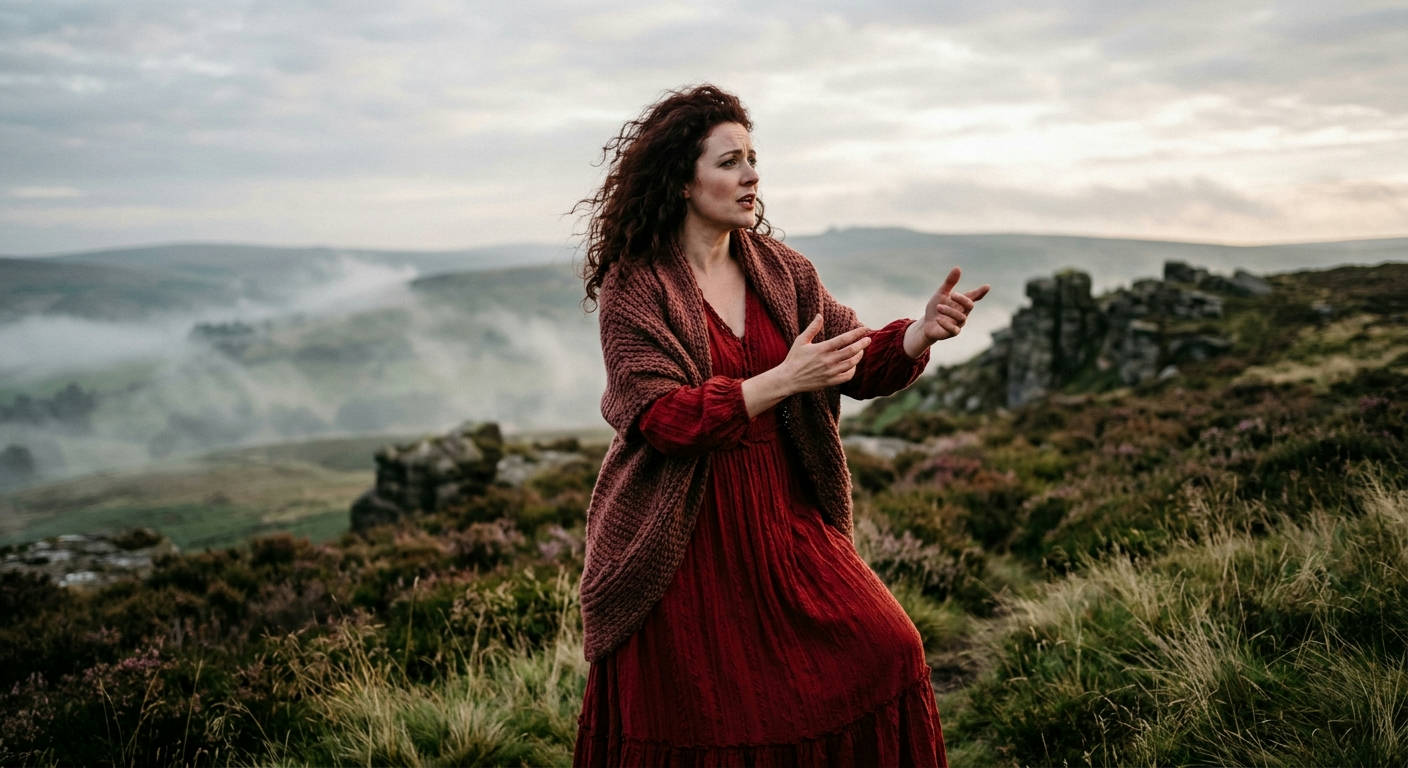
This is where the song’s intensity peaks. The tone shifts from mournful pleading to something far more aggressive and desperate.
“Ooh, let me have it / Let me grab your soul away / Ooh, let me have it / Your soul away.”
Is she trying to comfort him or consume him? It’s both. In the novel, after Cathy’s death, Heathcliff begs her ghost to haunt him for the rest of his days, as he cannot live without her. He screams, “Be with me always—take any form—drive me mad! only do not leave me in this abyss, where I cannot find you!”
The song’s outro is her answer to his prayer. She has come back to claim him, to take his soul so they can finally be together in death, as they could never be in life. The repeated, frantic “Let me in!” becomes less of a plea and more of a demonic demand. It’s the sound of obsession reaching its terrifying, supernatural climax. This is the ultimate delivery on the promise of the Kate Bush Wuthering Heights lyrics explained—it’s not a love song, it’s a horror story.
The Dual Vocal Enigma: Why Are There Two Voices?
One of the most discussed aspects of the track is Kate’s vocal performance. It’s not one single voice but a clever interplay between two distinct registers, each telling a different part of the story.
The High-Pitched Chorus vs. The Lower-Pitched Verse
The verses are sung in a more conventional, albeit still high, pop register. This is the voice of the living Cathy, or perhaps the ghost’s memory of her living self—reflective, mournful, and full of regret. It’s grounded in the past, recalling the “rolling and falling in green.”
Then the chorus hits. The voice shifts dramatically upwards into that now-legendary, ethereal soprano. This is the voice of the ghost. It’s thin, piercing, and unnatural, designed to sound like a voice breaking through from another dimension. It’s the sound of the supernatural, the wail of a lost soul on the wind. This vocal separation is a key part of how the Kate Bush Wuthering Heights lyrics explained the song’s narrative non-verbally.
A Teenage Prodigy’s Vocal Acrobatics
Let’s not forget, Kate Bush was only 19 when she recorded this. The vocal control and creative audacity on display are staggering. In 1978, the charts were filled with disco and punk. Nobody sounded like this.
The vocal performance was divisive. Some critics found it shrill or even comical. But it was impossible to ignore. It was a bold artistic statement that announced the arrival of a truly unique talent. She wasn’t just singing lyrics; she was embodying a character with her voice, using its texture and pitch as narrative tools.
How The Vocals Tell The Story
The vocal duality is a storytelling masterstroke. The shift from the lower verse to the higher chorus creates a sense of dislocation. It aurally represents the barrier between the living world (Heathcliff in his room) and the spirit world (Cathy outside the window).
When she sings “I’m so cold,” you don’t just hear the words; you feel the chill in the thinness of her voice. When she begs “Let me in-a-your window,” the high pitch conveys a desperation that a normal singing voice couldn’t touch. It’s a performance that is completely in service of the song’s gothic horror narrative.
Beyond the Words: Symbolism and Musicality
The lyrics are only one piece of the puzzle. The music itself is a character in the story, building the eerie, dramatic world that Cathy’s ghost inhabits.
The Haunting Piano Riff
The song begins with that iconic, cascading piano intro. Bush wrote the song at her parents’ piano in a single night after being inspired by the film. The chords are unusual, moving in unexpected ways that immediately create a sense of mystery and unease.
The piano doesn’t just provide a melody; it mimics the “wiley, windy moors.” It’s flighty, unpredictable, and carries a deep sense of melancholy. It’s the musical foundation upon which the entire gothic drama is built.
The Role of the Orchestra and Celtic Influences
Andrew Powell’s orchestral arrangement adds a cinematic sweep to the track. The swelling strings heighten the drama, making Cathy’s plea feel epic and tragic. They are the sonic equivalent of the vast, unforgiving Yorkshire landscape.
There’s also a distinct Celtic feel to the melody and instrumentation, which adds to the song’s folk-horror atmosphere. It feels ancient, like a ghost story passed down through generations. This wasn’t standard for a pop song in the 70s and helped set it apart from everything else on the radio. It sounded both timeless and completely new.
The Famous “Red Dress” Music Video
Two music videos were made for “Wuthering Heights.” The UK version features Kate in a white dress in a dark room, but it’s the US version—the one with the red dress—that has become iconic.
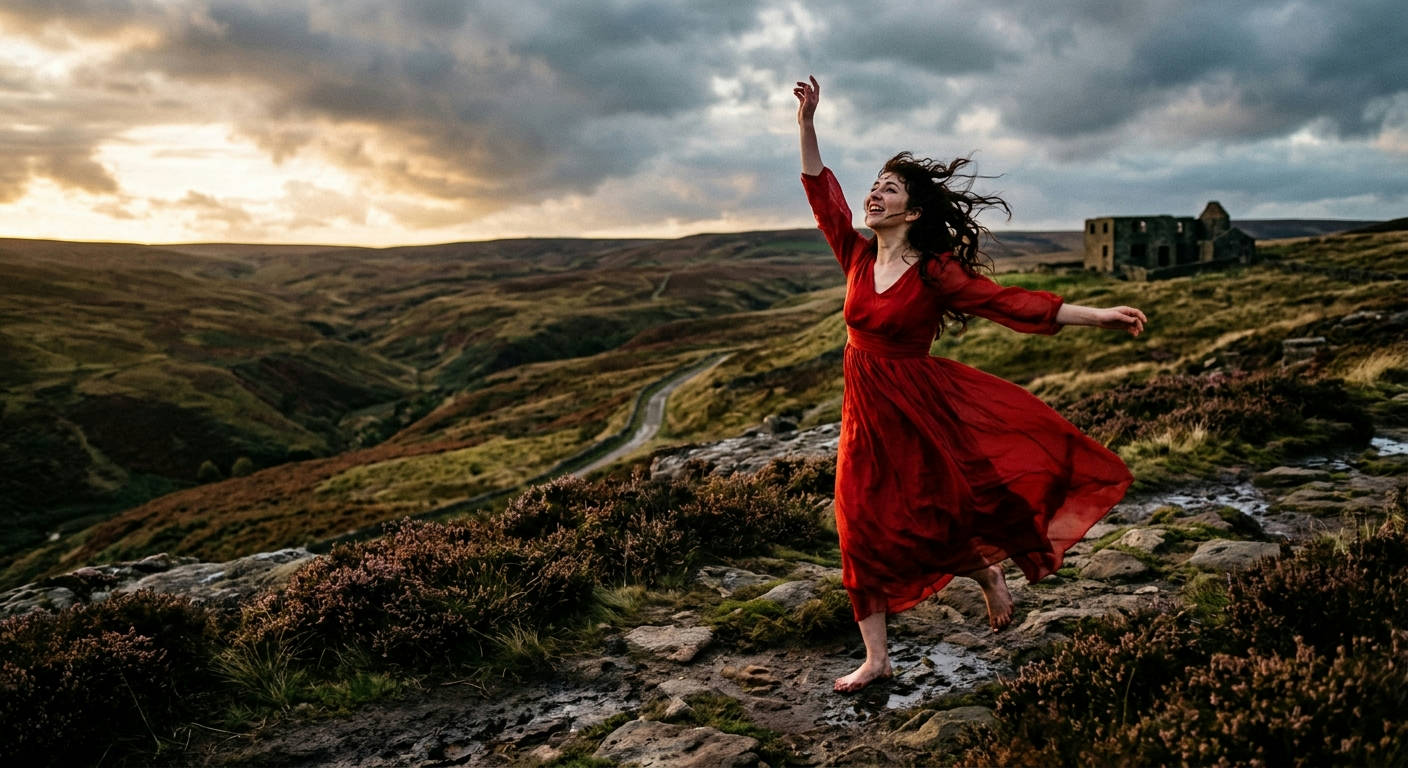
In it, Kate performs an expressive, almost frantic dance in a misty field. Her movements are a physical interpretation of the lyrics. She’s not just dancing; she’s embodying the wild, untamed spirit of Catherine Earnshaw. The flowing red dress against the green background creates a startling visual contrast, symbolising a passion that is both beautiful and dangerous. The dance is as crucial to understanding the song’s meaning as the lyrics themselves.
The Fight for “Wuthering Heights”: Kate’s Battle with Her Label
The song that would define her career almost never saw the light of day as a single. The story behind its release is a testament to Kate Bush’s unwavering artistic vision, even at the very beginning of her career.
EMI’s “Safe Bet” vs. Kate’s Vision
The record label, EMI, was nervous. They had invested in this young prodigy, and they wanted a hit. They thought “Wuthering Heights,” with its bizarre subject matter and strange vocals, was far too risky for a debut.
Their choice for the lead single was a more conventional rock track called “James and the Cold Gun.” It was a great song, but it was safer. It was something they understood. “Wuthering Heights” was a complete unknown.
How a 19-Year-Old Won the Argument
Kate Bush, at just 19 years old, stood her ground. She was adamant that “Wuthering Heights” had to be her first single. She instinctively knew it was the song that best represented her as an artist.
She reportedly became “very stroppy” and, in some accounts, even cried during the arguments, refusing to back down. It was an incredible display of self-belief from an artist who hadn’t even released a record yet. Her conviction was so strong that the seasoned record executives eventually, reluctantly, gave in.
The Immediate, Shocking Success
Kate was right. The public was ready for something different. “Wuthering Heights” was released in January 1978 and took four weeks to climb the charts, finally knocking ABBA’s “Take a Chance on Me” off the top spot.
She became the first female artist to have a self-penned UK number-one single. The gamble had paid off spectacularly. It proved that audiences were hungry for originality and complexity in pop music. This success cemented her status as one of the Best Selling English Artists and gave her the creative freedom to pursue her unique vision for decades to come.
The Lasting Legacy: From ‘Stranger Things’ to TikTok in 2026
The impact of “Wuthering Heights” didn’t stop in 1978. Its influence has echoed through the decades, finding new life with each new generation that discovers its strange magic.
The 1986 “New Vocal” Version
For her 1986 greatest hits compilation, The Whole Story, Kate re-recorded the vocals for “Wuthering Heights.” Her voice had matured, and the new version is smoother, deeper, and less piercing than the original.
This version uses a Fairlight CMI synthesizer and a drum machine, giving it a distinct ’80s sound. While many purists prefer the raw, unhinged energy of the 1978 original, the “New Vocal” offers a different, more polished interpretation of the song. It’s fascinating to hear the same artist approach the same material with nearly a decade of experience behind her. You can find both versions on pressings of The Whole Story, a must-have for any collector.
A Guide to Experiencing Wuthering Heights on Vinyl
To truly appreciate the sonic depth of “Wuthering Heights,” you need to hear it on vinyl. The warmth of the analogue recording brings out the richness of the piano and the sweeping orchestra in a way that digital streaming can’t quite capture.
- The Kick Inside (1978): For the original, raw experience, you need her debut album. An original 1978 pressing is the holy grail for collectors. You can search for a copy of The Kick Inside on vinyl from sellers on Amazon.
- The Whole Story (1986): To get the “New Vocal” version and a fantastic overview of her early career, this compilation is essential. Find a copy of The Whole Story on vinyl through Amazon.
Listening on a quality turntable really lets you sink into the track’s atmosphere. You can hear the space in the recording, the subtle details in the arrangement, and the full dynamic range of that incredible voice.
Why Kate Bush’s Wuthering Heights Still Resonates
The song’s recent resurgence, thanks to its prominent feature in the TV show Stranger Things and its viral spread on social media platforms in 2025 and 2026, is no accident. The song’s themes are timeless. The feeling of obsessive love, of wanting something you can’t have, of being an outsider—these are universal human experiences.
Its influence is also undeniable. You can hear echoes of Kate Bush’s theatricality and artistic bravery in artists like Florence + The Machine, St. Vincent, and Lorde. She paved the way for artists who wanted to be more than just singers, who wanted to be storytellers and world-builders. Her early work, in many ways, laid the groundwork for the emotional complexity explored in some of the great Five Alt Rock Albums From The 1990s.
Diving Deeper: Unpacking Common Misinterpretations
Because of its complexity, “Wuthering Heights” is often misunderstood. Let’s clear up a few common misconceptions.
Is it a Simple Love Song?
Absolutely not. To call “Wuthering Heights” a love song is to fundamentally misunderstand it. It’s a song about obsession, possession, and a love so toxic it destroys everyone it touches.
Cathy and Heathcliff don’t bring out the best in each other; they amplify each other’s worst traits. The song is a ghost story, a warning about the destructive power of unfulfilled passion. The romance is in the tragedy, not in the relationship itself.
### The Kate Bush Wuthering Heights lyrics explained through a modern lens
Viewed through the lens of 2026, the relationship depicted is a textbook example of codependency and toxic obsession. The line “I needed to possess you” is a massive red flag. The song brilliantly captures the all-consuming nature of such a bond, where individuality is lost and two people become a destructive force.
It serves as a powerful artistic exploration of these dark psychological themes. It doesn’t glorify the relationship; it dramatises its horrifying, supernatural consequences, which is perhaps why it continues to fascinate us. It forces us to confront the darker side of love and passion. For more on the literary context of such themes, The British Library offers extensive resources on the gothic novel genre that Emily Brontë helped to define.
Common Lyrical Slip-ups and What They Actually Mean
Many people mishear the opening line as “out on the wild and windy moors.” The actual lyric is “wiley, windy moors.” “Wiley” means cunning or tricky, which adds a layer of menace to the setting. The moors aren’t just wild; they are actively deceptive, a fitting backdrop for the story’s twisted emotions. This one word change adds so much to the atmosphere and shows the depth of Kate’s songwriting, even at that young age.
Ultimately, “Wuthering Heights” is a song that rewards deep listening. It’s a dense, literary, and emotionally complex piece of art that just happened to become a number-one pop hit. It’s a testament to the power of a singular artistic vision and a reminder that the most interesting music often comes from the most unexpected places. It’s more than just a song; it’s a timeless piece of musical theatre that continues to haunt and enchant listeners almost fifty years on.