
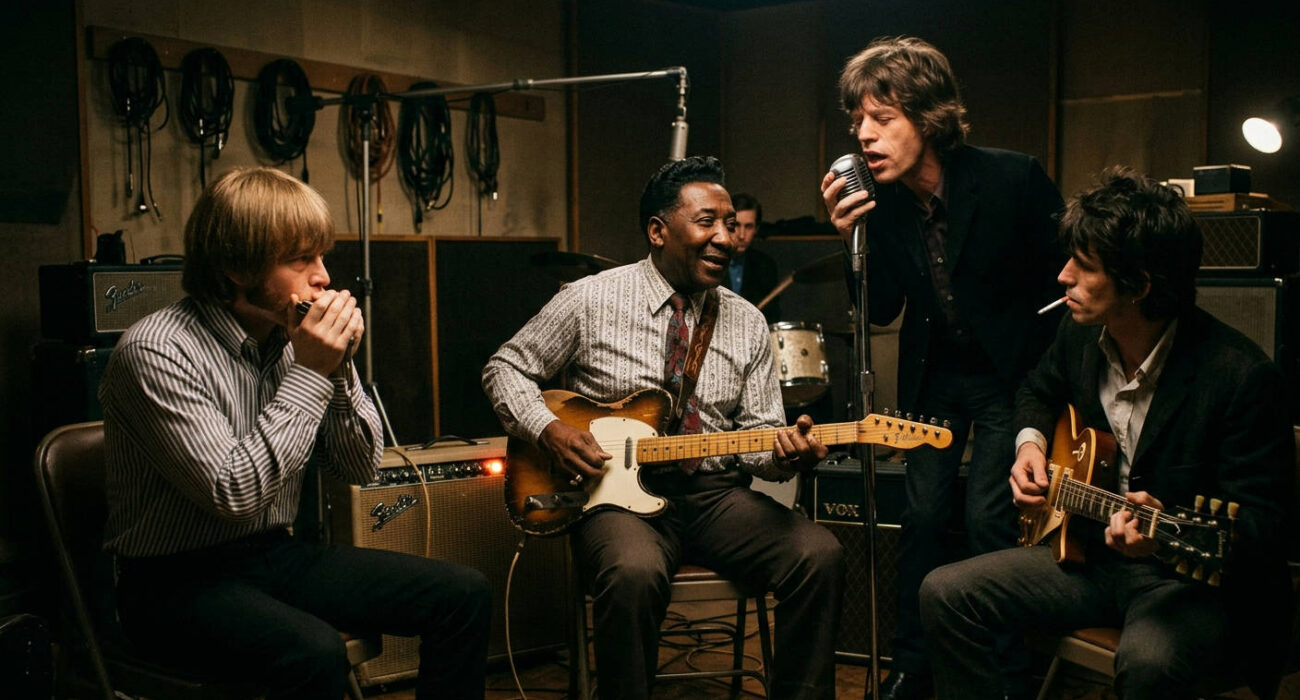
Let’s cut right to the chase. Without the electric, guttural blues of McKinley Morganfield, better known as Muddy Waters, there is no Rolling Stones. It’s that simple. The entire swagger, the sonic blueprint, and the very name of the world’s greatest rock and roll band are a direct consequence of his genius. The Muddy Waters influence on Rolling Stones isn’t just a footnote in their history; it’s the foundational text, the holy scripture from which every snarling riff and every hip-shaking performance was born.
This wasn’t a casual appreciation. For a group of young, disenfranchised art-school kids in post-war Britain, the raw, amplified recordings coming out of Chicago’s Chess Records were a transmission from another planet. It was dangerous, adult, and drenched in an authenticity their own pop scene sorely lacked. They didn’t just like Muddy Waters; they studied him, they channelled him, and they built their empire on the bedrock he laid.
The Chicago Prophet: Who Was Muddy Waters?
Before he could influence a generation of British rockers, Muddy Waters had to invent a genre. Born in rural Mississippi, he started out playing acoustic Delta blues, but his move to Chicago in the 1940s changed everything. He plugged his guitar into an amplifier, and in doing so, electrified the blues for a loud, rough, urban audience.
The sound that emerged was revolutionary. It was gritty, distorted, and packed with a sexual bravado that was unheard of in mainstream music. This was the sound that would eventually cross the Atlantic and land in the eager hands of teenagers like Keith Richards and Mick Jagger.
The Sacred Halls of Chess Records
You can’t talk about Muddy Waters without talking about Chess Records. This legendary Chicago label, run by brothers Leonard and Phil Chess, was the epicentre of the electric blues movement. It was here that Muddy, alongside a wrecking crew of phenomenal musicians, created his defining work.
This wasn’t a solo act. The classic Muddy Waters sound was a band sound, featuring the genius songwriting of Willie Dixon, the revolutionary harmonica wails of Little Walter, and the powerhouse drumming of Fred Below. Together, they created a sound that was dense, swinging, and impossibly heavy.
The Essential Tracks That Lit the Fuse
To understand the obsession, you just have to listen. These weren’t just songs; they were statements of intent that laid out the rules for rock and roll years before it had a name.
- “Rollin’ Stone” (1950): A stark, hypnotic, one-chord boogie. It’s more of a threat than a song. Its brooding power is immense, and, of course, it provided a certain British band with their name.
- “Hoochie Coochie Man” (1954): Penned by Willie Dixon, this is the epitome of blues bravado. The stop-start riff became a foundational element of rock music, and its lyrical swagger was a direct template for countless frontmen, most notably Mick Jagger.
- “I Just Want to Make Love to You” (1954): Another Willie Dixon classic, this track is pure, unadulterated lust set to a stomping rhythm. The Stones’ 1964 cover was a faithful, high-energy tribute that introduced the song to a global audience.
The Definitive Muddy Waters Influence on Rolling Stones’ Sound
When the Stones started, they were essentially a high-octane Muddy Waters cover band. But the influence runs far deeper than their early setlists. It’s baked into the very DNA of their music, a sonic ghost that haunts every record they ever made. They absorbed the lessons of their hero and transmuted them into something new, but the source code is unmistakably Chicago.
“When you are a teenager, you are looking for a voice, and I was lucky to run into Muddy Waters.” – Keith Richards
This quote from Keef says it all. It wasn’t about imitation; it was about finding an identity through the music of another.
Guitar Godfathers: Chicago Slide Meets the Human Riff
Keith Richards didn’t just copy Muddy’s licks; he absorbed his entire philosophy. Muddy’s raw, powerful slide guitar work was a primary inspiration, but Keith took that feeling and translated it into his own iconic style.
The famous five-string open G tuning that Richards has used since the late 60s is a direct descendant of the open tunings used by Delta and Chicago bluesmen for slide guitar. It’s the key to that signature Stonesy drone and the percussive, weaving riffs that define songs from “Honky Tonk Women” to “Start Me Up.” He took the raw power of one man and split it between two guitars, creating what he calls “the ancient art of weaving” with his six-string partners.
Lyrical Swagger and Primal Performance
Watch footage of Muddy Waters in his prime. He’s a commanding presence—confident, powerful, and radiating a potent masculinity. Now, picture a young Mick Jagger. The pouting, the pointing, the raw, sexual energy—it’s a direct line.
Jagger took Muddy’s stage persona and amplified it with his own androgynous, athletic flair. The lyrical themes of the early Stones songs also owe a massive debt to the blues. The bravado, the thinly veiled innuendos, and the stories of love, loss, and late-night trouble are all classic blues tropes, repackaged for a new generation.
Building the Rhythmic Foundation
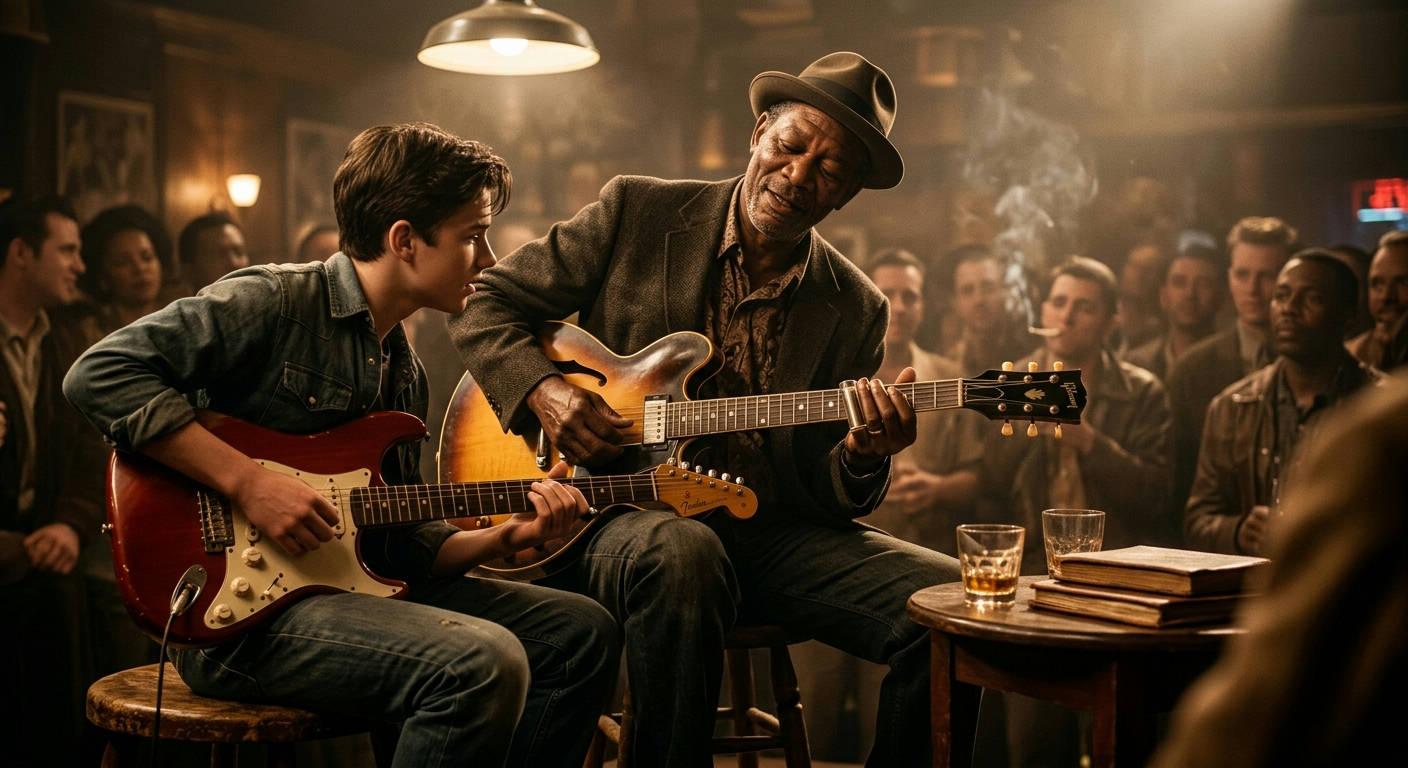
A blues band is only as good as its rhythm section, and Muddy’s bands were legendary. The lock-step groove of his drummers and bassists created a deep, hypnotic pocket for the guitars and harmonica to play over.
Charlie Watts and Bill Wyman were devout students of this school. Watts’s playing was never flashy, but it swung with an authentic, behind-the-beat feel lifted directly from the Chicago shuffles he adored. He and Wyman understood that the power of the Stones’ sound wasn’t in complexity, but in the unshakeable, primal groove they laid down. It was the perfect foundation for the chaos of the guitars and vocals.
From Acolytes to Apostles: Spreading the Gospel
The Stones quickly realized that being a purist blues band wouldn’t make them stars. Pushed by their savvy manager Andrew Loog Oldham, the Jagger-Richards songwriting partnership began to blossom. They didn’t abandon their roots; they built upon them, using the blues as a springboard for their own unique vision.
Their mission, conscious or not, became to act as a bridge. They were conduits, taking this potent, niche American music and selling it back to the world, including America itself. The Stones were arguably the most successful evangelists the blues ever had.
Taking “Little Red Rooster” to Number One
In late 1964, The Rolling Stones did something audacious. They released their version of “Little Red Rooster,” a slow, menacing blues track written by Willie Dixon and famously recorded by Howlin’ Wolf, another Chess Records giant.
Against all odds, it went to number one on the UK singles chart. This was a seismic event. A raw, authentic slice of Chicago blues, performed with genuine reverence, was the most popular song in the country. They forced the mainstream to listen to the music they loved, opening the door for countless other blues-inspired artists. This incredible feat helped cement their status as some of the best-selling English artists of all time.
Injecting Pop into the Blues Formula
The first truly great Jagger-Richards originals, like “(I Can’t Get No) Satisfaction” and “The Last Time,” demonstrate this evolution perfectly. “The Last Time” is built around a riff that could easily have come from a 1950s John Lee Hooker record, but it’s paired with a pop-inflected chorus and a youthful angst that was all their own.
“Satisfaction” is even more of a hybrid. The iconic three-note fuzz-guitar riff is pure, primal blues aggression, but the song’s structure and its themes of commercial and sexual frustration were thoroughly modern for 2026. They were using the language of the blues to talk about their own world.
The Circle Completes: Meeting the Master
The Stones never hid their devotion. In every interview, they were quick to name-drop their heroes, urging fans to seek out the original records. For them, the ultimate validation came when they finally got to meet the man himself.
During their first American tour in June 1964, the band made a pilgrimage to 2120 South Michigan Avenue, Chicago—the home of Chess Records. They went there to record, but more importantly, to breathe the same air as their idols.
“He was painting the ceiling when we arrived. We were shitting ourselves, of course. Here we are, a bunch of English kids, and we get to meet the man.” – Keith Richards, on meeting Muddy Waters at Chess Studios.
The story of finding Muddy Waters, the great blues patriarch, on a stepladder with a paintbrush in hand has become legendary. It was a humbling, humanizing moment for the young Stones, and it solidified a bond that would last for the rest of Muddy’s life. This encounter is well-documented in various rock histories, like this detailed account from Wikipedia.
The Jam at the Checkerboard Lounge
Perhaps the most iconic moment in this cross-generational relationship occurred on November 22, 1981. The Rolling Stones, then the biggest band on the planet, were in Chicago on their “Tattoo You” tour. They took a night off to go to a small, local blues club called the Checkerboard Lounge to see Muddy Waters perform.
What followed was pure magic. Muddy, sensing his disciples in the room, called them up on stage. An impromptu, electrifying jam session ensued, with Mick Jagger, Keith Richards, and Ronnie Wood trading verses and licks with their hero and his band. The footage from that night, which you can find documented by institutions like the Chicago Blues Guide, is a beautiful testament to their shared history and mutual respect. It was the student paying homage to the master on his home turf.
Analyzing the enduring Muddy Waters influence on Rolling Stones
Decades later, well into 2026, the influence remains potent. You can hear it in the menacing slide guitar of “Monkey Man,” the swampy groove of “Midnight Rambler,” and the bar-room stomp of “Start Me Up.” The Muddy Waters influence on Rolling Stones wasn’t a phase they grew out of; it’s the wellspring from which they continue to draw. It gave their music a weight, an authenticity, and a connection to something ancient and powerful that has allowed it to endure for over sixty years.
This relationship was truly symbiotic. Muddy Waters gave The Rolling Stones their name, their sound, and their soul. In return, The Rolling Stones gave Muddy Waters a global audience in the last decades of his life, introducing his genius to millions and ensuring his legacy would never be forgotten.
To truly grasp this connection, you need to hear it. Put on a copy of The Best of Muddy Waters, then immediately follow it with the Stones’ Exile on Main St.. The through-line is undeniable, a raw and beautiful current of electricity running from the Mississippi Delta to London and back again. For more deep dives into the music that shaped generations, keep exploring with us at Vinyl Gold UK’s blog.