
Let’s cut right to the chase. You’re here for a straight answer to one of music’s most debated pub questions: how many studio albums The Clash released. The definitive number, the one that separates the die-hards from the casuals, is six. That’s it. Six official, original studio albums from “the only band that matters.” But like everything with this band, the simple answer is just the start of a much more interesting story filled with transatlantic tracklist changes, ambitious triple LPs, and a final chapter many wish to forget.
At Vinyl Gold UK, we live for these details. The story behind the music is just as important as the grooves on the wax. So, let’s go beyond the simple number and explore the complete studio discography of The Clash, album by glorious album.
The Official Count: Six Studio Albums
The number is six. Anyone telling you differently is either confused by the US releases, lumping in compilations, or trying to be a contrarian. For a band that burned so brightly and so fast, their official studio output was remarkably concise and impactful.
Defining a “Studio Album”
Before we break them down, let’s be clear on what we mean. A studio album is a collection of new, original material recorded in a studio setting. This definition intentionally excludes:
- Live Albums: Recordings of concerts, like the brilliant From Here to Eternity: Live.
- Compilations: Greatest hits packages or box sets, such as The Story of the Clash or the essential Clash on Broadway.
- EPs (Extended Plays): Shorter releases like The Cost of Living E.P.
- Reconfigured Releases for Different Markets: This is the big one that trips people up, specifically the 1979 US version of their debut.
Understanding this distinction is key to appreciating why the count remains firmly at six.
The Controversy and Confusion
The primary source of confusion comes from the differences between the UK and US releases, particularly their debut. Epic Records in the US initially passed on the first album, only to release a heavily modified version two years later. This version is, for all intents and purposes, a compilation of the debut and early UK singles. It’s an incredible record, but it’s not a new, distinct studio album.
How Many Studio Albums The Clash Released: The UK Discography Breakdown
This is the canonical list. The six studio albums as they were conceived and released in their home country. Each one represents a seismic shift in the band’s sound and ambition.
The Clash (1977)
This is ground zero for British punk. Recorded in a blur of speed and youthful fury, their self-titled debut is a snarling, raw document of late-’70s London. Tracks like “White Riot” and “I’m So Bored with the U.S.A.” are pure, unfiltered energy. It’s a Molotov cocktail on vinyl, and it sounds best played loud.
Give ‘Em Enough Rope (1978)
For their follow-up, the band brought in American producer Sandy Pearlman (Blue Öyster Cult). The result was a more polished, rock-oriented sound that divided some early fans but broadened their appeal. The production is bigger, the guitars are cleaner, but the righteous anger in tracks like “Tommy Gun” and “English Civil War” is still front and centre.
As Joe Strummer once put it, “Punk rock for me was a social movement. We tried to do it by the rules, but the rules were hopeless. We had to find something else.”
This album was the sound of them looking for that “something else” on a bigger stage.
London Calling (1979)
The masterpiece. A sprawling double album that shattered the confines of punk rock. Here, The Clash incorporated reggae, rockabilly, ska, and pop with breath taking confidence. From the iconic title track to “Train in Vain,” London Calling is a flawless statement and a landmark in music history. It’s the album that proved they were more than just another punk band. You can read about its enduring legacy across countless retrospectives, including its high placement on Rolling Stone’s 500 Greatest Albums list.
Sandinista! (1980)
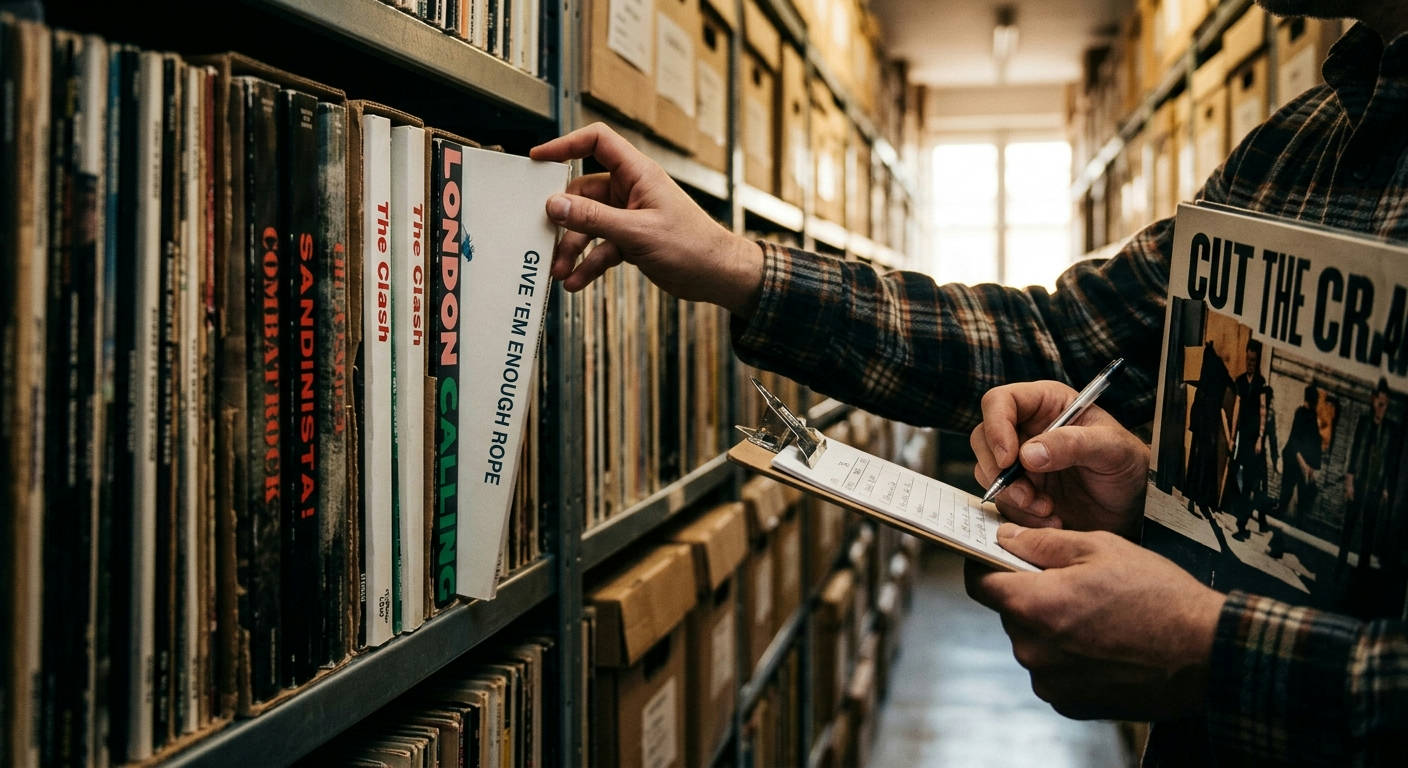
If London Calling was ambitious, Sandinista! was beautifully, chaotically over-the-top. A triple album featuring 36 tracks, it dives headfirst into dub, funk, hip-hop, and gospel. It’s a messy, indulgent, and often brilliant record that showcases a band bursting with ideas and refusing to be constrained. Songs like “The Magnificent Seven” and “Somebody Got Murdered” are towering achievements. It’s a challenging listen, but an endlessly rewarding one.
Combat Rock (1982)
This is the album that made them global superstars. Originally conceived as another sprawling double LP titled Rat Patrol from Fort Bragg, it was edited down by producer Glyn Johns into a lean, 12-track monster. It contains their two biggest hits, “Should I Stay or Should I Go” and “Rock the Casbah,” and showcases a tighter, more radio-friendly sound while still retaining their political edge on tracks like “Straight to Hell.”
Cut the Crap (1985)
The end of the line. After the acrimonious firing of Mick Jones and Topper Headon, Joe Strummer and Paul Simonon soldiered on with a new lineup. The resulting album, produced by Bernard Rhodes, is a contentious mess of drum machines, gang vocals, and questionable production choices. While some defend “This Is England,” most fans and the band themselves have disowned the record. It’s officially the sixth studio album, but it’s the black sheep of the family.
The Great US vs. UK Debut Album Mystery
Let’s clear this up once and for all. The version of The Clash released in the United States in 1979 is not a separate studio album. It’s a different beast entirely.
What Was Different About the US Version?
CBS Records in America felt the original 1977 UK version was too raw and “un-produced” for their market. So, when they finally released it two years later, they made significant changes:
- Tracks Removed: Four songs from the UK original were cut (“Deny,” “Cheat,” “Protex Blue,” and “48 Hours”).
- Tracks Added: They replaced them with five non-album UK singles and B-sides from that era, including “(White Man) In Hammersmith Palais,” “Complete Control,” and their cover of “I Fought the Law.”
The result is a fantastic record—some even argue it’s stronger than the UK original—but it’s essentially a hybrid of a studio album and a singles collection.
### So, Why Doesn’t It Count as a Seventh Album?
It doesn’t count because it contains no new material recorded specifically for it. It’s a brilliant repackaging, a snapshot of the band’s first two years, but it lacks the core requirement of being a new, cohesive studio project. Think of it as a “Version 1.5” rather than a “Version 2.0.” For collectors, owning both the UK and US versions is essential to understanding the full picture of their early years.
Collecting The Clash: A Guide for Vinyl Lovers
Getting into The Clash on vinyl is a journey. Their music was made for the format, with intricate sleeve art and a warm, punchy sound that digital just can’t replicate.
First Pressings vs. 21st Century Reissues
Finding a clean, original UK first pressing of their debut or London Calling is a holy grail for many collectors. These pressings have an undeniable energy and historical weight. However, the reissues from recent years, particularly the 180-gram remastered versions, are pristine. They offer a crystal-clear listening experience and are far more accessible. As of 2026, many of these high-quality reissues are readily available.
The Power of a Proper Setup
You can’t fully appreciate the low-end of “The Guns of Brixton” or the intricate layers of Sandinista! on a cheap, all-in-one record player. The dynamic range of these records demands a quality system. A solid turntable with a well-balanced tonearm and a decent cartridge will pull details out of the grooves you’ve never heard before. If you’re looking to upgrade your setup without breaking the bank, exploring some of the best turntables under £300 in the UK is a fantastic starting point.
The Final Word on The Clash’s Studio Legacy
Six albums. That’s the answer to how many studio albums The Clash released. In just six records (five, if you ask the purists who ignore the finale), they redefined what a rock band could be. They were political without being preachy, musically adventurous without being pretentious, and utterly fearless.
Mick Jones, on the band’s eclectic nature: “I suppose we were a bit like a magpie. We’d just take from everything. That was the whole point of it, to be open to everything.”
That openness is what makes their catalogue so timeless. From the three-chord fury of 1977 to the global fusion of 1982, their evolution was staggering. The Rock & Roll Hall of Fame inducted them in 2003, cementing a legacy built on a foundation of just six studio LPs. Their influence is immeasurable, and their music remains as vital and urgent in 2026 as it was decades ago.
So, the next time someone asks, you’ll have the answer. It’s six. But now you know the real story is so much bigger than just a number. It’s a story best told by dropping a needle on a record and turning the volume up.