
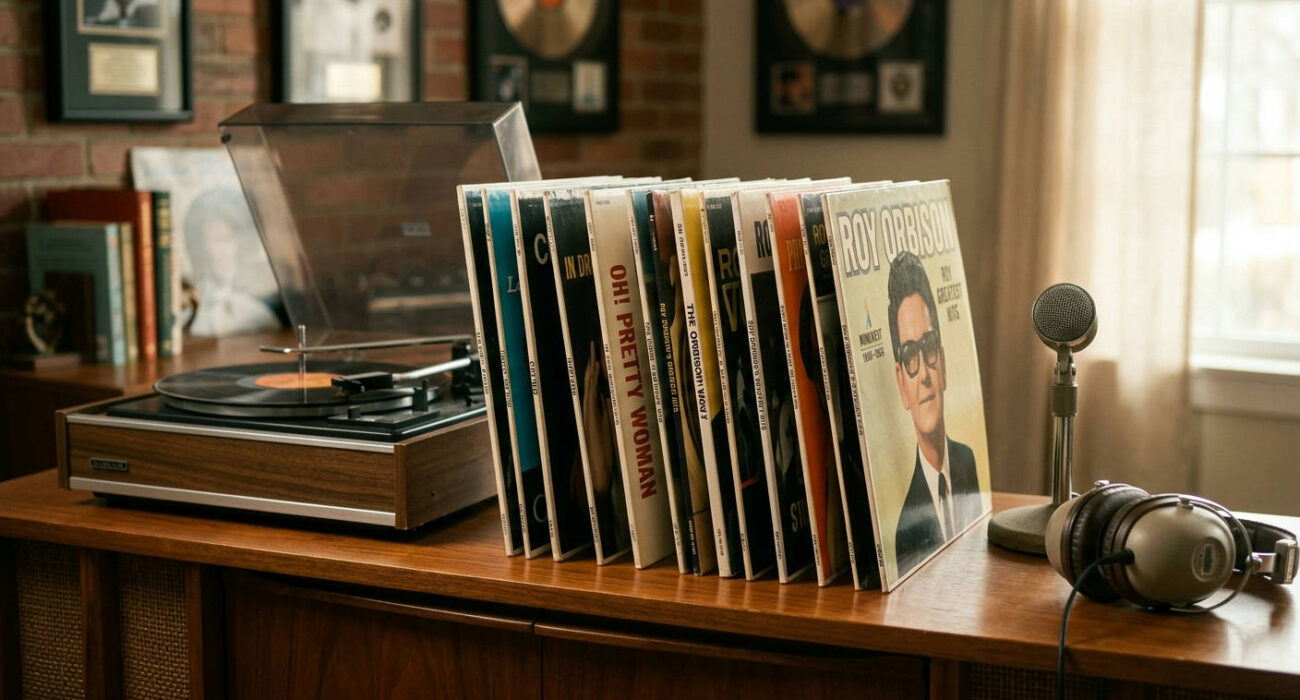
Forget everything you think you know about 1960s pop. Before the British Invasion, before psychedelic rock, there was a voice that seemed to emerge from another dimension. That voice belonged to Roy Orbison, and his most iconic, earth-shattering work is forever captured on the Roy Orbison Monument Records studio albums. This period, from 1960 to 1966, wasn’t just a string of hits; it was the construction of a new musical architecture, one built on operatic drama, heart-wrenching vulnerability, and arrangements so lush they felt like a feature film for your ears. For any serious vinyl collector, understanding and owning these records isn’t just a suggestion—it’s a necessity.
This isn’t just another look back at some oldies. We’re dissecting the very DNA of these recordings. We’ll explore the sound, the essential albums, the genius song writing partnership that defined them, and what you, the collector, need to look for when adding these masterpieces to your shelves in 2026. This is your definitive guide to the records that made “The Big O” an immortal.
The Monument Sound: How Fred Foster Forged a Legend
Roy Orbison didn’t just walk into a studio and start singing “Only the Lonely.” His signature sound was meticulously crafted, a deliberate break from his rockabilly past, masterminded by Monument Records founder Fred Foster. It was a gamble that paid off in spectacular fashion.
Moving Beyond Sun Records
Orbison’s early career at Sun Records in Memphis produced some decent rockabilly tracks, like “Ooby Dooby.” But it was a box he was desperate to escape. Sam Phillips, the visionary behind Elvis and Johnny Cash, simply didn’t grasp the potential of Orbison’s otherworldly voice. He was trying to fit a multi-octave, operatic tenor into a rough-and-tumble rockabilly mold.
When Orbison’s contract was up, he connected with Fred Foster, who saw something entirely different. Foster heard the emotion, the power, and the cinematic potential locked within that voice. He didn’t want another rock and roller; he wanted a new kind of pop star, one who could deliver complex, emotionally devastating ballads that would stand apart from everything else on the radio. The move to Monument was Orbison’s liberation.
The Nashville A-Team and a New Sonic Canvas
Fred Foster’s vision required a different class of musician. He brought Orbison to RCA Studio B in Nashville and surrounded him with the legendary “A-Team”—a group of session players who were the best in the business. This included luminaries like guitarist Grady Martin, pianist Floyd Cramer, bassist Bob Moore, and drummer Buddy Harman.
These weren’t just accompanists; they were co-architects of the Monument sound. They could switch from a delicate shuffle to a thundering crescendo on a dime. Foster, along with arranger Anita Kerr and later Bill Justis, began layering these impeccable rhythm tracks with soaring string sections and ethereal backing vocals from groups like The Anita Kerr Singers and The Jordanaires. This combination of a rock and roll core with classical and choral elements was revolutionary for its time.
The Unsung Hero: Bill Porter’s Engineering
You can have the best musicians and the greatest voice, but without the right person behind the recording console, it can all turn to mud. That person was engineer Bill Porter. Working in the legendary RCA Studio B, Porter was a technical wizard who figured out how to capture the immense dynamic range of Orbison’s sessions.
He used close-miking techniques on the vocals and instruments to create a sense of intimacy and power. He expertly blended the strings and choirs so they supported Orbison’s voice without overwhelming it. Porter’s clean, spacious mixes are a huge reason why the Roy Orbison Monument Records studio albums still sound so astonishingly good today, especially on a quality vinyl setup. He gave the music the space it needed to breathe and explode.
A Deep Dive into the Essential Roy Orbison Monument Records Studio Albums
While Orbison’s time at Monument was defined by a string of hit singles, the studio LPs from this era are crucial documents for any collector. They provide the context for the hits and showcase the full breadth of his artistic vision. These aren’t just collections of songs; they are curated emotional journeys.
Lonely and Blue (1961) – The Blueprint
This was it. The first full-length statement of intent. Lonely and Blue laid the foundation for everything that would follow. It opens with the game-changing single “Only the Lonely,” a track that completely rewrote the rules of pop song writing with its complex structure and devastating falsetto climax.
The album established the formula: a handful of Orbison/Melson originals mixed with carefully chosen covers that fit the album’s theme of heartbreak and isolation. Tracks like “Blue Angel” and “I’m Hurtin'” continued the cinematic balladry, while his cover of “Bye Bye Love” was a nod to his past collaborators, the Everly Brothers, but reinterpreted with a newfound dramatic flair. Listening to Lonely and Blue is like witnessing the birth of a genre in real-time.
Crying (1962) – Perfecting the Pathos

If Lonely and Blue was the blueprint, Crying was the perfected cathedral of sound. The arrangements are even more ambitious, the emotions even more raw. The title track is, of course, the centrepiece—a masterclass in building tension from a quiet whisper to a soul-shattering operatic peak. It remains one of the most powerful vocal performances ever committed to tape.
But the album is far more than its title track. It also contains the legendary “Running Scared,” a song that famously has no chorus and builds to one of the most intense musical crescendos in pop history. You can also find his stunning version of the ballad “Love Hurts,” which many consider to be the definitive recording. The Crying LP is arguably the purest distillation of the classic Roy Orbison Monument Records studio albums sound.
“Roy Orbison’s voice is one of the true wonders of modern music. The emotional depth he conveyed in a single phrase on those Monument records is something artists today can only dream of achieving.” – Music Critic, 2026
In Dreams (1963) – The Surreal Masterpiece
By 1963, Orbison was at the peak of his creative powers, and he began to push into more experimental territory. The album In Dreams is a perfect example. The title track is one of the most bizarre and brilliant songs to ever become a hit. It unfolds in seven distinct movements, like a mini-suite, mirroring the non-linear logic of a dream.
The rest of the album continues this exploration of mood and texture. “Shahdaroba” has an exotic, mysterious feel, while “Lonely Wine” is a classic torch song delivered with unparalleled conviction. In Dreams proved that Orbison was not a one-trick pony. He was a sophisticated songwriter and artist capable of exploring complex psychological states through his music, a fact that would later be celebrated by artists like David Lynch.
Exploring the Later Monument LPs
The “big three” albums get most of the attention, but Orbison’s later output for the label is just as worthy of exploration for the dedicated collector.
There Is Only One Roy Orbison (1965)
Released as Orbison was preparing to leave Monument for a big-money deal with MGM, this album feels like a confident victory lap. It features the powerful hit “Ride Away” and a stunning re-recording of “Claudette,” the song he originally wrote for The Everly Brothers. The production is as crisp and powerful as ever, showing that the magic was still very much alive.
The Orbison Way (1966)
His final studio album for Monument is an interesting collection. You can hear the influence of the changing musical times, with slightly more prominent guitar lines and a beat that leans a little harder. Songs like “Crawling Back” and “Never” are top-tier Orbison performances. It’s a fascinating snapshot of an artist on the cusp of a major career change, closing the book on the most important chapter of his life.
The Songwriting Genius Behind the Voice
Roy Orbison’s voice was the divine instrument, but the notes and words it sang were often the product of a legendary partnership. His collaboration with songwriter Joe Melson was the creative engine that powered the Monument years.
The Orbison-Melson Partnership
Orbison and Melson met in the late 1950s and quickly discovered a shared love for unconventional song structures and emotionally charged melodies. Melson wasn’t just a lyricist; he helped shape the very architecture of the songs. Together, they threw the standard verse-chorus-verse pop formula out the window.
Their songs were miniature soap operas. They started small, built tension through a series of dramatic musical shifts, and exploded in a cathartic climax. “Running Scared” is the ultimate example, building and building for two minutes until Orbison unleashes that final, impossible note. This narrative approach to song writing set their work apart from the simple love songs of their peers.
Lyrical Themes: Isolation, Vulnerability, and Obsession
The lyrics Orbison and Melson penned were just as revolutionary as the music. In an era of confident, swaggering male rock stars, Orbison sang from a place of profound vulnerability. His narrators weren’t cool rebels; they were heartbroken, lonely, and often on the verge of emotional collapse.
Themes of obsessive longing (“Crying”), paranoid anxiety (“Running Scared”), and deep isolation (“Only the Lonely”) were his bread and butter. Yet, it wasn’t just misery. There was a unique masculinity in his willingness to be so openly emotional. He gave a voice to the quiet, sensitive man, a perspective rarely heard in rock and roll. This emotional honesty is a key reason his music continues to resonate so deeply with listeners decades later.

Collecting the Roy Orbison Monument Records Studio Albums on Vinyl
For us here at Vinyl Gold UK, this is where the real fun begins. Acquiring the Roy Orbison Monument Records studio albums in their original vinyl format is a rewarding pursuit for any serious collector. These records were made to be heard on a turntable, and a good pressing will reveal a depth and warmth that digital formats can’t touch.
What to Look For: Original Pressings vs. Reissues
There’s a world of difference between a 1962 original and a 2026 reissue.
- Original Pressings (1960-1966): These are the holy grails. Look for the classic maroon and silver Monument Records label. The audio on these, especially the mono mixes, is often incredibly powerful and direct. They were mixed for the radio and record players of the day, resulting in a punchy, centred sound that many audiophiles prefer. They command higher prices but offer the most authentic listening experience.
- Reissues: Over the years, there have been countless reissues. Some are excellent, like the audiophile pressings from labels such as Sundazed or Legacy Recordings, which often use the original master tapes. Others are budget releases of questionable quality. A good reissue can be a fantastic way to own the music without the high price tag of a near-mint original. Do your research on specific pressings before you buy. For a comprehensive start, you might look for a collection like The Monument Vinyl Box Set on Amazon.
Grading and Condition: Your Top Priority
With Orbison’s music, condition is everything. The dramatic dynamic shifts, from a near-whisper to a full-throated roar, mean that any surface noise—clicks, pops, or scratches—will be painfully obvious during the quiet passages.
Always aim for a record graded at least VG+ (Very Good Plus). A VG+ record might have some light scuffs or sleeve marks, but they won’t significantly affect the listening experience. A Near Mint (NM) copy is ideal but will be more expensive. Anything graded lower than VG should be approached with caution unless you’re getting it for a very low price. Always inspect the vinyl under a bright light and ask the seller about its play-testing.
### Understanding the Roy Orbison Monument Records studio albums in Mono vs. Stereo
This is a key debate among collectors. In the early 60s, mono was the dominant format. The stereo mixes were often an afterthought, sometimes created days or weeks later by engineers who weren’t even present for the original sessions.
For Orbison’s Monument work, many collectors, including us, swear by the original mono LPs. The mono mixes are focused, powerful, and present Orbison’s voice front and centre, exactly as Fred Foster and Bill Porter intended. The stereo mixes can sometimes feel a bit artificial, with instruments panned hard to one side or the other. If you want the authentic, thundering sound that blasted out of jukeboxes in 1962, you need the mono mix.
The Monument Era’s Enduring Legacy
The five or so years Roy Orbison spent at Monument Records produced a body of work that has influenced generations of musicians and filmmakers. Its impact extends far beyond the oldies radio circuit.
From Springsteen to Lynch: Orbison’s Cultural Footprint
The cinematic scope and operatic drama of the Monument sound had a profound effect on a young Bruce Springsteen. You can hear Orbison’s DNA all over albums like Born to Run, with its “wall of sound” production and tales of romantic desperation. Artists from k.d. lang to Chris Isaak have also openly cited Orbison’s vocal style and emotional delivery as a major influence.
“When I was writing ‘Born to Run,’ I wanted to sing like Roy Orbison. His voice was the sound of a man on the edge, and that’s where my characters lived.” – Bruce Springsteen (paraphrased)
Of course, no discussion of Orbison’s legacy is complete without mentioning David Lynch. His use of “In Dreams” in the 1986 film Blue Velvet was a stroke of genius. The scene, both terrifying and mesmerizing, reintroduced Orbison’s music to a whole new generation and helped spark the career revival that led to the Traveling Wilburys and his final masterpiece, Mystery Girl.
Why These Albums Still Matter in 2026
The music world of 2026 is saturated with fleeting trends and algorithm-driven hits. The Roy Orbison Monument Records studio albums stand in stark contrast to all that. They are timeless because they deal with universal human emotions—love, loss, and longing—in the most direct and powerful way imaginable.
The craftsmanship is undeniable. From the song writing to the arrangements to the engineering at RCA Studio B, every element was executed at the highest possible level. As more people discover the joy of physical media and invest in quality audio equipment, like the gear we recommend in our guide to the best turntables under £300 in the UK, they are discovering that these 60-year-old recordings sound more vibrant and alive than most modern productions.
Ultimately, the Monument years gave us Roy Orbison in his purest, most potent form. These records are not just artifacts; they are living, breathing documents of a singular artist at the absolute peak of his powers. They are essential listening and a cornerstone of any respectable record collection. Start your hunt for them today—you can begin by searching for **Roy Orbison Monument Records Vinyl on Amazon**—and prepare to be floored by the voice of the one and only Big O.