
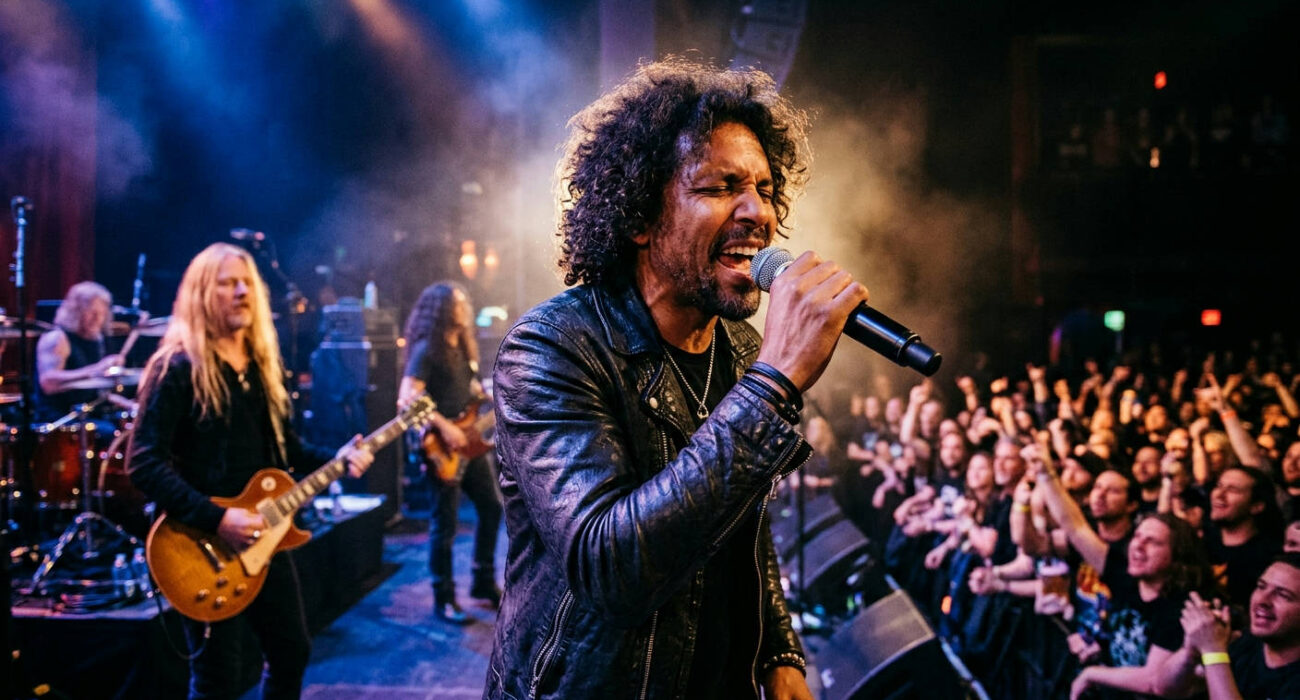
Let’s cut right to the chase. You’re asking who is the current lead singer of Alice in Chains, and the straightforward answer is William DuVall. He officially joined the band in 2006, taking on the monumental task of fronting one of the most iconic bands to emerge from the 90s Seattle grunge explosion. But if you know anything about Alice in Chains, you know that “straightforward” is never part of the equation. The real answer is far more complex, layered with history, tragedy, and the enduring spirit of a band defined by its unique vocal harmony.
William DuVall is not merely a replacement for the legendary Layne Staley. He is one half of the vocal force that powers the modern iteration of Alice in Chains, sharing the microphone with guitarist and co-founder Jerry Cantrell. To truly understand who sings for the band in 2026, you have to understand the dynamic that has always been at its core: a two-headed vocal monster. This article dives deep into the full story, from the irreplaceable legacy of Staley to the powerful rebirth with DuVall.
The Man at the Mic Since 2006: William DuVall
So, who is this guy who stepped into one of the most scrutinised roles in rock history? William DuVall was not some newcomer plucked from obscurity. He had a long and respected history in the punk and rock underground long before Alice in Chains came calling.
A Pedigree Forged in Punk and Rock
DuVall’s musical journey began in the early 80s Atlanta punk scene with his band Neon Christ. He was a guitarist and songwriter, deeply embedded in the DIY ethos of hardcore. His path eventually led him to form the rock band Comes with the Fall in the late 90s, where he handled lead vocals and guitar.
It was through Comes with the Fall that he connected with Jerry Cantrell. DuVall’s band served as both the opening act and the backing band for Cantrell’s solo tours in the early 2000s. This period built a strong musical and personal foundation between the two, long before any thoughts of reforming Alice in Chains were on the table.
The Tsunami Benefit and an Impossible Decision
The seeds of the Alice in Chains reunion were sown at a 2005 benefit concert in Seattle for the victims of the South Asian tsunami. Jerry Cantrell, Mike Inez, and Sean Kinney took the stage together for the first time in years to perform, inviting a rotating cast of guest vocalists. The emotional response was overwhelming.
Following this, the band members began jamming together again, eventually bringing DuVall in to sing with them. It was never an audition to “replace” Layne. It was a group of friends and musicians feeling their way through a difficult process, and DuVall’s presence just clicked. His respect for the material, his powerful voice, and his pre-existing chemistry with Cantrell made him the only logical choice to move forward with.
It’s a Partnership, Not a Replacement
It’s critical to understand that DuVall’s role is co-lead vocalist. Jerry Cantrell has always been a primary vocal contributor to Alice in Chains, writing the majority of the music and lyrics and providing the essential harmony that defined the band’s sound.
This structure continues today. On post-Staley albums and in live performances, Cantrell often takes the lead on certain verses or entire songs, while DuVall handles Staley’s iconic parts and contributes his own distinct vocal identity. They are a team, a partnership that allowed the band to not just continue, but to thrive creatively.
The Unforgettable Shadow: The Legacy of Layne Staley
You cannot talk about the singer of Alice in Chains without paying proper tribute to Layne Staley. For an entire generation, his voice was the sound of anguish, beauty, and raw, unfiltered honesty. He wasn’t just a singer; he was a conduit for a very specific and powerful form of expression.
A Voice That Defined a Generation
Staley’s vocal style was singular. That haunting, snarling, and yet melodic delivery was unmistakable. He could project immense power and then pull back into a vulnerable, almost fragile whisper. His ability to double-track his own vocals created a chilling, chorus-like effect that became a signature of the band’s sound.
When paired with Jerry Cantrell’s harmonies, it was pure alchemy. The interplay between Staley’s higher, more tortured wail and Cantrell’s lower, steadier tone created a sound that was both unsettling and beautiful. This vocal blend is arguably the most identifiable element of Alice in Chains’ music.
“There’s no replacing Layne. It’s not a thing that can be done. The way that we’ve always looked at it is that we’re continuing on, and we’re bringing our friend with us.” – Jerry Cantrell
The Final Years and the End of an Era
The band’s meteoric rise in the early 90s was followed by a long period of inactivity due to Staley’s struggles with addiction. The band never officially broke up, but they ceased touring and recording after 1996. Staley became increasingly reclusive, and his final years were marked by isolation.
His tragic death in 2002 at the age of 34 seemed to be the definitive end of Alice in Chains. For years, the band members grieved and pursued other projects, and for fans, the idea of the band continuing without Layne was unthinkable. His contribution was so profound, so central to the band’s identity, that his absence left a void that seemed impossible to fill. The music world lost a truly unique talent, a fact underscored by the enduring influence of his work on countless vocalists since.
## Who is the Current Lead Singer of Alice in Chains: A Tale of Two Voices
The question of who is the current lead singer of Alice in Chains is complicated because the band was never a “single frontman” operation in the traditional sense. It has always been about the vocal blend, a concept that has evolved but remains central to their identity.

The Original Blueprint: Staley and Cantrell
Go back and listen to classic AIC tracks. On songs like “Would?” and “Man in the Box,” you can clearly hear the two-part harmony. On “No Excuses,” Cantrell and Staley trade lines, their voices weaving around each other. On “Down in a Hole,” their combined voices create a towering, mournful chorus.
Cantrell was never just a background vocalist. He was a co-lead singer from day one. This fundamental structure is the key to understanding how the band was able to continue. They didn’t need to find a Layne Staley clone; they needed to find a musician who could fit into the dual-vocal dynamic that already existed.
### The Evolution of the Dynamic: Unpacking Who Sings for Alice in Chains Now
William DuVall stepped into this dynamic perfectly. He has the vocal power and range to perform Staley’s demanding parts with respect and intensity during live shows. Crucially, he doesn’t imitate Staley. He interprets the parts with his own feel, honouring the original melody and emotion without resorting to mimicry.
On new material, his voice provides a new texture that complements Cantrell’s. It’s a different blend from the Staley era, but the core principle is the same. The songs are built around the interplay of two distinct voices. Sometimes Cantrell takes the lead, as on “Your Decision.” Other times, DuVall drives the verse, as on “The One You Know.” Most often, they are working together to create that signature wall of vocal harmony.
Vocal Analysis on the DuVall-Era Albums
- Black Gives Way to Blue (2009): On tracks like “Check My Brain,” Cantrell’s voice is front and centre in the verses, with DuVall providing a powerful chorus and backing harmonies. On “A Looking in View,” DuVall’s aggressive, raw vocals are more prominent, showcasing his own style.
- The Devil Put Dinosaurs Here (2013): The title track is a perfect example of the modern AIC vocal tapestry. It’s a slow-burning epic where Cantrell and DuVall’s voices are layered meticulously, creating a dense and hypnotic effect.
- Rainier Fog (2018): On “The One You Know,” DuVall handles the biting, staccato verses while Cantrell’s voice soars over the chorus. It’s a masterclass in their modern partnership, showing how they divide and conquer to serve the song.
The Rebirth Albums: A New Chapter with DuVall
The return of Alice in Chains was not a cash-grab nostalgia tour. It was a genuine artistic rebirth, resulting in three critically acclaimed albums that stand tall alongside their classic catalogue. These albums prove that the band’s creative well is far from dry.
Black Gives Way to Blue (2009): The Respectful Return
This was the album that had to be perfect. It was their first in 14 years, and the first without Layne Staley. The pressure was immense. The band delivered a masterpiece of modern rock, full of their signature sludgy riffs and dark melodies.
The title track, a hauntingly beautiful piano ballad featuring Elton John, served as a direct and emotional tribute to Staley. It was the band’s way of acknowledging their past and getting closure before moving forward. The album was a commercial and critical success, proving that Alice in Chains was still a vital creative force.
The Devil Put Dinosaurs Here (2013): Forging a New Identity
If the first album was about proving they could still exist, this one was about proving they could evolve. The Devil Put Dinosaurs Here is arguably the band’s heaviest and most experimental work of the DuVall era.
The song writing is complex, the riffs are colossal, and the vocal arrangements are more intricate than ever. The album solidified the band’s new identity and showed they weren’t interested in simply recreating the past. It was a bold statement from a band fully confident in its new line-up.
Rainier Fog (2018): A Homecoming Record
For their latest album, the band returned to their Seattle roots, recording in the city for the first time in over 20 years. The result is Rainier Fog, an album that feels both reflective and forward-looking.
The title track is a tribute to the Seattle scene that birthed them, while songs like “Never Fade” see the band exploring themes of loss and perseverance. DuVall’s role as a songwriter and guitarist is more integrated than ever, marking his complete assimilation into the creative fabric of the band. It’s the sound of a band that is at peace with its past and excited about its future.
The Fan Dilemma: A Pointless Comparison?
From the moment William DuVall was announced, the online debate began. For some, the idea of Alice in Chains without Layne Staley was sacrilege. For others, the continuation of the band was a gift, a way to keep the music and the legacy alive.
The “No Layne, No Chains” Stance
This perspective is rooted in deep emotional attachment. For fans who grew up with Staley’s voice as the soundtrack to their lives, his connection to the music is absolute. To them, anyone else singing those songs feels inauthentic. It’s a valid and understandable point of view born from love and loyalty to the original line-up and its iconic frontman.
This sentiment often overlooks the fact that Jerry Cantrell wrote the vast majority of the music and was a co-vocalist on almost every track. The band’s continuation is as much about him carrying on his life’s work as it is about anything else.
Honouring the Legacy vs. Imitating the Past

This is where William DuVall deserves immense credit. He has navigated an impossible situation with grace and power. He never tries to be Layne Staley. Instead, he focuses on delivering the songs with the energy and respect they deserve.
In an interview with Kerrang! magazine, DuVall reflected on his role: “You have to have a great deal of respect for the history, and for the people that made the history. But you also have to be yourself. There’s no other way it can work.”
This approach is key. The current version of Alice in Chains is about honouring the legacy, not cosplaying as the 1992 version of the band. It allows fans to hear the songs they love live, played by the master musicians who wrote them, while also allowing the band to grow and create new music.
Experience Alice in Chains Live in 2026
Seeing Alice in Chains live is the best way to understand their current dynamic. On stage, the power and chemistry of the four-piece line-up are undeniable. As we head into late 2026, anticipation is high for another major world tour.
The Live Set: A Balance of Eras
A modern AIC setlist is a journey through their entire career. You’ll hear the monolithic classics like “Them Bones” and “Rooster” right alongside modern-day bangers like “Stone” and “The One You Know.”
DuVall delivers the Staley-era material with a ferocious energy that electrifies the crowd, while Cantrell, Kinney, and Inez provide the thunderous rhythm and groove that is the band’s backbone. The transition between old and new material is seamless, feeling like one cohesive story. For anyone looking to truly appreciate the band, seeing them at a great live music venue is an absolute must.
The Vocal Interplay in Person
Watching Cantrell and DuVall trade vocal lines on stage is a show in itself. You can see the chemistry and mutual respect. They are two masters of their craft working in perfect sync, supporting each other to create a sound that is bigger than the sum of its parts. It silences any doubt about the legitimacy of this line-up.
Getting the Definitive AIC Experience on Vinyl
To truly appreciate the sonic depth of Alice in Chains, you need to hear them on vinyl. The warmth and dynamic range of a good vinyl pressing bring out the nuances in their layered production, from the crushing guitar tones to the intricate vocal harmonies. Building a collection is a rewarding journey for any fan.
Staley-Era Essentials for Your Turntable
These are the foundational texts. Every rock collection needs them. The raw power of these records is perfectly suited for the vinyl format.
- Facelift (1990): The raw, metallic debut that put them on the map. Find it on vinyl here: https://www.amazon.com/s?k=Alice+in+Chains+Facelift+Vinyl&tag=vinylgolduk-21
- Dirt (1992): An absolute masterpiece. A dark, harrowing, and brutally honest album that is considered one of the greatest of the decade. Get the vinyl: https://www.amazon.com/s?k=Alice+in+Chains+Dirt+Vinyl&tag=vinylgolduk-21
- Jar of Flies (1994): An acoustic-based EP that showed the band’s incredible range and song writing depth. A stunningly beautiful and melancholic record. Add it to your collection: https://www.amazon.com/s?k=Alice+in+Chains+Jar+of+Flies+Vinyl&tag=vinylgolduk-21
DuVall-Era Must-Haves on Wax
Don’t stop with the classics. The modern albums are sonic heavyweights that sound incredible on a quality turntable. To ensure you’re getting the most out of these pressings, check out our guide to the best turntables under £300 in the UK.
- Black Gives Way to Blue (2009): The landmark comeback album. The production is massive, and the vinyl pressing captures all of its weight and clarity. Find the vinyl: https://www.amazon.com/s?k=Alice+in+Chains+Black+Gives+Way+to+Blue+Vinyl&tag=vinylgolduk-21
- Rainier Fog (2018): A rich, textured album that rewards repeat listens. The vinyl experience allows you to pick up on all the subtle layers in the mix. Get your copy: https://www.amazon.com/s?k=Alice+in+Chains+Rainier+Fog+Vinyl&tag=vinylgolduk-21
What’s Next? The Future of Alice in Chains
With 2018’s Rainier Fog now eight years in the rear-view mirror, the question on every fan’s mind is: what’s next? The band has been touring consistently, but the demand for new music is growing louder.
A New Album on the Horizon for 2027?
All signs point to the band working on new material. While there has been no official announcement as of late 2026, the long gap between albums is typical for Alice in Chains. They are a band that takes their time to get it right.
It’s highly likely that we will see a new album in 2027. What it will sound like is anyone’s guess, but based on their track record, it will be another powerful, authentic, and uncompromising statement from one of rock’s most resilient bands.
The Final Word
So, who is the current lead singer of Alice in Chains? The name is William DuVall. But the real answer is that Alice in Chains is, and always has been, a band driven by the powerful chemistry of two voices and four master musicians. DuVall doesn’t replace the irreplaceable legacy of Layne Staley; he stands alongside Jerry Cantrell to carry that legacy forward, writing a new and vital chapter for a band that has defied all expectations. The story of Alice in Chains is a story of tragedy, resilience, and the enduring power of music.