
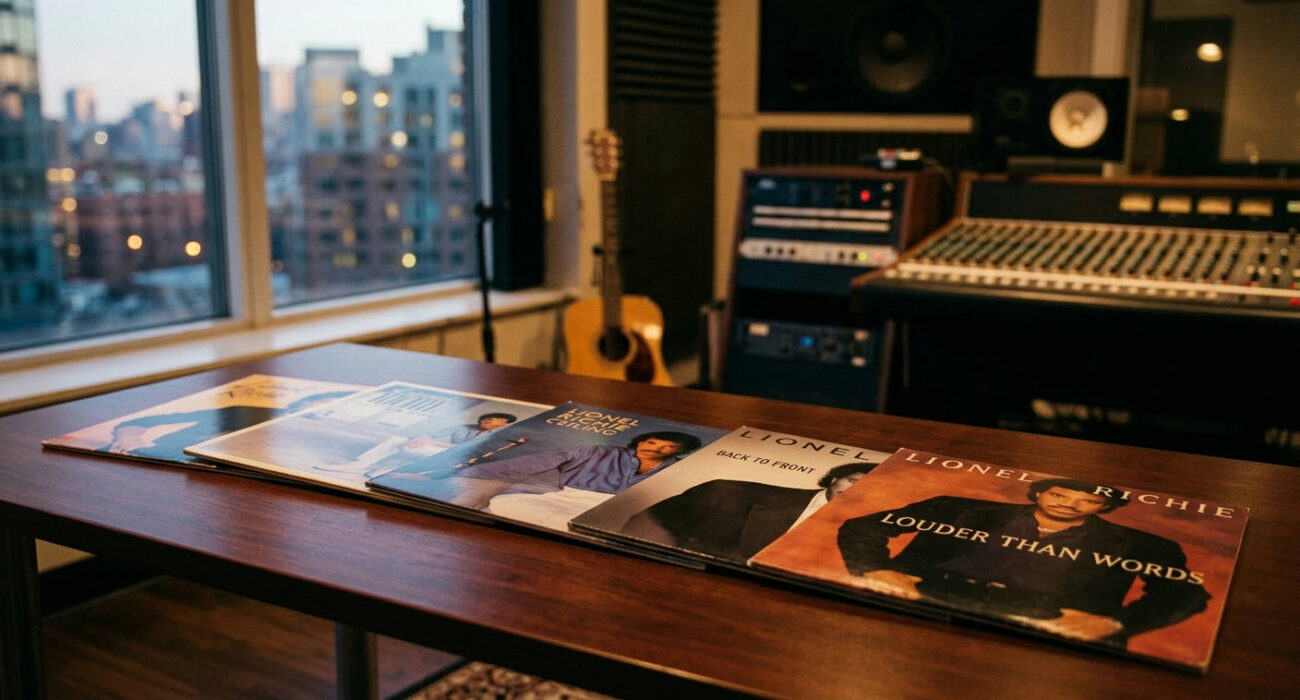
Trying to navigate the incredible solo career of a music icon can feel like a massive task. You know the hits, but piecing together the full story album by album is the real key to understanding the artist’s journey. That’s why we’re mapping out the complete Lionel Richie studio albums release order, from his explosive solo debut to his celebrated modern work. This isn’t just a list; it’s a chronological deep dive into the evolution of a true master of the pop and R&B songbook.
For anyone collecting vinyl or just wanting to appreciate his genius, understanding the Lionel Richie studio albums release order is essential. It tells a story of creative peaks, bold reinventions, and timeless songwriting that continues to resonate well into 2026.
The Breakout: Stepping Away From The Commodores
Before Lionel Richie was a global solo superstar, he was the velvet-voiced frontman and principal songwriter for the funk and soul powerhouse, The Commodores. He penned some of their most enduring and gentle classics, including “Easy,” “Three Times a Lady,” and “Still,” proving he had a golden touch for ballads that could stop the world.
By the early 1980s, the writing was on the wall. Richie’s star was ascending beyond the group’s orbit. The monumental success of his 1981 duet with Diana Ross, “Endless Love,” confirmed he had a voice and a style that could stand entirely on its own. The pull of a solo career became irresistible, leading to his departure from the band that made him famous and setting the stage for one of the most successful solo runs in music history.
Lionel Richie (1982) – The Solo Statement
Richie’s self-titled debut in 1982 was less of a tentative first step and more of a confident, powerful stride into the spotlight. The album was a declaration of intent, perfectly packaging his signature smooth vocals and unparalleled melodic instincts for a mainstream pop audience. It was clear he wasn’t just a balladeer; he was a complete solo artist.
The album immediately spawned massive hits. “Truly” shot to number one on the Billboard Hot 100 and earned Richie his first solo Grammy Award for Best Male Pop Vocal Performance. It was the definitive Richie ballad: heartfelt, beautifully arranged, and emotionally resonant.
Other singles like the upbeat, joyful “You Are” and the tender “My Love” further solidified his commercial clout. The entire record, co-produced with his longtime Commodores collaborator James Anthony Carmichael, established the polished, sophisticated R&B-pop sound that would define his career for the next decade. It was the perfect foundation for what was to come.
For vinyl collectors, a first pressing of this album is a cornerstone piece. You can feel the warmth and precision of the production on a quality turntable.
Find your copy on Amazon: Lionel Richie (1982) Vinyl
Reaching the Stratosphere: Can’t Slow Down
If his debut album was a statement of intent, Can’t Slow Down was a global coronation. Released in 1983, this album wasn’t just a success; it was a cultural phenomenon that transformed Lionel Richie from a star into an icon. It sold over 20 million copies worldwide, making it Motown’s best-selling album of all time and a landmark of 1980s pop music.
The album’s genius lies in its incredible range and flawless execution. It effortlessly blends pop, R&B, soul, and even hints of country and Caribbean music into a cohesive, irresistible package. Every single track felt like a potential number-one hit, and many of them were.
“I wanted to take from all the different parts of my background… The funk is the Commodores, the ballads are the ballads, and the ‘All Night Long’ part is the Caribbean.” – Lionel Richie
This sonic diversity is a huge part of its enduring appeal. It was an album for everyone, a record that could soundtrack a party, a long drive, or a quiet evening. In 2026, it still sounds as fresh and masterfully crafted as it did upon its release.
The Making of a Pop Juggernaut (1983)
The creation of Can’t Slow Down was a masterclass in meticulous pop craftsmanship. Richie and co-producer James Anthony Carmichael honed every melody, every rhythm, and every harmony to perfection. The result was an album that was both artistically satisfying and commercially unstoppable.
Its dominance was confirmed at the 27th Annual Grammy Awards in 1985, where it took home the most prestigious award of the night: Album of the Year. This victory, as documented by the Recording Academy, cemented Richie’s place at the absolute pinnacle of the music world. It was a validation of his decision to go solo and a testament to his incredible talent as a songwriter and performer.
The Unstoppable Hit Machine: A Singles Breakdown
The sheer number of iconic singles from Can’t Slow Down is staggering. It was a hit factory that refused to quit.
- “All Night Long (All Night)”: The album’s lead single is a masterstroke of joyous, infectious energy. Its blend of Caribbean and African rhythms created a universal party anthem that still fills dance floors today. The music video was a vibrant, celebratory affair that perfectly captured the song’s spirit.
- “Hello”: This became one of the defining power ballads of the decade. The song is a slow-burn of longing and romance, but it’s the iconic, and often parodied, music video featuring Richie sculpting a clay bust of his blind love interest that etched it into pop culture history forever.
- “Stuck on You”: Showcasing his versatility, Richie delivered a heartfelt, country-tinged ballad that became a major crossover hit. It demonstrated that his songwriting transcended genre boundaries, appealing just as much to Nashville as it did to pop and R&B radio.
- “Running with the Night”: A sleek, synth-driven track with an electrifying guitar solo by Toto’s Steve Lukather, this song captured the vibrant, neon-lit energy of the 80s. It was Richie at his most dynamic and urgent.
- “Penny Lover”: Another classic, smooth ballad co-written with his then-wife Brenda Harvey-Richie, “Penny Lover” continued the album’s incredible run of chart success.
For any serious vinyl enthusiast, owning Can’t Slow Down is non-negotiable. It’s an essential piece of music history.

Find the masterpiece on Amazon: Can’t Slow Down Vinyl
The Definitive Guide to the ## Lionel Richie Studio Albums Release Order
Here it is. For the collectors, the new fans, and the lifelong devotees, this is the complete, chronological list of every official studio album from the man himself. This is the official Lionel Richie studio albums release order.
The Motown Era (1982-1986)
This initial trio of albums represents Richie’s imperial phase, where he dominated the charts and defined the sound of mainstream pop and R&B.
-
- Lionel Richie (1982)
-
- Can’t Slow Down (1983)
-
- Dancing on the Ceiling (1986)
The 90s Return and Evolving Sound
After a significant break, Richie returned in the mid-90s with a more contemporary R&B sound, adapting his style for a new musical era.
-
- Louder Than Words (1996)
-
- Time (1998)
The 21st Century Catalogue
The new millennium saw Richie embrace a variety of styles, from European pop to modern R&B and a triumphant return to his roots via Nashville.
-
- Renaissance (2000)
-
- Just for You (2004)
-
- Coming Home (2006)
-
- Just Go (2009)
-
- Tuskegee (2012)
The Post-Superstardom Era: Dancing on the Ceiling and the Hiatus
Following the world-conquering success of Can’t Slow Down and his pivotal role in co-writing “We Are the World,” the pressure for Lionel Richie’s next album was immense. He was, without question, one of the biggest stars on the planet.
Dancing on the Ceiling (1986) – The Follow-Up Pressure
Released in 1986, Dancing on the Ceiling was another commercial behemoth. While it didn’t quite reach the dizzying sales heights of its predecessor, it was still a multi-platinum success packed with hits. The album leaned even more heavily into the polished synth-pop sound of the mid-80s.
The title track, “Dancing on the Ceiling,” is remembered as much for its groundbreaking music video (which featured Richie literally dancing on the walls and ceiling, pre-CGI) as for the song itself. It was a fun, high-energy pop confection that captured the buoyant mood of the time.
The album’s biggest success was “Say You, Say Me.” Originally featured in the film White Nights, the song had already been released in 1985 and won an Academy Award for Best Original Song. Its inclusion on the album guaranteed a massive head start. Other singles like the tender “Ballerina Girl,” written for his daughter Nicole, continued his run of ballad success.
The Long Wait: Why a Decade Passed
After Dancing on the Ceiling, Lionel Richie virtually disappeared from the recording studio for ten years. The intense, non-stop cycle of writing, recording, and touring that had defined his life for nearly two decades had taken its toll. He was suffering from severe burnout.
In interviews years later, he revealed a more profound reason for the hiatus. His father was seriously ill, and Richie stepped away from his career to care for him. It was a period of personal reflection that also coincided with a dramatic shift in popular music. The polished pop of the 80s was giving way to the grittier sounds of grunge and the rising dominance of hip-hop. When Richie was ready to return, the musical world had changed completely.
The Return and Reinvention: Richie in the 90s and 2000s
When Lionel Richie re-emerged in 1996, he faced a new set of challenges. He had to find his place in a very different musical environment. His comeback albums reflect an artist adapting and exploring new sonic palettes.
Louder Than Words (1996) & Time (1998)
His 1996 return, Louder Than Words, saw him embrace the smooth, contemporary R&B sound popularized by artists like Babyface. Tracks like “Don’t Wanna Lose You” were well-crafted and showcased his still-flawless vocals, but the album didn’t make the same commercial splash in the US as his 80s work.
Time, released two years later, continued this exploration of modern R&B. While both albums were solid efforts that performed respectably, particularly overseas, they marked a new phase in his career. He was no longer the chart-topping titan but a legacy artist re-establishing his voice for a new generation.
The European Revival: Renaissance (2000) & Just for You (2004)
Something remarkable happened at the turn of the millennium: Lionel Richie became a massive star all over again, particularly in the UK and across Europe. His 2000 album, Renaissance, was a key part of this revival.

The album smartly blended his classic balladry with a more modern, European dance-pop sensibility. The lead single, “Angel,” was a huge international hit, driven by a remix from trance producer Orion. It was a brilliant fusion of his timeless melodic gifts with a contemporary sound, and it connected in a big way. The subsequent album, Just for You, continued this successful formula.
### Exploring the Lionel Richie studio albums release order from a collector’s perspective
For vinyl collectors, this period of the Lionel Richie studio albums release order presents a unique challenge. The late 90s and early 2000s were the height of the CD era. Vinyl pressings of albums like Louder Than Words, Time, and Renaissance were produced in much smaller quantities, primarily for the European market.
This makes original pressings from this era significantly rarer and often more valuable than his 80s blockbusters. Finding a mint-condition copy of Renaissance on vinyl is a true prize for a dedicated fan. When you do find one, you want to ensure your setup can do it justice. Having a quality turntable is key to enjoying these harder-to-find gems. If you’re looking to upgrade, our guide to the best turntables under £300 in the UK can help you get the best sound for your collection.
The Modern Era: Country Crossovers and Legacy
As the 21st century progressed, Lionel Richie continued to record, tour, and experiment, culminating in one of the most successful and celebrated projects of his entire career.
Coming Home (2006) & Just Go (2009)
These albums saw Richie collaborating with some of the biggest names in contemporary R&B and pop production, including Jermaine Dupri, Raphael Saadiq, Akon, and Stargate. Tracks like “I Call It Love” from Coming Home were smooth, radio-friendly R&B that proved he could still hang with the current hitmakers. Just Go continued this trend, with a guest spot from Akon on “Just Go.”
These records were about staying current and demonstrating his relevance, proving that his songwriting prowess was adaptable to any production style.
The Masterstroke: Tuskegee (2012)
In 2012, Lionel Richie released Tuskegee, an album that was both a brilliant creative pivot and a massive commercial comeback in the United States. The concept was simple yet inspired: he re-recorded his greatest hits as duets with a who’s-who of country music superstars.
He partnered with artists like Shania Twain (“Endless Love”), Blake Shelton (“You Are”), Kenny Rogers (“Lady”), and Willie Nelson (“Easy”). The album debuted at number one on the Billboard 200 chart and became a platinum-selling sensation.
“The common denominator is the story. If you get the story right, and you get the melody to that story, it becomes a hit.” – Lionel Richie on the connection between his music and country.
Tuskegee worked so perfectly because it highlighted the core of Richie’s genius: storytelling. His songs, stripped down and reinterpreted with country arrangements, revealed their narrative strength. It proved that a great song is a great song, regardless of genre. The project introduced his classic catalogue to a whole new audience and stands as a high point in his later career. For vinyl lovers, the Tuskegee pressing is a modern classic.
Grab this essential album on Amazon: Tuskegee Vinyl
What’s Next? The Future of Lionel Richie’s Music in 2026 and Beyond
As of 2026, Lionel Richie’s legacy is more secure than ever. While it has been over a decade since Tuskegee, he remains a vital part of the cultural conversation through his sell-out world tours and his popular role as a judge on American Idol.
There is always chatter about a new studio album, with some speculation pointing towards a gospel-inspired project. Whatever comes next, he has nothing left to prove. His influence can be heard in the melodic R&B of today’s artists, and his songs remain staples at weddings, parties, and on radio stations worldwide. He is a songwriter of the highest calibre, a true legend in the same vein as other timeless storytellers like Nat King Cole.
Collecting Lionel Richie on Vinyl: A Vinyl Gold UK Guide
Exploring the Lionel Richie studio albums release order on vinyl is a deeply rewarding experience. From the analogue warmth of his 80s masterpieces to the rare finds of the 2000s, there’s a lot for collectors to dig into.
Finding the Original Pressings
For the 80s albums, original Motown pressings are the gold standard. Look for copies of Lionel Richie, Can’t Slow Down, and Dancing on the Ceiling in Near Mint (NM) or Very Good Plus (VG+) condition. Pay attention to the cover for ring wear and the vinyl for any scratches that could affect playback. These albums were pressed in huge numbers, so clean, affordable copies are readily available.
Modern Reissues and Remasters
In recent years, many of Richie’s classic albums have been reissued on high-quality, 180-gram vinyl. These modern pressings offer pristine, quiet playback and are a fantastic option for audiophiles who want the best possible sound without hunting down a perfect original. They often feature remastered audio that can bring new life and clarity to these beloved recordings.
Beyond the Studio Albums: Compilations and Live Records
No Lionel Richie collection is complete without the 1992 compilation Back to Front. It gathers all his essential solo hits up to that point and includes new tracks like the massive hit “Do It to Me.” It’s a perfect single-LP summary of his peak years and a great find for vinyl DJs. Live albums can also offer a different energy, capturing the charisma and showmanship he’s famous for.
Lionel Richie’s solo career is a remarkable journey of talent, ambition, and adaptation. From the funk-soul roots of The Commodores, he launched into the pop stratosphere, creating a songbook that has become a permanent part of our shared musical heritage. Following the Lionel Richie studio albums release order is the best way to appreciate the full scope of his artistry.
His catalogue is a testament to the enduring power of a great melody and a heartfelt story. So whether you’re dropping the needle on an original pressing of Can’t Slow Down or discovering a later gem, you’re experiencing the work of a master. To discover more deep dives into legendary artists, check out more articles on our blog.