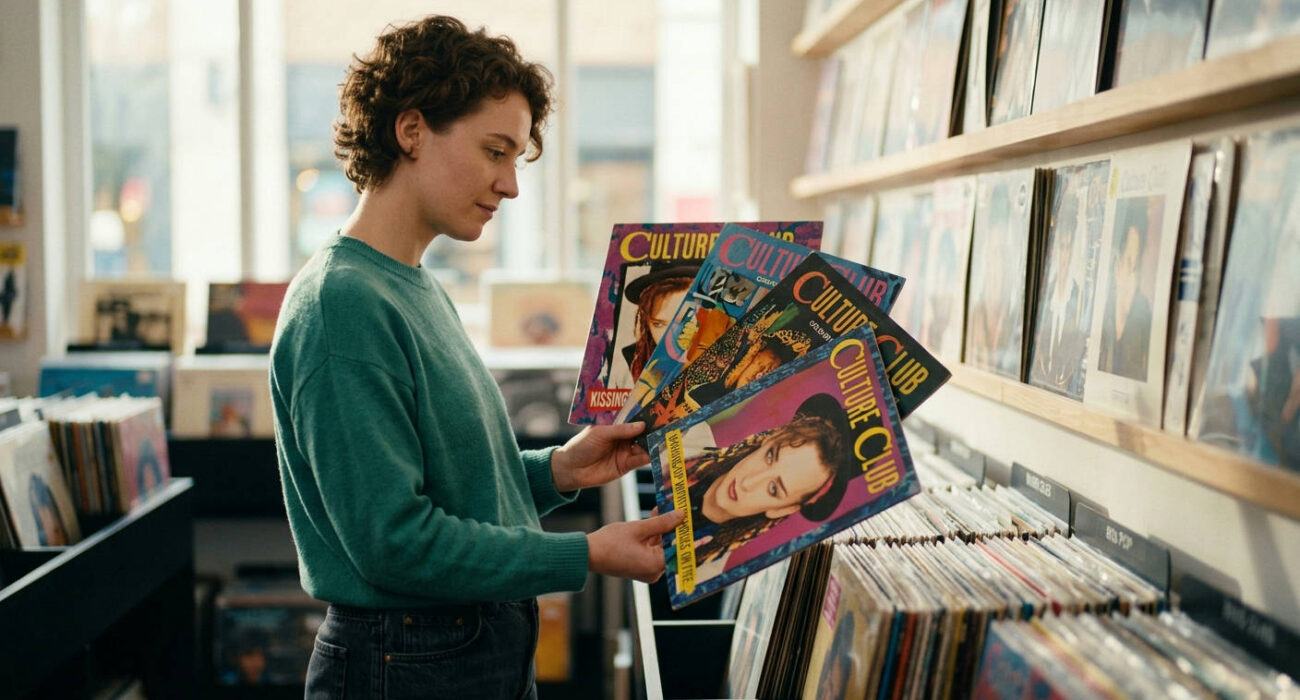
Trying to definitively settle on the best Culture Club albums ranked is a mission fraught with passionate debate, nostalgia, and some seriously killer basslines. Boy George, Roy Hay, Mikey Craig, and Jon Moss didn’t just write songs; they crafted a sound and an image that defined a significant chunk of the 80s. From their reggae-infused pop debut to their mature, soulful return, their catalogue is a journey. Here at Vinyl Gold UK, we’re diving deep into their studio albums to settle the score once and for all.
Get ready. We’re not just listing albums; we’re dissecting them, contextualizing them, and giving you the ultimate guide to one of pop music’s most vibrant and important bands.
What Made Culture Club So Revolutionary?
Before we start ranking, you have to understand why Culture Club mattered so much. They weren’t just another band with catchy tunes. They were a cultural phenomenon, a riot of colour and sound that exploded onto a scene that was still shaking off the grit of punk.
Boy George: The Chameleon of Pop
Let’s get the obvious out of the way: Boy George was a revelation. His androgynous, artfully constructed image was a masterstroke of visual provocation. With his dreadlocks, ribbons, and flawless makeup, he challenged every preconceived notion of masculinity in mainstream pop music.
But the image would have been a gimmick without the voice. George’s vocals were pure, blue-eyed soul—smooth, emotive, and instantly recognizable. He could deliver heartbreak in one line and pure joy in the next, a duality that gave Culture Club’s music its incredible depth. He wasn’t just singing the songs; he was living them, and you could feel it.
A Melting Pot of Sounds
Culture Club was never just a synth-pop band. Their true genius lay in the effortless fusion of genres. Mikey Craig’s reggae and funk-inspired basslines were the band’s anchor, providing a rhythmic foundation that was impossible not to move to. Roy Hay was a versatile multi-instrumentalist, layering slick guitar licks and melodic keyboard parts that gave the songs their pop sheen.
And Jon Moss, with his precise and powerful drumming, brought it all together. The result was a sound that was uniquely their own: a cocktail of new wave, lovers rock, calypso, Motown soul, and pop. No one else sounded like them because the four members brought such different influences to the table.
Cultural Impact Beyond the Music
When Culture Club appeared on Top of the Pops in 1982, jaws dropped across the UK. Their arrival, alongside bands like Duran Duran and The Human League, heralded the Second British Invasion. Thanks to the burgeoning power of MTV, their visually stunning music videos were beamed into homes across America, making them global superstars.
They influenced fashion, attitudes, and conversations about identity and acceptance. They proved that pop music could be smart, soulful, and socially conscious all at once.
The Definitive: Best Culture Club Albums Ranked
Alright, the moment of truth. We’ve listened, re-listened, and argued over every track. This is our definitive list, from the comeback attempts to the world-conquering masterpieces. We’re starting from the bottom and working our way to the undisputed champion.
This ranking considers not just the hit singles but the quality of the deep cuts, the album’s overall cohesion, and its lasting impact. Every fan has their favourite, but some records simply stand taller than others in the grand scheme of the band’s career.
Let the Ranking Begin
We will explore each album’s context, sound, and standout moments. Prepare for a trip through the highs, the lows, and the glorious pop perfection of one of the 80s’ most iconic groups.
Album Deep Dive: The Ranking Explained
Here we go. Each album gets its moment in the spotlight, with a full breakdown of why it landed where it did on our list.
6. Don’t Mind If I Do (1999)
After a 13-year hiatus filled with solo projects and public drama, the original four members reunited. The result was Don’t Mind If I Do, an album that tries to recapture the old magic but feels more like a collection of disparate ideas than a cohesive statement.

The lead single, “I Just Wanna Be Loved,” is a classic Culture Club track with its reggae beat and soulful vocal, proving the chemistry was still there. However, the rest of the album struggles to find a consistent identity. It dips into MOR balladry (“Your Kisses Are Charity”), flirts with 90s dance-pop, and revisits their classic sound without fully committing. It’s a pleasant listen, but it lacks the fire and focus of their best work. It feels less like a band reborn and more like a band testing the waters.
5. From Luxury to Heartache (1986)
This album is the sound of a band under immense strain. Recorded amidst Boy George’s escalating drug addiction and the breakdown of his secret relationship with Jon Moss, the tension is audible. Producer Arif Mardin brought a very slick, polished, mid-80s production style that, at times, sanitizes the band’s eclectic charm.
Despite the turmoil, there are flashes of brilliance. “Move Away” is an absolute pop banger, one of their finest singles, with a driving beat and an unforgettable chorus. “God Thank You Woman” is another strong track that showcases George’s vocal prowess. The problem is the filler. Tracks like “Heaven’s Children” and “Too Bad” feel generic and lack the personality that defined their earlier work. It’s an album with high peaks but deep, forgettable valleys, marking a sad end to their imperial phase.
4. Waking Up with the House on Fire (1984)
How do you follow up a global multi-platinum smash hit? That was the impossible task facing Culture Club in 1984. Rushed to capitalize on their momentum, Waking Up with the House on Fire was recorded and released less than a year after its predecessor. And it shows.
The album isn’t bad by any means. “The War Song,” while lyrically a bit naive, is an undeniable earworm. “Mistake No. 3” is a beautiful, melancholic ballad, and “The Medal Song” is a hidden gem. But the pressure to deliver another blockbuster resulted in an album that feels less inspired and more formulaic. The production is bigger and brassier, but some of the subtle genre-blending that made them special is lost in the noise. It sold millions but remains the ‘other’ 80s album, overshadowed by what came before it.
3. Life (2018)
Who knew that in 2018, nearly 20 years after their last effort, Culture Club would release one of the strongest albums of their career? Life is a stunning return to form, a mature and reflective record that plays to all their strengths without sounding like a tired rehash.
Boy George’s voice has changed, acquiring a deeper, richer, and more gravelly tone that adds a new layer of soul and wisdom to his delivery. The songwriting is superb, with the band leaning heavily into their reggae and soul roots. “Let Somebody Love You” is pure sunshine, a track that would have been a smash hit in any era. The title track, “Life,” is a powerful, introspective piece about survival and gratitude. This album is the sound of a band comfortable in its own skin, making music for the love of it. A truly remarkable comeback.
“We are a mature group and we’re making a mature record. There’s been a lot of life lived between our records and I think you can hear that in the songs.” – Boy George
Looking to add this incredible comeback album to your collection? You can find a copy of Life on vinyl and hear that mature sound for yourself.
2. Kissing to Be Clever (1982)
This is where it all began. The debut album that launched a global phenomenon. Kissing to Be Clever is a raw, vibrant, and utterly charming record that perfectly bottled the band’s unique energy. It’s the sound of four distinct musicians from different backgrounds finding a common language.
The album’s anchor is, of course, “Do You Really Want to Hurt Me?” The quiet-storm reggae ballad was unlike anything else in the charts and became their ticket to superstardom. But the album is no one-trick pony. “I’ll Tumble 4 Ya” is a joyous, calypso-infused dance track, while “Time (Clock of the Heart)” is a sophisticated slice of Motown-inspired pop that wasn’t even on the original UK pressing but became a massive hit. It’s a near-perfect debut that established their template for success.
For any serious collector, a first pressing of Kissing to Be Clever on vinyl is an essential piece of pop history.
### 1. This is the One: Our Number One Pick in the Best Culture Club Albums Ranked List is Colour by Numbers (1983)
Was there ever any doubt? Colour by Numbers is not just Culture Club’s best album; it’s one of the defining pop albums of the 1980s. This is the moment where all their potential was realized, where their fusion of sounds became seamless, and where their songwriting reached a level of pure, unadulterated genius.
There is absolutely zero filler on this record. Every single track is meticulously crafted. You have the worldwide smash “Karma Chameleon,” a folk-pop singalong that is pure infectious joy. “Church of the Poison Mind,” with Helen Terry’s powerhouse backing vocals, is a blast of harmonica-driven soul. “Miss Me Blind” is a punchy new wave rocker, and “It’s a Miracle” is a euphoric celebration of their success.
Even the deep cuts are sublime. “Black Money” is a smoky, jazz-tinged ballad, and “Changing Every Day” is a masterclass in pop melancholy. The album is a flawless victory lap, the sound of a band at the absolute peak of its creative and commercial powers. It’s a vibrant, emotional, and timeless record that still sounds fresh and exciting in 2026. This is their masterpiece.
Collecting Culture Club on Vinyl: A Collector’s Guide
Experiencing these albums on vinyl is the way to go. The warmth and depth of an analog pressing bring out the nuances in Mikey Craig’s basslines and the richness of Boy George’s vocals. Here’s a quick guide for aspiring collectors.
Finding Original Pressings vs. 2026 Reissues

Original 1980s pressings from Virgin Records are plentiful and often sound fantastic. They capture the specific production aesthetic of the era perfectly. A well-cared-for original of Colour by Numbers is a treasure.
Modern reissues, often on 180-gram vinyl, can offer a different experience. They’re typically sourced from digital remasters, which can result in a cleaner, quieter pressing with a bit more clarity. It’s a matter of taste: do you want the authentic 80s sound or a modern, pristine interpretation? For a truly great listening experience, ensure your setup is up to scratch; a quality turntable can make all the difference. Investing in one of the best turntables under £300 is a fantastic starting point for any new collector.
How to Spot a First Pressing
For the serious collector, identifying a first pressing is key. Look for a few things:
- Matrix Numbers: These are the codes etched into the run-out groove near the vinyl’s label. Earlier pressings will have lower numbers (e.g., A-1/B-1).
- Label Design: Record labels often change their designs over the years. Research the specific Virgin Records label design used in 1982-1983 to ensure you’re getting an original.
- Sleeve Details: Check for original inner sleeves with lyrics or photos, and look for any hype stickers that might have been on the original shrink wrap.
A copy of Colour by Numbers on vinyl is the perfect centerpiece for any 80s record collection.
Beyond the Albums: B-Sides, Rarities, and Live Performances
A band’s story isn’t just told through their studio LPs. To truly appreciate Culture Club, you need to dig into the extras that surrounded their main releases.
The Hidden Gems on 12″ Singles
The 80s was the golden age of the 12″ single, and Culture Club’s are a treasure trove for fans. They often featured extended mixes that gave the songs more room to breathe, highlighting the incredible rhythm section of Craig and Moss.
More importantly, the B-sides often contained non-album tracks that were just as good as the A-sides. The song “Colour by Numbers,” for example, was the B-side to “Church of the Poison Mind” and is a fan-favourite ballad that inexplicably didn’t make the album. Hunting down these singles is a rewarding experience for any completist.
Culture Club Live: Capturing the Energy
On stage, Culture Club was a force. Bolstered by backing singers and a horn section, their live shows were vibrant, energetic affairs. Boy George was a captivating frontman, and the band was a tight, professional unit.
“The live show has to be a spectacle. People have paid money to be entertained, so you have a responsibility to give them something they’ll remember.” – Boy George
Historic performances, like their shows at London’s Hammersmith Odeon in 1983, have become legendary. These concerts, captured in broadcasts and bootlegs, show a band at the height of its power, connecting with an adoring audience. These recordings offer a raw, unfiltered version of the band, a powerful counterpoint to their polished studio work. A great archive of their television appearances can be found at the BBC Programme Index, which documents their many iconic Top of the Pops performances.
The Legacy and Enduring Influence of Culture Club
Decades after their peak, the influence of Culture Club is undeniable. They weren’t just a fleeting 80s pop act; they left an indelible mark on music and culture.
Impact on Modern Pop and Fashion
Boy George’s fearless and fluid approach to gender expression paved the way for countless artists who followed. His impact can be seen in the stylistic choices of everyone from Adam Lambert to Harry Styles. He made androgyny mainstream and proved that you could be commercially successful without conforming to rigid societal norms.
Musically, their fearless genre-blending is now a standard practice in pop. In an era of streaming and playlist culture, artists regularly mix elements of hip-hop, soul, rock, and electronic music. Culture Club were pioneers of this eclectic approach, demonstrating that a pop song could be built on a reggae bassline and a Motown beat. This is why their tracks still work so well when you’re trying to create music styles to create the perfect party atmosphere.
Why Their Music Still Resonates in 2026
Great songwriting is timeless. The themes Culture Club explored—love, heartbreak, alienation, and the search for belonging—are universal human experiences. A song like “Time (Clock of the Heart)” is just as poignant today as it was in 1982.
Their incredible knack for melody means their songs are permanently lodged in the collective consciousness. The hooks in “Karma Chameleon” or “Move Away” are pure pop perfection. Their music has endured because it was built on a foundation of classic songcraft, something that never goes out of style. As noted by the Rock & Roll Hall of Fame, their role in the Second British Invasion cemented a sound that would influence pop for decades to come.
Final Thoughts on the Best Culture Club Albums Ranked
So there you have it. The definitive breakdown of Culture Club’s studio output. While Colour by Numbers stands tall as their undisputed masterpiece, every album in their catalogue tells a part of their fascinating story. From the explosive debut of Kissing to Be Clever to the dignified maturity of Life, their journey is one of incredible highs and challenging lows.
Ultimately, the best way to experience their music is to listen for yourself. Put on a record, drop the needle, and let the sounds of one of pop’s most colourful and creative bands fill the room. Whether you’re a lifelong fan or a new listener, there’s a world of vibrant, soulful music waiting to be discovered. This ranking is a starting point, but the real adventure begins when you start your own collection.