
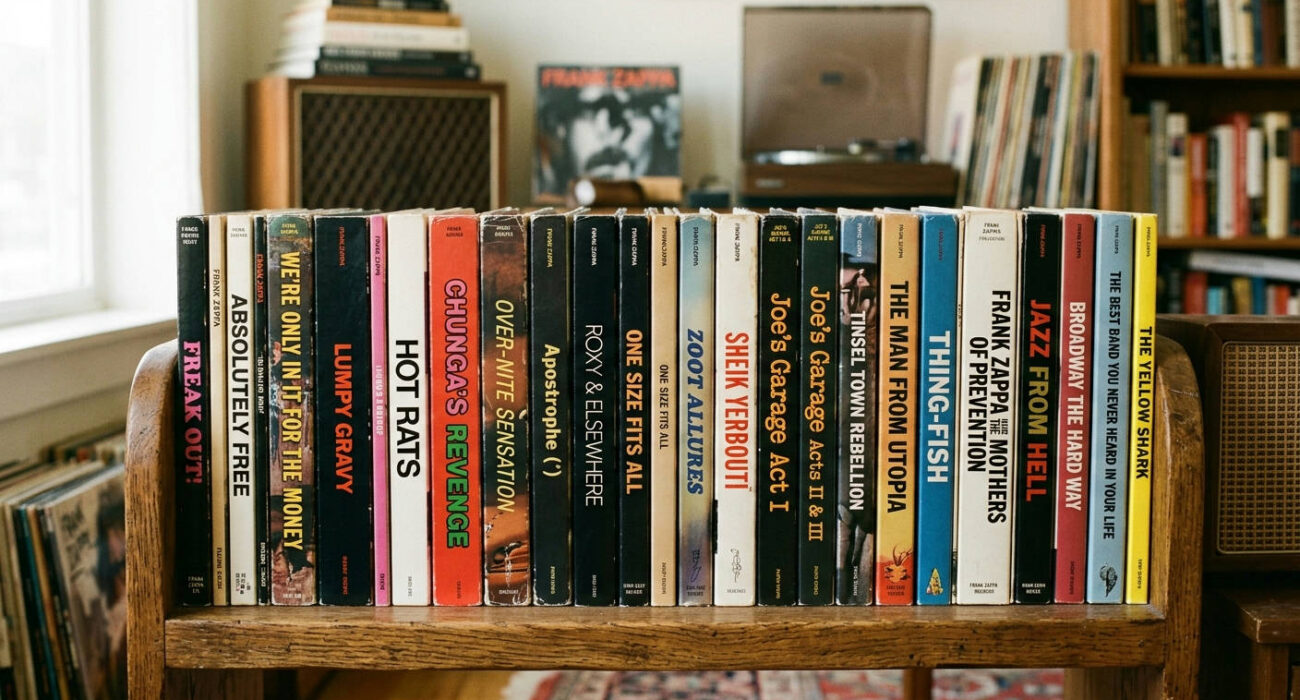
Trying to assemble a complete Frank Zappa solo album list can feel like wrestling an octopus. The man was a machine, releasing over 60 albums in his lifetime, with dozens more appearing posthumously. It’s a discography that defies easy categorization, spanning rock, jazz, classical, comedy, and sounds that haven’t been named yet. This isn’t just a list; it’s a map through the mind of one of the 20th century’s most brilliant and uncompromising composers. Forget what you think you know. Let’s dive in.
Who Was Frank Zappa? Beyond the Moustache
Frank Zappa was more than a musician; he was an institution. A self-taught composer, virtuosic guitarist, and relentless satirist, he operated completely outside the music industry’s norms. After his initial run with the Mothers of Invention, he forged a solo career that was pathologically prolific and creatively boundless.
He saw no distinction between “high” and “low” art. A complex orchestral piece could sit right next to a juvenile song about stinky feet on the same album. This was the core of his philosophy: conceptual continuity. Every project, every song, every guitar solo was part of one massive, interconnected work.
This is why tackling the Frank Zappa solo album list is so intimidating for newcomers. It’s not a linear progression. Albums recorded years apart might be thematically linked. A character from a 1973 song might reappear in a 1981 rock opera. He built a universe, and his albums are the star charts.
Without deviation from the norm, progress is not possible.
Zappa was also a fierce advocate for free speech, famously taking on the Parents Music Resource Centre (PMRC) in the 1980s. He was a tireless worker, a demanding bandleader, and a true original whose influence is still being unpacked decades after his death. Understanding this relentless drive is key to appreciating the sheer scale of his output.
The Definitive Frank Zappa Solo Album List: A Chronological Expedition
Here’s the thing about a “solo” Zappa album: the lines are blurry. Many albums credited to him feature former Mothers or his touring bands. For clarity, we’re focusing on albums released under his own name, distinct from the initial “The Mothers of Invention” releases. This chronological journey maps his evolution as a composer and bandleader.
The Early Years (Post-Mothers): 1967-1972
This period marks Zappa’s first major steps as a singular entity. While still working with various Mothers, the focus shifted entirely to his complex compositional vision. He was breaking free from the psychedelic rock constraints and diving headfirst into jazz fusion and modern classical music.
- Lumpy Gravy (1967): Zappa’s first official solo record is an avant-garde masterpiece, a collage of orchestral music, surf rock, and surreal spoken-word segments. It’s a challenging listen but essential to understanding his compositional ambitions.
- Hot Rats (1969): This is the game-changer and a perfect entry point for many. A mostly instrumental album, Hot Rats is a landmark of jazz-rock fusion. The guitar work on “Willie the Pimp” (featuring Captain Beefheart on vocals) is legendary, and the intricate arrangement of “Peaches en Regalia” became one of his signature tunes. Get your hands on a quality pressing of Hot Rats on Amazon.
- Chunga’s Revenge (1970): A transitional album, it mixes instrumental jazz workouts with the kind of satirical rock that would define his mid-70s work. It features the vocal talents of Flo & Eddie (Mark Volman and Howard Kaylan of The Turtles).
- Waka/Jawaka (1972): Following a severe on-stage injury that left him wheelchair-bound for a time, Zappa focused on large-ensemble jazz compositions. This album and its follow-up are dense, brass-heavy, and brilliant, showcasing his skills as an arranger.
- The Grand Wazoo (1972): The companion piece to Waka/Jawaka, this is a full-blown big band jazz fusion record. It’s pure, uncut musicianship, a testament to Zappa’s ability to write for and conduct a large, complex ensemble.
The Mid-70s Fusion & Funk Era: 1973-1978
With a new band featuring virtuosos like George Duke and Napoleon Murphy Brock, Zappa hit a commercial and creative peak. The music was still complex, but it was groovier, funkier, and laced with the storytelling and social satire that would become his trademark. The funk undercurrent of this era is undeniable, drawing from the same well as contemporaries like Parliament-Funkadelic, whose work you can explore in our guide to the best from Parliament and Funkadelic.
- Apostrophe (‘) (1974): Zappa’s most commercially successful album. It features the fluke hit “Don’t Eat the Yellow Snow” and the incredible bass work of Jack Bruce on the title track. It’s funny, musically adventurous, and surprisingly accessible. An essential purchase for any collection. Find Apostrophe (‘) on vinyl via Amazon.
- Roxy & Elsewhere (1974): Technically a live album, but it’s so fundamental to this era’s sound that it belongs here. It captures the sheer power and telepathic interplay of his mid-70s band. The performances are mind-bendingly tight.
- One Size Fits All (1975): Often cited by fans as one of his absolute best. It perfectly balances jaw-dropping instrumental complexity (“Inca Roads”) with sharp satire (“Po-Jama People”) and moments of sheer beauty. The production is immaculate.
- Zoot Allures (1976): A darker, more guitar-heavy record. Zappa plays most of the instruments himself, giving it a unique, studio-centric feel. “Black Napkins” is one of his most celebrated guitar solos.
The Barking Pumpkin Era: 1979-1988

After a lengthy legal battle with his former record label, Zappa founded Barking Pumpkin Records, giving him complete creative control. The floodgates opened. This era is defined by an explosion of output, including sprawling rock operas, live albums, and blistering guitar solo compilations.
- Sheik Yerbouti (1979): A double album filled with satirical and controversial tracks like “Bobby Brown Goes Down” and “Jewish Princess.” It also contains the Grammy-nominated “Dancin’ Fool.” It showcases his use of xenochrony—taking a studio guitar solo and overdubbing it onto a completely different live track.
- Joe’s Garage Acts I, II & III (1979): A three-act rock opera about a young musician whose life is ruined by a totalitarian government that criminalizes music. It’s a scathing critique of censorship and conformity, packed with incredible music and some of Zappa’s most iconic guitar solos (“Watermelon in Easter Hay”).
- Shut Up ‘n Play Yer Guitar (1981): Exactly what it says on the tin. A three-record set composed entirely of live guitar solos edited from performances between 1977 and 1980. It is an essential document for anyone who wants to understand Zappa the guitarist.
- The Man from Utopia (1983): A wild collection of studio and live tracks, notable for its cover art by Tanino Liberatore and tracks like “The Dangerous Kitchen” that blur the line between song and manic spoken-word performance.
The Synclavier & Final Works: 1984-1993
In his later years, Zappa became obsessed with the Synclavier, an early digital synthesizer and workstation. This allowed him to compose music that was humanly impossible to play. He saw it as the ultimate tool for realizing his complex rhythmic and melodic ideas without compromise.
- Francesco Zappa (1984): A bit of an oddity, this album features Zappa performing the works of 18th-century composer Francesco Zappa (no relation, probably) on his Synclavier.
- Jazz from Hell (1986): This all-Synclavier album won a Grammy for Best Rock Instrumental Performance, ironically for an album with no rock music on it. It’s a dense, challenging, and fascinating look into Zappa’s “serious” compositional mind.
- Civilization Phaze III (1994): The last album Zappa completed before his death, and a sequel of sorts to his 1967 masterpiece, Lumpy Gravy. It’s a monumental two-disc work combining Synclavier compositions with surreal dialogue recorded in the 1960s. It’s his final, challenging statement.
How to Approach Zappa’s Music: A Listener’s Guide
Jumping into the Frank Zappa solo album list without a plan is a recipe for confusion. His catalogue is not meant to be consumed chronologically or randomly. The best approach depends entirely on your existing musical tastes.
For the Rock & Roll Fan: Where to Start
If you love classic rock, tight riffs, and killer guitar solos, these albums are your gateway. They have the humour and the hooks to draw you in before you get to the truly weird stuff.
- Start with Apostrophe (‘) (1974): It’s his biggest seller for a reason. It’s funny, funky, and rocks hard.
- Next, try Over-Nite Sensation (1973): Recorded in the same sessions as Apostrophe (‘), it’s a perfect companion piece with classics like “Montana” and “Camarillo Brillo.”
- Then, move to Sheik Yerbouti (1979): This double album shows off his satirical side and features some of his most straightforward rock tracks alongside the studio wizardry.
For the Jazz Fusion Enthusiast
If you appreciate instrumental prowess, complex time signatures, and the outer limits of jazz, Zappa’s early solo work is a goldmine. This is where he established himself as a composer on par with the jazz greats.
- The only place to start is Hot Rats (1969): It’s a foundational text of the entire jazz-rock genre.
- Follow up with Waka/Jawaka (1972) and The Grand Wazoo (1972): These big-band albums are a masterclass in arrangement and composition.
- Don’t miss Zappa in New York (1978): A live album with the Brecker Brothers on horns, it’s a stunning display of a jazz-rock band at the peak of its powers.
An Essential Frank Zappa Solo Album List for Avant-Garde Listeners
If you have a taste for the strange and a love for composers like Edgard Varèse (Zappa’s idol), then you should dive right into the deep end. This is Zappa at his most experimental and uncompromising.
- Begin with Lumpy Gravy (1967): His first solo outing is a challenging tape-edit and orchestral piece that sets the stage for everything to come.
- Jump ahead to Jazz from Hell (1986): Hear what Zappa’s mind sounded like when freed from the constraints of human musicians. The Synclavier pieces are breathtakingly complex.
- End with Civilization Phaze III (1994): His final, posthumous statement is a dense, difficult, and ultimately rewarding journey that connects the beginning of his career to its end.
Beyond the Studio: Zappa’s Essential Live Albums

You can’t fully grasp Zappa’s genius without hearing him live. His concerts were legendary events, combining musical perfectionism with theatrical absurdity and on-the-fly improvisation. The live albums are not just souvenirs; they are crucial components of his body of work, often featuring material unavailable anywhere else.
- Roxy & Elsewhere (1974): As mentioned before, this is the definitive document of the mid-70s band. The level of musicianship is simply staggering.
- Zappa in New York (1978): A sprawling live set recorded in 1976. It’s notable for its raunchy humour, complex instrumentals like “The Black Page,” and a killer horn section.
- The Best Band You Never Heard in Your Life (1991): A document of Zappa’s final tour in 1988. The 12-piece band was a powerhouse, capable of playing anything from Zappa’s vast catalogue, along with bizarre cover songs like the theme from The Godfather.
The Sound of Genius: Vinyl vs. Digital for Zappa’s Music
How you listen to Zappa matters. His studio productions were incredibly dense and meticulously crafted. He was an early adopter of digital recording, but his analogue-era work, in particular, benefits immensely from a quality vinyl pressing.
Music, in performance, is a type of sculpture. The air in the performance is sculpted into something.
This quote perfectly captures his approach. He was sculpting sound, and the nuances of those sculptures can get lost in low-quality digital compression.
Why Vinyl Is a Revelation for Zappa’s Complex Mixes
Zappa’s albums are layered with countless overdubs, subtle musical jokes, and intricate percussion. A good vinyl setup reveals this depth in a way that streaming often can’t. The dynamic range on records from the Hot Rats or One Size Fits All era is stunning. The physical format, with its large-scale artwork and liner notes, also enhances the experience, pulling you deeper into Zappa’s universe. If you’re looking to get the most out of these records, investing in a decent setup is key. Check out our guide to the best turntables under £300 in the UK to get started.
Finding Zappa on Vinyl in 2026: Tips for Collectors
For years, getting Zappa’s music on vinyl was tough. Original pressings were often scarce and expensive. Fortunately, the Zappa Family Trust, under the “Zappa Records” imprint, has been executing a high-quality reissue campaign since the mid-2010s.
- Original Pressings: Look for records on the Bizarre, Straight, or DiscReet labels for his 60s and 70s work. They can be pricey but offer the authentic analogue experience.
- Zappa Records Reissues: These are the best bet for most people in 2026. They are mastered from the original analogue tapes, pressed on high-quality vinyl, and are widely available and affordable. The sound quality is generally excellent.
- Avoid Counterfeits: Zappa’s popularity has led to a market for bootlegs and counterfeits. Stick to reputable record stores or official channels to ensure you’re getting the real deal.
Zappa’s Lasting Influence: The Legacy of a Solo Maverick
Frank Zappa’s impact extends far beyond the impressive Frank Zappa solo album list. He was a cultural force who challenged conventions at every turn.
The Composer and Social Critic
Zappa was one of music’s most trenchant and hilarious social commentators. His lyrics targeted everything from hippie culture and consumerism to the religious right and government censorship. His 1985 testimony before the U.S. Senate committee on record labelling is a legendary defense of artistic freedom. He wasn’t just a rock star; he was a public intellectual with a guitar. At his core, however, he was a composer, and his complex works are now studied and performed by orchestras around the world.
His Impact on Modern Music
Zappa’s refusal to be pigeonholed has inspired countless artists. You can hear his influence in the genre-bending prog-metal of bands like Primus and System of a Down, the experimental work of sound artists, and the satirical song writing of artists like “Weird Al” Yankovic. He proved that you could be musically sophisticated, commercially successful (on your own terms), and relentlessly, uncompromisingly yourself.
Exploring the world of Frank Zappa is a commitment, but it’s one that pays dividends. His music is a universe of its own—challenging, hilarious, and deeply rewarding. Use this guide as your starting point, pick an era that speaks to you, and prepare for a wild ride. There’s no one else quite like him.