Let’s cut straight to it. You’re asking, “How many studio albums did The Yardbirds release?” The simple, almost misleading answer is just two during their original 1960s run, with a third reunion album decades later. But that number is a massive injustice to the band’s story. The real answer is tangled up in a web of UK vs. US releases, record label cash-grabs, and a discography that prioritised ground breaking singles over long-form albums. To truly understand their studio output, you have to untangle the mess and look at what they actually recorded, not just what was pressed onto vinyl LPs.
This is the definitive guide from Vinyl Gold UK, breaking down the entire saga of The Yardbirds’ studio recordings. We’ll separate fact from fiction, compilation from creation, and show you why their limited album count is one of the most explosive and influential in rock history.
The Simple Number vs. The Complicated Truth
The Yardbirds were a quintessential 1960s British band, and that means their discography is a minefield for modern listeners. Record labels in the UK and the US had completely different strategies. In Britain, the album was still finding its feet as an art form; the 7-inch single was king. In America, the LP was a commercial juggernaut. This transatlantic disconnect is the root of all the confusion.
The Core UK Discography: The “Official” Count
If you were a fan in London during their heyday, your collection of Yardbirds LPs would look incredibly sparse. The band only released one proper, all-original studio album in the United Kingdom during their entire 1963-1968 run.
- Roger the Engineer (1966): This is the one. The pure, undiluted article. It was the only time the band went into a studio with the express purpose of creating a full-length album of new material for their home audience.
Everything else released in the UK on a 12-inch record was either a live album (Five Live Yardbirds) or a compilation of singles released after the band had already split. This “singles-first” mentality was common, shared by bands like The Who and The Kinks.
Why the US Releases Confuse Everyone
Across the pond, Epic Records had a different plan. They saw the commercial potential of The Yardbirds and knew the American market demanded albums. Their solution was to essentially build LPs out of whatever material they could get their hands on.
This meant taking A-sides, B-sides, and a few new recordings, and packaging them as full-length “studio albums.” These records weren’t cohesive projects conceived by the band; they were products assembled by the label. This is why LPs like For Your Love and Having a Rave Up with The Yardbirds are often cited as studio albums, creating the confusion that persists to this day. They contain studio recordings, but they aren’t true studio albums in the artistic sense.
A Chronological Deep-Dive into The Yardbirds’ Studio Output
To really grasp their recorded legacy, we have to walk through their LPs chronologically, dissecting what they are and, more importantly, what they are not. This is where the story of their ground breaking sound unfolds.
Five Live Yardbirds (1964)
Okay, it’s a live album, not a studio one. But you can’t tell the story without it. This is the ground zero recording of the band’s raw, blues-drenched power, captured at the legendary Marquee Club in London. It features a young Eric “Slowhand” Clapton on guitar, and it’s a blistering document of their R&B roots. It’s their first UK LP, and for many, it’s the most authentic representation of the early band. No studio polish, just pure energy.
For Your Love (1965)
Here’s where the confusion begins. Released only in the US and Canada, this LP was built around their smash-hit single, “For Your Love.” The problem? The song was a pop-oriented track penned by Graham Gouldman, featuring a harpsichord and bongos. This was the final straw for blues purist Eric Clapton, who quit the band in protest. The rest of the album was a patchwork of previously released singles and B-sides. It’s a collection of studio tracks, but not a studio album.
Having a Rave Up with The Yardbirds (1965)
Another US-only release from Epic Records, this one is even more of a hybrid. Side one features new studio recordings from the brand-new line-up with guitar virtuoso Jeff Beck. This is where you first hear the sonic experiments that would define their sound, like the fuzztone riff of “Heart Full of Soul.” Side two, however, is just a chunk of the Five Live Yardbirds album. It’s a fantastic record, but it’s half live, half studio compilation.
Roger the Engineer (1966)
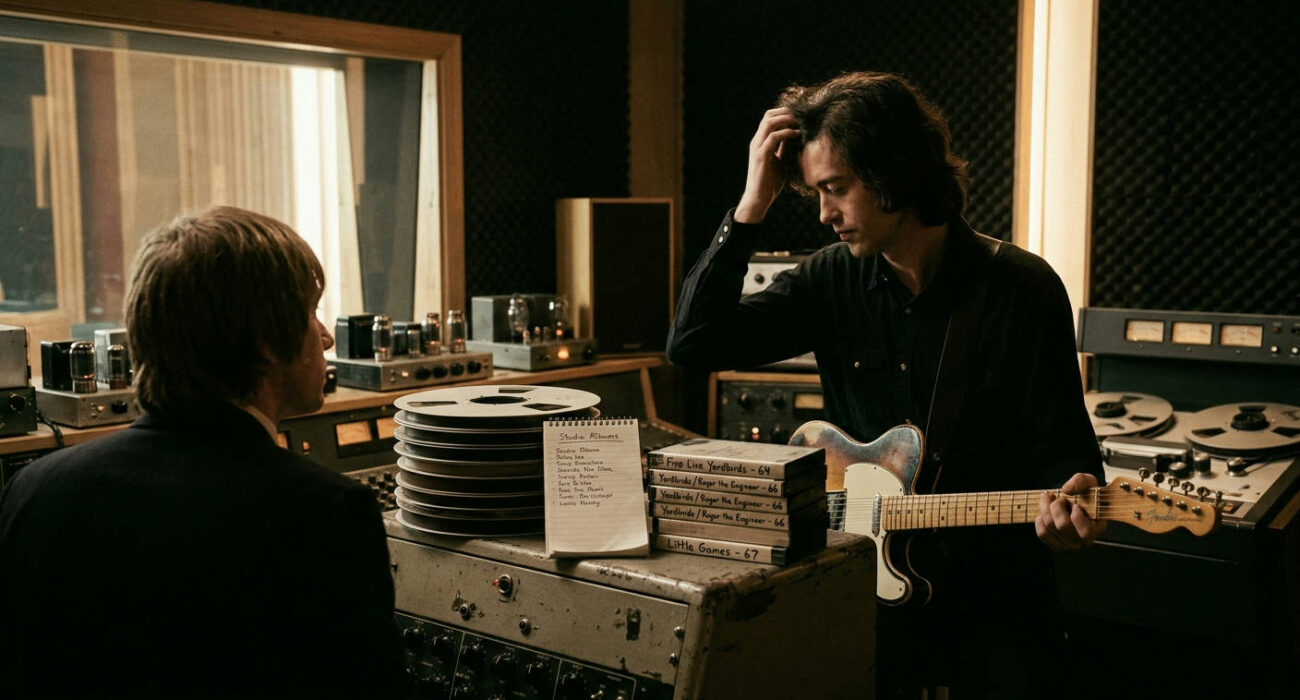
This is the masterpiece. Released in the UK as Yardbirds and in the US as Over Under Sideways Down, this is the one and only true studio album from the classic Yardbirds line-up. It’s a psychedelic blues-rock tour de force, with Jeff Beck’s guitar pyrotechnics leading the charge. From the proto-metal raga of “Shapes of Things” to the frantic energy of the title track, every song showcases a band at the absolute peak of its innovative power. If you want to own one Yardbirds studio album, this is it. No question.
“We were in Advision Studios in London, and we were just let loose. There was no producer in the conventional sense. We produced it ourselves, and it was a wonderful, creative time. We were experimenting with everything.” – Jim McCarty, Yardbirds drummer

This album is a testament to what happens when a band is given creative freedom. The sonic textures, the feedback, the sheer audacity of Beck’s playing—it set a new standard for what a guitar could do.
Little Games (1967)
After Jeff Beck was fired, a new guitar genius stepped fully into the spotlight: Jimmy Page. The band’s final 1960s studio effort was, once again, a US-only release. The band was paired with pop producer Mickie Most, who pushed them in a more commercial direction, much to their dismay. The results are a mixed bag. You can hear Page’s burgeoning genius on tracks like “White Summer,” a clear precursor to his work in Led Zeppelin. But other tracks are buried in ill-fitting orchestral arrangements. The band themselves largely disowned the album, and it was never even released in the UK until much later.
Birdland (2003)
Decades after their split, founding members Chris Dreja and Jim McCarty resurrected The Yardbirds. This reunion album, Birdland, is their most recent official studio release. It features a mix of re-recordings of their classic hits with guest appearances from guitar heroes like Steve Vai, Slash, and Joe Satriani, alongside a handful of new original songs. It’s a respectful tribute to their legacy, but it exists in a different universe from their ground breaking 60s material.
How Many Studio Albums Did The Yardbirds Release? A Guitar-God Breakdown
The best way to understand the answer to how many studio albums did The Yardbirds release is to filter it through the lens of their three iconic lead guitarists. Each era had a distinct sound and a different approach to studio recording.
The Eric Clapton Era (1963-1965): Blues Purity and Pop Compromise
During Clapton’s tenure, The Yardbirds were fundamentally a live R&B band. Their focus was on stagecraft and raw, blues-based improvisation. The studio was a place to capture singles.
- Studio Albums Released: Zero.
- Key Recordings: “Good Morning Little Schoolgirl,” “I Wish You Would,” and the material that made up the Five Live Yardbirds LP.
- Legacy: Clapton established the band’s blues credentials but left when pop success beckoned. His purist attitude meant a dedicated studio album was never really on the cards.
The Jeff Beck Era (1965-191966): Psychedelic Explosions
When Jeff Beck joined, the band transformed. He was a sonic architect, unafraid to push his equipment to the breaking point to create sounds no one had ever heard before. This was the band’s creative zenith.
- Studio Albums Released: One (Roger the Engineer).
- Key Recordings: “Heart Full of Soul,” “Shapes of Things,” “Over Under Sideways Down.” These singles were revolutionary, bringing Indian-inspired scales, feedback, and fuzz-tone to the pop charts.
- Legacy: This era produced the band’s only true, cohesive studio album. Beck’s experimental genius defined The Yardbirds’ most influential period, laying the groundwork for psychedelic rock.
The Jimmy Page Era (1966-1968): The Road to Zeppelin
With Jimmy Page first on bass and then as co-lead and sole lead guitarist, the band ventured into heavier, more experimental territory. The dual-guitar attack of Beck and Page was legendary but tragically short-lived and poorly documented.
- Studio Albums Released: One (the US-only Little Games).
- Key Recordings: “Happenings Ten Years Time Ago,” “Glimpses,” “Think About It.” The B-side “Think About It” features a guitar solo that Page would later recycle almost note-for-note for Led Zeppelin’s “Dazed and Confused.”
- Legacy: This line-up pointed directly to the future of hard rock. While Little Games was a flawed effort, Page’s studio savvy and heavy riffing were the final ingredients in the primordial soup from which Led Zeppelin would emerge. The influence of this period can be heard throughout the best albums of the 1970s.
The Legacy of a Small but Mighty Discography
The Yardbirds prove that influence isn’t measured in album sales or the length of a discography. Their impact on music is completely out of proportion to their studio output.
The “Singles Band” Argument
Ultimately, The Yardbirds were a singles band. That’s where their most radical ideas were unleashed upon the world. A 3-minute track like “Shapes of Things” had more innovation packed into it than many entire albums of the era. They used the single format as a laboratory for sound, and the charts were their testing ground. To truly appreciate them, you need a compilation that gathers these essential 45s.
How a Small Album Count Launched Three Guitar Gods
It’s astonishing that one band’s sparse studio history served as the crucible for three of the most important guitarists ever.
- Eric Clapton: Honed his blues chops before leaving to find superstardom with Cream.
- Jeff Beck: Rewrote the rulebook for electric guitar on Roger the Engineer and became a revered solo artist.
- Jimmy Page: Used the band’s final days as a workshop to develop the sounds, riffs, and producer’s mindset that would make Led Zeppelin the biggest band in the world.

Their story is a powerful lesson in how the right environment can nurture transcendent talent. The creative friction and constant evolution within The Yardbirds pushed each guitarist to new heights. Much like their contemporary, Jimi Hendrix, they proved that a short, incandescent burst of creativity can leave a permanent mark on music. Exploring The Best Of Jimi Hendrix reveals a similar pattern of explosive, era-defining work.
The Collector’s Nightmare: Navigating the Mess
For new fans, especially vinyl collectors, The Yardbirds’ discography is a headache. With countless repackages, budget compilations, and grey-market releases, it’s easy to buy the wrong thing. The key is to know what you’re looking for. Ignore the confusing US LPs from the 60s and focus on either a high-quality reissue of Roger the Engineer or a well-curated modern compilation.
Finding Yardbirds Albums on Vinyl in 2026
Getting into The Yardbirds on vinyl is a rewarding experience. Hearing Jeff Beck’s guitar wizardry through a proper setup is a revelation. Here’s what you need to know.
Original Pressings vs. Modern Reissues
An original 1966 mono pressing of Roger the Engineer is a holy grail item for collectors and will cost a small fortune. For most people, a modern reissue is the way to go. Audio restoration technology has advanced significantly, and a well-mastered reissue from a reputable label can sound incredible, often with less surface noise than a 60-year-old original.
What to Look For in a Quality Reissue
Not all reissues are created equal. Look for releases from audiophile labels like Sundazed, Demon Records, or Repertoire. Pay close attention to the source material—was it mastered from the original tapes? Also, consider the mono vs. stereo debate. For most 60s rock, the mono mix is the definitive one. It’s how the band and engineers intended it to be heard. The stereo mixes were often an afterthought, with clumsy panning and strange separation.
“The mono mix has all the power. That’s the punch. The stereo mixes were done very quickly afterwards, and they just don’t have the same guts.” – Paul Samwell-Smith, Yardbirds bassist and producer
### How many studio albums did The Yardbirds release that are worth owning on vinyl?
This is the practical question. If you’re building a collection, here’s the Vinyl Gold UK recommendation:
- Roger the Engineer: This is non-negotiable. It’s their only true studio masterpiece and an essential 60s rock album. Prioritise a good mono reissue. You can search for one here: The Yardbirds Roger The Engineer Vinyl on Amazon.
- Little Games: This is for the completists and serious Jimmy Page fans. It has moments of brilliance, but it’s not a consistent listen. The Jimmy Page-produced Little Games Sessions & More compilation is often a better choice.
- A Great Compilation: For everyone else, a comprehensive compilation is the best investment. Look for one that gathers all the A-sides and essential B-sides from 1965-1968. This is the best way to hear their evolution in one place. Search for a collection like this: The Yardbirds Greatest Hits Vinyl on Amazon.
To get the most out of these records, you’ll need a solid setup. If you’re looking to upgrade your system without breaking the bank, check out our guide to the best turntables under £300 in the UK.
Beyond the Official Studio LPs
To get the full picture, you have to look beyond the slim studio discography. The Yardbirds were a formidable live act, and thankfully, some of that energy was captured for posterity.
The BBC Sessions
Like many of their British Invasion peers, The Yardbirds recorded numerous sessions for the BBC. These recordings, collected on albums like Yardbirds…On Air, are fantastic. Stripped of studio gimmickry, they offer a clear view of the band’s musical chemistry and raw power. They often feature different arrangements and a looser feel than the official singles. You can find a detailed history of these kinds of recordings in archives like the BBC’s own Rewind project.
Live at the Anderson Theatre
This legendary 1968 recording from New York captures the final incarnation of the band with Jimmy Page at the helm. Though the sound quality of official releases has been debated for years, it’s a vital document. You can hear the band stretching out on long, proto-Zeppelin jams like “I’m Confused” (soon to be “Dazed and Confused”). It’s the sound of a band disintegrating and a new one being born in its place.
The Ultimate Compilation: Train Kept A-Rollin’: The Complete Giorgio Gomelsky Productions
For the serious fan, this box set (or its equivalent) is essential. It compiles everything the band recorded under their first manager and producer, Giorgio Gomelsky. This covers the Clapton and early Beck eras in exhaustive detail, including demos, alternate takes, and studio chatter. As documented by the Rock & Roll Hall of Fame, this early period was crucial in defining their sound.
So, the question of “how many studio albums did The Yardbirds release” opens a door into one of rock’s most fascinating and complex histories. The number is small, but the shockwaves from those few recordings are still being felt today. They weren’t an album band; they were an idea band. Their legacy isn’t in the quantity of their LPs, but in the sheer quality of their innovation and the monumental careers they launched. Go spin Roger the Engineer and hear for yourself.