
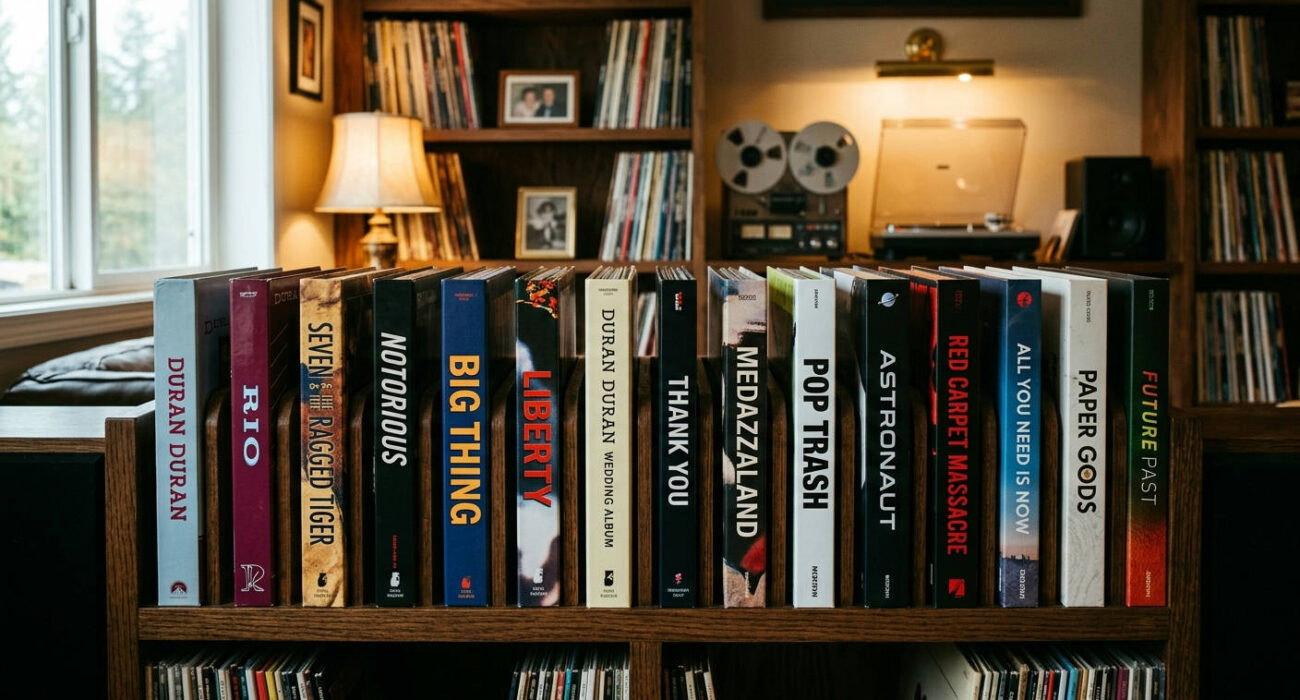
Ready to explore one of the most iconic, stylish, and enduring careers in pop music? Forget a surface-level skim. We’re going deep, album by album, through the entire Duran Duran complete studio albums discography. This isn’t just a list; it’s a journey through sonic evolution, from the synth-drenched shores of Rio to the sophisticated modern pop of their 2026 releases. At Vinyl Gold UK, we live and breathe this stuff, and we’re here to be your definitive guide to the Fab Five’s epic studio output.
For over four decades, Duran Duran has navigated trends, survived lineup changes, and repeatedly proven their relevance. Their catalogue is a masterclass in blending art-rock ambition with irresistible pop hooks, and understanding it means appreciating the highs, the lows, and the fascinating experiments in between.
The New Romantic Genesis: The Early Years (1981-1983)
The story starts not in London, but in Birmingham’s Rum Runner club. This was the crucible where Duran Duran forged their sound and style, mixing punk’s energy with disco’s glamour and the futuristic pulse of synthesizers. They weren’t just a band; they were a multimedia concept from day one, and their first three albums would make them global superstars.
Duran Duran (1981) – The Debut That Defined a Decade
Their self-titled debut album wasn’t just a collection of songs; it was a statement of intent. Dropping in 1981, it hit with the force of a cultural tidal wave. The sound was a potent cocktail of Nick Rhodes’ atmospheric synths, John Taylor’s Chic-inspired basslines, and Simon Le Bon’s cryptic, poetic vocals.
This record is darker and more atmospheric than what would follow. Tracks like “Careless Memories” carry a post-punk edge, while “Planet Earth” became an anthem for the burgeoning New Romantic movement. Of course, the real controversy and fame came with “Girls on Film” and its banned-by-the-BBC music video, instantly establishing their reputation as glamorous provocateurs. This is where the legend began.
Rio (1982) – The Global Phenomenon
If the debut was the spark, Rio was the explosion. This 1982 masterpiece is, for many, the quintessential Duran Duran album. Polished, confident, and impossibly stylish, it’s a flawless fusion of pop, rock, and new wave. The production is immaculate, with every synth shimmer and sax solo perfectly placed.
From the driving title track to the predatory groove of “Hungry Like the Wolf” and the hauntingly beautiful ballad “Save a Prayer,” there isn’t a weak moment. The album’s success was supercharged by its groundbreaking music videos, shot in exotic locations like Sri Lanka and Antigua. They didn’t just sell the music; they sold a lifestyle of adventure and luxury that millions craved. Rio is not just an album; it’s a cultural touchstone.
Seven and the Ragged Tiger (1983) – Conquering the World
How do you follow an album like Rio? With enormous pressure and a globe-spanning tour. Seven and the Ragged Tiger was the sound of a band grappling with their monumental fame. It’s a slicker, more commercial affair, engineered for the stadiums they were now filling.
The album delivered massive hits. “Union of the Snake” was a tightly-wound funk-pop number, while “New Moon on Monday” showcased their cinematic video ambitions once more. But it was the Nile Rodgers remix of “The Reflex” that gave them their first number-one single in both the UK and the US, cementing their status as the biggest band on the planet.
Splintering and Reinvention: The Mid-to-Late 80s
By the mid-80s, the intense pressure of “Durandomania” led to a fracture. The band split into two side projects: the atmospheric, art-pop of Arcadia (Simon, Nick, Roger) and the hard-rocking funk of The Power Station (John and Andy, with Robert Palmer and Tony Thompson). These projects allowed for creative release but also marked the end of an era. When the band reconvened, it was as a trio.
Notorious (1986) – A Funk-Infused New Direction
With Roger and Andy Taylor gone, the remaining three members—Simon, John, and Nick—recruited producer Nile Rodgers to help redefine their sound. The result was Notorious, a sophisticated and funk-driven album that marked a significant departure from their earlier work.
The title track, with its powerful horn section and undeniable groove, was a global smash. The album explored a more mature R&B and funk sensibility, evident on tracks like the slinky “Skin Trade” and the atmospheric “A Matter of Feeling.” It was a bold move that proved Duran Duran could evolve beyond their New Romantic roots.
Big Thing (1988) – Experimenting with House and Rock
Big Thing is one of the most underrated and eclectic albums in the Duran Duran complete studio albums discography. Released in 1988, it saw the band diving into the emerging sounds of house music while also embracing a harder rock edge, thanks to the addition of guitarist Warren Cuccurullo.
“I Don’t Want Your Love” was a stomping, sample-heavy dance track that felt raw and urgent. “All She Wants Is” was a pure slice of acid-house-infused pop, a sound that was years ahead of its time for a mainstream act. The album was a commercial disappointment compared to their previous work, but it remains a fascinating document of a band refusing to stand still.
The Comeback Kings: The 90s Resurgence
The dawn of the 1990s was a tough time for many 80s bands. Grunge and alternative rock had taken over, and many of Duran Duran’s peers were relegated to the nostalgia circuit. For a moment, it seemed they might suffer the same fate.

Liberty (1990) – A Misstep on the Path to Revival
Often considered a transitional record, 1990’s Liberty is the forgotten album in their catalogue. With the addition of Sterling Campbell on drums, the band tried to capture a more “live” rock feel, but the songwriting didn’t quite hit the mark.
The lead single, “Violence of Summer (Love’s Taking Over),” had energy but lacked the killer hook of their best work. While not a disaster, Liberty failed to make a commercial or critical impact, leaving the band’s future looking uncertain.
Duran Duran (The Wedding Album) (1993) – The Second Coming
Just when everyone had written them off, Duran Duran staged one of the most stunning comebacks in music history. Their second self-titled album, universally known as The Wedding Album due to its cover art, was a massive, unexpected triumph.
It was spearheaded by two of the best songs they ever wrote. “Ordinary World” was a breathtakingly beautiful and mature ballad that connected with a massive audience, proving their songwriting had deepened with age. It was followed by the sensual, trip-hop-inflected “Come Undone.” The album masterfully blended their pop sensibilities with a contemporary alternative rock sound, earning them a whole new generation of fans.
“We’ve always tried to be the band of the moment. In 1993, we suddenly found ourselves back in the right place at the right time with the right songs.” – Nick Rhodes
### A Deep Dive into the Duran Duran complete studio albums discography: Thank You (1995)
After the monumental success of The Wedding Album, the band’s next move was a head-scratcher for many: a full album of cover songs. Thank You is arguably the most divisive record they ever released.
The concept was to pay tribute to their influences, but the results were wildly uneven. Their high-energy take on Grandmaster Flash’s “White Lines (Don’t Do It)” was a hit, and their version of Lou Reed’s “Perfect Day” was genuinely moving. Other choices, like a lounge-y version of Public Enemy’s “911 Is a Joke,” were met with critical derision. It’s a bizarre but essential part of their story, showcasing their willingness to take risks, for better or worse.
Navigating the New Millennium: A Duran Duran complete studio albums discography Exploration
The late 90s and early 2000s were another challenging period. John Taylor departed the band in 1997, leaving Simon Le Bon, Nick Rhodes, and Warren Cuccurullo to carry on as a trio. This era was defined by sonic experimentation and shifting commercial fortunes.
Medazzaland (1997) & Pop Trash (2000) – The Wilderness Years
These two albums represent the band at their most experimental and least commercially successful. Medazzaland (1997) was a dark, heavily electronic album that saw Nick Rhodes take on a more prominent role, even handling lead vocals on the title track. “Electric Barbarella,” a nod to their namesake film, was a standout, but the album’s limited release (initially not available in Europe) hampered its reach.
Pop Trash (2000) continued this direction but felt even more disconnected from the pop mainstream. Despite some strong songwriting on tracks like “Someone Else Not Me,” the album sold poorly, marking a career low point. It seemed, for a moment, that the magic might be gone for good.
Astronaut (2004) – The Fab Five Reunite
The announcement that the original five members were reuniting sent shockwaves of excitement through their global fanbase. The subsequent tour was a massive success before they had even released a note of new music. The pressure was on for their comeback album, Astronaut.
Released in 2004, Astronaut was a triumphant return to form. It successfully recaptured the classic Duran Duran sound without feeling like a simple retread. The lead single, “(Reach Up for The) Sunrise,” was an explosive, euphoric dance-rock anthem that immediately put them back on the charts. It was the sound of a band re-energized and rediscovering their unique chemistry.
The Modern Era: Legacy and Continued Innovation (2007-2026)
Following the successful reunion, Duran Duran entered a new phase of their career, one defined by collaborations with cutting-edge producers. They refused to become a nostalgia act, instead choosing to engage with contemporary music, solidifying their status as timeless innovators. Andy Taylor would depart again before this period began, but the core four have remained a stable, creative force.
Collaborations and New Sounds: Red Carpet Massacre (2007) & All You Need Is Now (2010)
Red Carpet Massacre (2007) was a bold, if not entirely successful, experiment. The band teamed up with super-producers Timbaland and Danja, along with Justin Timberlake, to create a modern, hip-hop and R&B-influenced pop record. While tracks like “Nite-Runner” were interesting, many fans felt the band’s identity was lost in the slick, contemporary production.
In response, they made a hard pivot for 2010’s All You Need Is Now. Working with super-fan and producer Mark Ronson, they created what many have called the “lost” follow-up to Rio. Ronson pushed them to embrace their classic sound, resulting in an album filled with sparkling synths, driving basslines, and epic choruses. It was a critical and fan favourite, proving the classic formula was still potent.
Paper Gods (2015) – Embracing Modern Pop

For Paper Gods, the band once again opened themselves up to collaboration, bringing back Nile Rodgers and Mark Ronson while also working with artists like Janelle Monáe, Kiesza, and ex-Red Hot Chili Peppers guitarist John Frusciante.
The result was a vibrant, eclectic album that seamlessly blended the band’s DNA with modern pop production. “Pressure Off,” featuring Rodgers and Monáe, was a joyous funk-pop explosion that became an instant fan favourite. Paper Gods was a confident, contemporary record that saw the band hitting a new creative peak well into their fourth decade.
Future Past (2021) & Beyond in 2026
Their 15th studio album, Future Past, was another critical smash. Here, they collaborated with electronic pioneers like Giorgio Moroder and Erol Alkan, as well as Blur’s Graham Coxon on guitar. The album perfectly lived up to its title, with one foot in their atmospheric, art-rock past and the other firmly in the future.
As of 2026, Duran Duran’s legacy is secure. Their induction into the Rock & Roll Hall of Fame in 2022 was long overdue recognition of their immense contribution to music. They continue to tour and record, always looking forward while honouring their incredible history.
Collecting the Duran Duran complete studio albums discography on Vinyl
For any serious fan, experiencing this music on vinyl is a must. At Vinyl Gold UK, we believe the warmth, depth, and sheer presence of a vinyl record is the definitive way to listen. It’s how this music was meant to be heard.
Why Vinyl is the Definitive Format for Duran Duran
It’s about more than just sound. It’s about the entire package. The iconic album art—from the Nagel-inspired portrait on Rio to the bold graphics of Notorious—is a huge part of the band’s aesthetic. Holding a 12-inch sleeve in your hands is a tangible connection to the art.
Sonically, the rich layers of Nick Rhodes’ synthesizers and John Taylor’s basslines come alive on a good turntable setup. The analogue production of their 80s classics, in particular, has a dynamic range that truly shines on vinyl. If you’re looking for a quality player, our guide to the best turntables under £300 in the UK is a great place to start your journey.
Essential Pressings for Your Collection: A Buyer’s Guide
Building your collection can be a thrilling hunt. Here’s what to look for:
- Original 80s Pressings: For the purist, nothing beats an original UK pressing on the EMI label. They generally offer the best audio quality for the first three albums. You can find these on marketplaces and in specialist shops.
- Modern Reissues: In recent years, Duran Duran’s catalogue has been given the deluxe reissue treatment. These 180-gram vinyl pressings are a fantastic, high-quality, and often more affordable way to own the classics. Start your search for the essentials right here.
- Find Rio on Vinyl: Search on Amazon
- Find Notorious on Vinyl: Search on Amazon
- Find The Wedding Album on Vinyl: Search on Amazon
Tips for Identifying First Pressings vs. Reissues
Want to know if you’ve found a gem? Check the matrix numbers etched into the run-out groove near the record’s label. A “first press” will typically have an A-1/B-1 or similar low-number designation. Also, examine the record label design and compare it with online discography databases like Discogs to confirm the specific release year and country of origin.
The Legacy and Influence of Duran Duran
Duran Duran’s impact extends far beyond their impressive record sales. They fundamentally changed the relationship between music and visual media and have inspired countless artists who followed.
“I don’t think you can talk about the 80s without talking about Duran Duran. They were the visual representation of the decade’s sound and ambition.” – Music Journalist, 2026
Pioneers of the Music Video
Before Duran Duran, music videos were often low-budget promotional tools. They transformed the format into a cinematic event. By hiring professional film directors and shooting on 35mm film in exotic locations, they created mini-movies that defined the early years of MTV. Their visual flair was as important as their musical innovation, a lesson not lost on artists like Madonna and Michael Jackson. Their influence in this area is so profound it’s been the subject of numerous retrospectives and analyses over the years.
A Lasting Impact on Pop and Rock
The “Duran Duran sound” is instantly recognizable, yet it’s also a moving target. Their ability to blend dance, rock, funk, and electronic music created a blueprint for modern pop. You can hear their influence in the synth-driven rock of The Killers, the dance-punk of Franz Ferdinand, and the stylish pop of artists like Lady Gaga.
Their 2022 induction into the Rock & Roll Hall of Fame was a formal acknowledgement of what fans have known for decades: they are one of the most important and influential bands of their generation. Their contemporaries, like Blondie, also mastered this blend of art and pop, defining an entire era of musical innovation.
So, where do you begin your journey? From the raw energy of their debut to the polished confidence of their latest work, the Duran Duran complete studio albums discography offers a rich and rewarding listening experience. Pick an era, drop the needle, and let one of the greatest pop bands of all time tell you their story. Your record collection will thank you for it.