
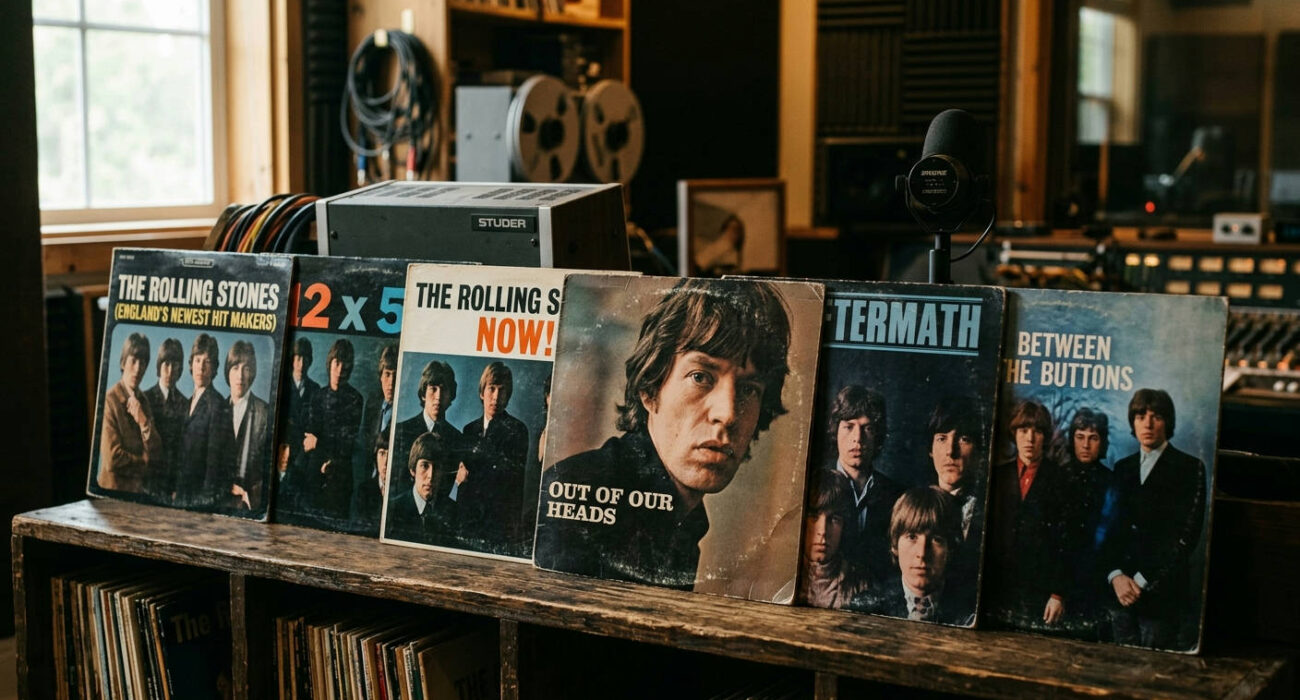
Forget the sanitized history. Before the stadium tours, the private jets, and the status as rock royalty, The Rolling Stones were a raw, snarling R&B band, drenched in the blues and brimming with youthful arrogance. They weren’t just playing music; they were mainlining the sounds of Chicago and the Mississippi Delta directly into the veins of 1960s London. To truly understand their colossal impact, you have to go back to the source. This is our definitive, no-holds-barred Rolling Stones early studio albums analysis, digging deep into the vinyl grooves that started a revolution.
We’re talking about the foundational period, from their explosive 1964 debut through the psychedelic haze of 1967. This wasn’t just a band finding its sound; it was a band inventing a new kind of rock and roll attitude. Here at Vinyl Gold UK, we live for this stuff—the crackle of an original mono pressing, the story behind the sessions, and the pure, untamed energy of a band on the brink of conquering the world.
The Raw Beginnings: Decca Records and the Blues Obsession
Before Jagger and Richards became the Glimmer Twins, they were students of the blues. Their initial output on Decca Records was less about original composition and more about passionate, and sometimes frantic, evangelism for their American heroes. They were channeling the spirits of Chuck Berry, Bo Diddley, and Muddy Waters with a uniquely British swagger.
The Rolling Stones (1964) – The UK Debut
This is ground zero. Released in April 1964, the band’s self-titled debut is a glorious, lo-fi burst of energy. Recorded in a hurry at Regent Sound Studios in London—a place described by Keith Richards as a “tiny, egg-box-lined room”—the album is a testament to their live power. There’s almost no studio trickery, just a band playing their hearts out.
The tracklist is a who’s who of R&B royalty. They tear through Willie Dixon’s “I Just Want to Make Love to You,” Bo Diddley’s “Mona (I Need You Baby),” and Chuck Berry’s “Carol.” Mick Jagger’s vocals are a youthful yelp, full of bravado, while Brian Jones’s harmonica on “Honest I Do” is pure Chicago grit. This album is the sound of obsession, a tribute record that somehow feels entirely new. The US version, retitled England’s Newest Hit Makers, swapped out a few tracks but kept the same raw, blues-soaked core.
12 x 5 (1964) – The American Stopgap
The American market had a different release schedule, leading to unique albums like 12 x 5. This wasn’t a proper studio album in the UK sense but rather a compilation of tracks from EPs and singles, designed to keep the momentum going stateside. It’s a crucial part of the story.
It features their ferocious cover of The Valentinos’ “It’s All Over Now,” which became their first UK number-one single. More importantly, it contains early Jagger/Richards originals like “Good Times, Bad Times” and “Congratulations,” showing the first glimmers of the songwriting powerhouse they would become. While still heavily reliant on covers, 12 x 5 demonstrates a band growing in confidence and beginning to find their own voice amidst the echoes of their idols.
The Rolling Stones No. 2 (1965) – Polishing the Grit
Recorded largely at Chess Records in Chicago—the hallowed ground where their heroes made magic—The Rolling Stones No. 2 is a significant step up in sound and execution. You can hear the thrill of being in that legendary studio in every note. They were no longer just imitating the sound; they were breathing the same air.
The album still leans on covers like “Time Is on My Side” and “Down the Road Apiece,” but the performances are tighter, tougher, and more assured. Charlie Watts’s drumming is a masterclass in swing and power, and the twin-guitar attack of Richards and Jones is becoming more defined. This record cemented their image as the scruffy, dangerous alternative to The Beatles, an image perfectly captured by David Bailey’s iconic, defiant cover photograph.
Jagger/Richards Take the Helm: The Songwriting Revolution
Manager and producer Andrew Loog Oldham knew that for the band to have lasting success, they couldn’t just be a great covers band. He famously locked Mick Jagger and Keith Richards in a kitchen, telling them not to come out until they had written a song. While likely apocryphal, the sentiment was real. The pressure was on to create original material.
The Birth of a Legendary Partnership
The transition from interpreters to creators was a slow burn, but it ignited a fire that would define rock music for the next six decades. Early efforts were often pastiches of their influences, but they quickly developed a unique voice—one that was cynical, observant, and dripping with attitude.
This shift was monumental. It moved the Stones from being part of the British Blues Boom to leading a new charge of authentic, original rock and roll. They were no longer just disciples; they were becoming the new masters.
Out of Our Heads (1965) – Two Albums, One Breakthrough
Like many British Invasion bands, the UK and US versions of Out of Our Heads are vastly different beasts. The UK version is a solid collection, but the US version is the one that changed everything, for one simple reason: it included “(I Can’t Get No) Satisfaction.”
That three-note fuzz-toned riff, which famously came to Keith Richards in a dream, was the shot heard ’round the world. It was a roar of youthful frustration, sexual tension, and anti-consumerist angst all wrapped up in a perfect three-and-a-half-minute package. It transformed The Rolling Stones from hitmakers into cultural icons. The US album also featured “The Last Time,” another classic riff-driven original that showcased their burgeoning songwriting prowess. This album is the pivot point where the band’s own creations began to overshadow their influences.

A Comprehensive The Rolling Stones Early Studio Albums Analysis
With the success of their original singles, the floodgates opened. The mid-60s saw the band enter a period of incredible creativity, with the Jagger/Richards partnership hitting its first true golden age and Brian Jones colouring their sound with an array of exotic instruments.
Aftermath (1966) – The First Masterpiece
Released in 1966, Aftermath is a landmark achievement. It was their first album composed entirely of Jagger/Richards originals, a sprawling, ambitious work that showcased a stunning leap in sophistication and scope. The blues were still in their DNA, but now they were fused with pop, psychedelia, and social commentary.
This is where Brian Jones’s genius as a multi-instrumentalist truly shines. His marimba on “Under My Thumb” provides a hypnotic, menacing pulse. His sitar on “Paint It, Black” (a UK single added to the US version of the album) single-handedly introduced the instrument to a generation of rock fans. The lyrics became darker and more complex, exploring themes of love, hate, and power dynamics with a cynical eye that courted controversy, particularly on tracks like “Stupid Girl.”
“Brian Jones was a catalyst. He would bring in a sitar or a dulcimer, and suddenly a song would go from being a standard blues progression to something otherworldly. He painted the music with colours nobody else was using.”
The US and UK versions of Aftermath are again different, with the UK version being longer and featuring a different track order. For any serious vinyl collector, owning both is essential to appreciate the full picture. The American release, with its inclusion of “Paint It, Black,” is arguably the more iconic of the two.
Between the Buttons (1967) – Psychedelic Flirtations and Pop Art
If Aftermath was dark and cynical, Between the Buttons is the sound of the band lightening up, absorbing the kaleidoscopic influences of Swinging London. It’s their most pop-oriented album of the era, filled with witty character sketches and baroque arrangements that owe as much to The Kinks as they do to Muddy Waters.
Tracks like “Yesterday’s Papers” and the beautiful, melancholic “Ruby Tuesday” showcase a newfound melodicism and lyrical tenderness. Brian Jones is again a key player, adding recorder, vibraphone, and kazoo to the album’s whimsical palette. It’s a stylistic detour, and for some blues purists, a step too far. But looking back from 2026, it stands as a fascinating, vibrant snapshot of a band refusing to stand still, a perfect soundtrack to the Summer of Love’s burgeoning dawn.
The Studio as a Playground: Instrumentation and Production Evolution
The sonic leap from their 1964 debut to 1967’s Between the Buttons is staggering. This transformation was driven by two key factors: the multi-instrumental genius of Brian Jones and the rapid evolution of recording technology, guided by Andrew Loog Oldham.
Brian Jones: The Secret Weapon
It’s impossible to overstate Brian Jones’s importance to the early Stones’ sound. While Mick and Keith wrote the songs, Brian gave them their unique sonic identity. He was a musical chameleon, restlessly seeking new sounds to incorporate into their rock and roll framework.
His contributions are legendary:
- Sitar: The droning, exotic melody of “Paint It, Black.”
- Marimba: The cool, detached rhythm of “Under My Thumb.”
- Appalachian Dulcimer: The delicate, folksy texture on “Lady Jane.”
- Recorder & Harpsichord: The baroque flourishes on “Ruby Tuesday.”
- Harmonica: The raw, bluesy wail that defined their earliest records.
Jones pushed the band beyond the confines of a standard two-guitars-bass-drums lineup. He was their secret weapon, the architect of their most adventurous early sounds.
From Four-Track to Eight-Track: The Andrew Loog Oldham Effect
The band’s producer, Andrew Loog Oldham, was as much a conceptual artist as a technical one. He understood that the sound of the record was as important as the song itself. Working at studios like RCA in Hollywood, he and engineer Dave Hassinger helped the Stones craft a sound that was both raw and massive.
They pushed the limits of the era’s four-track recording technology, using techniques like “bouncing” tracks to create denser arrangements. The “wall of sound” approach on songs like “Satisfaction” was a deliberate attempt to create something that would leap out of a transistor radio. This era also saw the great debate of mono versus stereo. In the mid-60s, mono was the priority. The stereo mixes were often an afterthought, sometimes with bizarre panning choices. For this reason, many purists argue that the original mono pressings are the definitive way to hear these albums.
The Collector’s Corner: Pressings, Mono vs. Stereo, and Value in 2026
For vinyl enthusiasts, collecting early Rolling Stones albums is a rewarding journey. The thrill of finding an original pressing and hearing it as it was intended in the 1960s is unmatched. But it can be a minefield for the uninitiated.
Why Original Mono Pressings Are King

In the 1960s, most music was consumed on mono record players. The band and producers focused all their energy on creating a powerful, punchy mono mix. The sound is direct, centered, and visceral. The stereo mixes from this period can sometimes sound thin or disjointed in comparison.
When hunting for original UK pressings on the Decca label, look for the unboxed Decca logo on a red label for mono or a blue label for stereo. Checking the matrix numbers stamped in the run-out groove is the best way to identify a true first pressing. These records from the 60s are historical artifacts, and their value has only continued to climb into 2026.
Critical Insights for a The Rolling Stones Early Studio Albums Analysis
Starting a collection can seem daunting. Here’s some actionable advice from us at Vinyl Gold UK:
- Where to Start: A great entry point for an original purchase is a UK mono copy of Aftermath. It’s a masterpiece, and clean copies are still findable without requiring a second mortgage.
- Quality Reissues: Don’t sleep on modern reissues. The 2016 box set, The Rolling Stones in Mono, is a meticulously crafted collection that brings together their entire 60s mono output. It’s a fantastic, and more affordable, way to experience these records. You can search for it on Amazon here: The Rolling Stones in Mono Vinyl Box Set.
- Your Setup Matters: To truly appreciate the nuances of these recordings, especially a vintage mono pressing, you need a decent setup. A well-calibrated turntable with a good stylus will pull details from the grooves you never knew existed. If you’re looking to upgrade, we’ve reviewed some of the best turntables under £300 in the UK.
The Legacy: How These Early Records Shaped Rock Music
The importance of these early albums extends far beyond their track listings. The Rolling Stones didn’t just write great songs; they created a blueprint for what a rock and roll band could be.
The “Anti-Beatles” Image and Its Impact
Andrew Loog Oldham masterfully positioned the Stones as the dark, dangerous alternative to the lovable mop-tops from Liverpool. While The Beatles wore matching suits and smiled for the cameras, the Stones scowled, looking like they’d just been thrown out of a pub.
“If the Beatles were the saints, the Stones were the sinners. They gave rock and roll its rebellious streak, its sneer. Every punk, metal, and hard rock band that followed owes them a debt for that.”
This “black hat” image was a marketing masterstroke, but it was also authentic. It resonated with a generation of kids who didn’t want to hold hands; they wanted to start a revolution. This archetype of the rock and roll outlaw, created in these early years, has been imitated countless times but never duplicated.
The Blues Revival and Transatlantic Influence
The Rolling Stones were key figures in the British Blues Boom, a movement where young British musicians reinterpreted and popularized American blues music. They acted as a conduit, taking the music of artists like Howlin’ Wolf and Jimmy Reed and selling it back to an American audience that had largely ignored it.
Their influence is undeniable. Bands like Aerosmith built their entire sound on the foundation of the Stones’ blues-rock swagger. Southern rock acts like Lynyrd Skynyrd, while forging their own path, shared a deep reverence for the same American roots music that the Stones championed. Check out our deep dive into Lynyrd Skynyrd’s entire catalogue to explore those connections further. The raw, guitar-driven sound they pioneered can be traced through the decades, right up to contemporary artists in 2026.
Beyond the Music: Lyrics, Controversy, and Social Commentary
As their songwriting matured, the Stones’ lyrics evolved from simple love and lust proclamations to sharp, often biting, observations of the world around them. They weren’t afraid to be provocative, and their words often landed them in hot water.
From Teenage Lust to Social Critique
By the time of Aftermath, Jagger’s lyrics had taken on a new level of sophistication. “Mother’s Little Helper” was a surprisingly empathetic and cynical look at the over-prescription of tranquilizers to suburban housewives. “19th Nervous Breakdown” perfectly captured the anxiety and pressure of modern life with a frantic, paranoid energy.
Of course, they also courted controversy. The perceived misogyny of songs like “Under My Thumb” and “Stupid Girl” sparked debate that continues to this day. Whether viewed as satire, simple chauvinism, or a complex reflection of the era’s gender politics, these lyrics proved that pop music could be a forum for uncomfortable ideas.
The Run-ins with the Establishment
This period saw the beginning of the band’s long and storied battle with authority. Their rebellious image wasn’t just a marketing ploy; it was reflected in their lifestyle. The infamous 1967 Redlands drug bust, detailed in a retrospective by The Guardian, turned Jagger and Richards into symbols of the counterculture’s fight against an outdated establishment.
This constant friction with the press and the police only served to burnish their outlaw credentials. It fed back into their music, adding a layer of genuine danger and authenticity that their peers couldn’t match. They weren’t just singing about rebellion; they were living it.
What this journey through their early work reveals is a band in constant, thrilling motion. From the raw R&B of their debut to the sophisticated pop of Between the Buttons, this was a period of explosive growth. These albums are not just historical documents; they are living, breathing records that still crackle with an untamed, dangerous energy more than sixty years later. This in-depth The Rolling Stones early studio albums analysis shows that this formative era was the bedrock upon which their entire legendary career was built. So go on, drop the needle on an early pressing and hear the revolution for yourself.