
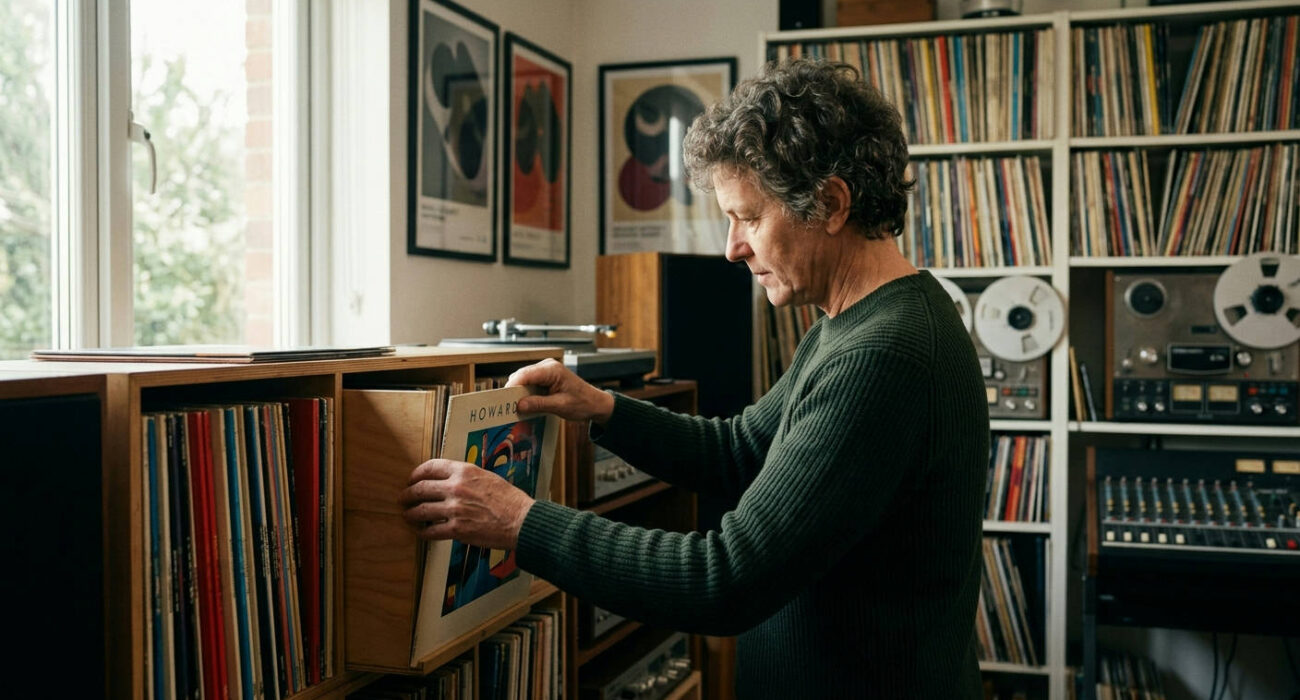
Trying to pin down every one of Howard Jones’s studio releases can feel like a mammoth task, especially for an artist who has consistently evolved for over four decades. You’re not just looking for a few hit singles; you’re seeking the complete artistic journey. That’s why we at Vinyl Gold UK have assembled the definitive Howard Jones complete studio album list, a chronological deep-dive that cuts through the noise of compilations and live recordings to focus squarely on the core studio masterpieces.
This isn’t just a list. It’s a roadmap through the career of a synth-pop pioneer who refused to be defined by his era, transitioning from a chart-topping icon into an independent innovator and a modern electronic composer. Let’s get the needle on the record and explore the full catalogue.
The 80s Synth-Pop Revolution: The First Wave
The 1980s were defined by synthesizers, and Howard Jones was a key architect of the sound. Armed with a wall of keyboards and a refreshingly positive lyrical perspective, he didn’t just write songs; he crafted anthems that captured the technological optimism of the decade.
Human’s Lib (1984): A Ground breaking Debut
It all started here. Human’s Lib wasn’t just a debut album; it was a statement of intent. Landing in early 1984, it immediately catapulted Jones to stardom in the UK, hitting the number one spot on the album charts. The sound was a vibrant tapestry of analogue synths, infectious melodies, and lyrics that encouraged self-belief and questioning the status quo.
The album is packed with era-defining singles. “New Song” was the perfect introduction, with its simple, powerful message: “Don’t be afraid to be yourself.” Then came “What Is Love?,” a more introspective but equally catchy track that became a global smash. Even the deeper cuts like “Pearl in the Shell” and “Equality” showcase a song writing maturity far beyond a typical debut. For those of us tracking the charts back then, Jones was an inescapable and welcome presence, as we explored in our look at what was number 1 in 1984.
For any vinyl collector, this album is a non-negotiable starting point. It’s the pure, unadulterated sound of early 80s British synth-pop at its finest.
- Find it on Amazon: Search for Howard Jones – Human’s Lib Vinyl
Dream into Action (1985): Conquering the Globe
If Human’s Lib made him a star in the UK, Dream into Action made him a household name worldwide, especially in America. Released just a year later in 1985, this album demonstrated staggering creative momentum. Jones expanded his sonic palette, incorporating more complex arrangements and leaning into a slightly more polished production.
This record is home to some of his most enduring hits. “Things Can Only Get Better” is a relentless burst of positivity, while “Life in One Day” encourages listeners to seize the moment. The album also features the original version of “No One Is to Blame,” a beautiful piano-led ballad that would later be re-recorded with Phil Collins producing and providing drums, becoming his biggest US hit. The US and UK versions of the album famously had different track listings, a common practice at the time to maximize regional appeal.
Dream into Action is the sound of an artist brimming with confidence, effortlessly churning out hit after hit. It represents his commercial peak and is an essential piece of any 80s music collection.
One to One (1986): Polishing the Sound
Following the massive success of Dream into Action brought immense pressure. For his third album, One to One, Jones enlisted legendary producer Arif Mardin (known for his work with Aretha Franklin, Chaka Khan, and the Bee Gees). The result was a decidedly more slick, R&B-influenced, and pop-focused sound.
The heavy layers of synths were still present but were now complemented by brass sections, funk-infused basslines, and a level of studio polish that was pure mid-80s sophistication. The lead single, “You Know I Love You… Don’t You?,” showcased this new direction perfectly. While some critics at the time felt it was a step too far into mainstream pop, the album holds up as a masterclass in production and song writing.
It marked a conscious move away from the one-man-and-his-synths image, showing Jones as a versatile musician comfortable working with a full band and world-class producers.
Navigating Changing Tides: The Late 80s and Early 90s
As the 1980s drew to a close, musical tastes began to shift. The synth-pop boom was waning, making way for alternative rock, grunge, and new dance genres. Howard Jones navigated this period with artistic integrity, evolving his sound rather than chasing trends.
Cross That Line (1989): The End of an Era
Cross That Line feels like a bridge between two worlds. It retains the polished production of his mid-80s work but also hints at the more organic, song-focused direction he would later embrace. The album is best known for the massive hit “Everlasting Love,” a powerful, anthemic track that became a staple of late-80s radio.
The album saw Jones continuing to collaborate with top-tier producers like Chris Hughes (Tears for Fears) and Ross Cullum. While it didn’t match the blockbuster sales of its predecessors, it was a mature and confident record that proved his songwriting prowess was as sharp as ever. Tracks like “The Prisoner” and “Powerhouse” showed he could still deliver compelling, synth-driven pop with depth.

In the Running (1992): An Organic Shift
By 1992, the musical world was a completely different place. In a bold and deliberate move, Howard Jones stripped back the electronics for In the Running. This album marks a significant pivot, placing his piano playing and vocal performance front and centre. The synthesizers are still there, but they serve the songs rather than defining them.
This was a conscious decision to be seen as a songwriter first and a synth wizard second, aligning with the “unplugged” ethos that was becoming popular. The album features a more adult-contemporary feel, with heartfelt ballads and sophisticated arrangements. It was a clear signal that Jones was not interested in becoming a legacy act trading on past glories; he was an active artist committed to growth.
“I thought it was time to make a record that really was about the songs and my piano playing. I had sort of been defined by the technology, and I wanted to re-define myself as a songwriter.”
This quote, paraphrased from interviews around the time, captures the album’s mission statement perfectly. It was a brave and necessary evolution.
The Howard Jones Complete Studio Album List: The Independent Years
The mid-90s marked a crucial turning point. Parting ways with major labels, Howard Jones took control of his own destiny, creating his own label, Dtox (DTP), and connecting directly with his audience. This era is defined by artistic freedom and a return to his core principles.
Working in the Backroom (1994): Taking Control
Released on his own label, Working in the Backroom is the epitome of an independent album. It was recorded in his own studio and initially sold exclusively at live shows and through his fan club. This DIY approach was years ahead of its time, pre-dating the internet-fuelled indie artist boom of the 2000s.
The music itself is a reflection of this newfound freedom. It’s a raw, honest collection of songs that feel personal and unpolished in the best way possible. Jones handles almost everything himself, returning to the one-man-band ethos of his earliest days but with a decade of experience behind him. It’s a fascinating listen for any dedicated fan, offering a direct, unfiltered look into his creative process.
Angels & Lovers (1997) / People (1998): A Tale of Two Releases
This album’s release history is a bit unique. It first appeared in Japan in 1997 under the title Angels & Lovers. A year later, it was re-tooled and released in the UK and US as People. Both versions showcase a sound that blends his classic pop sensibilities with smooth, R&B-influenced production.
The album features collaborations with bassist Pino Palladino and producer Andy Gray. It’s a warm, soulful record with tracks like “We’re in This Together” and “If You Love” highlighting a more reflective and romantic side of his song writing. This project demonstrated his enduring international appeal, particularly in the Japanese market, and his ability to craft sophisticated pop music outside the major label machine.
Exploring New Sonic Territories in the 21st Century
The new millennium saw Howard Jones continue to explore and experiment. Unburdened by commercial expectations, he was free to pursue projects that were artistically fulfilling, whether that meant stripping everything down to the bare essentials or diving headfirst back into cutting-edge electronics.
Piano Solos (For Friends and Loved Ones) (2001): The Virtuoso
For anyone who ever doubted his musicianship, Piano Solos is the definitive answer. This purely instrumental album is a stunning showcase of his classical training and profound skill as a pianist. It’s an intimate, beautiful, and deeply personal collection of original compositions.
This wasn’t a commercial play; it was a pure artistic statement. The album allows the listener to appreciate the melodic and harmonic complexity at the core of his song writing, free from lyrics and production. It’s the kind of project an artist makes for the love of the craft, and it remains a hidden gem in the Howard Jones complete studio album list.
Revolution of the Heart (2005): A Return to Electronics
After a decade of more organic and piano-focused work, Revolution of the Heart was a triumphant return to a full-blown electronic sound. But this wasn’t an exercise in 80s nostalgia. Jones embraced modern production techniques, software synths, and contemporary dance music elements to create an album that was both forward-looking and unmistakably his.
Tracks like “Just Look at You Now” and “The Presence of Your Love” are brimming with the energy and optimism of his early work but are filtered through a 21st-century lens. The album proved that his passion for electronic music was as strong as ever and that he could still innovate within the genre he helped popularize.
The Ambitious Modern Electronic Trilogy (2015-2022)
In the most recent phase of his career, Howard Jones embarked on his most ambitious project yet: a multi-album electronic trilogy designed to be a fully immersive experience. Comprising Engage, Transform, and Dialogue, this body of work cemented his status as a true pioneer.

Engage (2015): The Multimedia Experience
The first part of the trilogy, Engage, was conceived as more than just an album. It was a multimedia spectacle designed to be performed live with interactive visuals, ballet, and contemporary dance. Inspired by everything from philosophy to his love of the sea, the project pushes the very definition of what an album can be in the modern era.
The music is cinematic and largely instrumental, blending sweeping synthesizer soundscapes with powerful electronic beats. It was a bold, high-concept project that challenged his audience and demonstrated an artist who, over 30 years into his career, was still taking massive creative risks.
Transform (2019): A Modern Synth Collaboration
For the second instalment, Jones joined forces with a modern master of electronic music, BT (Brian Transeau). The collaboration on Transform is a masterstroke, creating a perfect synthesis of classic synth-pop and contemporary electronica. The album is packed with energetic, uplifting tracks that feel both timeless and completely current.
Songs like “The One to Love You” and the title track “Transform” are pure, exhilarating synth-pop, proving that the genre is alive and well in the right hands. The partnership with BT bridged a generational gap, connecting one of the original architects of synth music with one of its modern titans. According to an interview with Billboard around the album’s release, the collaboration was born from mutual respect and a shared passion for synthesis.
Dialogue (2022): Completing the Vision
The trilogy concluded with 2022’s Dialogue. This album brought the project’s conceptual threads together, focusing on communication and human connection in an increasingly divided world. The production is crisp and modern, with Jones’s songwriting and vocal performance as strong as they’ve ever been.
Dialogue was met with widespread critical acclaim, praised for its intelligent lyrics and sophisticated electronic arrangements. It served as the perfect capstone to the trilogy, a cohesive and powerful body of work that stands as one of the major achievements in his later career. It solidified that the Howard Jones complete studio album list is not just a relic of the past but a living, breathing, and evolving entity.
- Find the Trilogy on Amazon: Search for Howard Jones – Dialogue CD
Your Guide to Collecting: Vinyl, CDs, and Beyond
Exploring this rich discography is a rewarding experience for any music fan. Whether you’re spinning vinyl or streaming digitally, there are different ways to approach collecting and appreciating his work.
Navigating the Howard Jones Complete Studio Album List on Vinyl
For vinyl enthusiasts, the 80s albums are the holy grail. Original pressings of Human’s Lib and Dream into Action are relatively easy to find and sound fantastic, capturing the warm analogue depth of the original recordings. When buying second hand, always check the vinyl for scratches and the sleeve for wear.
In recent years, companies like Cherry Red Records have reissued deluxe versions of his early albums on vinyl, often with remastered audio and bonus tracks. These are excellent options for those who want pristine copies. A quality turntable is essential to get the most out of these records; if you’re just starting, consider looking into the best turntables under £300 to build a solid foundation for your system.
The Digital and CD Catalogue
The CD format is perfect for completists. Many of Howard Jones’s albums have been released in deluxe, multi-disc CD editions that are packed with B-sides, remixes, and previously unreleased demos. These offer an incredible deep-dive into his creative process during his most prolific periods.
Of course, in 2026, streaming services provide instant access to nearly the entire Howard Jones complete studio album list. This is a fantastic way to explore the lesser-known albums from his independent years or to listen to the modern trilogy in its entirety before committing to a physical purchase.
The Legacy and Enduring Influence of Howard Jones
Howard Jones’s influence extends far beyond his chart statistics. He was one of the first artists to bring synthesizers to the forefront of pop music, not as cold, robotic instruments, but as tools for creating warm, human, and emotionally resonant songs.
His lyrical focus on positivity, mindfulness, and self-empowerment set him apart from the angst and cynicism of many of his peers. This philosophical underpinning has given his music a timeless quality that continues to resonate with new generations of listeners.
Unlike many of his contemporaries, he has never stopped creating, touring, and pushing himself musically. His journey from 80s pop icon to independent trailblazer and modern electronic artist is a testament to his artistic integrity and relentless creativity. You can track his incredible career journey and discography details on his official website.
Final Thoughts on the Discography
Charting the Howard Jones complete studio album list reveals a remarkable artistic trajectory. It’s a story of a musician who defined a sound, refused to be trapped by it, and continuously reinvented himself for over 40 years. From the synth-pop explosions of the 80s to the introspective piano work and the ambitious electronic projects of the 21st century, his catalogue is rich, diverse, and consistently brilliant.
So go beyond the greatest hits. Pick an era that intrigues you—the independent years, the modern trilogy—and dive in. You’ll discover a body of work crafted with intelligence, heart, and an unwavering belief in the power of music.