
Few artists in music history command the kind of cultural authority that Eminem does. From the underground streets of Detroit to the top of the global charts, Marshall Mathers built a legacy that spans nearly three decades. His albums don’t just document a career — they document a life. This is the definitive guide to every Eminem studio album, ranked and reviewed, with everything you need to know about the man behind the mic in 2026.
What Everyone Is Asking About Eminem Right Now
Is Eminem touring in 2026?
As of April 2026, no official tour dates exist. However, the buzz around a potential world tour — particularly a UK stadium run — remains loud. Rumours of a Wembley Stadium appearance in June 2026 continue to circulate, with some sources suggesting multiple European dates. Eminem.Pro His most recent full international tour, the Rapture Tour in 2019 alongside Kendrick Lamar, included major European stadium dates and a landmark show at Twickenham Stadium. SeatUnique His 2024 headlining sets — including a stunning performance at the Austin Grand Prix — only amplified global demand. If Eminem announces dates, expect them to sell out within minutes.
What is Eminem’s latest album?
The Death of Slim Shady (Coup de Grâce), released on 12 July 2024, marks his most recent studio album. Thematically, it represents the symbolic retirement of the Slim Shady alter ego — a persona that defined his most chaotic and provocative work. The album sparked debate among fans and critics alike, dividing opinion over whether it truly closed a chapter or simply teased another one.
How many years sober is Eminem?
This is a milestone worth celebrating. On 4/20, Eminem posted a photo of himself holding his sobriety chip, marking 18 years of sobriety Black America Web — one of the most remarkable turnarounds in music history. After a near-fatal overdose in 2007, he woke up in hospital and made the decision that changed everything. Celeb Tattler He has since described treating sobriety like a superpower, openly proud of what he overcame. Just Jared Fellow artists including Big Sean and Questlove flooded his post with support, and fans worldwide shared their own stories inspired by his journey.
Will there be an 8 Mile 2?
The short answer: not in the traditional sense. 50 Cent confirmed he is developing the 8 Mile film into a television series, describing it as something audiences should expect to be just as big as the feature film. Eminem.Pro However, Eminem’s longtime manager Paul Rosenberg firmly stated on Twitter: “There is no 8 Mile sequel. It does not and won’t exist.” HotNewHipHop The distinction matters — 50 Cent’s vision leans closer to the Peacock model used for Bel-Air, a modern reimagining rather than a direct continuation. Collider Whether Eminem lends creative input beyond his approval remains unknown, but the project keeps the conversation alive.
-
 Buy Now£28.69
We earn a commission if you make a purchase, at no additional cost to you.
06/28/2026 11:28 pm GMT -
 Buy Now£50.86
We earn a commission if you make a purchase, at no additional cost to you.
06/28/2026 10:23 pm GMT





The Complete Eminem Album Rankings
| Year | Album Title | Key Fact |
|---|---|---|
| 1996 | Infinite | Underground debut; rare and poetic |
| 1999 | The Slim Shady LP | The breakthrough; introduced Slim Shady |
| 2000 | The Marshall Mathers LP | Often cited as the greatest rap album ever |
| 2002 | The Eminem Show | Peak commercial success and political era |
| 2004 | Encore | Controversial, comedic turn |
| 2009 | Relapse | Horrorcore comeback after five-year hiatus |
| 2010 | Recovery | Transition to stadium pop-rap and sobriety |
| 2013 | The Marshall Mathers LP 2 | Nostalgic return to technical roots |
| 2017 | Revival | Most politically charged and polarizing work |
| 2018 | Kamikaze | Surprise response to critics of Revival |
| 2020 | Music to Be Murdered By | Hitchcock-inspired; features “Godzilla” |
| 2024 | The Death of Slim Shady | Retirement of Slim Shady; latest major release |
1996 — Infinite
Before the world knew his name, Eminem pressed 1,000 copies of Infinite and sold them out of his car. This underground debut rarely gets the attention it deserves, yet it reveals everything about where Marshall Mathers began. Technically, it holds its own — the rhyme schemes are intricate, the flows confident, and the hunger unmistakable. However, the album lacks the rage and dark wit that later defined him. Critics at the time dismissed it, comparing him too closely to Nas and AZ. Indeed, the Slim Shady persona had not yet emerged, so the record sounds almost like a different artist. Still, Infinite rewards the curious listener. Furthermore, it shows a young Eminem wrestling with poverty and self-doubt in Detroit, themes that never left his music. Original copies fetch significant money today, and its rarity only adds to its legend. Moreover, the album’s poetic lyricism foreshadows the technical mastery that would later make “Rap God” possible. It ranks last not because it fails, but because it represents a starting point rather than a destination. Consider Infinite the raw material — before the fire was lit.
2004 — Encore
Encore divides fans more sharply than almost any other Eminem release. Following the massive commercial weight of The Eminem Show, this album took a deliberately comedic and chaotic turn. Tracks like “Rain Man” and “Ass Like That” felt like parody rather than progression, and critics accused Eminem of coasting. Nevertheless, the album still sold millions — a testament to his reach even at a creative low. Interestingly, it also contains moments of genuine brilliance. “Mockingbird,” a heartfelt letter to his daughter Hailie, stands among his most emotionally raw recordings. Similarly, “Like Toy Soldiers” offered a reflective, almost weary look at hip-hop beef culture. The problem with Encore is its inconsistency — brilliant tracks sit uncomfortably beside juvenile filler. Furthermore, Eminem himself has since acknowledged that he was not in the best creative or personal headspace during this period. Substance abuse clouded his judgment and output. In hindsight, Encore functions as a document of a man beginning to unravel before eventually hitting rock bottom. It ranks near the bottom, but not without merit.
2017 — Revival
Revival remains the most controversial chapter in the Eminem catalogue. Released in December 2017, the album leaned heavily into political commentary, taking aim at Donald Trump across multiple tracks. Additionally, it featured a string of pop collaborations — Beyoncé, Ed Sheeran, Pink — that felt jarring against his Detroit roots. Critics accused Eminem of losing the plot entirely. Furthermore, the album’s production felt bloated and unfocused, a sharp departure from his tightest work. Even loyal fans struggled to defend it. However, Revival deserves some reconsideration. Tracks like “Walk on Water” offered a vulnerability rarely heard from him — a man publicly questioning whether he still had what it takes. That kind of honesty resonates. Moreover, the political passion was genuine even if the execution stumbled. The backlash to Revival directly inspired its follow-up, and in that sense, the album served an important purpose. It forced Eminem to confront criticism head-on rather than ignore it. Ultimately, Revival ranks low — but its emotional honesty earns it more credit than the internet typically allows.
2018 — Kamikaze
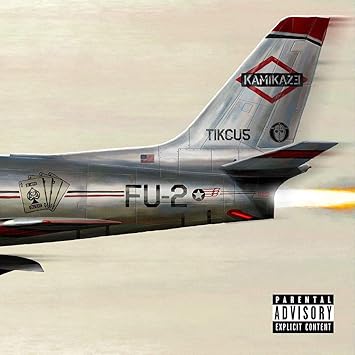
Few surprise drops in hip-hop history hit as hard as Kamikaze. Released without warning in August 2018, Eminem responded directly to critics of Revival and took aim at a generation of mumble rappers. The album opened with breathtaking speed and precision. Consequently, it immediately silenced many who had written him off. Tracks like “The Ringer” and “Not Alike” featured some of the fastest, most technically demanding verses of his career. Furthermore, the Machine Gun Kelly beef — sparked by Kamikaze — became one of 2018’s defining hip-hop moments, with Eminem‘s diss track “Killshot” accumulating hundreds of millions of streams. However, the album also carries flaws. Some targets felt small or personal in ways that diminished the impact. Moreover, at 13 tracks, it occasionally felt like a reaction rather than a fully formed artistic statement. Still, Kamikaze proved something crucial — Eminem still carried elite-level lyricism when sufficiently motivated. This is not a legacy record, but it is an undeniably exciting one.
2009 — Relapse
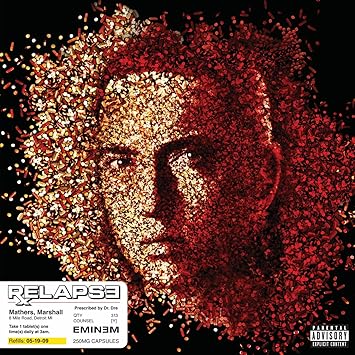
Relapse is, without question, one of the most underrated albums in Eminem‘s catalogue. After a five-year hiatus — during which addiction nearly killed him — this horrorcore return announced that he was back with something to prove. Produced almost entirely by Dr. Dre, the dark, cinematic beats gave Eminem room to explore his most disturbing alter egos. Critics initially pointed to the exaggerated accents and shock content as weaknesses. However, revisiting Relapse years later reveals a more layered achievement. The album processes trauma through dark satire — a coping mechanism dressed up as entertainment. Furthermore, songs like “Beautiful” crack the horror open to reveal genuine tenderness beneath. This is Eminem using art to survive. The production work from Dre remains some of his finest, with tracks like “3 A.M.” building genuine cinematic dread. Additionally, Relapse marked the first real documentation of his sobriety journey in album form. It deserves far more respect than it typically receives. Consider it the wound before the healing — raw, uncomfortable, and entirely necessary.
2013 — The Marshall Mathers LP 2
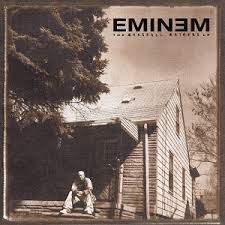
Few sequels live up to their predecessors, but The Marshall Mathers LP 2 came remarkably close. Released in November 2013, the album debuted at number one in multiple countries and earned Eminem a Grammy for Best Rap Album. The Rick Rubin-influenced production gave it a harder, more stripped-back sound. Consequently, it felt both nostalgic and fresh simultaneously. Tracks like “Rap God” shattered records — its six-minute assault of rapid-fire rhymes cemented Eminem as technically peerless in his generation. Furthermore, “The Monster” with Rihanna became a global smash, demonstrating his continued commercial instinct. The album also features thoughtful call backs to themes from the original Marshall Mathers LP, giving long-time fans moments of genuine payoff. However, at times it feels more like a celebration of past glories than a bold new direction. Nevertheless, that celebration carries real craftsmanship. Moreover, Eminem uses the record to wrestle publicly with his own mythology. It ranks among his best work — a technically dazzling record that rewards close listening.
2020 — Music to Be Murdered By
Another surprise drop, another statement of intent. Music to Be Murdered By, released in January 2020, arrived with an Alfred Hitchcock-inspired aesthetic and zero warning. The album featured Eminem at his most playful and his most ferocious within the same track list. Moreover, “Godzilla” featuring Juice WRLD became an enormous hit, partly because it broke the Guinness World Record for fastest rap verse. Consequently, a new generation of listeners discovered Eminem through the track. The production spans a wide range — from jazz-tinged beats to hard industrial bangers — and largely holds together. Furthermore, the album balances introspection with jaw-dropping technical performance. Guest appearances from 50 Cent, Anderson .Paak, and others add textural variety. However, Music to Be Murdered By occasionally stretches too long, losing momentum in its second half. Nevertheless, it represents a genuinely excellent late-career album. Eminem clearly still enjoys the craft, and that energy carries throughout. It stands as proof that legacy artists can still surprise when they choose to.
2010 — Recovery

Recovery marks one of the most important turning points in Eminem‘s career. Released in June 2010, the album documented his journey from addiction to sobriety with remarkable directness. Tracks like “Not Afraid” and “Space Bound” gave listeners access to a more emotionally open Eminem than anyone had previously seen. Furthermore, “Love the Way You Lie” with Rihanna became one of the biggest songs of the decade, spending seven weeks at number one in the United States. Commercially, Recovery was his biggest success. Artistically, its polished pop-rap production split opinion — some felt he softened too much, while others appreciated his accessibility. However, the album’s best moments — particularly “Going Through Changes” and “25 to Life” — carry genuine emotional weight. Moreover, the record introduced his music to a stadium-sized mainstream audience that had never engaged with his darker work. Recovery also established Eminem as a symbol of resilience, not just lyricism. It deserves its high ranking not despite its commercial nature, but because of what that accessibility achieved.
2002 — The Eminem Show
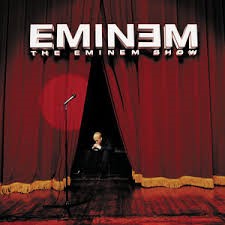
The Eminem Show often gets overlooked between his two greatest records, but it holds up brilliantly. Released in May 2002, the album arrived at the peak of Eminem‘s mainstream power. Furthermore, it represented his most politically engaged work to that point — “White America” and “Square Dance” tackled censorship and the Iraq War with genuine fury. The production, largely self-handled, demonstrated his growing ambitions behind the boards as well as behind the mic. Moreover, “Cleanin’ Out My Closet” offered one of his most brutally honest performances, confronting his relationship with his mother without restraint. “Without Me” remains one of the most entertaining rap tracks ever recorded — absurd, sharp, and perfectly constructed. Additionally, the album sold over 27 million copies worldwide, placing it among the best-selling hip-hop records in history. The Eminem Show endures because it captures a specific cultural moment — a superstar fully aware of his power, choosing to challenge rather than conform. It sits just below his twin peaks, but only barely.
1999 — The Slim Shady LP
Everything changed with The Slim Shady LP. Released in February 1999 under Dr. Dre‘s Aftermath label, the album introduced the world to Slim Shady — a deliberately offensive, pitch-black alter ego designed to expose hypocrisy and discomfort. Furthermore, the production was immaculate, with Dre’s beats giving Eminem a platform that matched his ambition. Tracks like “My Name Is” delivered shock value wrapped in genuine wit, while “Rock Bottom” laid bare the desperation of poverty in Detroit. Moreover, “97 Bonnie & Clyde” remains one of the most disturbing and inventive storytelling tracks in rap history. The album earned Eminem his first Grammy Award and announced him as the most compelling new voice in hip-hop. Additionally, it sparked enormous controversy — Parents Music Resource Center groups, politicians, and cultural commentators all weighed in. That attention only amplified its reach. The Slim Shady LP ranks this high because it achieved the impossible — it made a white rapper from the Midwest the most talked-about artist on the planet, and it earned that attention entirely on merit.
2000 — The Marshall Mathers LP
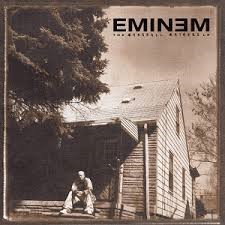
Nothing in Eminem‘s catalogue touches The Marshall Mathers LP. Released in May 2000, it sold nearly two million copies in its first week in the United States alone — a record-breaking achievement that stunned the industry. Moreover, the album operates on every level simultaneously. It is technically brilliant, culturally explosive, emotionally devastating, and frequently hilarious. Tracks like “Stan,” “The Way I Am,” and “Kim” represent three entirely different artistic registers, yet sit together without contradiction. Furthermore, “Stan” invented a word now used across every language — an extraordinary cultural footprint for a single song. Eminem uses the album to process fame, poverty, rage, and identity with an honesty that felt genuinely unprecedented. The production from Dr. Dre and the Bass Brothers remains some of the greatest in hip-hop history. Additionally, the controversy the album generated — lawsuits, protests, international bans — only demonstrates how deeply it cut. Revisiting it in 2026, The Marshall Mathers LP still sounds startling. It deserves every superlative it has ever received. This is the definitive Eminem record — and one of the greatest albums ever made, in any genre.
2024 — The Death of Slim Shady (Coup de Grâce)
The Death of Slim Shady closes the chapter on one of rap’s most iconic alter egos. Released on 12 July 2024, the album deliberately positions itself as a farewell to Slim Shady — the provocateur that launched Eminem‘s career and defined his most polarising work. Furthermore, the title functions as both a creative statement and a biographical reckoning. At 51, Marshall Mathers appears to be asking what remains when the mask comes off entirely. Production-wise, the album carries sharp, aggressive beats that reward repeat listens. Tracks featuring longtime collaborators from the Detroit hip-hop world add texture and authenticity. Moreover, Eminem‘s technical ability remains elite — his breath control, internal rhyme schemes, and syllable density still outpace artists half his age. The album is bold and occasionally exhausting, much like Slim Shady himself. Critics debated whether it truly buried the character or simply winked at the audience. Nevertheless, the ambition behind the concept elevates it. Additionally, the album’s release solidified Eminem‘s continued relevance in a streaming era that often overlooks veteran artists. Whether it represents an ending or a reinvention, only time will tell.
A Legacy That Refuses to Stay Still
Few artists have matched the range, consistency, and cultural impact of Eminem. Across nearly 30 years and twelve studio albums, Marshall Mathers has documented addiction and recovery, poverty and superstardom, rage and tenderness — often within the same track. His story is inseparable from the story of modern hip-hop itself. As he celebrates 18 years of sobriety, with tour rumours building and a potential 8 Mile television series in development, Eminem remains one of the most compelling figures in music. Whatever he does next, one thing is certain — the world will be watching.