
The most popular advice about Crosley turntables is too blunt to be useful. One side says they’re all rubbish and will wreck your records. The other says they’re perfectly fine because vinyl is meant to be fun, not fussy. Both views miss the point.
A proper Crosley turntable review has to separate casual home use from serious listening, and both of those from event work. A suitcase player in a flat kitchen is one thing. A deck expected to behave through a wedding drinks reception or a private party in Kent is something else entirely.
That difference matters because people don’t buy turntables for the same reason. Some want a charming first record player that looks good on a shelf and plays a few LPs on a Sunday afternoon. Others want a reliable machine that respects the records, connects properly to the rest of their system, and doesn’t become the weak point the moment standards rise.
Introduction Beyond the Hype and Hate
If you read enough online opinion, Crosley becomes either a retro icon or a punchline. Neither is fair on its own. The brand covers everything from novelty-style portables to more serious deck designs, so one sweeping verdict doesn’t help anyone choose well.
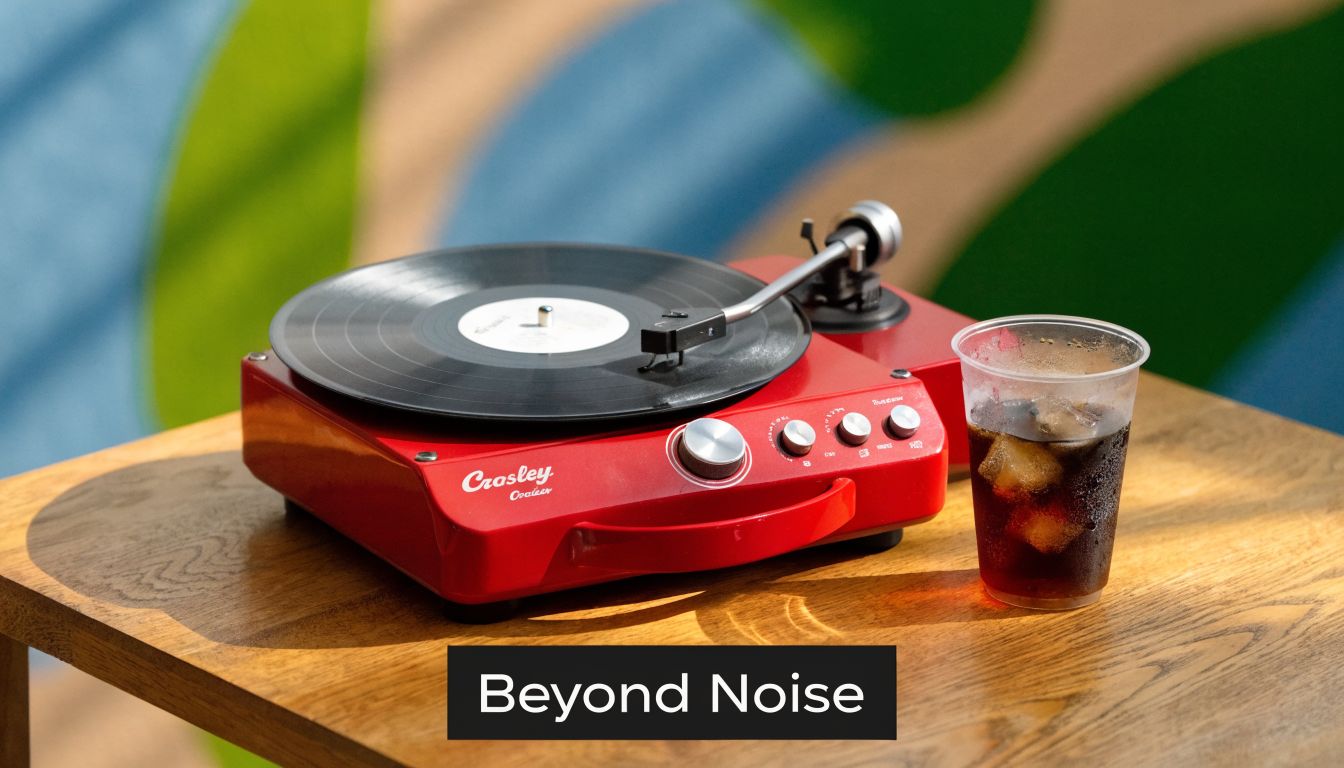
That matters even more in London and Kent, where people often buy a turntable with mixed expectations. They want something stylish at home, but they also start wondering whether it could handle a birthday, a garden party, or a wedding corner setup. Most reviews never answer that real-world question. They judge Crosley as hi-fi gear and stop there.
I come at this from the practical side of music playback. If a deck sounds pleasant in a living room but struggles with stable output, transport, setup fuss, or record care, that’s not a small detail. It changes whether the turntable is a harmless beginner choice or a bad investment. That same thinking sits behind the focus on music that feels personal and event presentation that feels polished, which you can see in this visual from a London vinyl events perspective.

Online hate often treats every Crosley like the cheapest suitcase player. That’s lazy reviewing. The real question is which Crosley, for what use, and at what compromise.
For casual listeners, some Crosley models can make sense. For anyone who cares about vinyl safety, stable playback, and dependable sound, the answer gets narrower very quickly. For DJs and event organisers, it narrows further.
Understanding the Crosley Spectrum From Cruiser to C-Series
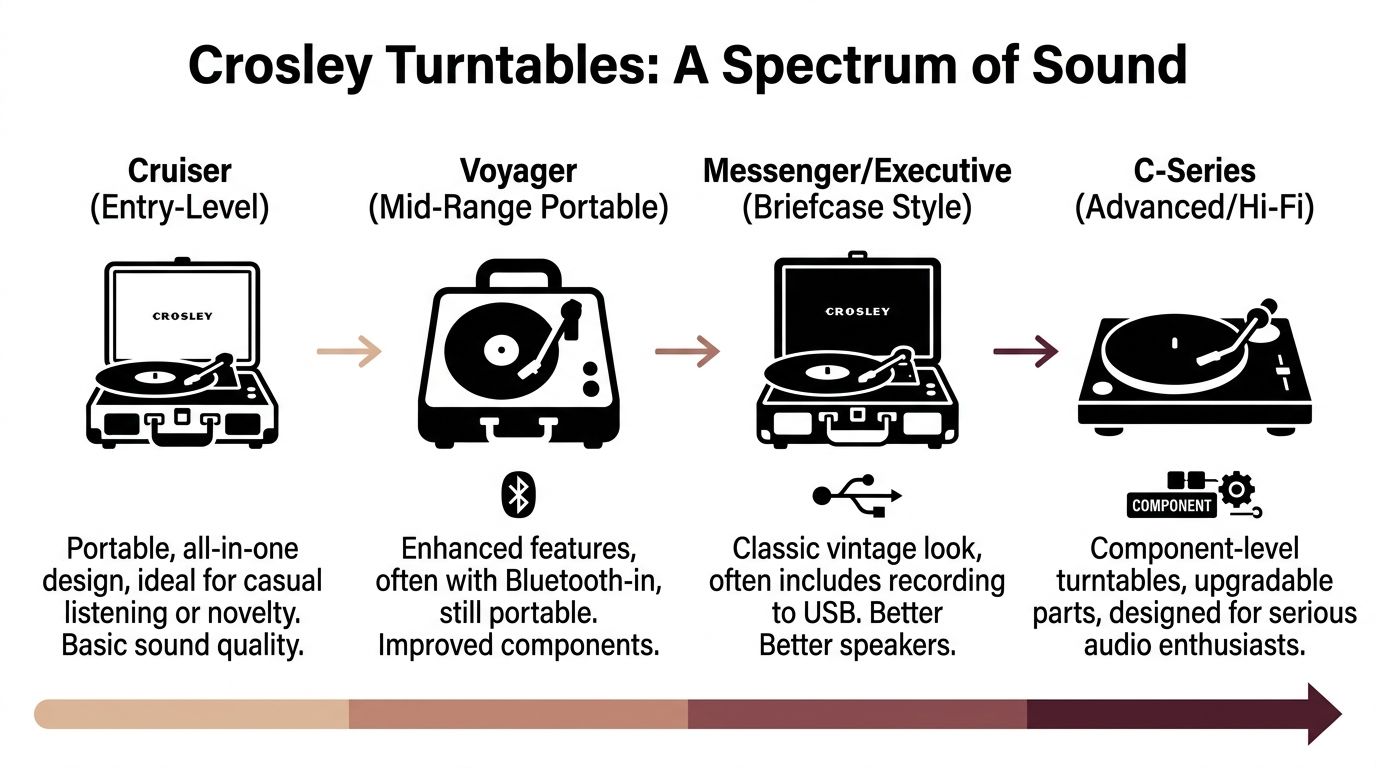
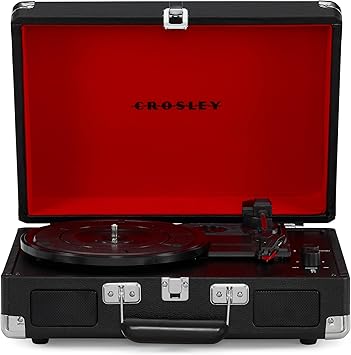
The first thing to get straight is that Crosley is not one turntable. Saying “I’m looking at a Crosley” is like saying “I’m looking at a Ford”. That could mean a tiny city car or something much more capable. Crosley’s range works the same way.
-
 Buy Now£200.00
We earn a commission if you make a purchase, at no additional cost to you.
06/28/2026 10:24 pm GMT -
 Buy Now£78.95
We earn a commission if you make a purchase, at no additional cost to you.
06/28/2026 10:23 pm GMT -
 Buy Now£88.99
We earn a commission if you make a purchase, at no additional cost to you.
06/28/2026 10:22 pm GMT

The portable models and what they’re really for
The suitcase and briefcase-style players exist for convenience and visual appeal. They’re compact, easy to move, and simple for a beginner to understand. If someone wants a decorative, all-in-one unit for occasional records, that appeal is obvious.
That category usually attracts people who care about these things:
- Ease over tweaking: they don’t want to learn cartridge setup or separate amplifiers.
- Compact footprint: they want one unit on a shelf, not a full hi-fi chain.
- Retro styling: the look is part of the purchase, not an afterthought.
There’s nothing wrong with that as long as the buyer understands the trade-off. Portable Crosley models are convenience products first. Sound quality and record care are not where they compete best.
The C-Series is a different conversation
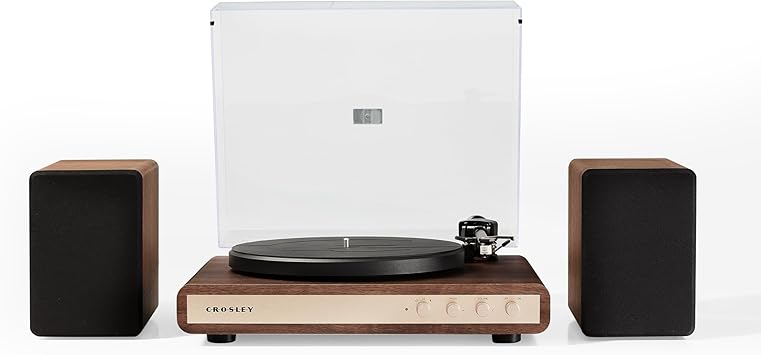
Once you get to models such as the C6 and C100, you’re no longer talking about the same kind of product. These are much closer to entry-level component turntables. According to Record Builds’ overview of Crosley turntables, the higher-end C6 and C100 use Audio-Technica AT-3600L moving magnet cartridges and include adjustable counterweight and anti-skate controls on aluminium S-shaped tonearms. That gives them tracking force calibration to 1.8g ±0.5g, along with pitch accuracy of ±10% and wow-and-flutter below 0.2%.
Those details matter because they move the deck out of toy territory and into proper starter hi-fi territory.
| Model family | Best fit | Main strength | Main limitation |
|---|---|---|---|
| Cruiser | Casual novelty listening | Portable all-in-one simplicity | Poor long-term record care and weak sound |
| Voyager | Style-led everyday use | Extra convenience features | Still compromised as a serious deck |
| Messenger or Executive | Vintage aesthetic setups | Better living-room friendliness | Built around convenience, not precision |
| C-Series | Beginner hi-fi buyers | Adjustable setup and better cartridge | Still not event-grade kit |
Buying rule: Don’t review the Cruiser and the C6 as if they’re the same machine with different colours. They serve different users and deserve different standards.
Why this distinction changes the verdict
If you judge the whole brand by the worst portable models, you’ll miss the fact that some Crosley decks are at least trying to do things properly. If you judge the whole brand by the better C-Series decks, you’ll understate the problems of the cheaper units.
That’s why the honest answer is split. Some Crosley turntables are decorative lifestyle products. Some are valid beginner decks. None should be bought blindly just because the badge is the same.
A Practical Look at Sound and Build Quality
The most common complaints about cheap Crosley players aren’t snobbery. They come from the way the deck is built and the way the stylus meets the groove.
Why tracking force matters more than beginners realise
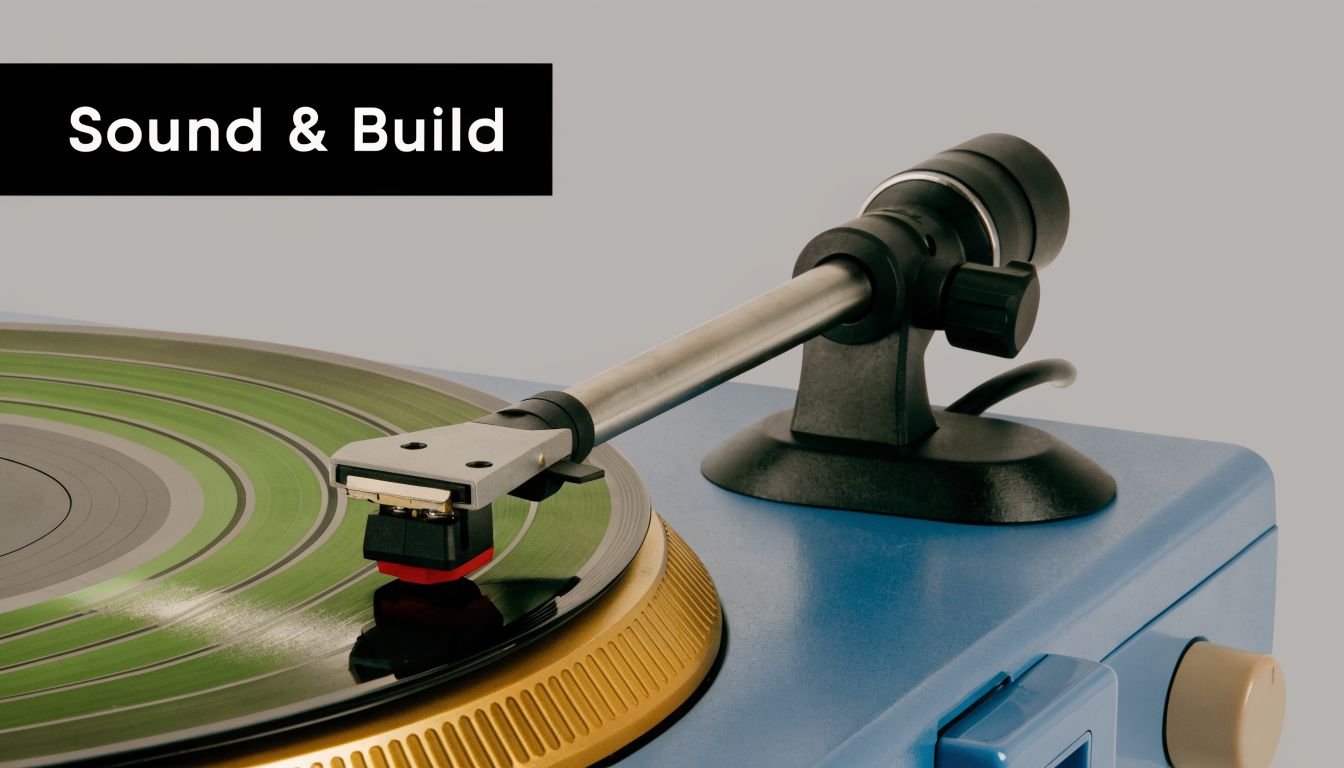
Think of the stylus like the tip of a pen. A good pen glides and follows the paper cleanly. Press too hard and the nib digs in, drags, and starts damaging the surface. Turntables work on the same principle.
What Hi-Fi’s review of the Crosley Cruiser points to the core issue. The Cruiser often exceeds the recommended 1.5 to 2.5g tracking force range and is estimated at 4 to 5g. That excessive pressure from the ceramic stylus can cause audible distortion and can physically degrade a record groove after 10 to 20 plays, potentially cutting record lifespan by up to 50% compared with a properly calibrated turntable.
That’s not an abstract audiophile complaint. It affects anyone with records they’d like to keep in decent condition.
What you hear from a light, all-in-one deck
Cheap portable turntables also struggle with the parts around the stylus. The platter is light, the cabinet is light, the speakers are tiny, and the whole unit is trying to do too much in one box.
The result usually sounds like this:
- Bass feels thin: kick drums and basslines lose weight.
- Vocals can harden up: especially when the record gets busier.
- Timing feels unsettled: sustained piano notes and held chords expose it quickly.
- Volume runs out early: the internal speakers are fine for background use, not for room-filling playback.
That kind of sound can still be enjoyable at low expectations. Put on an older soul single while cooking and it may feel charming enough. Sit down to listen closely, or compare it to a better entry-level deck through proper speakers, and the limits become obvious fast.
The issue isn’t that portable Crosleys make no sound. It’s that they make enough sound to be fun, but not enough to show what the record actually contains.
Build quality and daily use
Build quality on the cheaper models also affects how they behave in real rooms. Light cabinets pick up vibrations more easily. A less stable lid and body can feel flimsy over time. The controls tend to prioritise simplicity rather than precision.
For a beginner, that creates a strange trap. The turntable seems friendly because there’s little to adjust, but that same lack of adjustment means you can’t properly correct the things that matter. If tracking is heavy, if the sound is rough, if the deck is resonating with the surface underneath, there’s only so much you can do.
The better Crosley component decks improve on that. They’re still budget-minded, but they at least give the user some control over setup. That one change separates “live with its flaws” from “dial it in as well as the design allows”.
Can You Use a Crosley for DJing or Events
For home listening, the answer depends on which Crosley you buy and how demanding you are. For DJing or events, the answer is much less forgiving.
The problem isn’t just sound quality. Events expose every weak point in a turntable. Transport, setup speed, vibration, output level, mixer compatibility, and consistency all matter. A deck can feel acceptable at home and still be a poor choice the moment guests arrive.
What events ask from a turntable
At a wedding or party, a turntable doesn’t get judged like a living-room object. It gets judged like working equipment.
A usable event deck needs to do these things reliably:
- Connect cleanly to a wider system: mixers, speakers, and venue sound all have to cooperate.
- Hold stable playback: footfall, tables, and temporary staging create vibration issues.
- Travel well: cases, loading, and repeated setup punish fragile gear.
- Behave predictably under pressure: no awkward surprises during key moments.
If you’re trying to understand why these details matter, this guide to understanding audio visual equipment for events is useful because it frames sound gear as part of a complete event system rather than an isolated product.
Why even the better Crosleys still fall short
Many general reviews stop short. They may note that a C-Series deck is much better than a suitcase model, which is true, but that still doesn’t make it a professional event tool.
A source highlighting the gap in UK-focused coverage notes a 15% rise in event vinyl use, while also pointing out that suitcase models are a poor fit for DJs and that even the higher-end C-line models lack confirmed UK 230V compatibility and proven integration with professional mixers, which makes them a risky option for weddings and corporate events in London and Kent, as discussed in this UK event DJ suitability reference.
That matches the practical view from event work. Even if a Crosley C6 or C100 is decent as a home starter deck, you’re still taking a chance if you ask it to perform like dedicated DJ gear. The visual side may be attractive, and the idea of a vinyl corner can look great in photos like this DJ booth image used in event branding, but looks don’t solve signal chain and reliability issues.
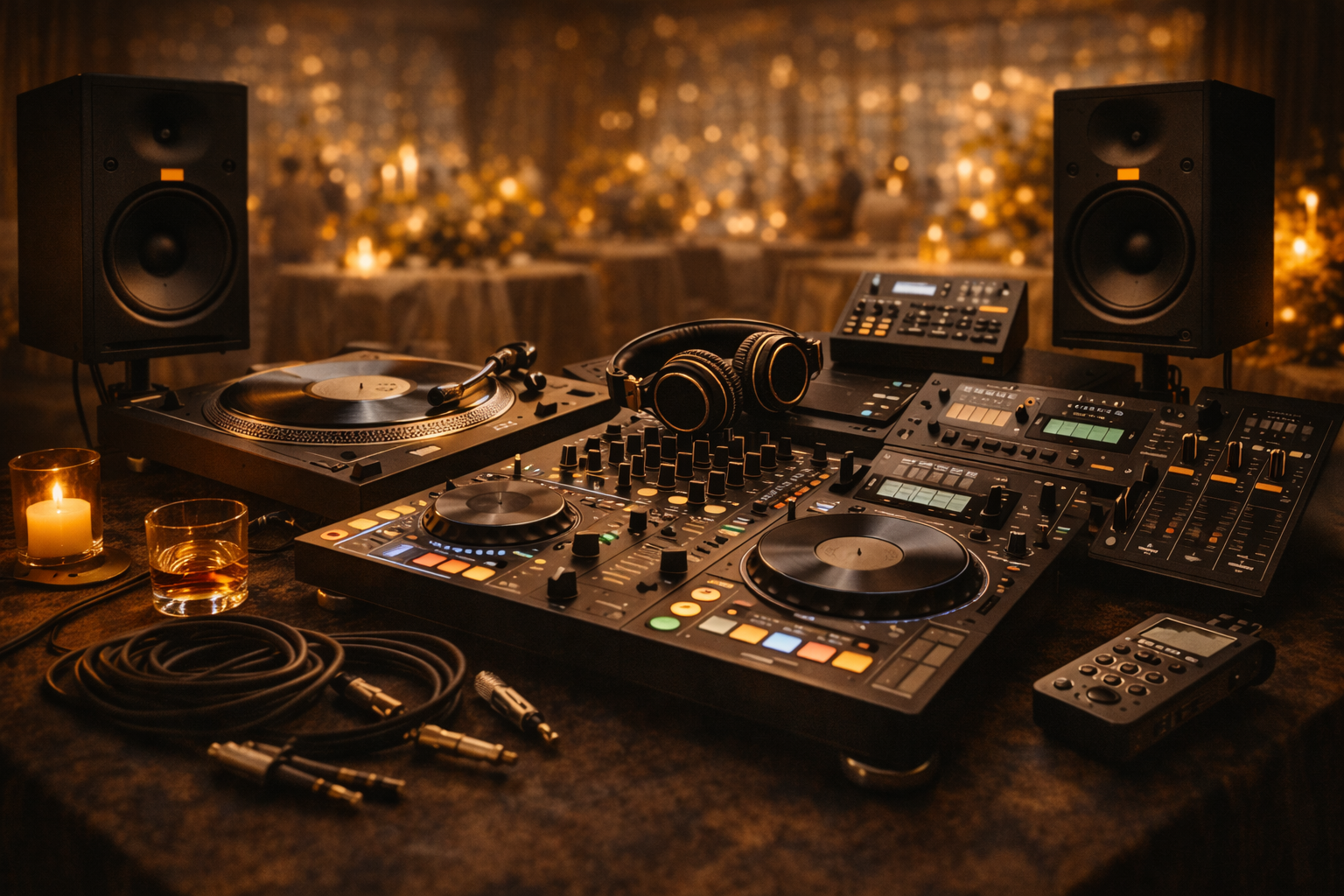
A wedding deck has one job. Play cleanly, predictably, and without drama. If there’s any doubt about power compatibility or mixer integration, it doesn’t belong in a high-stakes event setup.
The short answer for real events
For ambience at home, some Crosley models are fine. For a paid event, client event, or wedding, they’re the wrong category of gear.
That’s especially true for suitcase players. They’re not built for the demands of public playback, and they’re not kind to records you might want to keep spinning for years. The better C-Series models earn more respect, but they still sit in the entry-level home bracket, not the professional event bracket.
Setup Tips and Fixing Common Crosley Problems
If you already own a Crosley, writing it off immediately isn’t always necessary. You can improve the experience by setting it up carefully and being realistic about what it can and can’t do.
Start with the basics
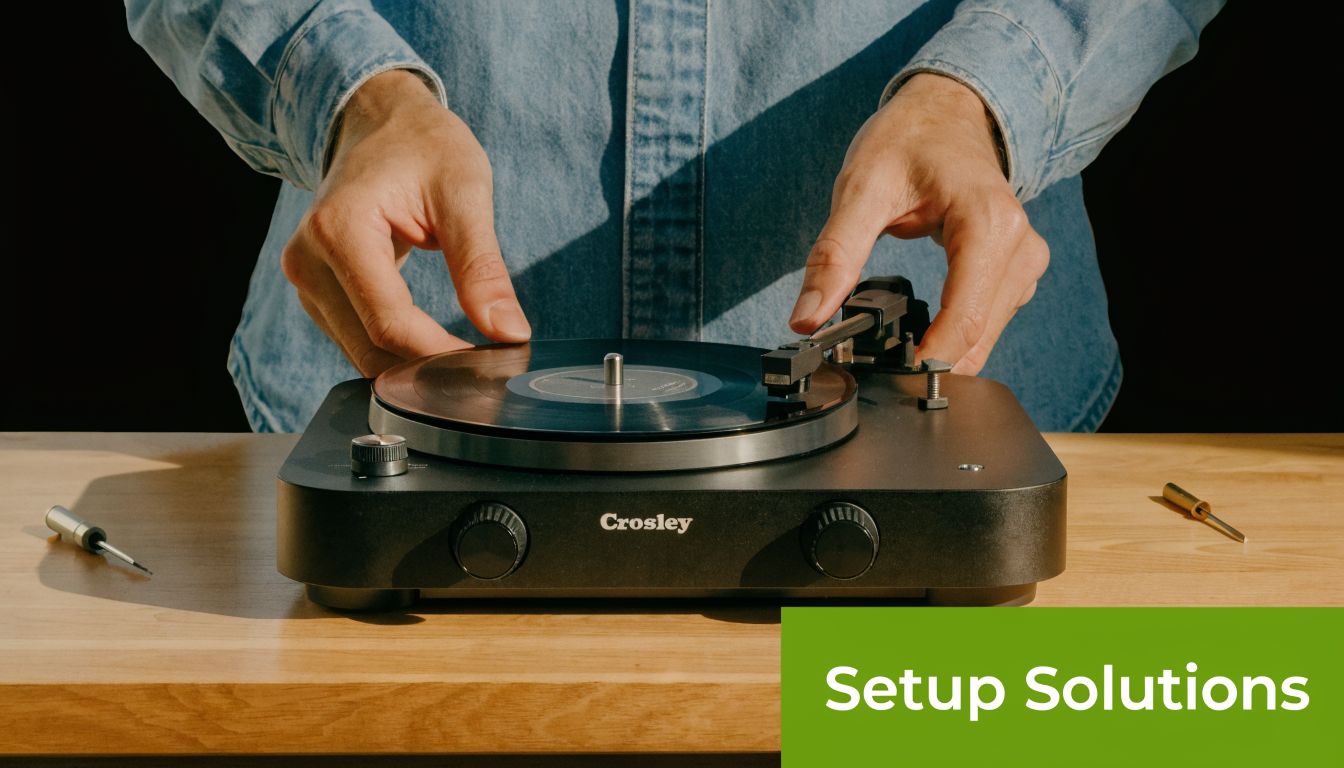
Skipping and rough sound often come from the setup, not just the brand. Even a modest turntable benefits from a stable surface and a bit of care.
Try this first:
- Level the unit properly. A turntable that leans even slightly can track badly.
- Move it away from vibrating furniture. Don’t put it on a hollow sideboard next to a speaker.
- Clean the stylus gently. Dust on the tip can make playback harsher and less secure.
- Check the record itself. Dirt, static, and warps all make cheap decks struggle more.
These aren’t miracle fixes. They stop the turntable fighting the room before the music even starts.
Get the sound out of the built-in speakers
The fastest improvement most owners can make is to bypass the internal speakers when the model allows it. Built-in speakers are there for convenience, not quality. External powered speakers or a proper amplifier and speaker setup will usually give you a fuller, cleaner result.
A few practical habits help:
- Use the line output if your model provides it. That keeps the setup straightforward.
- Keep cable runs tidy and secure. Loose connections create hum and frustration.
- Lower expectations for party volume. Small turntables aren’t made to drive a room.
One useful test: play a record with a clear vocal, bass guitar, and steady drum pattern. If the vocal sounds strained and the bass almost vanishes, the internal speakers are the bottleneck.
There’s also a basic walkthrough below that helps visual learners with common Crosley setup issues.
Reduce wear and prolong the deck’s useful life
For suitcase models especially, record choice matters. If you own valuable pressings, rare originals, or records in unusually good condition, don’t make them your test pile. Use ordinary copies for casual playback and save your prized records for a better deck.
A few habits make a real difference:
- Store the player closed and clean: dust and knocks shorten the life of basic parts.
- Don’t leave records on the platter: heat, pressure, and handling mistakes add up.
- Be gentle with the tonearm: budget mechanisms don’t forgive rough use.
- Upgrade by stages if you can: speakers first often give more benefit than chasing accessories.
A Crosley won’t become a different class of turntable through setup alone. But careful placement, clean records, and external speakers can make it more enjoyable and less troublesome.
Recommended Alternatives for Better Sound and Vinyl Safety
If you’re reading this because you haven’t bought yet, the best advice is simple. Buy for the job, not the styling alone.
If you like the idea of a Crosley Cruiser
If the appeal is price, compact size, and ease, look for a proper entry-level turntable from a brand with a stronger record-care track record. The reason isn’t snobbery. It’s that a better cartridge setup, a steadier platter, and cleaner output save frustration later.
The features worth prioritising are straightforward:
- Adjustable tonearm controls or at least better factory setup
- A proper moving magnet cartridge
- A platter and plinth that feel more stable
- Straightforward connection to external speakers
Even if the upfront spend is higher, it usually buys a turntable you won’t outgrow as quickly.
If you’re considering a Crosley C6 or C100
The answer gets more nuanced. The C-Series models are far more defensible than the suitcase range. If you find one at the right price and you want a beginner manual deck for home listening, they can make sense.
That said, I’d still advise comparing them against established entry-level hi-fi names before deciding. Look for decks that give you the same core strengths with a better reputation for consistency, parts support, and upgrade path. If you care about long-term listening and vinyl care, those things matter more than having a fashionable badge on the plinth.
If your end goal is DJing
Don’t buy a home-style Crosley as a stepping stone to event work. Start with equipment designed for cueing, stable output, and repeated transport. That means looking at proper DJ-oriented turntables and not expecting a domestic deck to bridge the gap.
If you want to learn vinyl mixing or use records in front of guests, buy the kind of turntable that was built for handling pressure. A stylish beginner deck and a working DJ deck are different tools.
A good alternative is one that lets you grow. Better setup control, cleaner outputs, and sturdier construction don’t just improve sound. They reduce the odds that you’ll replace the whole unit once your ears improve.
Frequently Asked Questions About Crosley Turntables
Do all Crosley turntables damage records
No. It’s more accurate to say the cheap suitcase-style models are the main concern, while the better C-Series models are a separate category. That’s why a blanket yes or no answer is misleading.
Can I upgrade the stylus or cartridge on my Crosley
It depends on the model. Portable all-in-one units usually offer far less flexibility. C-Series decks are the ones more likely to give you a sensible upgrade path because they’re closer to standard hi-fi layouts.
Is a Crosley okay for casual listening
Yes, if your expectations are realistic. For occasional background listening, a portable Crosley can be enjoyable enough. If you care about preserving records and getting fuller sound, it’s worth aiming higher.
Can I connect a Crosley to better speakers
Often, yes. If your model has the right output, external powered speakers usually improve the experience far more than relying on the built-in speakers. Check your exact model before buying cables or adapters.
Are Crosley turntables good for weddings or parties
As working event decks, no. For a decorative corner or very light personal use, maybe. For reliable public playback where sound and stability matter, they’re not the best tool.
Should I keep a Crosley if I already own one
If it’s already in your home, use it carefully, keep your prized records for a better deck, and improve the setup where you can. If you’re shopping from scratch, there are safer and better-sounding options.
If you want a small visual cue that reflects the style-led side of vinyl culture, this simple VinylGold brand mark fits that mood well. Just don’t let aesthetics make the buying decision on their own.

If you want music handled with more care than a budget turntable can offer, VinylGold provides London and Kent events with thoughtful DJ programming, reliable sound, and a vinyl-informed approach that respects both the records and the room.