
Jay-Z stands as one of the most consequential figures in music history. Over three decades, he transformed from a Brooklyn street hustler into a global cultural icon. His discography tells a story of relentless reinvention — sonically, lyrically, and commercially. Whether you’re a lifelong fan or a curious newcomer, this definitive guide ranks and reviews every Jay-Z solo studio album. We cover everything from the raw hunger of Reasonable Doubt to the hard-won wisdom of 4:44.
Jay-Z: The Questions Everyone Is Asking in 2026
What is Jay-Z’s net worth in 2026?
Jay-Z’s net worth sits at approximately $2.8 billion in 2026, making him the wealthiest musician on the planet. His fortune stretches far beyond music. He has built an empire spanning entertainment, luxury goods, cannabis, and sports management. Forbes has tracked his billionaire status since 2019, but the growth since then has been staggering. His stakes in premium champagne brand Armand de Brignac and cognac label D’Ussé alone represent hundreds of millions in value. Add his ownership of Roc Nation — one of the most powerful entertainment and sports agencies in the world — and the numbers become almost hard to comprehend. Jay-Z doesn’t just earn from art. He earns from infrastructure.
How many solo studio albums does Jay-Z have?
Jay-Z has released 13 solo studio albums, spanning from Reasonable Doubt in 1996 to 4:44 in 2017. Each album represents a distinct chapter in his artistic evolution. Early records leaned into gritty street narratives and sharp lyricism. Later projects embraced orchestral soul samples, electronic production, and deeply personal reflection. No two Jay-Z albums sound identical, which is a testament to his longevity and creative adaptability. He also released collaborative albums, including Watch the Throne with Kanye West and Everything Is Love with Beyoncé, but his 13 solo efforts remain the core of his artistic legacy.
Will Jay-Z release a new album in 2026?
Rumours have circulated throughout 2025 and into 2026 about a potential new Jay-Z project. The timing carries enormous significance. 2026 marks the 30th anniversary of Reasonable Doubt, and fans and industry insiders alike have speculated that he may honour the milestone with new music. Some reports suggest he has been working quietly in the studio. Others point to cryptic social media activity from collaborators as evidence of something brewing. Jay-Z himself has remained characteristically tight-lipped. He has never been an artist who announces before he’s ready. Whether a full album, an EP, or a surprise drop arrives this year remains to be seen — but the appetite for new material is undeniable.
What are Jay-Z’s biggest business ventures?
Jay-Z’s business portfolio is as impressive as his rap catalogue. Roc Nation, founded in 2008, operates as a full-service entertainment and sports agency, representing athletes, musicians, and touring productions globally. His cannabis brand Monogram positions itself at the luxury end of the legal cannabis market, reflecting his broader instinct to enter industries at the premium tier. His champagne investment, Armand de Brignac — better known as Ace of Spades — was later partially acquired by LVMH, significantly amplifying its global reach. D’Ussé, his cognac brand developed in partnership with Bacardi, has become one of the fastest-growing spirits in the United States. Together, these ventures signal a clear philosophy: Jay-Z doesn’t just endorse products — he owns them.
Every Jay-Z Album, Ranked and Reviewed
1. Reasonable Doubt (1996)
Reasonable Doubt is where everything begins. Jay-Z announced himself to the world not with a shout, but with a whisper — cold, composed, and devastatingly precise. Released independently through Roc-A-Fella Records, this debut captured the texture of Brooklyn street life with cinematic clarity. DJ Premier and Clark Kent provided production that was understated, jazz-inflected, and timeless. Jay-Z’s pen was already operating at an elite level. Tracks like Dead Presidents II, Feelin’ It, and Can’t Knock the Hustle established his signature blend of hustler philosophy and poetic introspection. Moreover, the album introduced listeners to a narrator who was morally complex and self-aware. He wasn’t glorifying the streets blindly — he was documenting them honestly. Critics initially gave it a warm reception, but its reputation has only grown with time. Today, most hip-hop scholars place it among the ten greatest rap albums ever recorded. Jay-Z himself has called it his most personal work. Interestingly, it was a commercial underperformer upon release, moving around 400,000 copies — modest by his later standards. However, that slow burn only added to its mystique. What Reasonable Doubt lacks in flash, it compensates for in depth. Consequently, it remains the benchmark against which every subsequent Jay-Z project is measured.
2. The Blueprint (2001)

Few albums carry the weight of circumstance that The Blueprint does. Jay-Z released it on September 11, 2001 — a date forever etched into global memory. Despite the chaos of that morning, the album became an instant classic. Kanye West and Just Blaze dominated the production, flipping soul samples into something entirely new and electric. Furthermore, the record served as a direct response to critics who had begun questioning Jay-Z’s relevance. His lyricism on tracks like Takeover, Izzo (H.O.V.A.), and Song Cry was sharper and more focused than anything he had released in years. The Nas diss on Takeover became one of rap’s most dissected moments. Additionally, the album’s influence extended far beyond its chart performance. It effectively launched the soul-sample era that would define early-2000s hip-hop. Producers across the genre took note. Jay-Z’s effortless delivery throughout the project made technically complex verses feel conversational. Nevertheless, the record’s greatest achievement may be its emotional range — from boastful to vulnerable within the same breath. The Blueprint didn’t just restore Jay-Z’s standing. It elevated it permanently.
3. 4:44 (2017)

4:44 is arguably the most important album of Jay-Z’s career — not necessarily his best, but unquestionably his most honest. Released exclusively through Tidal and later widely distributed, the album stripped away bravado and replaced it with accountability. Jay-Z addressed his infidelity openly on tracks like Sorry and the title track. Furthermore, he tackled generational wealth, Black ownership, and mental health with a directness that surprised even his most loyal fans. No ID handled all production, delivering warm, textured beats that felt both intimate and expansive. Additionally, the album’s cultural conversation extended beyond music. Jay-Z prompted genuine discussion about transparency in relationships and financial literacy in the Black community. Tracks like The Story of O.J. used animation and sharp lyricism to explore race and economics simultaneously. Consequently, 4:44 earned Jay-Z his first Grammy for Rap Album of the Year as a solo artist. Critics celebrated it as a mature artistic statement. However, what makes 4:44 truly remarkable is how it reframed Jay-Z not as an untouchable icon but as a flawed and evolving human being.
4. American Gangster (2007)
American Gangster arrived as Jay-Z’s most cohesive concept album. Inspired by Ridley Scott’s film of the same name, the record reimagined his own past through the lens of Frank Lucas’s rise and fall. Jay-Z used the narrative as both a personal mirror and a cultural critique. Diddy, Just Blaze, and Neptunes contributed production that was dark, cinematic, and richly layered. Tracks like Roc Boys, Say Hello, and Sweet demonstrated his storytelling ability at its most disciplined. Furthermore, the album benefited from a singular creative vision — something critics felt his previous two records had lacked. Jay-Z was not simply rapping over beats. He was constructing a world. Additionally, the decision to ask radio stations not to play the album out of sequence was a bold, artistic statement few mainstream artists would risk. Consequently, American Gangster stands as proof that Jay-Z operates best when working within a defined creative framework. It remains one of his most underappreciated records, often overshadowed by the Blueprint trilogy. Nevertheless, its depth and consistency reward repeated listening.
5. Vol. 2… Hard Knock Life (1998)
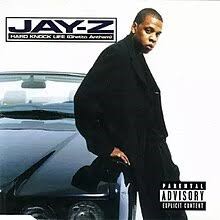
Vol. 2… Hard Knock Life is the album that turned Jay-Z into a genuine global superstar. The sampling of “It’s the Hard Knock Life” from Annie was a masterstroke of commercial intuition. It worked not because it was gimmicky, but because Jay-Z’s delivery transformed it into something entirely authentic. The album sold over five million copies in the United States alone. Furthermore, Swizz Beatz, Timbaland, and DJ Premier all contributed production, resulting in one of the most sonically diverse projects in his catalogue. Tracks like Can I Get A…, Nigga What, Nigga Who, and Money, Cash, Hoes showcased his adaptability across different production styles. Additionally, Jay-Z demonstrated that commercial success and lyrical substance were not mutually exclusive. Critics praised his ability to craft pop-friendly hooks without sacrificing his street credibility. Consequently, Vol. 2 remains his best-selling solo project to date. However, some purists argue that the record traded the intimacy of Reasonable Doubt for mass appeal. That debate aside, the album’s cultural impact is indisputable.
6. The Blueprint 3 (2009)
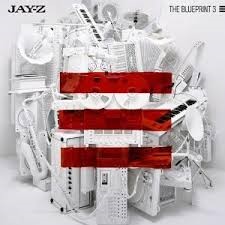
The Blueprint 3 marked Jay-Z’s most ambitious sonic leap. He embraced stadium-ready anthems, electronic textures, and live instrumentation in a way his earlier work never had. Empire State of Mind, featuring Alicia Keys, became one of the defining songs of the decade. Furthermore, the album debuted at number one and earned Jay-Z a Grammy for Album of the Year — his first in that category. Kanye West, Timbaland, and Swizz Beatz all contributed to a production palette that felt forward-looking and grand. Additionally, the record’s guest list — including Rihanna, Drake, and Luke Steele — reflected Jay-Z’s unmatched ability to attract the biggest names in music. However, some critics found the album’s commercial sheen a step removed from his most personal work. Tracks like D.O.A. (Death of Auto-Tune) and On to the Next One showed he could still command the culture’s attention. Consequently, Blueprint 3 remains one of his most commercially successful projects. Jay-Z proved here that he could evolve without abandoning what made him essential.
7. The Black Album (2003)
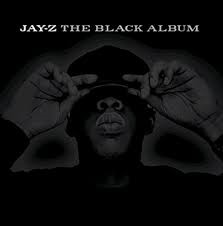
The Black Album was Jay-Z’s announcement of retirement — one he would not keep. Nevertheless, as a farewell statement, it was remarkable. Producers including Pharrell, Timbaland, Rick Rubin, and Kanye West each contributed one track, creating a beautifully fragmented sonic landscape. 99 Problems remains one of the most analysed songs in rap history. Furthermore, tracks like Dirt Off Your Shoulder, Encore, and Threat demonstrated the full range of Jay-Z’s ability. The album felt like a deliberate victory lap — a man closing a chapter on his own terms. Additionally, the Madison Square Garden concert that accompanied the release became a legendary cultural moment. Jay-Z’s decision to stage a retirement show cemented his status as a generational figure. Consequently, The Black Album sold over three million copies in the US and received near-universal critical praise. However, in hindsight, it feels less like an ending and more like a pause. Jay-Z was not finished — he was simply taking stock.
8. Vol. 3… Life and Times of S. Carter (1999)
Vol. 3 arrived at the height of Jay-Z’s commercial momentum. Timbaland and Swizz Beatz drove much of the production, bringing high-energy, kinetic beats that suited his confident delivery. Tracks like Do It Again (Put Ya Hands Up) and Snoopy Track crackled with energy. Furthermore, the album featured appearances from Mariah Carey, UGK, and Juvenile, broadening its commercial appeal. Jay-Z was at his most assured here — a man who knew the world was watching and rose to meet that expectation. Additionally, the album debuted at number one, maintaining his streak of consecutive chart-topping releases. However, critics noted that Vol. 3 prioritised momentum over the introspection of his debut. The production was polished to a high gloss that some felt undermined the rawness of his best writing. Consequently, it occupies a mid-tier position in his catalogue — commercially vital, artistically competent, but not essential. Nevertheless, as a document of Jay-Z at maximum commercial confidence, Vol. 3 delivers exactly what it promises.
9. Magna Carta Holy Grail (2013)
Magna Carta Holy Grail is most remembered for its release strategy. Jay-Z partnered with Samsung to deliver the album digitally to one million Galaxy users three days before its official release. Additionally, the rollout included a short film and a level of corporate spectacle unprecedented in hip-hop. Production contributions from Rick Rubin, Timbaland, and Pharrell gave the record a grandiose, polished quality. Tracks like Tom Ford, Oceans, and BBC showcased Jay-Z at his most luxurious and aspirational. Furthermore, the album debuted at number one and went platinum on the strength of the Samsung deal alone. However, critics were divided. Some felt the album’s messaging prioritised wealth and status over the lyrical depth of his earlier work. Jay-Z’s focus on opulence occasionally came at the cost of emotional resonance. Consequently, Magna Carta sits in the middle of his catalogue — innovative in delivery, uneven in execution. Nevertheless, it remains a fascinating document of Jay-Z navigating fame, art, and commerce in the streaming era.
10. The Dynasty: Roc La Familia (2000)
The Dynasty: Roc La Familia occupies an unusual position in Jay-Z’s discography. Originally conceived as a Roc-A-Fella Records compilation, it was reclassified as a solo Jay-Z album for chart eligibility. Additionally, it served as a showcase for the roster he was building — introducing the wider world to Beanie Sigel, Memphis Bleek, and Kanye West in a production capacity. Tracks like I Just Wanna Love U (Give It 2 Me) and This Can’t Be Life demonstrated his range. Furthermore, the album’s commercial performance was solid, debuting at number one. However, its hybrid nature — part solo album, part label showcase — means it never quite coheres as a unified artistic statement. Jay-Z sounds energised and generous throughout, ceding space to his labelmates in a way his solo albums rarely do. Consequently, The Dynasty is best understood as a transitional document. It bridges the raw hunger of Vol. 2 and the refined mastery of The Blueprint. Nevertheless, Jay-Z’s contributions remain strong throughout.
11. In My Lifetime, Vol. 1 (1997)
In My Lifetime, Vol. 1 arrived during a turbulent period in Jay-Z’s career. Seeking mainstream crossover success, he embraced a more polished, Puffy-influenced production style. Tracks like (Always Be My) Sunshine and Dead Presidents II showed commercial instincts. Furthermore, Puff Daddy’s influence on the record is audible — glossy, radio-ready, and occasionally at odds with the gritty realism of his debut. Jay-Z himself has acknowledged that the album was a compromise. Additionally, the record suffered from inconsistency, alternating between moments of genuine lyrical brilliance and radio-friendly filler. However, it was a commercially necessary step. The album entered the charts at number three, proving he could compete in the mainstream arena. Consequently, Vol. 1 is best viewed as a growing pain — a necessary miscalculation on the path to his peak. Jay-Z was still finding the balance between artistic integrity and commercial ambition. That balance would come sharply into focus just a year later.
12. Kingdom Come (2006)
Kingdom Come represented Jay-Z’s return from his brief retirement — and it arrived with enormous expectations. Unfortunately, it did not fully meet them. The album leans heavily on bombastic production and aspirational themes, but lacks the lyrical sharpness of his best work. Tracks like Show Me What You Got and Lost One offered genuine moments of quality. Furthermore, Jay-Z’s personal evolution is audible here — he sounds reflective and older, no longer performing street narratives. However, critics noted that the record’s bloated runtime diluted its impact. Several tracks felt like filler rather than statements. Additionally, the production — handled largely by Just Blaze, Dr. Dre, and Swizz Beatz — varied too widely in tone and coherence. Consequently, Kingdom Come feels like an artist recalibrating rather than arriving. Jay-Z was clearly transitioning into a new creative phase. Nevertheless, the album sold over two million copies in the United States. It reminds listeners that even imperfect Jay-Z commands attention.
13. The Blueprint 2: The Gift & The Curse (2002)
The Blueprint 2: The Gift & The Curse suffers primarily from its ambition. Released as a double album just a year after its masterful predecessor, it struggled under the weight of its own scope. Jay-Z packed the record with guest appearances, radio-friendly singles, and sprawling production. Tracks like ’03 Bonnie & Clyde and Excuse Me Miss were undeniable hits. Furthermore, the album debuted at number one, proving that commercial momentum remained firmly in his favour. However, critics and fans found the double-album format unwieldy. The highs were high, but the lows were noticeable. Additionally, the record lacked the focused artistic vision that made The Blueprint essential. Jay-Z seemed to be filling space rather than curating a statement. Consequently, Blueprint 2 is best experienced as a singles collection rather than a front-to-back listen. Nevertheless, the moments of brilliance it contains remind you that even a diluted Jay-Z remains a formidable creative force. It simply couldn’t match what came before it.
Jay-Z’s discography does not trace a straight line. It spirals — outward into commerce, inward into confession, and always forward into new creative territory. From the streetwise poetry of Reasonable Doubt to the marital reckoning of 4:44, he has consistently refused to remain static. Moreover, his business empire amplifies rather than distracts from his artistic impact. Each venture reinforces a singular philosophy: ownership, longevity, and evolution on his own terms. As 2026 unfolds and the 30th anniversary of his debut approaches, the conversation around Jay-Z’s legacy feels more vital than ever. Whether new music arrives or not, his existing catalogue guarantees his place among the greatest artists any genre has ever produced. Revisit these albums. Listen in order. The journey is worth every minute.