
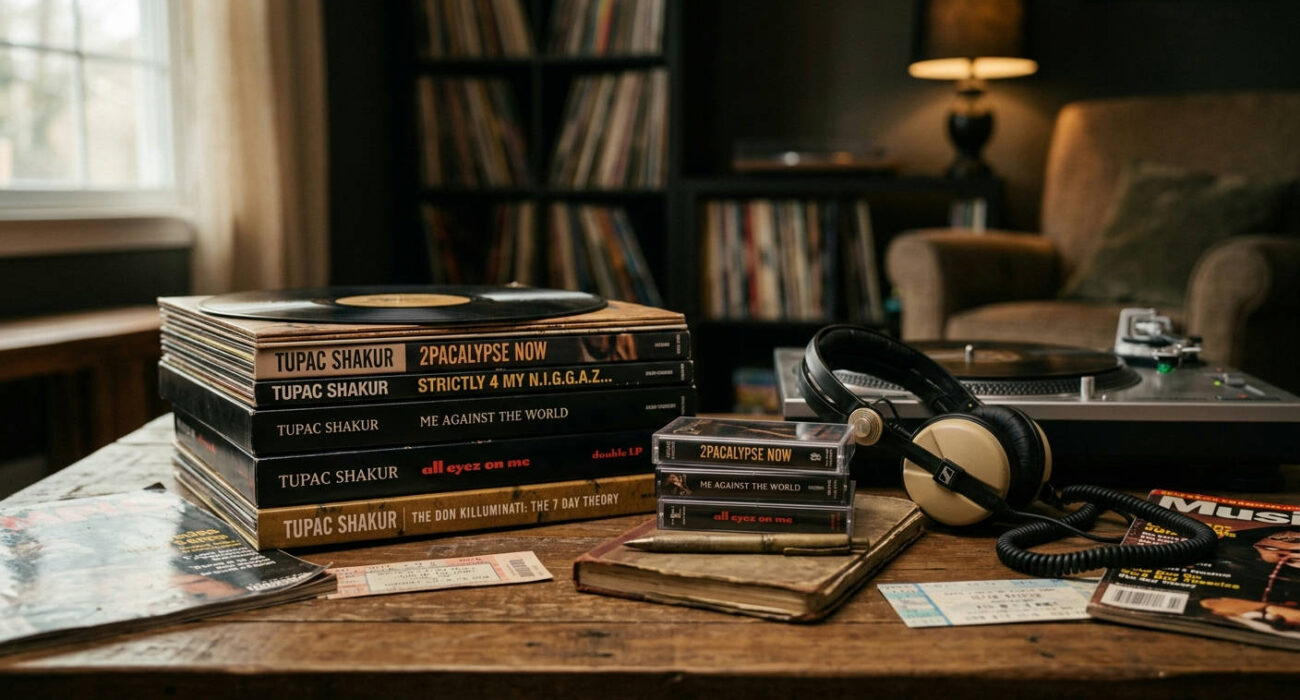
Let’s cut straight through the noise. Sifting through decades of posthumous projects, compilations, and remixes can make a clear understanding of the core catalogue a real challenge for any fan. This guide is your definitive map to the Tupac official studio album releases, the essential body of work conceived and executed by the artist himself during his lifetime. We’re focusing on the foundational albums that cemented his legacy, the records that every serious music collector and hip-hop historian needs to understand intimately.
This isn’t about the endless stream of “what if” projects. This is about the certified, artist-approved canon. From the raw, political fury of his debut to the polished, paranoid opulence of his final recordings, these albums tell a complete, albeit tragically short, story.
The Early Years: Raw Talent and Social Commentary
Before the Death Row dynasty and the East Coast/West Coast feud that defined mainstream media narratives, there was a young, fiercely intelligent artist finding his voice. The earliest Tupac official studio album releases were characterized by righteous anger, sharp social observation, and a hunger to be heard.
2Pacalypse Now (1991): The Provocative Debut
This wasn’t an album designed for radio play. 2Pacalypse Now, released in late 1991, was a Molotov cocktail thrown into the music industry. It was raw, unpolished, and confrontational. Tracks like “Trapped” and the unforgettable “Brenda’s Got a Baby” weren’t just songs; they were visceral street journalism set to a beat.
The production, handled largely by the Underground Railroad, has a grittier, sample-heavy feel that grounds the album in the early 90s. It lacks the sonic sheen of his later work, but that’s precisely the point. This record was a statement of intent, an unfiltered look at poverty, police brutality, and systemic injustice. It was so potent that it even drew condemnation from U.S. Vice President Dan Quayle, cementing its status as a piece of genuinely dangerous art.
For vinyl collectors, an original 1991 pressing is a prized possession, but modern reissues capture the raw energy well. The bass isn’t the window-rattling G-funk of his later years, but the lyrical depth is undeniable.
“I see no changes. All I see is racist faces. Misplaced hate makes disgrace to races we under. I wonder what it takes to make this one better place… let’s erase the wasted.”
This early work established Tupac not just as a rapper, but as a crucial social commentator. He was holding a mirror up to a society that refused to look at its own reflection, and the image was unflattering and impossible to ignore.
Strictly 4 My N.I.G.G.A.Z… (1993): Polishing the Diamond in the Rough
If 2Pacalypse Now was the raw protest, Strictly 4 My N.I.G.G.A.Z… was the focused battle plan. Released in 1993, this album saw a significant leap in production quality and commercial appeal without sacrificing the political edge. The sound is fuller, the hooks are sharper, and Tupac’s flow is more confident and complex.
This is the album that gave us anthems like “Keep Ya Head Up” and “I Get Around.” The former became an empowering hymn for Black women, showcasing a sensitivity and depth that defied the “gangsta rap” label. The latter was a pure party track, proving he could command the charts as easily as he could command a debate.
This duality is the album’s greatest strength. It balances the introspective (“The Streetz R Deathrow”) with the aggressive (“Last Wordz,” featuring Ice Cube and Ice-T). It showed the world that Tupac contained multitudes; he was a revolutionary, a poet, a partier, and a philosopher, often all within the same 16 bars. This project refined his message, making it more palatable for a wider audience while still hitting just as hard.
The Pinnacle of a Prophet: Interscope and Incarceration
The mid-90s represented a period of intense turmoil and creative brilliance for Tupac. It was during this time that he recorded what many consider to be his most profound work, an album created under the shadow of a prison sentence and a near-fatal shooting.
Me Against the World (1995): Vulnerability from Behind Bars
Released in March 1995 while Tupac was incarcerated, Me Against the World is a masterpiece of introspection and paranoia. The bravado is still present, but it’s tempered with a deep sense of mortality and weariness. This is the sound of a man looking over his shoulder, questioning his own life, and grappling with his legacy.
The album debuted at number one on the Billboard 200, making him the first artist to achieve this feat while serving a prison sentence. It was a cultural moment. Tracks like “Dear Mama” are now considered timeless classics, a heartfelt tribute that transcends genre. But the album’s soul lies in darker cuts like “So Many Tears” and the title track, where you can hear the weight of the world on his shoulders.
The production is more melodic and melancholic, moving away from the hard-hitting funk of its predecessor. It’s a sombre, reflective album that showcases Tupac’s incredible gift for storytelling and emotional honesty. Listening to this album on a quality turntable, like some of the best turntables under £300 in the UK, allows the subtle layers of production and the raw emotion in his voice to truly come to life. This is arguably the most critically acclaimed of all Tupac official studio album releases.
The Thug Life Project: A Collaborative Interlude

It’s important to mention the 1994 project, Thug Life: Volume 1. While technically a group album with his collective Thug Life (featuring Big Syke, Mopreme Shakur, Macadoshis, and The Rated R), it’s an essential piece of the Tupac puzzle. It serves as a bridge between Strictly 4 My N.I.G.G.A.Z… and Me Against the World.
The album contains classics like “Bury Me a G,” “How Long Will They Mourn Me?,” and the incredibly poignant “Pour Out a Little Liquor.” The themes of loyalty, betrayal, and survival are front and center, foreshadowing the thematic core of his later solo work. While not a solo studio album in the strictest sense, its influence is undeniable and it remains a fan favorite for its raw, unfiltered crew dynamic.
Unpacking the Complete List of ## Tupac Official Studio Album Releases on Death Row
After Suge Knight and Jimmy Iovine secured his release from prison, Tupac signed with Death Row Records. This move ushered in the final, most prolific, and most controversial chapter of his career. The creative output during this period was staggering, resulting in two more landmark albums released during his lifetime.
All Eyez on Me (1996): The G-Funk Masterpiece
Released in February 1996, All Eyez on Me was an audacious, sprawling, and celebratory statement. As hip-hop’s first major double album, it was an event. Fresh out of prison, Tupac recorded with a furious energy, and the result is an epic of West Coast G-funk, produced primarily by Johnny “J” and Dr. Dre.
This is the sound of liberation, paranoia, and excess. Book 1 is packed with radio-dominating hits like “California Love” and “2 of Amerikaz Most Wanted.” Book 2 takes a slightly darker, more introspective turn with tracks like “I Ain’t Mad at Cha” and “Life Goes On.” The album is a cinematic experience, painting a vivid picture of a superstar’s life, complete with luxury, danger, and reflection.
The guest list is a who’s who of 90s hip-hop and R&B, including Dr. Dre, Snoop Dogg, George Clinton, and Method Man. All Eyez on Me is a monument to a specific time and place in music history, a work of such scale and ambition that it remains a benchmark for hip-hop albums to this day. It’s an essential part of any collection of Tupac official studio album releases, especially on vinyl where the expansive production can be fully appreciated. Finding a clean copy on vinyl is a must for any serious collector.
You can grab the vinyl reissue of this classic right now.
Search for All Eyez on Me on Amazon
The Don Killuminati: The 7 Day Theory (1996): The Eerie Final Chapter
Recorded in just three days and released in November 1996, less than two months after his murder, The Don Killuminati: The 7 Day Theory is one of the most haunting and debated albums in music history. Released under the pseudonym Makaveli, the album is dark, aggressive, and prophetic.
Gone is the celebratory G-funk of All Eyez on Me. In its place is a stark, minimalist, and often violent soundscape. Tupac’s delivery is ferocious, and the lyrics are filled with premonitions of his own death and scathing attacks on his perceived enemies in the music industry. Tracks like “Hail Mary” and “To Live & Die in L.A.” have become iconic, but it’s the raw fury of songs like “Bomb First (My Second Reply)” that defines the album’s tone.
Listening to The 7 Day Theory is an unsettling experience. It feels less like an album and more like a final will and testament, a raw nerve exposed. The conspiracy theories surrounding the album and the Makaveli persona persist to this day, but what’s undeniable is the raw power of the music. It’s a difficult but essential final entry in the catalogue of his lifetime’s work.
The Posthumous Puzzle: Navigating the Releases After 1996
This is where things get complicated. Tupac was famously prolific, leaving behind a vault of unreleased verses, song concepts, and acapellas. Since his death, this material has been repackaged, remixed, and released in various forms, creating a discography that can be confusing for new and old fans alike.
Why Discerning Posthumous from ### Tupac Official Studio Album Releases Matters
The distinction is critical. The official studio albums released during his life represent his complete, unadulterated vision. He approved the beats, the track lists, the sequencing, and the final mixes. They are the primary texts.
Posthumous albums, while containing his vocals, are curated by others. Producers, estate managers, and record executives make creative decisions about which beats to use, which artists to add as features, and how to structure the final product. While some posthumous projects like R U Still Down? are well-regarded for sticking close to the original material, others, like the Eminem-produced Loyal to the Game, have been criticized for using modern production that feels out of step with Tupac’s original sound.
For a true understanding of the artist, you must start with the work he personally oversaw.
Key Posthumous Projects: Hits, Misses, and Remixes
While not part of the official studio canon, several posthumous releases are noteworthy and contain essential material.
- R U Still Down? [Remember Me] (1997): The first posthumous release, a double album largely comprised of unreleased material from his pre-Death Row days. It feels authentic and contains gems like “I Wonder If Heaven Got a Ghetto.”
- Until the End of Time (2001): Another double album, this one featuring heavily remixed tracks from his Death Row sessions. It was commercially successful but drew criticism for its modern, polished production.
- Better Dayz (2002): A similar formula to its predecessor, culling from the vaults and remixing for a 2002 audience. The title track remains a fan favourite.
- Loyal to the Game (2004): Produced almost entirely by Eminem, this is perhaps the most controversial posthumous release. Eminem’s distinct production style, including speeding up and altering the pitch of Tupac’s vocals to fit the beats, was a love-it-or-hate-it affair for fans.
- Pac’s Life (2006): Released on the tenth anniversary of his death, this album featured a host of contemporary guest artists and producers, further distancing the material from its original context.

These albums are part of his story, but they are an epilogue written by others. The core narrative remains the five studio albums released between 1991 and 1996.
Collecting Tupac on Vinyl: A Guide for Audiophiles and Fans
For those of us at Vinyl Gold UK, the ultimate way to experience the Tupac official studio album releases is on vinyl. The warmth, the depth, and the tangible connection to the music are unmatched.
Original Pressings vs. 2026 Reissues: What’s the Difference?
Finding a mint-condition original pressing of an album like All Eyez on Me from 1996 is a holy grail for collectors. These pressings have historical value and, for some purists, represent the most authentic sound. However, they can be incredibly expensive and difficult to find in good condition.
Modern reissues, particularly the high-quality 180-gram pressings that have become standard in 2026, are a fantastic alternative. They are mastered specifically for the vinyl format from the best available sources and offer a clean, dynamic listening experience without the pops and crackles that can come with a 30-year-old record. For most listeners, a quality reissue is the perfect balance of affordability and audio fidelity.
Sound Quality and Mastering: Why Vinyl is King for 2Pac
The 90s were a fascinating time for music production. The “Loudness War” in digital mastering was just beginning, often resulting in compressed, harsh-sounding CDs. Vinyl masters from that era, and the new ones made for reissues, often have a greater dynamic range.
This means the quiet parts are quieter and the loud parts are louder, allowing the music to breathe. On a G-funk epic like All Eyez on Me, this makes a huge difference. The deep bass lines of the synthesizer and the crisp snap of the snare drum have more space to reverberate, creating a richer, more immersive sound. The emotion in Tupac’s voice on a track like “Dear Mama” feels more present and immediate.
Tupac’s induction into the Rock & Roll Hall of Fame in 2017 wasn’t just for his rhymes; it was for the total sonic and cultural impact of his work, an impact best felt through a high-fidelity format.
Where to Find Authentic Pressings
Hunting for these records is part of the fun. Local record stores, online marketplaces like Discogs, and specialized retailers are your best bet. When buying, always check the seller’s ratings and the description of the record’s condition (using the Goldmine Standard for grading is a good practice).
For new reissues of his most popular albums, it’s often easiest to start with a trusted source.
Search for Me Against the World on Amazon
The Unmistakable Lyrical and Sonic Evolution
Listening to the Tupac official studio album releases in chronological order is a journey. You witness an artist evolving in real-time, his skills sharpening and his worldview shifting with each project.
From Political Firebrand to Reflective Poet
The Tupac of 2Pacalypse Now was a pure activist. His lyrics were direct, journalistic, and aimed at exposing societal ills. As he progressed, his writing became more personal and multifaceted. On Me Against the World, he turns the lens inward, exploring his own fears and contradictions. By All Eyez on Me, he’s a master of crafting complex narratives that blend celebratory excess with a constant, underlying paranoia.
His ability to inhabit different personas—the revolutionary, the thug, the lover, the prophet—was unparalleled. This lyrical complexity is a key reason his music continues to be studied and revered. Scholars have even analyzed his work in academic settings, exploring its deep connections to historical and literary traditions, a testament to its enduring power. The music of the 90s was a vibrant mix of genres, and while Tupac was defining hip-hop, you can find other powerful voices from that time in our list of Five Alt Rock Albums From The 1990s.
The Production: How 2Pac’s Sound Changed the Game
Tupac had an incredible ear for beats. He worked with a range of producers who helped shape his sound. The raw, sample-based funk of his early work with Shock G and the Live Squad gave way to the smoother, more polished production on Strictly 4 My N.I.G.G.A.Z….
The Death Row era, however, defined his sonic legacy for many. The G-funk sound—characterized by deep bass, melodic synthesizers, and live instrumentation—was the perfect backdrop for his larger-than-life persona on All Eyez on Me. Then, for the Makaveli album, he stripped it all back, opting for darker, more menacing beats that reflected his state of mind. This sonic versatility ensured his music never became stale and always perfectly matched the lyrical content.
Tupac Shakur’s official studio catalog is a monumental pillar of 20th-century music. These five albums are not just a collection of songs; they are a living document of a brilliant, complex, and revolutionary artist. They represent his authentic voice and his untarnished vision. For anyone looking to understand his impact, or for any serious vinyl collector, these are the essential texts. They are the beginning, the middle, and the tragically abrupt end of one of the most important stories in music history.