
Creedence Clearwater Revival burned brighter and faster than almost any band in rock history. Between 1968 and 1972, they released seven studio albums, charted five consecutive top-five singles, and sold millions of records worldwide. Yet despite their dominance, the band collapsed under the weight of internal tensions and creative conflict. This retrospective examines every CCR album, tracing the arc from a scrappy Bay Area group to one of rock’s most iconic — and most tragically short-lived — acts.
Questions Everyone Asks About Creedence Clearwater Revival
Why did Creedence Clearwater Revival break up?
The short answer is creative control. John Fogerty wrote the songs, sang lead, produced the records, and made the key decisions. For years, the other members — his brother Tom Fogerty, bassist Stu Cook, and drummer Doug Clifford — accepted this arrangement. But by 1971, resentment had built to a breaking point. Tom Fogerty left the band first, in January 1971. The remaining three tried a democratic approach on their final album, Mardi Gras, giving Cook and Clifford song writing and lead vocal duties. Critics and fans largely rejected the result. The band officially disbanded in October 1972, and the fallout poisoned relationships for decades. John Fogerty and the other members became embroiled in bitter legal disputes over the band’s catalogue and name. It remains one of rock’s most painful implosions — a band undone not by failure, but by the very success that made one man indispensable.
Is CCR actually from the South?
This surprises many people, even devoted fans. Creedence Clearwater Revival was not from Louisiana, Mississippi, or anywhere near the swamps they sang about so convincingly. They formed in El Cerrito, California — a small city in the East Bay, across the water from San Francisco. John Fogerty absorbed Southern sounds through records, radio, and a deep personal obsession with American roots music. He then channelled those influences into original songs that felt more authentically Southern than most music actually made in the South. It is a remarkable creative achievement. The band never tried to fake a Southern identity on stage — they simply let the music speak, and audiences around the world believed every word.
How many albums did CCR release in 1969?
Three. In a single calendar year, Creedence Clearwater Revival released Bayou Country (January), Green River (August), and Willy and the Poor Boys (November). That output would be extraordinary by any era’s standards. In 1969 — the same year as Woodstock, the Moon landing, and the peak of the counter-culture — CCR somehow managed to release three distinct, fully realised albums, each containing songs that became enduring classics. It reflects both the band’s relentless work ethic and John Fogerty’s seemingly bottomless well of song writing inspiration during that period.
Who wrote most of CCR’s songs?
John Fogerty wrote virtually everything. He served as the band’s primary songwriter, lead vocalist, and producer — an unusually concentrated creative role that few rock bands have ever matched. Fogerty wrote iconic tracks like “Proud Mary,” “Bad Moon Rising,” and “Fortunate Son” essentially alone, crafting their arrangements and producing them with a precision that belied their raw, swampy feel. Tom Fogerty, Cook, and Clifford contributed occasionally, but the catalogue belongs overwhelmingly to John. This dynamic is precisely what created the internal tensions that eventually tore the band apart.
The Albums of Creedence Clearwater Revival
| Year | Album Title | Key Tracks |
|---|---|---|
| 1968 | Creedence Clearwater Revival | “Suzie Q”, “I Put a Spell on You” |
| 1969 | Bayou Country | “Proud Mary”, “Born on the Bayou” |
| 1969 | Green River | “Bad Moon Rising”, “Lodi”, “Green River” |
| 1969 | Willy and the Poor Boys | “Fortunate Son”, “Down on the Corner” |
| 1970 | Cosmo’s Factory | “Who’ll Stop the Rain”, “Run Through the Jungle” |
| 1970 | Pendulum | “Have You Ever Seen the Rain?”, “Hey Tonight” |
| 1972 | Mardi Gras | “Sweet Hitch-Hiker”, “Someday Never Comes” |





The Albums of Creedence Clearwater Revival
Creedence Clearwater Revival (1968)
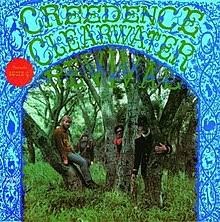
Few debut albums arrive with this much conviction. Creedence Clearwater Revival introduced a band that already knew exactly who they were. Fogerty and his bandmates had been playing together since their early teens, gigging under various names before signing to Fantasy Records. By 1968, that experience had hardened them into something tight and purposeful.
The record leans heavily on covers. “Suzie Q,” a strutting update of Dale Hawkins’ rockabilly original, became their first charting single. Their take on Screamin’ Jay Hawkins’ “I Put a Spell on You” is equally ferocious — raw, swaggering, and utterly convincing. Creedence Clearwater Revival transforms both songs into something entirely their own.
However, the original material here is still finding its footing. Fogerty’s song writing genius had not yet fully crystallised, and the album functions more as a statement of intent than a complete artistic vision. Even so, the energy is undeniable. The rhythm section of Cook and Clifford locks in with a swampy groove, while Fogerty’s voice — that distinctive, gravel-throated howl — announces itself as one of rock’s most immediately recognisable instruments. For listeners new to Creedence Clearwater Revival, this album offers a fascinating glimpse of a great band assembling its identity in real time. It is raw, occasionally uneven, and genuinely exciting.
Bayou Country (1969)
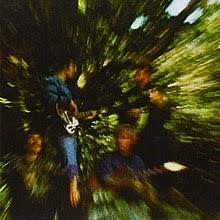
Everything changed with Bayou Country. Released in January 1969, this was the album where Creedence Clearwater Revival stopped covering other people’s songs and started writing the soundtrack to an America that existed largely in John Fogerty’s imagination — and yet felt entirely real.
“Proud Mary” opens the record and remains one of the most perfectly constructed rock songs ever recorded. That opening guitar riff is instantly recognisable decades later. “Born on the Bayou” is equally powerful — a slow-burning, atmospheric track that establishes the Southern mythology Fogerty would mine throughout the band’s peak years.
Notably, Fogerty was not writing about places he knew first hand. He was writing about a South he had absorbed through music, literature, and instinct. The result is something rare: fiction that feels more truthful than documentary. Creedence Clearwater Revival does not pretend to be from Louisiana. Instead, they inhabit that world with a commitment so total that the distinction stops mattering.
Bayou Country also marks the moment when the band’s production philosophy fully clicked. The sound is deliberately unpolished — swampy, direct, and loud in all the right places. Fogerty strips away anything unnecessary, letting the groove do the work. This is an album that rewards full-volume listening, and it announced CCR as a genuinely major force in American rock.
Green River (1969)
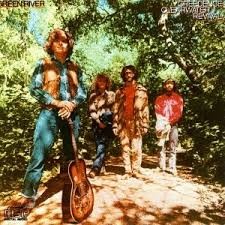
Released just seven months after Bayou Country, Green River is arguably the artistic peak of Creedence Clearwater Revival’s entire catalogue. The song writing here is extraordinary — concentrated, confident, and consistently inspired.
“Bad Moon Rising” became one of the defining songs of its era. Deceptively simple, relentlessly catchy, and laced with a quiet dread that suited the turbulent times perfectly. “Lodi” offers something different: a melancholy meditation on the life of a struggling musician, road-weary and forgotten. It is one of Fogerty’s most personal compositions, and it still resonates deeply.
The album’s tone shifts between exhilaration and unease with remarkable ease. Creedence Clearwater Revival had clearly found a creative zone that few bands ever locate, let alone sustain. Furthermore, the record demonstrates Fogerty’s gift for economy — not a single track outstays its welcome. Every song says what it needs to say and then steps aside.
Green River also benefits from the band’s sheer momentum. They were writing, recording, and touring at a ferocious pace during this period, and the energy of that relentless activity bleeds into the grooves. This is not a carefully considered studio experiment. It is a band at full sprint, producing some of the finest rock music of its generation almost casually, as if it cost them nothing.
Willy and the Poor Boys (1969)
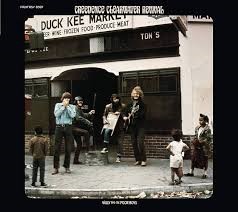
The third Creedence Clearwater Revival album of 1969 arrived in November, rounding out one of the most astonishing years any band has ever put together. Willy and the Poor Boys is slightly looser and more playful than its two predecessors — and that looseness suits it beautifully.
“Fortunate Son” is the centrepiece: a furious, two-minute broadside against class inequality and Vietnam-era privilege that still feels urgently relevant. It is concise, angry, and perfectly aimed. “Down on the Corner” provides the ideal counterweight — jubilant, easy-rolling, and irresistibly likeable.
This pairing defines the album’s character. Creedence Clearwater Revival could move between political fury and joyful simplicity without any apparent effort, and Willy and the Poor Boys showcases that range better than any other record in their catalogue. The band sounds relaxed here, almost casually brilliant.
Additionally, the album reflects a growing confidence in collective identity. Though Fogerty remained the undisputed creative engine, the performances feel unusually democratic. Cook and Clifford are locked in and fully present, and the result is a record that genuinely sounds like a band rather than one man with three capable sidemen. By any measure, closing out 1969 with this album was a remarkable achievement.
Cosmo’s Factory (1970)
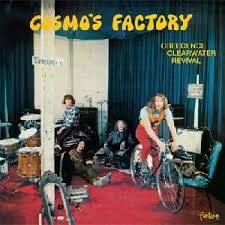
Cosmo’s Factory is the sound of Creedence Clearwater Revival at maximum commercial power. Released in July 1970, it became their best-selling album, and it is not difficult to understand why. The sequencing is immaculate, the performances are tight, and the songs are simply excellent.
“Who’ll Stop the Rain” and “Run Through the Jungle” are back-to-back highlights, each exploring a kind of brooding American unease that Fogerty had made his own. Meanwhile, the eleven-minute cover of Marvin Gaye’s “I Heard It Through the Grapevine” demonstrates that Creedence Clearwater Revival could stretch out and improvise with real authority when the mood suited them.
There is also a sense of culmination here — as though the band had assembled everything they had learned across their previous four albums and distilled it into one definitive statement. Consequently, Cosmo’s Factory feels simultaneously like a greatest hits collection and a genuinely cohesive album, which is a rare trick to pull off.
In retrospect, it also marks the high-water point before the decline began. Tom Fogerty’s dissatisfaction was growing, and the creative tensions that would eventually destroy the band were quietly intensifying beneath the surface. None of that is audible in the music, which makes it all the more poignant.
Pendulum (1970)
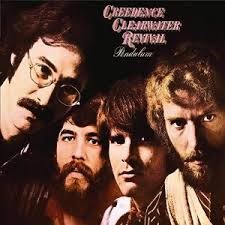
Pendulum represents a deliberate creative left turn — and it is more rewarding than its reputation suggests. Released in December 1970, this album finds Creedence Clearwater Revival expanding their sonic palette, incorporating keyboards and a slightly more atmospheric production style.
“Have You Ever Seen the Rain?” is among Fogerty’s finest songs — deceptively simple, emotionally resonant, and built around a melody that lodges permanently in the memory. “Hey Tonight” is equally strong: lean, direct, and driven by that characteristic CCR momentum.
However, not everything lands with the same force. Some tracks feel exploratory rather than fully realised, as though the band was uncertain which direction to push in next. That uncertainty reflects the real tensions beginning to fracture the group from within. Tom Fogerty would leave the band just weeks after Pendulum‘s release.
Nevertheless, this album deserves reassessment. It is frequently overlooked between the commercial peak of Cosmo’s Factory and the infamous disappointment of Mardi Gras, but Pendulum contains genuinely beautiful moments. Fogerty sounds reflective and slightly world-weary here, and that emotional texture gives the album a depth that rewards repeated listening. It is, in many ways, the most human-sounding record Creedence Clearwater Revival ever made.
Mardi Gras (1972)
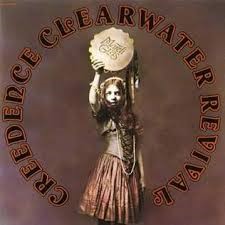
Mardi Gras is the most debated album in the Creedence Clearwater Revival catalogue, and its story is inseparable from the band’s collapse. By 1972, Tom Fogerty had departed, and the remaining three members attempted a democratic creative arrangement — Cook and Clifford each wrote and sang lead on several tracks, alongside John Fogerty.
The experiment did not succeed. Critics savaged the record upon release, and even sympathetic listeners acknowledged that the non-Fogerty contributions fell well short of the band’s established standard. “Sweet Hitch-Hiker” and “Someday Never Comes” — both Fogerty compositions — provide the album’s only genuine highlights.
Yet Mardi Gras deserves a more nuanced verdict than outright dismissal. Cook and Clifford were not talentless musicians; they simply lacked the singular song writing voice that had defined Creedence Clearwater Revival from the beginning. Heard today, their contributions feel earnest rather than embarrassing. The problem was context: releasing them under the CCR banner invited inevitable and unfavourable comparison.
Furthermore, there is something genuinely poignant about this record. It documents a band trying to survive its own internal fracture — three men attempting to hold something together long after the creative heart had effectively walked out. Mardi Gras is a document of dissolution as much as a piece of music, and understanding it in that light makes it a fascinating, if melancholy, listen.
Creedence Clearwater Revival produced a body of work that continues to resonate more than fifty years after the band’s demise. Seven albums. Five years. An almost unbroken run of classic songs. John Fogerty’s singular vision gave the band its identity — and ultimately, its limit. The tension between one man’s genius and a band’s need for collective dignity produced both the greatest music and the most painful ending. What remains is a catalogue that still sounds vital, still sounds American in some deep and elemental way, and still rewards anyone willing to start from the beginning and listen straight through. Few bands have mattered this much, this quickly, and then fallen this hard. That contradiction is precisely what makes Creedence Clearwater Revival so endlessly compelling.