
The most popular answer to the question, are vinyl records a good investment in 2026?, is too neat. Vinyl is back, demand is rising, collectors are active, so records must be a smart investment. That sounds good in a headline. It’s much less useful when you’re standing in a shop deciding whether to spend real money on a first press, a coloured reissue, or a stack of dancefloor staples you’ll play.
The honest answer is that vinyl in 2026 sits in a strange middle ground. It can be an asset, but it’s rarely a pure financial one. A record can hold resale value, earn money in the right hands, and still be mainly worth owning because it deepens your connection to the music. That’s why I think of vinyl as a hybrid investment. Part financial asset. Part passion project. Part working tool, especially if you’re a DJ.
That hybrid view matters because records don’t behave like shares, bonds, or even most other collectibles. Liquidity is patchy. Condition can change value overnight. A repress can cool demand. And sometimes the best return comes from use, not resale. If you’re interested in diversifying with alternative assets, vinyl fits better in the “specialist, high-touch, knowledge-led” camp than the “easy passive return” camp.
For many buyers, the value is also emotional and aesthetic. A collection shapes a room, a set, and a memory. Even the visual side of records still matters, which is part of why artwork and presentation continue to drive behaviour, much like the kind of personal music storytelling shown in this event-focused image.

Beyond the Hype The Reality of Vinyl Investing
If you want the short version, yes, vinyl records can be a good investment in 2026, but only if you stop treating every record as an investment. The question, are vinyl records a good investment in 2026?, requires careful consideration.
A common error arises from hearing that vinyl is growing and then assuming anything pressed on wax will become more valuable. It won’t. Plenty of records are made to be sold, enjoyed, and eventually forgotten. Others become useful trade pieces, long-term keepers, or income-producing tools for DJs and event professionals. Those are very different outcomes.
What vinyl actually offers
Vinyl tends to reward buyers who understand three kinds of value at once:
- Financial value. Some records hold price well, and a smaller number appreciate.
- Cultural value. Certain pressings become desirable because they mark a scene, an era, or a specific release moment.
- Functional value. DJs, venues, and collectors can use records in ways that create practical return.
A northern soul original, a clean house 12-inch with proper club utility, and a sealed limited indie variant might all be “valuable”, but for different reasons. If you confuse those categories, you overpay.
Vinyl works best as an investment when the owner knows why the record matters to the next buyer.
What usually doesn’t work
The weakest strategy is hype-buying. That means grabbing every “limited edition” release on release day, assuming scarcity alone will do the heavy lifting. Sometimes it does. Often it doesn’t, especially when labels flood the market with multiple colours, retail exclusives, and barely differentiated variants.
The stronger approach is slower. Buy records you understand. Learn what a proper first press looks like. Notice which records are genuinely hard to replace in clean condition. And if you DJ, recognise that a record can pay you back through bookings, atmosphere, and credibility long before anyone buys it from you.
Understanding the 2026 UK Vinyl Market
Before judging whether are vinyl records a good investment in 2026, look at the market as it stands in the UK. The headline is straightforward. Vinyl is still growing while other physical formats are not.
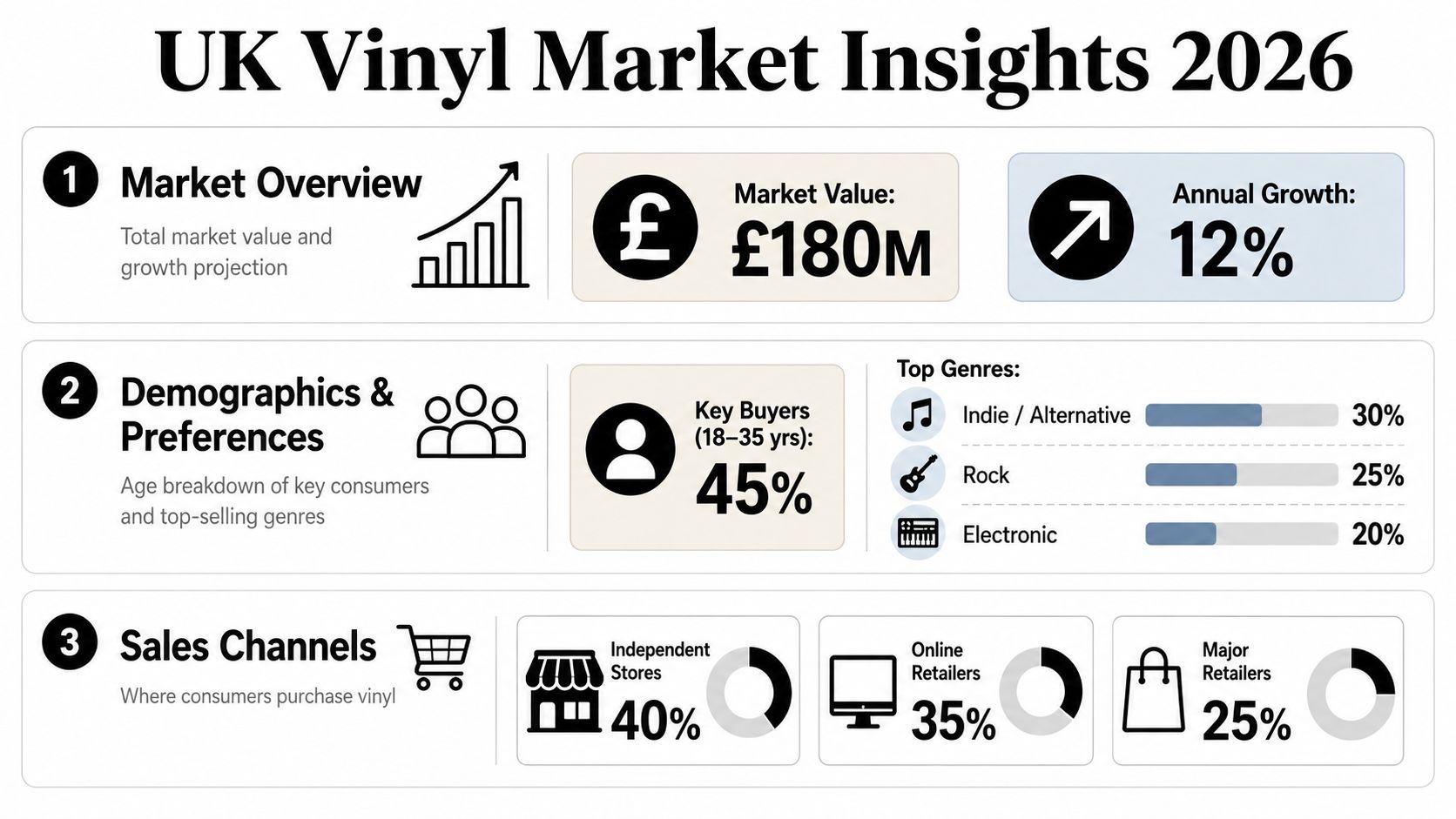
According to Music Week’s reporting on BPI data and 2026 forecasts, the UK vinyl market grew 10.7% year-on-year in Q3 2025 to 1,498,693 units, while year-to-date sales rose 7.4% to 4,733,937 units. In the same period, CD sales fell 11%, which leaves vinyl as the only physical music format still growing. The same report notes a projected 8 to 9% rise for 2026.
Why the growth matters
That kind of growth doesn’t mean every record is a winner. It does mean the format has moved beyond novelty. Buyers are still showing up, labels are still committing to the format, and shops still have a reason to back vinyl over other physical stock.
It also changes how you should think about risk. A growing format gives you a healthier resale environment than a shrinking one, but growth alone doesn’t protect bad buying decisions. If you buy common titles at inflated prices, the market won’t rescue you.
A useful image of the format’s appeal sits in this DJ booth scene, because vinyl’s strength isn’t just sales volume. It’s the mix of listening, collecting, gifting, and identity.

What’s pushing the market
Several forces are shaping demand in the UK:
- Collectors still want tangible ownership. Vinyl offers artwork, sleeves, inserts, and a sense of occasion that streaming can’t replicate.
- Limited formats keep buyers engaged. Variants, exclusives, and premium packaging continue to attract attention.
- Independent record shops remain central. More than 40% of UK vinyl sales happen through independent record stores, which says a lot about how relationship-driven this market still is.
A healthy vinyl market doesn’t automatically create good investments. It creates more chances for informed buyers to find them.
That final point matters more than many people realise. UK vinyl is not purely an online market. It still runs on local knowledge, trusted shop owners, second-hand bins, pre-orders, and regular customers getting first nod on the better stock. In practical terms, the market is maturing. That’s good news for serious collectors. It’s less helpful for anyone hoping for easy, effortless gains.
How to Decode a Record’s True Value
A record’s sticker price tells you almost nothing on its own. The pertinent question is why one copy of an album is worth little and another is worth chasing. In practice, value usually comes down to pressing, condition, and rarity. Miss one of those and you can turn a smart buy into dead stock.
Pressing matters more than most buyers think
The first thing to check is exactly which version you’re holding. “Original” and “old” are not the same thing. A first press from the right country, with the right labels, sleeves, and runout markings, can sit in a completely different bracket from a later repress that looks similar from a few feet away.
Matrix numbers in the deadwax are your fingerprints. They tell you whether you’ve got an early cut, a recut, or a later mass-market version. For dance music, soul, disco, jazz, and post-punk especially, tiny pressing differences can shape both collectability and sound.
A quick working rule:
- First pressings tend to attract buyers who care about authenticity and era-correct details.
- Early reissues can still be worthwhile if they’re scarce, well-cut, or tied to a respected label run.
- Modern standard reissues are often fine for listening, but they usually don’t carry the same investment potential unless something else makes them special.
Condition is value
Condition is where many collections gradually lose money. A desirable record in rough shape can still sell. A common one in rough shape often won’t.
Most collectors use the Goldmine grading language. You don’t need to memorise every nuance, but you do need to understand the hierarchy. Mint and Near Mint sit at the top. Very Good Plus is often the practical sweet spot for used buying. Once you drift into Very Good or lower, every flaw starts taking a bite out of demand.
Practical rule: Grade the vinyl and the sleeve separately. Buyers care about both, and they notice when a seller blurs the difference.
Look closely at spindle marks, hairlines, seam splits, ringwear, writing on labels, replaced inner sleeves, and warping. If you DJ, add one more test. Can it cue cleanly and play through without unpleasant surprises in a live set?
Rarity only counts when demand exists
People use “rare” too loosely. A record can be scarce and still not especially valuable if few people want it. True investment-grade rarity usually has demand attached to it. That might come from a short original run, a withdrawn sleeve, a promo-only issue, a label misprint, or a highly sought-after variant.
That’s where current release strategy matters. According to Funky Moose Records on vinyl release trends and collector demand, limited-edition variants now make up 58% of new releases, and they can command £8 to £15 more than standard black vinyl. The same source notes that 31% of vinyl purchasers buy for collection purposes and are willing to pay £25 to £40+ per album.
That tells you two things at once. First, variants can carry real premium pricing. Second, not every variant is automatically special anymore.
Vinyl valuation factors at a glance
| Attribute | Low Investment Potential | High Investment Potential |
|---|---|---|
| Pressing | Later mass reissue with no distinguishing features | First press, early issue, desirable country, identifiable matrix details |
| Condition | Noticeable wear, noisy play, damaged sleeve | Clean vinyl, sharp sleeve, original inserts, honest grading |
| Rarity | Widely available standard edition | Short-run pressing, promo, withdrawn art, scarce variant with demand |
| Packaging | Generic sleeve or replacement parts | Original inner, hype sticker, numbered copy, gatefold or premium presentation |
| Utility | Decorative only, little collector or DJ interest | Strong collector pull, respected title, or proven set value for DJs |
One final point. A record’s true value is never just “what someone listed it for”. It’s what informed buyers repeatedly pay for the right copy, in the right condition, with the right details intact.
Strategic Buying and Selling for Maximum Return
The best returns usually go to buyers who think like collectors, not flippers. Fast money exists in vinyl, but it’s inconsistent and crowded. Long-term gains come from buying well, being patient, and knowing when a record is underpriced because someone missed what it is.
Where the smart buying happens
The UK trade still runs through physical shops more than many newer buyers expect. Over 40% of UK vinyl sales happen through independent record stores, which makes local shops more than a nice weekend habit. They’re one of the strongest sourcing channels in the market.
That matters because independent shops do three things online listings often don’t. They grade more conservatively, they put interesting stock in front of regulars first, and they surface second-hand records that haven’t been algorithmically priced to death.
If you’re building a collection with investment in mind, use more than one lane:
- Independent record shops for trusted grading, local relationships, and occasional underpriced gems.
- Record fairs for volume and negotiation, especially if you know your labels and matrix details.
- Discogs and specialist online sellers for version-specific hunting.
- Auction houses only when the record is exceptional and provenance matters.
How to buy without overpaying
A simple discipline helps. Don’t ask, “Do I want this?” first. Ask, “Why is this copy priced this way?” If the seller can’t answer clearly, or the details don’t line up, walk away.
Useful habits include:
- Check the exact pressing. Never buy on sleeve art alone.
- Inspect the weak points. Look for spindle wear, seam splits, and signs of heat damage.
- Know your lane. If you understand disco promos, buy those. If you know post-punk originals, stay there.
- Build shop relationships. Staff remember buyers who are knowledgeable, polite, and consistent.
The collector who buys ten records they understand usually does better than the speculator who buys fifty records they don’t.
Selling is a different skill
A good collection doesn’t automatically become easy money. Selling takes clean grading, careful photography, proper packing, and realistic pricing. If you list records too high, they sit. If you grade them too generously, they come back.
For anyone sharpening that side of the process, these tips for selling valuable items are useful because they focus on presentation, trust, and buyer confidence. Those basics matter as much in vinyl as they do in any other collectibles category.
When you do sell, think in terms of timing. A record tied to an anniversary campaign, a renewed artist spotlight, or fresh collector interest can move faster than the same title in a quiet month. Selling well is part market knowledge, part discipline, and part reputation.
Protecting Your Growing Collection
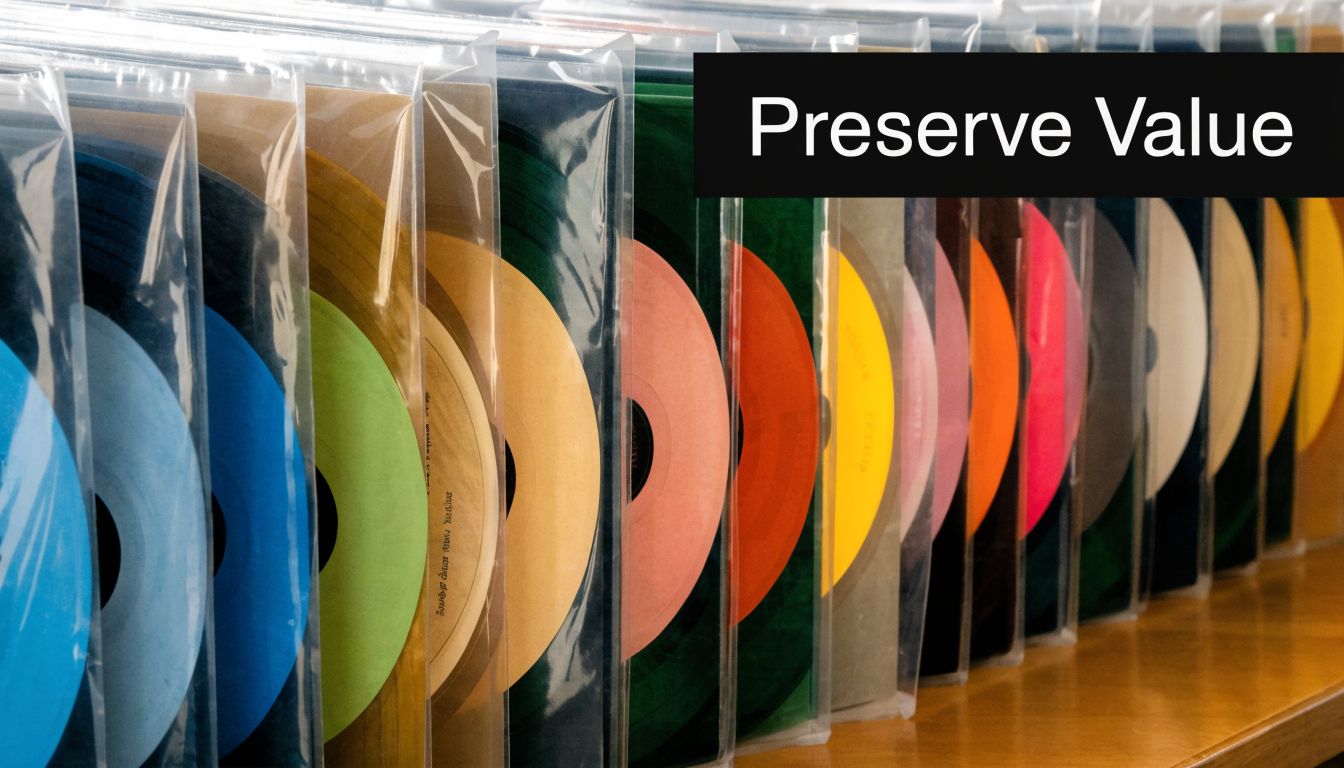
A record only holds value if you keep it in saleable condition. That sounds obvious, but plenty of collections lose value through bad storage rather than bad buying. Ringwear, warped discs, split seams, mouldy sleeves, and scuffed surfaces are usually preventable.
The habits that preserve value
Store records upright, never stacked flat for long periods. Use decent outer sleeves and anti-static inner sleeves. Handle the record by the edges and label, not the grooves.
Cleaning also matters, but it needs restraint. Dust removal before and after play helps. Heavy scrubbing with the wrong cloth or fluid does not. If a record is valuable, treat it like an object you may need to resell to a demanding buyer.
A sensible routine looks like this:
- Sleeve the jacket to reduce shelf wear and rubbing.
- Replace damaged inner sleeves if they’re scratching the vinyl, but keep original printed inners if possible.
- Keep records away from heat. Radiators, lofts, direct sun, and hot cars are all bad ideas.
- Log your best pieces so you’ve got a record of what you own and what condition it’s in.
Storage is part of portfolio management
For larger or more valuable collections, space and climate become practical issues. If your home setup is crowded, damp, or exposed to temperature swings, outside storage can make sense. Options like Nottingham climate controlled storage show the kind of environment worth looking for if you need a steadier space for collectible media.
Clean records sell faster, grade more honestly, and create fewer disputes.
Insurance is worth thinking about too. Not every collection needs a specialist policy, but once the replacement cost becomes uncomfortable, it’s sensible to document the collection and check what your existing cover includes. Records are easy to underestimate because they accumulate gradually. Their total value often surprises the owner first.
Calculating Realistic ROI and Managing Risks
The romantic version of vinyl investing usually falls apart. People love talking about records that doubled in value. They talk much less about the shelves full of releases that barely moved, the grading disputes, the fees, or the time it takes to turn a collection into cash.
The biggest problem is simple. UK-specific ROI data is scarce. That means anyone pretending there’s a clean, predictable formula is overselling the case.
According to Vinyl Alliance on 2026 vinyl sales and collector returns, UK resale premiums on platforms like Discogs are only 15 to 25% above retail after 12 months. That’s not nothing, but it’s a long way from the fantasy some buyers have in mind. The same source also points to a stronger practical angle for DJs, noting event rentals of £50 to £100 per night, and that 40% of UK indie store sales come from used or rental stock.
Why the resale story is less glamorous than it sounds
A modest resale premium can disappear quickly once you count postage materials, seller fees, returns, grading risk, and the simple fact that many records take time to sell. If you bought a release because it was marketed as “exclusive” but thousands of similar variants exist, you may own something desirable but not especially scarce.
That’s one reason I’m cautious about mass-produced “collectible” editions. A coloured pressing can look brilliant and still end up ordinary if too many versions chase the same buyer.
The hybrid return most people miss
For working DJs, selectors, and event businesses, vinyl can generate return in a different way. A rare disco 12-inch, an original soul LP, or a crate of floor-fillers might not deliver life-changing resale gains, but they can earn their keep through bookings, rentals, and differentiation.
That matters because utility changes the maths. If a record helps you land better gigs, shape a stronger brand, or offer a more distinctive service, its return isn’t limited to what someone will pay for it later.
A record that earns money in the booth can outperform a record that sits sealed on a shelf waiting for the “right buyer”.
A broader industry discussion of music products, repeatable revenue, and physical formats can help frame that mindset, which is why this video is worth a look:
The 2026 risks to keep in view
Not every risk shows up in resale data. Some sit upstream in production and release strategy. Turnaround times for vinyl pressing have stretched to around six weeks in early 2026, and production costs favour larger runs over very small ones, according to this industry video on vinyl production constraints. That can help committed operators who plan early, but it also puts pressure on small buyers and independent artists.
The bigger risks are practical:
- Variant saturation. If too many “limited” copies exist, scarcity gets diluted.
- Liquidity risk. Selling records quickly at full value is hard.
- Condition risk. A damaged sleeve or noisy play grade can wipe out your margin.
- Taste risk. What feels hot now may cool once the release cycle moves on.
So, are vinyl records a good investment in 2026? They can be, but mostly for people who define return broadly and buy with discipline.
Final Verdict Your Personal Vinyl Investment Strategy
The cleanest answer is this. Vinyl is a good investment in 2026 for some people, some records, and some goals. It is not a shortcut to easy profit.
If you’re a casual collector, buy what you love first. Favour quality over quantity. Learn to spot condition issues, avoid overhyped variants, and enjoy the collection even if prices go nowhere. That keeps the purchase worthwhile.
If you’re a serious investor, be much pickier. Focus on pressings with genuine scarcity, documented desirability, and strong condition. Build knowledge in a few lanes rather than trying to own everything. A smaller, sharper collection usually beats a broad one.
If you’re a working DJ or event professional, think in hybrid terms. Buy records that create atmosphere, authority, and replay value in real rooms. A killer run of disco, soul, funk, or house can pay back through use long before resale enters the picture. That’s often the smartest version of vinyl investing.
A collection also says something about the person behind it. For businesses, creators, and selectors, presentation matters too, right down to visual identity, much like the clean branding shown in this VinylGold logo asset.
The mistake is asking only whether vinyl will go up. A better question is whether the records you buy can hold meaning, hold utility, and hold enough value to justify the money tied up in them. When all three line up, vinyl stops being hype and starts becoming a serious, if specialised, asset.
If you want help creating events where great records do more than sit on a shelf, VinylGold brings a collector’s ear and a DJ’s discipline to weddings, private parties, and brand events across London, South East London, and Kent.