
Few bands have compressed so much innovation into so short a career. Cream — the British power trio that existed from 1966 to 1969 — permanently changed rock music. They fused electric blues, psychedelia, and jazz improvisation into something entirely new. Their influence stretches from heavy metal to progressive rock, and their records remain essential listening today. Before diving into the full discography, here are the most important things to know about Cream.
Everything You Need to Know About Cream
Who were the members of Cream? Cream consisted of three virtuosos: guitarist Eric Clapton, bassist and vocalist Jack Bruce, and drummer Ginger Baker. Each member came to the band with serious credentials. Clapton had already earned a legendary reputation through his work with the Yardbirds and John Mayall’s Bluesbreakers. Bruce was a classically trained musician with a fiercely melodic bass style. Baker was one of the most technically gifted and rhythmically adventurous drummers of his generation, drawing heavily on jazz and African polyrhythmic traditions. Together, they created a sound far greater than the sum of its parts — a live improvisation-driven approach that audiences had never encountered before in rock music.
Why did Cream break up? The tensions within Cream were almost as famous as the music itself. Baker and Bruce had a notoriously volatile personal relationship, frequently clashing both personally and professionally. The pressure of relentless touring took a significant toll on all three members. Clapton, meanwhile, grew increasingly disillusioned with the band’s direction. He heard Blind Faith’s music and felt creatively stifled by the “guitar hero” expectations audiences placed on him. Each member wanted to explore new creative territory. By 1968, the decision to disband was mutual, though no less significant. Their farewell concerts at the Royal Albert Hall in November 1968 drew enormous crowds and confirmed their status as one of rock’s most important acts.
Is anyone from Cream still alive? Sadly, only Eric Clapton remains. Jack Bruce passed away on 25 October 2014, following liver disease. He left behind a rich solo catalogue and was widely regarded as one of the greatest rock bassists who ever lived. Ginger Baker died on 6 October 2019, after a long struggle with chronic obstructive pulmonary disease. His drumming innovations — particularly his use of double bass pedals in rock — had an incalculable influence on generations of musicians. Clapton continues to perform and record, maintaining one of the most enduring careers in rock history.
What was Cream’s biggest hit? “Sunshine of Your Love” remains Cream’s signature song and most commercially successful single. Jack Bruce wrote the descending bass riff after attending a Jimi Hendrix concert, inspired by the experience. Clapton and lyricist Pete Brown completed the track, and it appeared on Disraeli Gears in 1967. The song reached number 36 in the UK and number 5 in the United States, becoming one of the defining riffs in rock history. Its simple but hypnotic structure made it immediately accessible, while the raw power of its delivery showcased everything Cream did best. It has since been inducted into the Grammy Hall of Fame and covered by dozens of artists.
What is the “Woman Tone”? The “Woman Tone” refers to Eric Clapton’s signature guitar sound — thick, smooth, and heavily overdriven. He achieved it primarily by rolling the tone knob on his Gibson SG down to zero and cranking the volume, creating a sustained, almost vocal quality. The sound is closely associated with his use of a Marshall amplifier stack and, on certain recordings, a wah-wah pedal held in a fixed position. The result is a tone that sounds almost like a singing voice — hence the name. Clapton used it most memorably on “Sunshine of Your Love” and “White Room.” The Woman Tone became one of the most imitated guitar sounds in rock history and remains inseparable from Cream’s sonic identity.
![Fresh Cream [VINYL]](https://m.media-amazon.com/images/I/71Y+A1Yh8dL._AC_SY355_.jpg)



The Cream Discography: A Complete Guide
Studio & Hybrid Albums
Fresh Cream (1966)
| Detail | Info |
|---|---|
| Year | 1966 |
| Type | Studio Album |
| Key Tracks | “I Feel Free”, “Spoonful”, “Toad” |
| Label | Reaction Records |
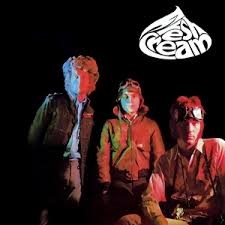
Fresh Cream announced the arrival of something genuinely new. Cream launched their debut with a record rooted in electric blues but stretched beyond it in exciting directions. The album draws heavily on Chicago blues tradition, covering tracks by Muddy Waters, Robert Johnson, and Skip James. However, the trio transforms each song through sheer improvised intensity. Ginger Baker’s drum showcase “Toad” was one of the first extended drum solos on a rock record. Jack Bruce’s bass playing is melodic and driving, anchoring each track with uncommon authority. Clapton’s guitar work crackles with restraint one moment and fury the next. “I Feel Free,” the band’s second single, offered a glimpse of the psychedelic direction Cream would soon pursue. The production, handled by Robert Stigwood, now sounds slightly dated. Nevertheless, the energy of these performances remains undeniable. Fresh Cream reached number six on the UK Albums Chart — a remarkable achievement for a debut. It confirmed that Cream were not simply a blues revival act. They were building something new from blues foundations.
Disraeli Gears (1967)
| Detail | Info |
|---|---|
| Year | 1967 |
| Type | Studio Album |
| Key Tracks | “Sunshine of Your Love”, “Strange Brew”, “Tales of Brave Ulysses” |
| Label | Reaction Records |
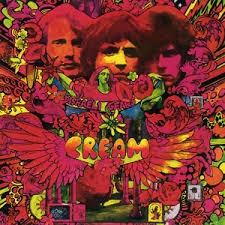
Disraeli Gears is the crown jewel of the Cream catalogue — a psychedelic masterpiece recorded in New York with producer Felix Pappalardi. The album captures the band at their most focused and inventive. Unlike their sprawling live performances, these studio recordings are tightly constructed and brimming with imagination. “Sunshine of Your Love” became Cream’s defining moment, its descending bass riff instantly recognisable. “Strange Brew” is a slow-burning blues shuffle elevated by Clapton’s fluid soloing. “Tales of Brave Ulysses,” meanwhile, introduced the wah-wah pedal to rock music — a pivotal moment. Martin Sharp’s iconic swirling cover artwork perfectly complements the music inside. The album reached number five in both the US and UK charts. Cream proved here that they could translate their improvisational power into disciplined songwriting. Every track rewards repeated listening. Furthermore, the record’s influence on later hard rock and heavy metal cannot be overstated. Disraeli Gears remains a landmark of late 1960s rock.
Wheels of Fire (1968)
| Detail | Info |
|---|---|
| Year | 1968 |
| Type | Hybrid Double Album (Studio + Live) |
| Key Tracks | “White Room”, “Crossroads” (Live), “Politician” |
| Label | Polydor / Atco |
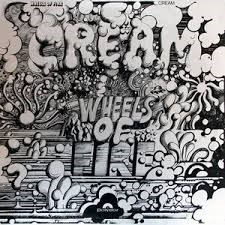
Wheels of Fire made history as the world’s first double album to receive platinum certification. Cream split the record into two distinct halves: a polished studio disc and a raw live disc recorded at the Fillmore West in San Francisco. The studio side opens with “White Room,” arguably the band’s most sophisticated composition. Its shifting time signatures and orchestral strings arrangement showcase a new level of musical ambition. “Politician” is a swaggering blues-rocker with a groove that feels almost funky. The live disc, meanwhile, captures Cream at their most elemental. Their version of Robert Johnson’s “Crossroads” is one of rock’s great live performances. Clapton’s solo burns with urgency and precision. Additionally, Baker’s “Toad” returns in an extended live form, stretching past sixteen minutes. The two halves complement each other beautifully. Together, they demonstrate the full range of what Cream were capable of, both in the studio and on stage.
Goodbye (1969)

| Detail | Info |
|---|---|
| Year | 1969 |
| Type | Hybrid Album (Studio + Live) |
| Key Tracks | “Badge”, “I’m So Glad” (Live) |
| Label | Polydor / Atco |
Goodbye arrived as a farewell statement, released shortly after Cream officially disbanded. The album combines three new studio recordings with three live tracks from their final Los Angeles concerts. “Badge” stands as the album’s centrepiece and one of the finest songs in the entire Cream catalogue. Remarkably, George Harrison co-wrote “Badge” with Eric Clapton, also playing rhythm guitar under the pseudonym “L’Angelo Misterioso.” The song’s bridge section, with its unusual chord movement, gives it a melancholy depth that suits a farewell record perfectly. Cream deliver the live recordings — “I’m So Glad,” “Politician,” and “Sitting on Top of the World” — with full commitment, despite knowing the end was near. The performances capture a band still playing at the highest level. Goodbye reached number two in the UK and number two in the US. Though brief, it offered a dignified and emotionally resonant conclusion to the band’s studio career. Cream went out on their own terms.
Live Cream (1970) & Live Cream Volume II (1972)
These two posthumous releases give fans the most extensive documentation of Cream’s long-form improvisation. Live Cream draws from the same Fillmore West recordings as Wheels of Fire, offering extended versions of tracks like “Lawdy Mama” and “Sweet Wine.” Live Cream Volume II digs deeper, including a remarkable 17-minute version of “Steppin’ Out” and an explosive reading of “Deserted Cities of the Heart.” Both albums are essential for anyone who wants to understand what made Cream genuinely revolutionary as a live act.
Royal Albert Hall London May 2-3-5-6, 2005
| Detail | Info |
|---|---|
| Year | 2005 (Recorded) / Released 2005 |
| Type | Live Reunion Album |
| Key Tracks | “Crossroads”, “White Room”, “Sunshine of Your Love” |
- The definitive document of Cream’s brief, legendary reunion.
- Released as both a 2-CD set and a DVD concert film.
- Baker, Bruce, and Clapton performed four sold-out nights to critical acclaim.
- The performances demonstrate that their chemistry — and their power — remained fully intact.
- “Crossroads” and “Sunshine of Your Love” received extended, electrifying treatments.
- For many fans, this reunion confirmed Cream’s place among rock’s all-time great live acts.
Full Discography at a Glance
| Album | Year | Type | Key Tracks | Why It Matters |
|---|---|---|---|---|
| Fresh Cream | 1966 | Studio | “I Feel Free”, “Spoonful”, “Toad” | Birth of the power trio; blues foundations with jazz drumming |
| Disraeli Gears | 1967 | Studio | “Sunshine of Your Love”, “Strange Brew”, “Tales of Brave Ulysses” | Psychedelic masterpiece; iconic Martin Sharp cover art |
| Wheels of Fire | 1968 | Hybrid | “White Room”, “Crossroads” (Live), “Politician” | World’s first certified platinum double album |
| Goodbye | 1969 | Hybrid | “Badge”, “I’m So Glad” (Live) | Posthumous farewell; “Badge” co-written by George Harrison |
| Live Cream | 1970 | Live | “Lawdy Mama”, “Sweet Wine” | Essential document of their improvisational power |
| Live Cream Vol. II | 1972 | Live | “Steppin’ Out”, “Deserted Cities of the Heart” | Extended jams at their most adventurous |
| Royal Albert Hall 2005 | 2005 | Live Reunion | “Crossroads”, “Sunshine of Your Love” | The definitive reunion recording |
Why Cream Still Matters in 2026
Cream’s career lasted just three years. Yet their impact on rock music has proven permanent. They essentially invented the power trio format, demonstrating that three musicians could generate more power than most larger bands. Their approach to live improvisation opened the door for progressive rock, jazz fusion, and heavy metal. Clapton’s guitar work set a standard that players still chase today. Bruce’s melodic bass style changed how bassists thought about their role in a band. Baker’s polyrhythmic drumming remains a touchstone for jazz and rock drummers alike.
Beyond technique, Cream gave rock music a sense of ambition it had not previously possessed. They proved that rock could be complex, improvisational, and emotionally deep without losing its visceral energy. Every great power trio that followed — from ZZ Top to Rush to the White Stripes — owes something to what Cream built between 1966 and 1969. Their records have never gone out of print. Their influence has never faded. For anyone serious about rock music, the Cream discography is not optional — it is foundational.