
N.W.A changed hip-hop by telling direct stories about life in Los Angeles. Their music shaped gangsta rap and influenced artists worldwide. This guide explores every N.W.A release in order, while also answering key questions that fans and search engines often ask.
What does N.W.A stand for?
N.W.A stands for Niggaz Wit Attitudes. The name reflects the group’s bold identity and direct approach to music. From the start, N.W.A used this name to signal honesty and resistance. As a result, the group quickly built a reputation for challenging authority and social norms.
Who were the original members of N.W.A?
The original lineup included Eazy-E, Dr. Dre, Ice Cube, Arabian Prince, and DJ Yella. Shortly after, MC Ren joined the group. Together, N.W.A created a distinct sound that mixed sharp lyrics with hard beats.
Why did N.W.A break up?
N.W.A broke up due to disputes over royalties and management issues. Ice Cube left first after questioning financial transparency. Later, Dr. Dre exited following disagreements with manager Jerry Heller. These conflicts weakened the group, and N.W.A eventually disbanded.
What was N.W.A’s first album?
N.W.A’s first release was “N.W.A. and the Posse” (1987). However, this project works as a compilation of early recordings. In contrast, “Straight Outta Compton” (1988) stands as the group’s official debut studio album. Therefore, fans often view it as the true starting point of N.W.A’s legacy.
What was the FBI’s reaction to “Fuck tha Police”?
The song “Fuck tha Police” triggered a strong reaction from the Federal Bureau of Investigation. The agency sent a warning letter to Ruthless Records. This response increased public attention, and it helped cement N.W.A’s reputation as controversial voices in hip-hop.
N.W.A Discography Review
N.W.A. and the Posse (1987)
N.W.A. and the Posse (1987) introduces the early sound of N.W.A during a key transition period. Although this release works as a compilation, it still plays an important role in the N.W.A story. At this stage, N.W.A explored an electro-hop style influenced by earlier West Coast acts. However, the group already showed signs of a harder edge.
Tracks like “Panic Zone” and “8-Ball” highlight this shift in direction. While the beats still carry electronic elements, the lyrics begin to reflect street realities. As a result, N.W.A started moving away from the polished sound of club rap. This transition helped define their later identity.
Moreover, the presence of multiple Ruthless Records artists adds variety to the project. Even so, N.W.A remains the focal point throughout the compilation. Their performances stand out because of their energy and direct tone.
Over time, listeners have re-evaluated this release within the broader N.W.A discography. Although it lacks the cohesion of later albums, it documents an important evolution. Therefore, it offers valuable insight into how N.W.A developed their voice.
In hindsight, N.W.A used this project as a stepping stone. Soon after, they would refine their message and production style. Consequently, this early work remains essential for understanding how N.W.A became pioneers of gangsta rap.
Straight Outta Compton (1988)
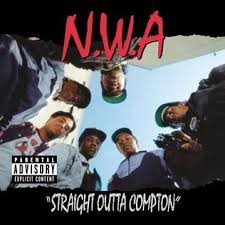
Straight Outta Compton (1988) defines the sound and message of N.W.A at their peak. From the opening moments, N.W.A deliver raw energy and direct storytelling. This album introduced what the group called “reality rap,” which focused on real-life experiences.
The production, led by Dr. Dre, blends heavy beats with sharp rhythms. As a result, N.W.A created a sound that felt both aggressive and accessible. Each track reinforces the group’s commitment to honest expression.
Importantly, N.W.A used this album to address social issues, including police brutality and systemic inequality. Songs like “Fuck tha Police” sparked national debate. Consequently, the group attracted criticism as well as strong support.
Despite limited radio play, the album achieved major commercial success. This success proved that audiences connected with N.W.A’s message. Furthermore, it showed that hip-hop could thrive without mainstream approval.
The chemistry between Ice Cube, Eazy-E, and the rest of N.W.A drives the album forward. Their performances feel urgent and purposeful.
Straight Outta Compton (1988) set a new standard for hip-hop. Even today, N.W.A remains central to discussions about the genre’s evolution. Therefore, this album stands as a key moment in music history.
100 Miles and Runnin’ (1990)
100 Miles and Runnin’ (1990) marks a turning point for N.W.A after major internal changes. Following the departure of Ice Cube, N.W.A needed to redefine their sound. This EP shows how the group responded with renewed intensity.
From the start, N.W.A increase the tempo and energy across the project. The production leans into faster beats and layered arrangements. As a result, the music feels more urgent and confrontational.
Lyrically, N.W.A address tensions within the group and the wider hip-hop scene. Several tracks respond directly to critics and former members. Therefore, this release begins the well-known diss exchanges involving Ice Cube.
Meanwhile, Dr. Dre continues to refine his production style. His work here hints at the future development of G-Funk. Consequently, the EP serves as a bridge between earlier sounds and later innovations.
Although shorter than a full album, this release still carries weight within the N.W.A catalogue. Each track contributes to the group’s evolving identity. Moreover, the performances from MC Ren and Eazy-E feel focused and confident.
100 Miles and Runnin’ (1990) captures N.W.A during a period of change. Despite internal conflict, N.W.A maintain their influence and direction. This EP proves their ability to adapt while staying true to their core message.
Niggaz4Life (1991)

Niggaz4Life (1991) represents the final studio album from N.W.A. By this point, the group had evolved both musically and lyrically. As a result, this release sounds more polished and structured than earlier work.
Production again plays a central role, with Dr. Dre pushing his style forward. The album introduces elements that would later define G-Funk. Therefore, N.W.A helped shape the next phase of West Coast hip-hop.
At the same time, the lyrics become darker and more confrontational. N.W.A continue to challenge authority, but they also explore more extreme themes. This approach drew criticism, yet it also reinforced their reputation.
Commercially, the album achieved significant success. It debuted at number one on the Billboard 200. Consequently, N.W.A proved their lasting appeal even during internal struggles.
However, tensions within N.W.A continued to grow during this period. Disputes over management and finances affected group dynamics. These issues eventually led to the group’s breakup.
Even so, performances from MC Ren and Eazy-E remain strong throughout. Their delivery keeps the album engaging from start to finish.
Niggaz4Life (1991) closes the N.W.A chapter with impact. The album highlights both their growth and their challenges. Ultimately, N.W.A leave behind a legacy that continues to influence hip-hop today.
N.W.A created a short but powerful discography that continues to influence hip-hop culture. From early experimentation to chart-topping success, N.W.A consistently pushed boundaries and challenged expectations. Each release shows a clear evolution in sound, production, and lyrical focus. Moreover, their willingness to address real-world issues helped redefine what rap music could achieve. Although internal conflicts ended their run, N.W.A left a lasting mark on the genre. Today, artists still draw inspiration from their honesty, energy, and fearless approach. As a result, N.W.A remain one of the most important groups in music history.