
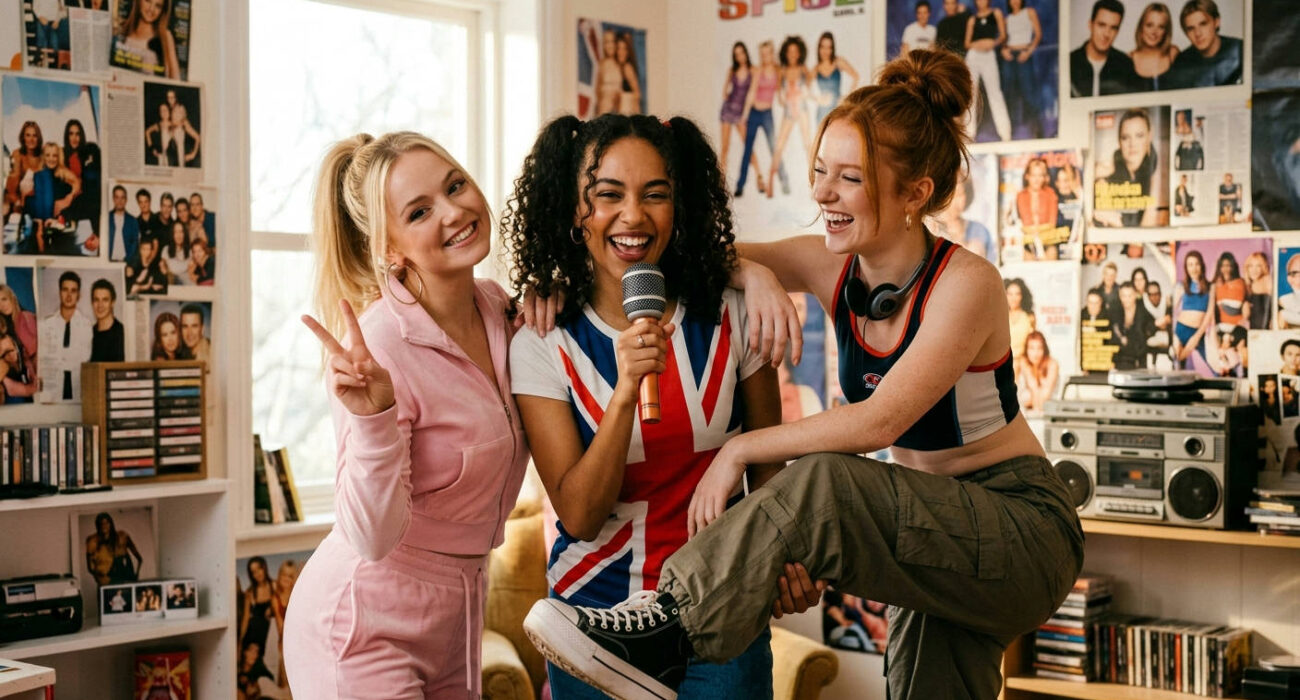
It’s impossible to talk about the 90s without them. Five women who didn’t just sing songs—they detonated a cultural bomb that reshaped pop music forever. The Spice Girls 90s pop music influence wasn’t a footnote in music history; it was the entire chapter. They ripped up the rulebook on what a pop group, particularly an all-female one, could be and achieve.
Three decades on from their earth-shattering debut, their legacy isn’t about nostalgia. It’s about a fundamental shift in music, marketing, and culture that we still feel today. They were a force of nature, and at Vinyl Gold UK, we believe understanding their impact is key to understanding the modern music industry.
The Unstoppable Spice Girls 90s Pop Music Influence on the Charts
Before “Wannabe,” the idea of a girl group from the UK achieving global domination on the scale of The Beatles was laughable. After “Wannabe,” it was a reality. The song wasn’t just a hit; it was a declaration of intent that topped the charts in 37 countries.
This wasn’t a one-off fluke. Their debut album, Spice (1996), became the best-selling album by a female group in history. It was a commercial juggernaut that redefined success for pop artists, proving that personality-driven, unapologetically fun music could move millions of units.
From “Wannabe” to Global Domination
The single “Wannabe” was a Trojan horse. Its chaotic, infectious energy, combined with a video shot in one take, felt raw and authentic in a way most polished pop did not. It introduced the world to five distinct personalities and a simple, powerful message: friendship first.
This message resonated universally. The song’s success was immediate and overwhelming, establishing the group as a global phenomenon overnight. This wasn’t just a UK success story; they became one of the best-selling English artists of all time, conquering the notoriously difficult US market with an ease not seen in decades.
Deconstructing the Success of Spice (1996) and Spiceworld (1997)
The albums were just as impactful as the singles. Spice delivered hit after hit, from the sultry R&B of “2 Become 1” to the dance-pop perfection of “Who Do You Think You Are.” It was a masterclass in variety, held together by the group’s undeniable chemistry.
The follow-up, Spiceworld (1997), was released at the absolute peak of their fame. It avoided the sophomore slump by doubling down on everything that made them great: bigger hooks, more diverse musical styles (including salsa and Motown influences), and lyrics that continued to champion self-belief and unity. The album sold over 14 million copies worldwide, cementing their status as pop royalty.
You can still feel that energy today. Grabbing a copy of Spice on vinyl or Spiceworld on vinyl isn’t just buying a record; it’s owning a piece of a cultural revolution.
More Than a Slogan: The “Girl Power” Phenomenon
“Girl Power” wasn’t a marketing gimmick cooked up in a boardroom. It was the core of the Spice Girls’ identity, a philosophy they lived and breathed. It was loud, in-your-face, and, most importantly, accessible to millions of young fans.
They took feminist ideas out of academic texts and put them onto lunchboxes and T-shirts. Their version of empowerment wasn’t about complex theory; it was about confidence, ambition, and sticking by your mates.
“We’re all about Girl Power. We’re not anti-men – we’re not trying to take over the world. We just want to be equal.” – Geri Halliwell, 1997
Redefining Feminism for the Mainstream
For a generation of young women, the Spice Girls were their first introduction to feminist ideals. They presented a united front, showing that women were stronger together. They sang about their own desires (“Tell me what you want, what you really, really want”) and set their own terms in relationships.
This was a radical departure from the often-passive roles female singers were expected to play. They were cheeky, assertive, and entirely in control of their own narrative.
The Power of Five: Crafting Marketable Personas
The genius of the Spice Girls brand was the creation of five distinct, relatable personas:
- Scary Spice (Mel B): Wild, outspoken, and fearless.
- Sporty Spice (Mel C): Athletic, down-to-earth, and relatable.
- Baby Spice (Emma Bunton): Sweet, innocent, and playful.
- Ginger Spice (Geri Halliwell): Fiery, ambitious, and the outspoken leader.
- Posh Spice (Victoria Beckham): Chic, sophisticated, and fashion-forward.
This strategy was brilliant. Every fan could see a part of themselves in at least one member. It fostered a deeper connection than just liking their songs; it created a sense of identity and belonging. This model of creating distinct archetypes within a group would be copied endlessly for years to come.
The Blueprint: How the Spice Girls Changed the Pop Music Formula
The Spice Girls didn’t just have an influence; they were the influence. They created a new blueprint for what a pop act could be, and the aftershocks of their success created the pop environment of the late 90s and early 2000s.
Their success demonstrated the immense commercial potential of personality-driven pop. Record labels scrambled to replicate their formula, leading to a surge in manufactured pop groups across the UK and the US.
Paving the Way for the Teen Pop Explosion
Without the Spice Girls kicking the door down, would the world have been ready for Britney Spears, Christina Aguilera, or Jessica Simpson? The Spice Girls proved there was a massive, untapped audience for unapologetic, female-led pop music.
They normalized a certain level of spectacle and branding that became standard for the pop superstars who followed. They showed that a pop star’s identity and story were just as important as the music itself.
The Archetype for the Modern Pop Group
Look at the biggest pop groups of the last 25 years, from Girls Aloud and Little Mix in the UK to the global dominance of K-pop acts like BLACKPINK. The DNA of the Spice Girls is all over them.
The formula is clear: distinct personalities, a strong visual identity, empowering lyrical themes, and high-energy choreography. The Spice Girls 90s pop music influence is so ingrained in the pop machine that many modern artists might not even realize they’re following a path first blazed by five women from Britain.
A Deeper Dive into the ### Spice Girls 90s Pop Music Influence
The influence wasn’t just on stage. It was in the business itself. Simon Fuller, their manager, perfected a model of 360-degree marketing that encompassed music, merchandise, television, and film. This holistic approach to building a brand, not just a band, is now the standard operating procedure for major pop acts in 2026.
They proved that a pop group could be a global brand, a multi-million-pound enterprise with revenue streams far beyond album sales and concert tickets.
The Sound of Spicemania: An Analysis of Their Musical Style
It’s easy to dismiss their music as simple “bubblegum pop,” but that does a disservice to the clever craftsmanship behind their biggest hits. The sound was a carefully calibrated fusion of genres designed for maximum appeal.
The production, handled by teams like Absolute and Stannard & Rowe, was slick, polished, and radio-ready. They blended the catchy melodies of pure pop with the rhythms and basslines of R&B and the energy of dance music.
A Fusion of Pop, R&B, and Dance
Listen closely to a track like “Say You’ll Be There.” Underneath the pop sheen is a clear R&B influence, from the harmonica solo to the soulful vocal ad-libs. This blend allowed them to cross over to different radio formats and appeal to a wider audience.
Their ability to jump between styles was a key strength. They could deliver a heartfelt ballad like “2 Become 1” and then turn around and release an energetic dance track like “Spice Up Your Life” without it feeling forced. This musical versatility kept their albums interesting and showcased their range.
Lyrical Themes of Friendship and Empowerment
The lyrical content was the secret weapon. While their contemporaries often sang about pining for a boy, the Spice Girls’ primary lyrical focus was on friendship, self-respect, and solidarity.
“Wannabe” is the ultimate example. The famous line “If you wanna be my lover, you gotta get with my friends” was a mission statement. It placed female friendship at the center of the narrative, a revolutionary act in 90s pop music. This focus on platonic love and mutual support is a major reason their music has endured and continues to resonate.
Beyond the Music: A Merchandising and Media Empire
The Spice Girls phenomenon transcended music. They became a brand, a visual identity that was plastered on everything imaginable. This wasn’t just a side project; it was a core part of their strategy for global domination.
The scale of their merchandising was unprecedented. From dolls and sticker books to their own branded PlayStation game, they were everywhere. Their faces adorned Pepsi cans, Polaroid cameras, and even potato crisps. They didn’t just sell records; they sold a lifestyle.
The Cinematic Takeover: Spiceworld: The Movie
At the height of their fame, they released Spiceworld: The Movie (1997). The film was a self-aware, chaotic, and ridiculously fun romp that knowingly winked at their own manufactured image. Critics were divided, but fans turned out in droves, and it became a cult classic.
As detailed by Box Office Mojo, the film was a commercial success, grossing over $100 million worldwide. It further solidified their status as cultural icons, moving them from the music charts to the silver screen and proving their brand had limitless potential.
Fashion as a Weapon: Platform Sneakers and Union Jacks
Each member’s personal style was an extension of their persona and a crucial part of the brand. Victoria’s little black dresses, Mel C’s tracksuits, and Emma’s babydoll dresses became iconic 90s fashion staples.
The most legendary fashion moment, of course, was Geri Halliwell’s Union Jack dress at the 1997 BRIT Awards. It was a bold, unapologetic statement of identity that became one of the most famous images of the decade. They understood that fashion was a powerful tool for communication and used it to amplify their message of individuality and British pride.
Critical Re-evaluation: From Pop Pariahs to Cultural Icons
In the 90s, the “serious” music press often treated the Spice Girls with disdain. They were frequently dismissed as a manufactured product, their music derided as disposable pop for children. The term “bubblegum” was used as an insult, a way to delegitimize their massive success.
However, as time has passed, a significant critical re-evaluation has taken place. The very things they were criticized for—their manufactured nature, their commercial savvy, their simple, empowering messages—are now seen as their greatest strengths.
“The Spice Girls were never just a pop group. They were a social and cultural catalyst. To ignore their impact is to ignore a fundamental shift in how pop music engages with its audience and the world.” – Dr. Jennifer O’Connell, University of Pop Culture Studies, 2025
Academics, cultural critics, and a new generation of music journalists now recognize the Spice Girls 90s pop music influence as a pivotal moment. They are studied for their brilliant marketing, their impact on “ladette culture,” and their role in mainstreaming feminist ideas for a generation. The snobbery has faded, replaced by an appreciation for their incredible achievements.
Experiencing the Legacy on Vinyl
In an age of streaming, there’s a unique power in owning a physical copy of a truly iconic album. The warmth and depth of vinyl bring a new dimension to these classic pop tracks. Hearing the bassline of “Who Do You Think You Are” or the harmonies on “Viva Forever” on a proper setup is an experience every music fan should have.
For collectors and new fans alike, the Spice Girls’ catalogue is an essential part of any 90s pop collection. It’s not just about the music; it’s about holding a piece of history in your hands.
Why Spice and Spiceworld are Vinyl Essentials
These albums are perfectly suited for the vinyl format. The artwork, a crucial part of their branding, is presented in its full glory on a 12-inch sleeve. The act of placing the needle on the record creates a deliberate, focused listening experience that a simple click on a streaming service can’t replicate.
Furthermore, a well-mastered vinyl pressing can reveal new layers in the production. You might notice instrumental details or vocal nuances that get lost in compressed digital files. For a truly great listening experience, pairing these records with one of the best turntables under £300 in the UK can make these 30-year-old tracks sound fresh and vibrant.
Starting Your 90s Pop Vinyl Collection
If you’re looking to dive into collecting 90s pop, the Spice Girls are the perfect starting point. Their first two albums are the cornerstones of the era.
- Start with the classics: Secure your copies of Spice (1996) and Spiceworld (1997). These are non-negotiable.
- Look for special editions: Keep an eye out for anniversary reissues or colored vinyl pressings, which often become highly sought-after collector’s items.
- Don’t forget Forever: While their third album, Forever (2000), was released after Geri’s departure and had a more mature R&B sound, it’s still a crucial part of their story and a must-have for completists. Find a copy of Forever on vinyl to round out the collection.
The enduring legacy of the Spice Girls is undeniable. They weren’t just a band that sold millions of records; they were a cultural earthquake. They rewrote the rules for pop stardom, championing a message of friendship and empowerment that defined a generation and continues to inspire artists in 2026. Their influence is woven into the very fabric of modern pop music, proving that Girl Power is, indeed, forever.