
The Definitive Guide to Every Metallica Album Rankings (2026 Edition)
Few bands have carved a path as dramatic and far-reaching as Metallica. From the sweat-soaked clubs of early 1980s San Francisco to stadium stages across the globe, they redefined what heavy music could be. Their discography spans four decades, multiple genre shifts, and more controversy than most bands could survive. Whether you are a lifelong fan or someone just discovering the band, this guide covers everything — every album, every era, and everything happening in 2026.
In this comprehensive overview, we will delve into the Metallica album rankings, exploring each release’s impact and significance within their storied career.
What You Need to Know Right Now
What is the best Metallica album for beginners?
Two albums consistently top the list for new listeners: The Black Album (1991) and Master of Puppets (1986). The Black Album is the easier entry point. It is polished, melodic, and built around huge, memorable hooks. Tracks like Enter Sandman and The Unforgiven pull you in without overwhelming you. Master of Puppets, on the other hand, rewards patience. It is faster, more aggressive, and structurally ambitious — but it delivers one of the most exhilarating listening experiences in rock history. If you want accessibility, start with The Black Album. If you want to understand why Metallica are considered legends, go straight to Master of Puppets.
Is Metallica touring in 2026?
Yes — and in a big way. The M72 World Tour continues into 2026 with a significant European and UK leg. The tour takes its name from the band’s 50th anniversary of drummer Lars Ulrich’s founding ad, placed in a Los Angeles newspaper in 1981. Metallica are playing massive outdoor venues and stadiums across the continent. The UK dates are among the most anticipated stops. Tickets have been in enormous demand, and the band are bringing their full production — pyrotechnics, elaborate staging, and a rotating setlist that keeps every show feeling fresh. If you have not yet secured tickets, acting quickly is strongly advised.
What is a “No Repeat Weekend”?
A No Repeat Weekend is one of Metallica’s most fan-celebrated touring concepts. When the band books two consecutive nights in the same city, they play two completely different setlists — no song appears on both nights. This means fans who attend both shows get an entirely unique experience each night. Deep cuts, rarities, and fan favourites all get a chance to appear. No Repeat Weekends have become a defining feature of the M72 World Tour, and they reward dedicated fans who make the commitment to attend multiple nights. For a band with a catalogue as deep as Metallica’s, it is a concept that works brilliantly and has earned widespread praise from the live music community.
When is the ReLoad Remastered Box Set being released?
The ReLoad Remastered Box Set is scheduled for release on June 26, 2026. The original album, released in 1997, was a companion piece to 1996’s Load — sharing that record’s bluesy, hard rock sensibility. The remaster is generating significant excitement among fans who felt ReLoad was always slightly underappreciated. Box sets of this kind typically include remastered audio, rarities, demo recordings, and extensive liner notes. Full details of the contents have been building anticipation, and for collectors and long-time fans alike, June 26th is firmly marked on the calendar.
Who are the current members of Metallica?
Metallica’s current lineup has remained stable since 2003. The four members are:
- James Hetfield — vocalist and rhythm guitarist, and one of the band’s primary songwriters
- Lars Ulrich — drummer and co-founder, the band’s strategic and conceptual driving force
- Kirk Hammett — lead guitarist, responsible for some of the most iconic solos in metal history
- Robert Trujillo — bassist, who joined in 2003 following the departure of Jason Newsted and has since become an integral part of the band’s sound and live identity
The Metallica Discography: Every Album Reviewed and Ranked
1983 — Kill ‘Em All
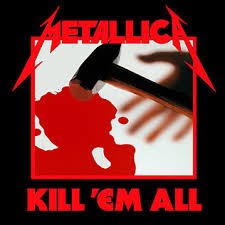
Kill ‘Em All did not just launch Metallica’s career — it launched an entire genre. In any serious look at Metallica album rankings, this debut demands its place near the top for sheer historical importance alone. Released in 1983, it arrived like a thunderclap. The speed was unprecedented. The aggression was raw and unfiltered. Tracks like Whiplash and Seek & Destroy set the template for thrash metal that hundreds of bands would follow. Furthermore, the album captured something that studio polish often erases — genuine danger. There was no safety net here. Metallica sounded like a band with something to prove. Indeed, they had everything to prove. The production is famously lo-fi by modern standards, but that roughness is part of its power. Consequently, Kill ‘Em All remains essential listening. It belongs in any ranking of Metallica’s catalogue as a foundational record that changed the direction of heavy music permanently.
1984 — Ride the Lightning
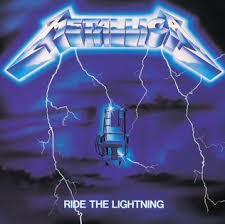
Just one year after their debut, Metallica released Ride the Lightning — and immediately proved they were far more than a one-trick speed machine. This record features prominently in any credible Metallica album rankings, and for good reason. The band introduced melody, atmosphere, and structural complexity without sacrificing their aggression. Fade to Black was a landmark moment — Metallica’s first ballad, and one of the most emotionally affecting songs in their catalogue. Moreover, For Whom the Bell Tolls opened with a bass intro that became instantly iconic. The album showed a band thinking beyond the obvious. Transitions between moods felt deliberate and assured. Additionally, the guitar work from Kirk Hammett demonstrated a maturity well beyond his years. Ride the Lightning expanded what thrash metal could express. As a result, it remains one of the most critically acclaimed albums in the Metallica discography — a record that pointed directly toward the masterpiece that would follow just two years later.
1986 — Master of Puppets
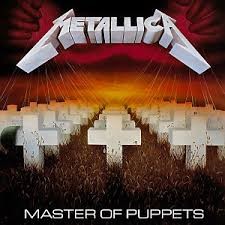
Master of Puppets is, by almost universal agreement, the greatest heavy metal album ever made. In every serious discussion of Metallica album rankings, it occupies the top position. Released in 1986, it achieved something remarkable — it was complex, progressive, and ferociously heavy, yet it connected with audiences on a visceral level. The title track alone is a nine-minute exploration of addiction and control that never loses its grip. Furthermore, Battery opens with an acoustic passage before detonating into one of the finest thrash riffs ever recorded. Orion is an instrumental of genuine beauty. Tragically, bassist Cliff Burton died in a tour bus accident later that year — making this the final album to feature his contributions. Consequently, Master of Puppets carries additional emotional weight. Every note on this record feels purposeful. It stands not merely as Metallica’s peak, but as a high-water mark for heavy music as a whole.
1988 — …And Justice for All
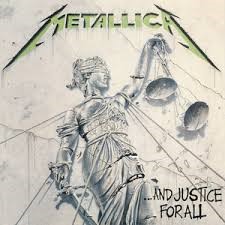
…And Justice for All is Metallica’s most divisive and most ambitious studio record. It features prominently in Metallica album rankings, though always with a caveat — the now-infamous mixing decision that rendered bassist Jason Newsted almost entirely inaudible. The controversy has followed this album for nearly four decades. Nevertheless, the music itself is extraordinary. Songs like One and Blackened are among the most structurally complex in the band’s entire catalogue. Riffs shift, time signatures change, and the band displays a compositional ambition rarely seen in heavy music. Moreover, One became Metallica’s first music video — introducing them to an even wider audience. The production, thin bass aside, is clean and precise. Additionally, the album’s themes — war, justice, political corruption — gave the lyrics unusual depth and weight. Despite its sonic imbalance, …And Justice for All remains a genuinely important record in the Metallica discography.
1991 — Metallica (The Black Album)
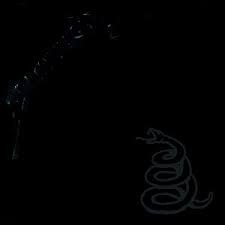
The Black Album is where Metallica became one of the biggest bands on the planet. In any ranking of Metallica album rankings, it represents a clear commercial and cultural peak. Bob Rock’s production stripped away the technical density of previous records and replaced it with something heavier in a different way — slower, more deliberate, and immensely powerful. Enter Sandman, The Unforgiven, and Nothing Else Matters became radio staples and cultural touchstones. Furthermore, the band demonstrated that heaviness did not require speed. Groove and space became their primary tools. Consequently, The Black Album sold over 30 million copies worldwide and spent years on charts across multiple countries. Critics initially questioned the shift. However, time has confirmed this as one of the great rock albums of the 1990s. Additionally, it remains the best starting point for anyone exploring the Metallica discography for the first time — accessible, powerful, and utterly consistent from start to finish.
1996 — Load
Load remains one of the most controversial entries in Metallica album rankings. The band cut their hair. They leaned into blues, Southern rock, and alternative influences. Long time fans reacted with fury. However, step back from the culture shock and Load reveals itself as a genuinely strong hard rock record. Tracks like Until It Sleeps, King Nothing, and Hero of the Day showcase strong song writing and a band deliberately exploring new territory. Furthermore, the production is warm and organic — a deliberate contrast to the precision of The Black Album. The album is long, and some critics argue it needed tighter editing. Nevertheless, its highs are considerable. Additionally, Load captures a specific moment — a globally successful band consciously refusing to repeat themselves. For fans willing to approach it on its own terms, rather than as a sequel to Master of Puppets, it rewards the effort. It occupies a complicated but legitimate place in the full Metallica discography.
1997 — ReLoad
ReLoad was recorded during the same sessions as Load and shares its elder sibling’s DNA entirely. In terms of Metallica album rankings, it has historically landed below Load — though 2026 is changing that conversation significantly. The upcoming ReLoad Remastered Box Set, due June 26, 2026, has prompted a widespread critical reassessment. Tracks like Fuel, The Memory Remains, and Devil’s Dance are harder and more direct than much of Load. Furthermore, The Unforgiven II extended the mythology of one of The Black Album’s most beloved songs. ReLoad suffered partly from timing and context — released just a year after Load, it felt like an overflow rather than a fully distinct statement. However, on its own terms, it contains some genuinely excellent song writing. Consequently, the remaster release offers a timely opportunity to reconsider its legacy. Additionally, for fans of the band’s mid-era sound, ReLoad delivers far more than its reputation has historically suggested.
2003 — St. Anger
St. Anger is the most polarising entry in any discussion of Metallica album rankings — and it earns that status honestly. The snare drum sound alone — a sharp, clanging tone often compared to a dustbin lid — provoked immediate and enduring criticism. The songs are long, repetitive, and deliberately raw. There are no guitar solos. Furthermore, the album emerged during a turbulent period for the band — documented in the film Some Kind of Monster — and it sounds like music made under enormous emotional strain. However, St. Anger deserves acknowledgment for its honesty. Metallica stripped everything back and made something confrontational and uncomfortable. Tracks like Frantic and Some Kind of Monster capture a band in genuine crisis, working through it in real time. Additionally, while it sits at the lower end of the Metallica discography in most rankings, dismissing it entirely misses what the album was attempting to do. It is flawed, but it is not dishonest.
2008 — Death Magnetic
Death Magnetic felt, to many fans, like a homecoming. After St. Anger’s divisive rawness, Metallica returned to the progressive thrash sound of their 1980s peak. In Metallica album rankings, it regularly places in the upper half — a significant achievement for an album released 22 years into their career. Producer Rick Rubin pushed the band toward longer songs, intricate arrangements, and a return to guitar solos. Tracks like That Was Just Your Life and The Day That Never Comes demonstrated that Metallica could still operate at the highest level. Furthermore, the album reconnected the band with fans who had drifted away during the Load era. However, Death Magnetic was not without controversy — its loudness-war mastering drew criticism from audiophiles. Additionally, the album was notably long, and some felt it could have been trimmed. Nevertheless, as a return to form, it largely delivered what fans had been waiting for, and it strengthened the Metallica discography considerably.
2016 — Hardwired… to Self-Destruct
Hardwired… to Self-Destruct arrived after an eight-year wait and delivered with confidence. In Metallica album rankings, it placed among their strongest post-Black Album work immediately upon release. The double album opens with Hardwired — a ferocious, two-minute thrash sprint that made clear the band had no interest in slowing down. Furthermore, Atlas, Rise! and Moth Into Flame demonstrated their ability to blend modern heaviness with classic structures. The album leans into both the speed of their early work and the groove of The Black Album. Consequently, it appeals across multiple generations of Metallica fans. Additionally, the production is crisp and powerful without the over-compression issues that plagued Death Magnetic. At 77 minutes, it is an ambitious listen, though the quality remains high throughout. Hardwired… to Self-Destruct confirmed that Metallica, approaching their fourth decade as a band, remained a vital and genuinely exciting creative force within the Metallica discography.
2023 — 72 Seasons
72 Seasons is Metallica’s most recent studio album and a thoughtful, heavyweight addition to their catalogue. In current Metallica album rankings, it sits as a strong late-career statement. The concept centres on the idea that the first 18 years of a person’s life — 72 seasons — shape who they become. James Hetfield explored themes of childhood, trauma, identity, and self-determination across the album’s 12 tracks. Furthermore, the band played with a looseness and confidence that comes only from experience. Lux Æterna is an immediate, exhilarating opener. Additionally, Sleepwalk My Life Away and If Darkness Had a Son show the band operating at full creative capacity. The M72 World Tour, currently running into 2026, takes its name directly from this album. Consequently, 72 Seasons and the tour are deeply connected — both representing where Metallica stand today. For fans who want to understand modern Metallica, this album and the ongoing M72 World Tour are the place to start.
Metallica’s discography is not a straight line — it is a series of bold decisions, sharp turns, and occasional stumbles, all made by a band that has consistently refused to stand still. From the furious birth of thrash metal on Kill ‘Em All to the introspective depth of 72 Seasons, every album in the Metallica discography tells a story. Not every record is perfect, and not every era pleased every fan. However, that tension is precisely what makes the catalogue so compelling. The M72 World Tour, the upcoming ReLoad Remastered Box Set, and the continued global demand for their live shows confirm one thing clearly — Metallica remain as relevant and vital in 2026 as they have ever been. Whatever your entry point into their music, the journey through the full Metallica discography is one of the most rewarding in rock history. Start anywhere. Stay for everything.