
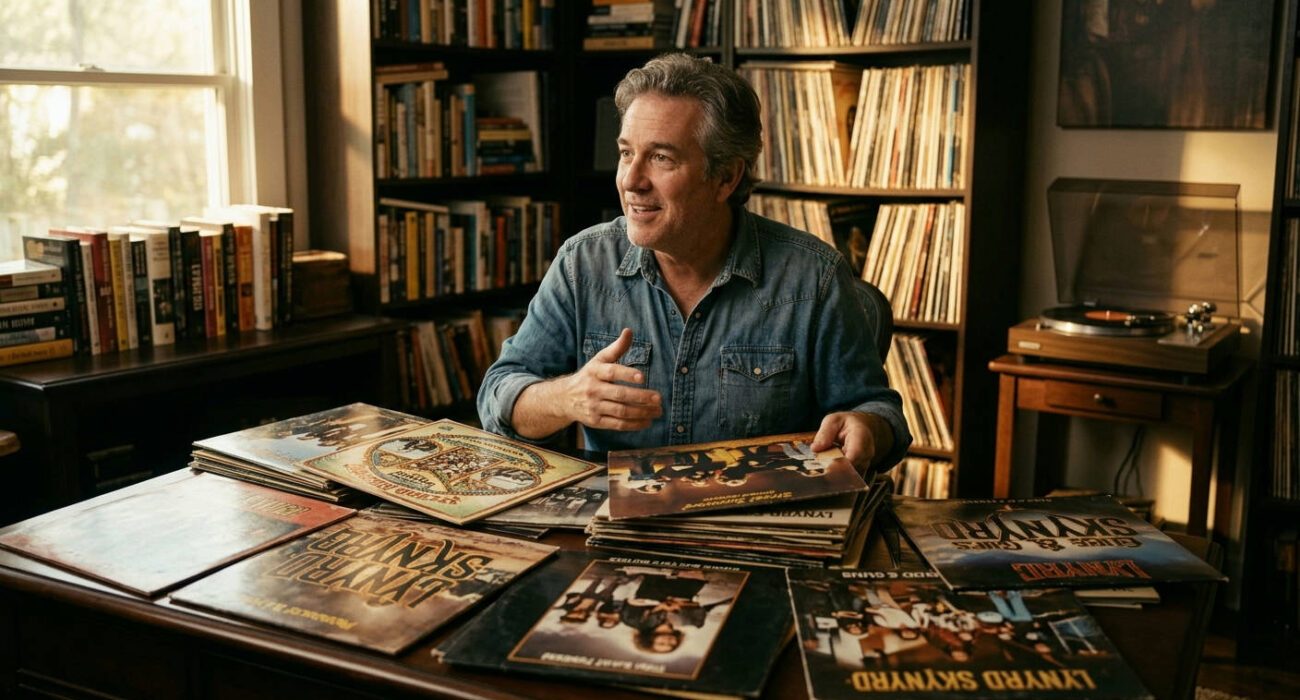
So, you’re asking, “How many albums does Lynyrd Skynyrd have?” The question sounds simple, but the answer is anything but. The story of Skynyrd’s discography is a tale of two distinct bands: the legendary, fire-breathing Southern rock pioneers fronted by Ronnie Van Zant, and the resilient, legacy-carrying group that rose from the ashes of tragedy. To truly understand the number, you have to understand their history. It’s a journey through studio LPs, iconic live recordings, and compilations that have defined a genre for over 50 years.
The Original Era (1973-1977): The Ronnie Van Zant Years
This is the chapter that forged the legend. In a whirlwind four years, the original Lynyrd Skynyrd released a body of work that remains the undisputed cornerstone of Southern rock. These albums aren’t just collections of songs; they are cultural documents, capturing the sound, sweat, and soul of the American South in the 1970s.
(Pronounced ‘Lĕh-‘nérd ‘Skin-‘nérd) (1973)
The world’s introduction to the Jacksonville hell-raisers was an absolute monster of a debut. Produced by the legendary Al Kooper, this album laid out the entire Skynyrd blueprint. You had the bar-room brawling fun of “Gimme Three Steps,” the poignant reflection of “Tuesday’s Gone,” and the soulful lament of “Simple Man.”
Then there’s “Free Bird.” What started as a tribute to Duane Allman morphed into the ultimate rock epic, a nine-minute masterpiece of slow-burning emotion and explosive guitar solos. This single album established their signature triple-guitar attack and Ronnie Van Zant’s plain-spoken, profoundly honest songwriting. It was raw, real, and an instant classic.
Second Helping (1974)
If the debut was the mission statement, Second Helping was the global conquest. This is the album that made them superstars, and it’s all thanks to one song: “Sweet Home Alabama.” Written as a fiery response to Neil Young’s “Southern Man” and “Alabama,” the track became an anthem for an entire region and a permanent fixture on classic rock radio.
But the album is so much more than its hit single. “Workin’ for MCA” offers a cynical look at the music business, “The Ballad of Curtis Loew” is a heart-wrenching story of a local blues hero, and their cover of J.J. Cale’s “Call Me The Breeze” is pure, rollicking joy. This record proved Skynyrd was no one-trick pony.
Nuthin’ Fancy (1975)
With their third album, the sound got a little meaner and the edges got a little rougher. Nuthin’ Fancy reflects a band constantly on the road, and the wear and tear shows in the music’s aggressive tone. The standout track, “Saturday Night Special,” is a powerful anti-gun anthem that remains shockingly relevant decades later.
While it may not have the iconic radio hits of its predecessor, tracks like “On the Hunt” and “Cheatin’ Woman” showcase the band at their blues-rocking best. It’s a lean, powerful record that captures the band’s live energy more than any studio album before it.
Gimme Back My Bullets (1976)
This album marked a transition. Guitarist Ed King had left, and the band was feeling the pressure of their relentless touring schedule. The title track wasn’t about firearms, but about reclaiming their “bullet” ranking on the Billboard charts.
Produced by the legendary Tom Dowd, Gimme Back My Bullets has a cleaner, more polished sound. While some fans missed the grit of the earlier records, songs like “Double Trouble” and the heartfelt “Every Mother’s Son” are undeniable Skynyrd classics. It’s an often-overlooked but crucial part of their story.
Street Survivors (1977)
This is the band’s most triumphant and tragic statement. With the addition of guitarist Steve Gaines, Skynyrd was creatively reborn. Gaines brought a new fire, co-writing the instant classic “I Know a Little” and trading blistering licks with Allen Collins and Gary Rossington. The energy is palpable on tracks like “What’s Your Name” and “That Smell,” a stark warning about the dangers of rock and roll excess.
The album was released on October 17, 1977. Three days later, the band’s chartered plane crashed in a Mississippi swamp, killing Ronnie Van Zant, Steve Gaines, Cassie Gaines, and others. The album cover, which originally featured the band engulfed in flames, was quickly replaced out of respect. Street Survivors stands as a haunting, powerful final testament to one of rock’s greatest-ever lineups.
“We wanted to be the best. Not just the best in the South, but the best in the world. And for a little while, I think we were.” – Gary Rossington
How Many Albums Does Lynyrd Skynyrd Have? The Pre-Tragedy Count
So, to directly answer the question for this first, legendary era, the count is straightforward. The original Lynyrd Skynyrd, fronted by Ronnie Van Zant, released five studio albums.
This core set of five records is what most die-hard fans and critics consider the essential canon. These are the albums that built the mythos.

Of course, that’s not the complete picture. You absolutely cannot ignore their monumental 1976 live album, One More from the Road. Recorded at the Fox Theatre in Atlanta, it captured the band at the absolute peak of their powers. For many, the live versions of songs like “Free Bird” on this record are the definitive ones. While not a studio album, it’s an indispensable part of their original output.
The Intervening Years: Compilations That Kept the Flame Alive (1978-1987)
After the crash, Lynyrd Skynyrd was over. The surviving members went their separate ways, and for a decade, the only new Skynyrd albums were compilations and archival releases. These records were crucial, introducing the band’s music to a new generation of fans and cementing their legacy.
Skynyrd’s First and… Last (1978)
Released a year after the tragedy, this wasn’t a greatest hits package. It was a collection of early demos and recordings from 1971 and 1972, before the band was signed to MCA Records. It provided a fascinating look at their development, featuring early versions of songs that would later become classics. For collectors, it’s an essential piece of the puzzle, showing the raw talent that was there from the very beginning.
Gold & Platinum (1979)
This was the big one. A double-LP greatest hits collection that became a fixture in millions of homes. It contained all the radio staples, from “Sweet Home Alabama” to “Free Bird,” and served as the perfect entry point for new listeners. This album’s success proved that even in their absence, the demand for Skynyrd’s music was stronger than ever.
The Best of the Rest (1982)
As the title suggests, this compilation dug a little deeper. It collected B-sides, album cuts, and lesser-known gems for the fans who already owned Gold & Platinum. It was a smart move, showcasing the depth of Ronnie Van Zant’s songwriting and the band’s musical versatility beyond the handful of hits everyone knew.
The Resurrection: A Tribute and a New Beginning (1987-Present)
In 1987, ten years after the crash, the surviving members reunited for what was intended to be a one-off tribute tour. Johnny Van Zant, Ronnie’s younger brother, stepped up to the microphone to honor his brother’s legacy. The tour was a massive success, and the demand from fans was undeniable. The tribute became a full-fledged reunion, and a new chapter for Lynyrd Skynyrd began.
Southern by the Grace of God (1988)
The first release from the reunited band was this live album, documenting the emotional 1987 tribute tour. It captured the energy and passion of the reunion, with Johnny Van Zant proving he had the vocal chops and the heart to carry the torch. It was a powerful statement that this wasn’t about replacing the past, but celebrating it.
Lynyrd Skynyrd 1991 (1991)
This was the moment of truth: the first studio album of all-new material from the reformed band. It was a massive challenge to create new music that could stand alongside their iconic catalogue. The album was a solid effort, with tracks like “Smokestack Lightning” showing they could still deliver their signature sound. It proved the band could be a creative force again, not just a touring tribute act.
The Modern Era Studio Albums
Since that first reunion album, the modern version of Lynyrd Skynyrd has been remarkably consistent in the studio, adding a significant number of albums to their discography. This is where the answer to “how many albums does Lynyrd Skynyrd have” gets much larger.
- The Last Rebel (1993): Continued their new direction, with a title track that became a fan favorite.
- Endangered Species (1994): An interesting departure, this album featured acoustic renditions of classics and new songs, showcasing their songwriting in a different light.
- Twenty (1997): Named in honor of the twenty years since the crash, a reflective and powerful record.
- Edge of Forever (1999): A hard-rocking album that was a staple of their late-90s live shows.
- Christmas Time Again (2000): A holiday album done in their unmistakable Southern rock style.
- Vicious Cycle (2003): Featured the poignant hit “Red, White & Blue,” a post-9/11 anthem that resonated deeply with their fanbase.
- God & Guns (2009): A defiant, politically charged album that proved the band still had plenty to say.
- Last of a Dyin’ Breed (2012): To date, their most recent studio album of original material, a title that reflects their status as elder statesmen of rock.
This prolific output adds another nine studio albums to the grand total, completely changing the numerical answer to the core question.
The Final Tally: A Complete Discography Breakdown
Let’s break it all down and give you a clear, definitive answer. The number of albums depends entirely on what you choose to count, as their catalogue is vast and spans two very different eras.
- Original Era Studio Albums (Ronnie Van Zant vocals): 5
- (Pronounced ‘Lĕh-‘nérd ‘Skin-‘nérd)
- Second Helping
- Nuthin’ Fancy
- Gimme Back My Bullets
- Street Survivors
- Reformed Era Studio Albums (Johnny Van Zant vocals): 9
- Lynyrd Skynyrd 1991
- The Last Rebel
- Endangered Species
- Twenty
- Edge of Forever
- Christmas Time Again
- Vicious Cycle
- God & Guns
- Last of a Dyin’ Breed

This gives us a grand total of 14 official studio albums.
But wait, how many albums does Lynyrd Skynyrd have if we count everything?
This is where things get wild for collectors. If you expand the definition beyond just studio LPs, the number explodes. Over the decades, especially since the 1990s, there has been a steady stream of releases.
There are dozens of official live albums, each capturing a different tour and lineup. There are countless compilation albums, each slicing and dicing their catalogue in a new way. Add in box sets like the comprehensive 1991 release, and the total number of officially released albums easily surpasses 60. The Rock & Roll Hall of Fame entry for the band notes their prolific nature, but even that doesn’t capture the full scope of their immense catalogue for completists.
Collecting Skynyrd on Vinyl: A Guide for Fans
At Vinyl Gold UK, we know the best way to experience this music is on a turntable. The warmth and depth of a vinyl record bring that triple-guitar attack to life in a way digital formats just can’t match.
The Must-Have Original Pressings
For the serious collector, nothing beats an original pressing from the 1970s. Look for albums on the “Sounds of the South” label, a subsidiary of MCA Records created by Al Kooper specifically for the band. These first pressings of albums like Second Helping are the holy grail for fans.
The most famous collector’s item is, without a doubt, the original “flames cover” of Street Survivors. After the plane crash, MCA recalled the album and replaced the cover art. Finding an original, pre-recall copy is the ultimate prize for any Skynyrd vinyl hunter. These pressings are rare and valuable, a true piece of rock history.
Finding Quality Reissues in 2026
Thankfully, you don’t need a second mortgage to enjoy Skynyrd on vinyl. As of 2026, there are numerous high-quality reissues available that sound incredible. Look for 180-gram pressings, which offer better durability and audio fidelity. Many of their classic albums have been remastered for vinyl, bringing out details you may have never heard before. If you’re looking to start your collection, you can’t go wrong with a modern reissue of Pronounced ‘Lĕh-‘nérd ‘Skin-‘nérd). You can start your search for a great copy right here on Amazon.
Essential Gear for the Southern Rock Sound
Getting the most out of a classic Skynyrd record means having the right setup. The raw, analogue power of their music deserves to be heard properly. If you’re just starting your vinyl journey, you don’t need to break the bank. Finding one of the best turntables under £300 in the UK is a fantastic first step to building a system that will do justice to these timeless albums.
Beyond the Numbers: The Enduring Legacy
Ultimately, counting albums only tells part of the story. The real measure of Lynyrd Skynyrd is their impact, which is immeasurable.
The Architects of Southern Rock
While The Allman Brothers Band may have laid some of the groundwork, Lynyrd Skynyrd built the house that Southern rock lives in. They took blues, country, and rock and roll, cranked it up, and infused it with a rebellious attitude that was all their own. Their sound has influenced generations of artists across genres, from country stars like Eric Church to metal bands like Metallica.
The Storytelling of Ronnie Van Zant
Ronnie was more than just a rock singer; he was a poet for the common man. His lyrics were direct, honest, and filled with vivid characters and compelling stories. He wrote about what he knew: life in the working-class South, the dangers of a hedonistic lifestyle, and the importance of simple values.
“I’m a simple man, and I like simple things. I like the country, and I like to fish and hunt. I’m not a fancy person.” – Ronnie Van Zant, 1976 interview
This plain-spoken authenticity is why his songs still connect so powerfully with people around the world. He wrote timeless truths.
The Triple-Guitar Attack
You can’t talk about Skynyrd without talking about the guitars. The interplay between Gary Rossington’s soulful slide, Allen Collins’ ferocious lead work, and Ed King’s (and later Steve Gaines’) melodic genius created a sound that was, and still is, absolutely immense. Their harmonized guitar parts were as complex and beautiful as anything in classical music, but delivered with the raw power of a freight train. Just listen to the last five minutes of “Free Bird” – it’s a symphony of rock and roll firepower.
The question of “how many albums does Lynyrd Skynyrd have” leads down a long and fascinating road. The simple answer is 14 studio albums. But the real answer is far richer. It’s a story of triumph, tragedy, and a musical legacy that refuses to fade. Whether you stick to the original five masterpieces or explore the entire sprawling catalogue, you’re tapping into one of the most vital and enduring forces in American music. Their story is a testament to resilience, and their music is the ultimate survivor.