
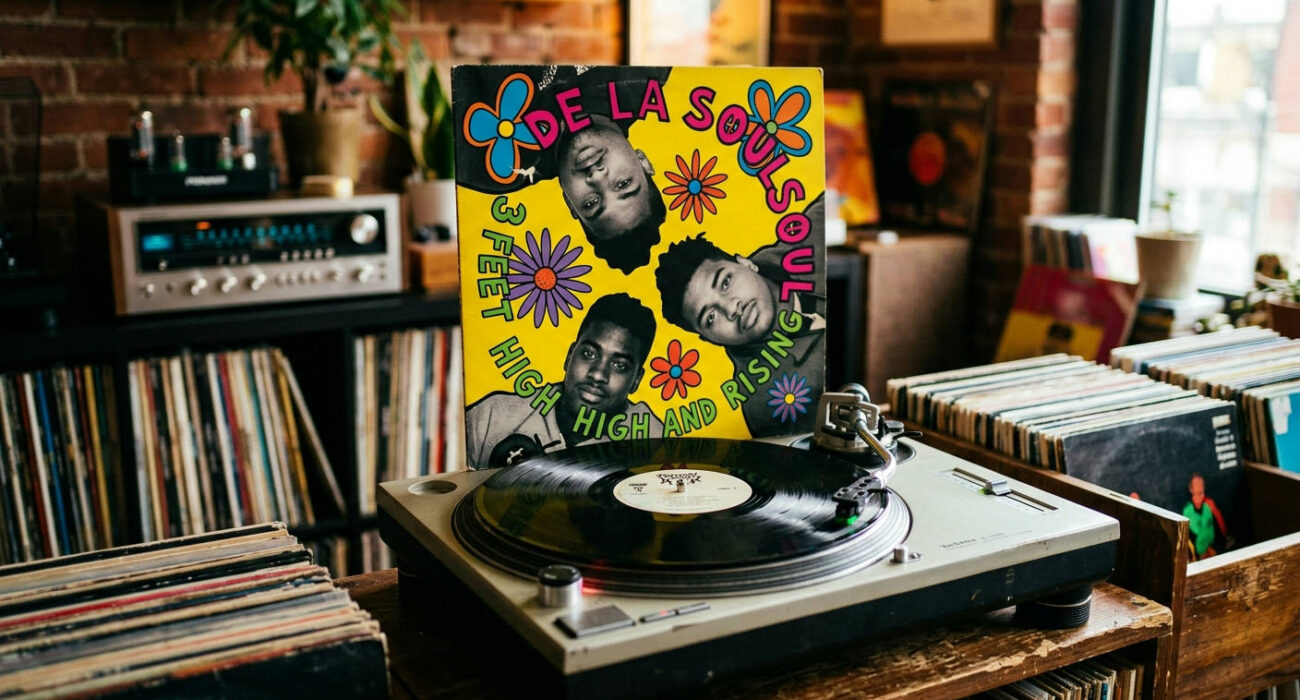
You’re searching for the De La Soul first studio album name, and the answer is a cornerstone of music history: 3 Feet High and Rising. This isn’t just a simple piece of trivia; it’s the title of a record that completely rewired the DNA of hip-hop upon its release in 1989. It arrived as a kaleidoscopic burst of colour, humour, and sonic invention in a genre that was, at the time, becoming increasingly dominated by harder, more aggressive tones.
3 Feet High and Rising wasn’t just an album; it was a statement of intent. It announced the arrival of Posdnuos, Trugoy the Dove (who we sadly lost in 2023), and Maseo, three kids from Long Island with a vision that was wildly different from their peers. They, along with producer Prince Paul, crafted a world built on bizarre skits, unbelievably eclectic samples, and a philosophy of playful positivity.
Unpacking the De La Soul First Studio Album Name: 3 Feet High and Rising
The title itself, 3 Feet High and Rising, is as enigmatic and layered as the music it represents. It’s not a boast about wealth or status but a phrase that hints at depth, growth, and a tide of change. While some have pointed to a potential link to a line in the Johnny Cash song “Five Feet High and Rising,” the group has often kept the true origin close to their chest, letting the evocative power of the words speak for themselves.
What it perfectly captures is the feeling of something momentous bubbling up from below, ready to overflow and transform everything. And that’s exactly what the album did. It represented the crest of a new wave in hip-hop.
The Revolutionary Sound
Forget the hard-hitting 808s and aggressive posturing that defined much of late-80s rap. De La Soul and producer Prince Paul took a completely different path. They treated the sampler not as a tool for looping breakbeats but as a painter’s palette.
They layered snippets of everything from Steely Dan and Liberace to French-language LPs and schoolhouse educational records. The result was a dense, textured, and joyfully chaotic sound that was utterly unique. The album flows with the loose, unpredictable energy of a radio show from another planet, stitched together by a series of recurring “game show” skits.
Prince Paul: The Unseen Fourth Member
You cannot discuss the sonic brilliance of 3 Feet High and Rising without putting producer Prince Paul at the center of the conversation. As a member of Stetsasonic, he was already an established name, but his work with De La Soul cemented his legacy as a true visionary.
Paul was the mad scientist in the lab, helping the trio realize their wildest ideas. He had an uncanny ability to find hooks and grooves in the most obscure corners of record crates. His production isn’t just a backing track; it’s an integral part of the storytelling, adding layers of irony, humour, and emotion to the lyrics. The album’s seamless blend of songs and skits is a testament to his cohesive and cinematic production style.
The D.A.I.S.Y. Age: A Philosophical Shift
3 Feet High and Rising heralded the arrival of the “D.A.I.S.Y. Age.” This wasn’t just a marketing slogan; it was the core of the group’s philosophy and a stark contrast to the gangsta rap narrative that was gaining traction on the West Coast.
It was a conscious decision to move away from the established norms of hip-hop culture and embrace something more personal, positive, and esoteric.
What D.A.I.S.Y. Stands For
D.A.I.S.Y. is an acronym for “Da Inner Sound, Y’all.” It was a call to look inward, to find your own voice, and to express your unique identity without apology. It was a rejection of the need to conform to a specific “hip-hop” image.
This philosophy was woven into every aspect of the album, from the introspective lyrics to the vibrant, almost psychedelic, album art. It was an invitation for listeners to join them in this new, more inclusive and imaginative space.
The “Hippie” Image: Blessing or Curse?
The album’s cover art, with its day-glo colours and cartoonish flowers, was as revolutionary as the music. Combined with their unique fashion sense, it led to the media quickly labeling them as “hip-hop hippies.”
Initially, this distinction helped them stand out. It was a powerful visual shorthand for their alternative approach. Over time, however, the group grew to resent the label, feeling it was a simplistic caricature that pigeonholed them and overshadowed the complexity of their music and message. Their 1991 follow-up album, De La Soul Is Dead, was a direct and aggressive attempt to kill off this one-dimensional image.
Lyrical Themes: Beyond Braggadocio
While other rappers were talking about their lyrical prowess and street credibility, De La Soul was crafting narratives about everything from body odour (“A Little Bit of Soap”) to the joys of Saturday morning cartoons.
Their lyrics were packed with inside jokes, surrealist imagery, and a vulnerability that was rare in the genre. Songs like “Ghetto Thang” offered social commentary without being preachy, while “Me Myself and I” became an anthem for individuality and self-acceptance. They proved that hip-hop could be profound, funny, weird, and intelligent all at once.

The Legal Battles That Changed Music History
The very thing that made 3 Feet High and Rising a masterpiece—its dense collage of samples—also became its biggest liability. The album’s creation in 1988-1989 existed in a legal “Wild West” for sampling, a period that would come to a screeching halt largely because of this very record.
This chapter of the album’s story is not just a footnote; it’s a critical moment in music law that continues to affect artists in 2026.
The Turtles vs. De La Soul: A Landmark Lawsuit
The most infamous legal challenge came from the 1960s rock band The Turtles. De La Soul used a short, sped-up, and uncredited snippet of their song “You Showed Me” in a skit called “Transmitting Live from Mars.”
The Turtles’ members, Flo & Eddie, sued for copyright infringement. The case was settled out of court, reportedly for a significant sum, but the precedent was set. It sent a shockwave through the music industry and established that any uncleared sample, no matter how brief or transformed, was a potential lawsuit waiting to happen.
“It was the end of an era. For us, and for a lot of people. After that, you had to have a lawyer go in and clear every little thing. It changed the whole texture of the music.” – Posdnuos
This lawsuit is often cited as the definitive moment that commercialized and complicated the art of sampling forever. You can read more about the album’s complex history and this legal turning point on its detailed Wikipedia page.
The Aftermath: How Sampling Evolved
The chilling effect was immediate. The freewheeling, kitchen-sink approach to sampling that defined 3 Feet High and Rising became prohibitively expensive and legally risky.
Producers in the 1990s and beyond had to adapt. Hip-hop production shifted towards using fewer, more prominent (and fully cleared) samples, often based around a single instrumental loop. While this led to its own era of classic music, the wild, unpredictable sonic tapestry of De La Soul’s debut became a relic of a bygone, more creatively liberated time.
Why the Album Was Missing From Streaming for Decades
The legal nightmare didn’t end in the 90s. The complex web of hundreds of uncleared samples made it impossible for their label, Tommy Boy Records, to bring De La Soul’s classic catalog to digital streaming services and online stores for decades.
For a whole generation of music fans, their most important works were essentially ghosts, only accessible through old CDs, vinyl, or illegal downloads. It wasn’t until a long, hard-fought battle concluded in 2023 that the group finally regained control of their masters and their first six albums, including 3 Feet High and Rising, were made legally available for streaming. This victory was a monumental moment for the group, their fans, and the preservation of music history.
A Track-by-Track Deep Dive: Cornerstones of a Classic
While the album is best experienced as a whole, several tracks stand out as perfect encapsulations of its genius. They are the pillars that hold up this incredible sonic structure.
“The Magic Number”
The album’s mission statement. Built around a sample from the educational show Schoolhouse Rock!, the track is a joyful and clever introduction to the group’s concept and their focus on the number three. Its infectious positivity and brilliant sample flips have given it a second life in 2026, famously being used in major film productions, introducing a new generation to the D.A.I.S.Y. Age.
“Me Myself and I”
The song that made them stars. It’s a defiant anthem of non-conformity, directly addressing the “hippie” label and championing the importance of being true to oneself. The funk-drenched beat, sampling Funkadelic’s “(Not Just) Knee Deep,” is undeniable, and the lyrics are a masterclass in self-aware, humorous social commentary. The accompanying music video, which sees the trio navigating a high school class taught by a stuffy professor, perfectly visualized their playful rebellion.
“Eye Know”
This track showcases the smoother, more romantic side of De La Soul. With its breezy whistle sample from Otis Redding’s “(Sittin’ On) The Dock of the Bay” and a slick guitar loop from Steely Dan’s “Peg,” “Eye Know” is a masterclass in sophisticated sample-based production. It demonstrated their incredible range and proved they could create a soulful, laid-back groove as effectively as a high-energy jam. The influence of artists like Steely Dan is a reminder of the incredible musical depth found in the best albums of the 1970s.
“Buddy” (feat. The Native Tongues)
More than just a song, “Buddy” is a celebration of community. It’s a classic posse cut featuring fellow members of their Native Tongues collective, including Q-Tip from A Tribe Called Quest and the Jungle Brothers. The track is pure joy, a recording of friends riffing off each other over a killer beat. It captured the collaborative, positive spirit of the Native Tongues movement, which stood as a powerful alternative to the confrontational and competitive nature of other hip-hop crews.

## What Is the De La Soul First Studio Album Name and Its Lasting Legacy?
When you ask, “What is the De La Soul first studio album name?” you are asking about a record that did more than just sell copies or produce hits. You are asking about an album that permanently altered the course of music. Its legacy is vast, influential, and still felt powerfully today.
3 Feet High and Rising was recognized for its cultural significance when it was selected for preservation in the United States National Recording Registry by the Library of Congress, calling it “a hip-hop masterpiece.”
### The Influence of the De La Soul First Studio Album Name on 90s Alternative Hip-Hop
The release of 3 Feet High and Rising opened the floodgates for what would become known as “alternative hip-hop.” Without the De La Soul first studio album name cracking the door open, it’s hard to imagine the careers of groups like The Pharcyde, A Tribe Called Quest (whose sound evolved in parallel), Arrested Development, or Digable Planets.
Even artists like OutKast and the Black Eyed Peas owe a debt to De La Soul’s pioneering spirit. They proved that there was a massive audience for hip-hop that was quirky, intelligent, and musically adventurous. They created a lane for artists who didn’t fit the hardened mold.
Breaking Molds and Paving Ways
De La Soul’s impact went beyond music. They changed the visual identity of hip-hop. Their colourful, eclectic style challenged the prevailing uniform of gold chains, tracksuits, and aggressive stances. They showed that rappers could be vulnerable, nerdy, and funny.
They broadened the emotional and intellectual palette of the entire genre. This album told a generation of kids that they didn’t have to pretend to be someone else to participate in the culture; they could just be themselves.
“We just wanted to be ourselves. We were from the suburbs. We weren’t street. We weren’t tough guys. We were just creative kids who loved music. And we put all of that into the record.” – Trugoy the Dove
Securing 3 Feet High and Rising on Vinyl in 2026
For any serious record collector, owning 3 Feet High and Rising on vinyl isn’t just a want; it’s a need. Hearing the warm crackle of the needle drop on “Intro” is the most authentic way to experience this collage of sound. The large-format cover art is a piece of history in itself.
Thanks to the group’s recent victory in regaining their masters, high-quality reissues from 2023 and beyond are now readily available. These pressings offer pristine audio quality for those who want the sound without the wear and tear of an original. Hunting down an original 1989 pressing, however, is a true crate-digger’s quest.
Collecting the Vinyl: A Guide for 2026 Enthusiasts
Adding this seminal album to your collection is a rite of passage. But whether you’re a seasoned collector or a newcomer, it helps to know what you’re looking for.
Original Pressings vs. Modern Reissues
An original 1989 pressing on Tommy Boy Records is the holy grail. It’s a direct piece of history, pressed at a time when the sonic landscape was about to be changed forever. These copies often carry a distinct warmth, but finding one in near-mint condition can be challenging and expensive.
The modern reissues from recent years are fantastic alternatives. They are pressed on high-quality, heavyweight vinyl and sourced from the original master tapes, offering incredible clarity and detail. For most listeners, a new reissue is the perfect way to experience the album’s sonic brilliance. You can often find a brand new copy of 3 Feet High and Rising on vinyl on Amazon, making it easier than ever to add to your collection.
Identifying a First Pressing
If you’re hunting for an original, there are key details to watch for. The original US pressing will be on the Tommy Boy label with the catalog number TBLP 1019. Check the runout groove on the vinyl itself for the matrix etchings, which can help verify its origin. The cover should be a non-glossy, matte finish, and original pressings often came with a printed inner sleeve featuring lyrics and credits.
Where to Buy: Your Best Options
Independent record stores are always your first and best stop. Here at Vinyl Gold UK, we’re constantly on the lookout for classic pressings and quality reissues of monumental albums like this. Online marketplaces like Discogs are also invaluable resources for connecting with sellers worldwide. Always check a seller’s rating and ask for detailed photos of the record and sleeve before buying.
Caring For Your Classic Vinyl
Once you’ve secured your copy, proper care is essential. Store it upright, away from heat and direct sunlight. Use an anti-static brush to clean the surface before each play. A good quality turntable is also crucial to not only get the best sound but also to preserve the grooves on your records for years to come. If you’re looking to upgrade your setup, there are some incredible and affordable options out there; exploring the best turntables under £300 in the UK is a great place to start.
So, the De La Soul first studio album name is 3 Feet High and Rising. But it’s so much more than a title. It’s a sonic yearbook from a time of boundless creativity, a legal landmark that reshaped an industry, and a cultural touchstone that championed individuality. It’s an album that sounds as fresh, innovative, and vital in 2026 as it did upon its release. To listen to it is to hear hip-hop reinventing itself in real-time.