
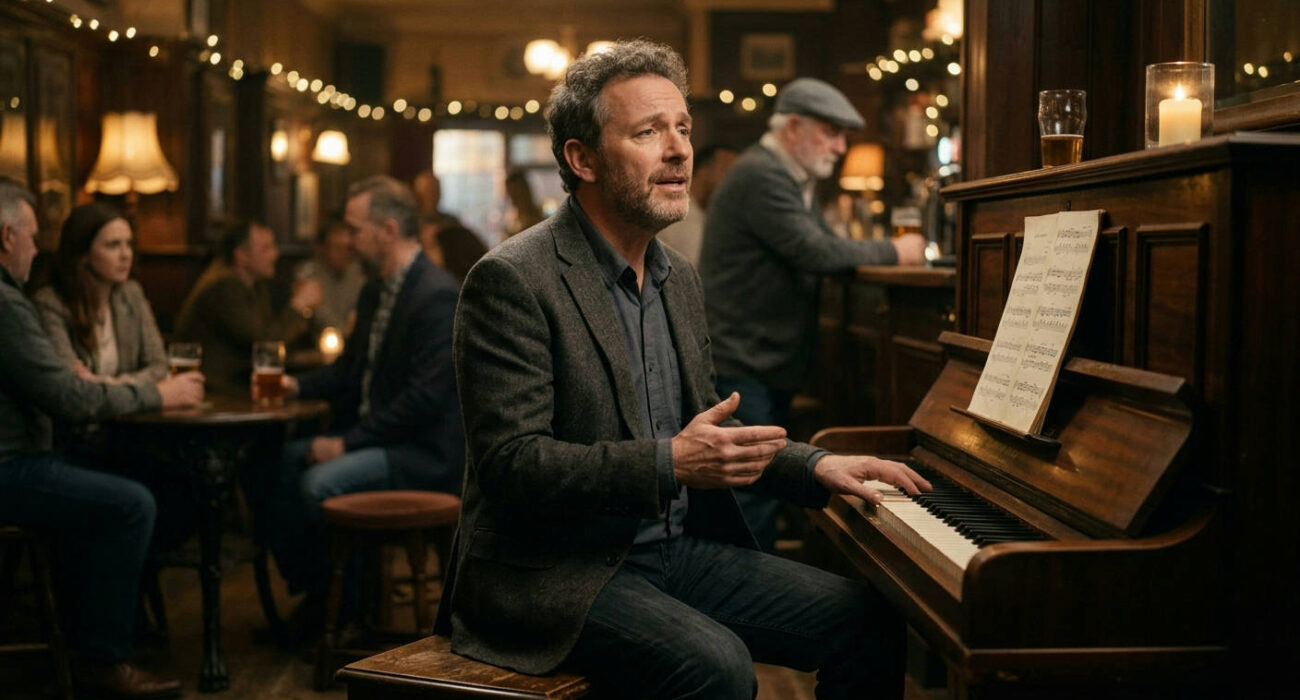
It’s nine o’clock on a Saturday, and the regular crowd shuffles in. That opening line is more than just a setup; it’s an invitation. For over fifty years, the opening notes of “Piano Man” have been a universal signal to stop what you’re doing, grab a drink, and sing along. But beneath the rousing chorus and the iconic harmonica lies a masterclass in storytelling. The true power of the song is woven into the fabric of the Billy Joel Piano Man lyrics, which paint a vivid, melancholic, and deeply human portrait of forgotten dreams and quiet desperation in a forgotten corner of Los Angeles.
This isn’t just a song. It’s a short story set to a waltz, a snapshot of real people Billy Joel met while trying to get out of a bad record deal. Here at Vinyl Gold UK, we believe a song’s story is just as important as its melody. Let’s pull up a stool, pour a drink, and dive deep into the world Joel created, one character at a time.
The Man Behind the Music: How “Bill Martin” Became the Piano Man
Before he was the “Piano Man,” Billy Joel was just Bill Martin. In the early 1970s, stuck in a terrible contract with Family Productions, he moved to Los Angeles to lay low and figure out his next move. To pay the bills, he took a gig playing piano at The Executive Room, a dark, unassuming bar on Wilshire Boulevard.
This six-month stint became the crucible for his most famous song. He wasn’t Billy Joel, the future rock star; he was just the entertainment, an observer watching the lives of the bar’s regulars unfold each night.
The Real-Life Characters
The people in the song weren’t fictional creations. They were the flesh-and-blood patrons of The Executive Room. “John at the bar” was the actual bartender. The “waitress practicing politics” was a real employee. These were individuals sharing a space, each trapped in their own narrative of what could have been.
Joel absorbed their stories, their mannerisms, and their quiet sadness. He was one of them, in a way—a musician with big dreams stuck playing for tips in a dive bar. This shared experience is what makes the lyrics feel so authentic and raw. He wasn’t just describing them; he was a part of their world.
From Observation to Anthem
The song was written from this unique first-person perspective. He is both the narrator and a character. This dual role allows the listener to see the bar through his eyes, feeling the sticky floor, the stale air, and the palpable sense of melancholy.
“They’re sharing a drink they call loneliness / But it’s better than drinkin’ alone”
This couplet is the beating heart of the entire song. It perfectly captures the strange comfort of shared misery. The Billy Joel Piano Man lyrics aren’t just a collection of character sketches; they are a profound commentary on the human need for connection, even when that connection is forged from disappointment.
Deconstructing the Billy Joel Piano Man Lyrics: A Character Study
The genius of “Piano Man” is its economy of language. In just a few lines, Joel introduces a full cast of characters, each with a backstory you can feel in your bones. They are archetypes of unfulfilled potential, the kind of people you might meet in any bar, in any city, even in 2026.
The Old Man and His Tonic and Gin
The first character we meet is an old man, lost in his drink and the memories it conjures. The line “making love to his tonic and gin” is a poetic and slightly unsettling image. It speaks to a deep, solitary comfort found at the bottom of a glass.
He asks the piano man to play a song that’s “sad and it’s sweet,” a tune that reminds him of a life he can no longer grasp. He knows the melody but can’t quite place it, a perfect metaphor for a past that is both vivid and frustratingly out of reach.
John, Paul, and Davy: A Trio of Broken Dreams
Next, we meet the men who represent the core theme of stagnation. John, the bartender, is “quick with a joke or to light up your smoke,” but he harbors a secret dream of being a movie star. The tragedy is in the line, “but he knows that he’s never gonna get out of this place.” He’s accepted his fate.
Paul, the “real estate novelist,” is another poignant figure. He’s been working on the “great American novel” for years, a classic symbol of artistic ambition waylaid by the practicalities of life. Davy, still in the Navy, likely for life, completes this trio of men who are stuck, their potential slowly fading with each passing year.
The Collective Voice of the Chorus
The patrons aren’t just passive listeners. They are active participants in the ritual. Their demand, “Sing us a song, you’re the piano man,” is a plea for escapism. They want him to conjure a feeling, to make them “forget about life for a while.”
The piano man is their vessel. He is there to absorb their sadness and reflect it back to them in a way that feels communal and cathartic. He is less a performer and more of a musical priest, taking their confessions and offering a temporary absolution in the form of a song.
The Musical DNA of “Piano Man”
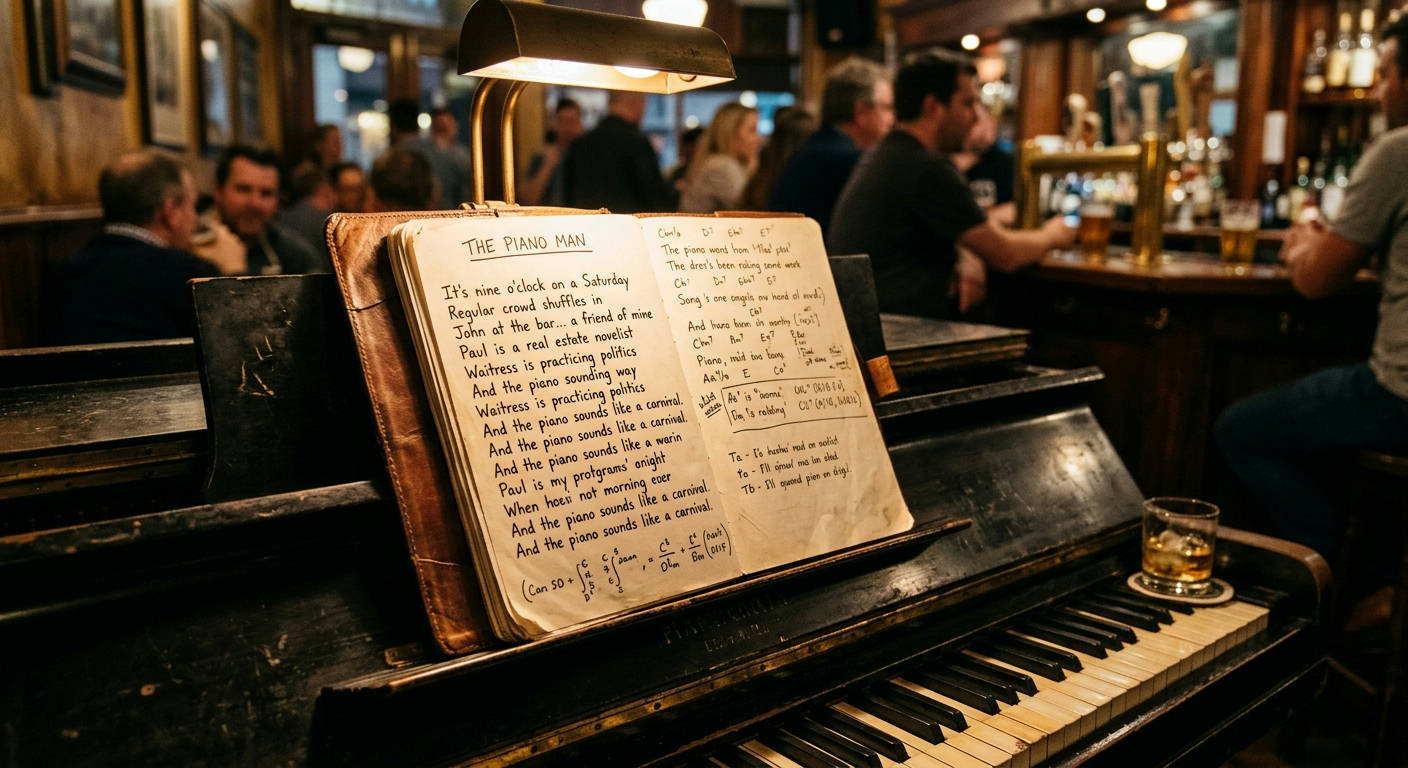
The lyrics are only half the story. The music itself is crafted to evoke the exact atmosphere of that dimly lit bar. The composition is just as crucial to the song’s emotional weight as the words.
The Harmonica’s Lonely Call
The song doesn’t start with a piano. It starts with a simple, slightly melancholic harmonica melody played over a gentle piano backing. This intro, inspired by Bob Dylan, immediately establishes a folk-like, storytelling tone. It feels personal and intimate, like someone is about to lean in and tell you a secret.
This iconic opening is instantly recognizable and sets the stage perfectly for the narrative that follows. It’s the sound of a memory, pulling you into the world of the song before a single word is sung.
The 3/4 Waltz Time Signature
“Piano Man” is structured as a waltz. The 3/4 time signature gives the song its characteristic swaying, almost drunken, rhythm. It’s not a triumphant march or a driving rock beat; it’s a gentle, repetitive loop that mirrors the feeling of being stuck.
This rhythm makes you want to sway back and forth, a physical manifestation of the patrons rocking on their barstools, lost in the music and their memories. It’s a sad dance, a musical embodiment of the song’s core themes of nostalgia and melancholy. The waltz gives the Billy Joel Piano Man lyrics a sense of timeless, old-world sadness.
The Power of Simplicity
The chord progression is straightforward, built around common chords that are both familiar and emotionally effective. This simplicity is a strength. It makes the song accessible and allows the melody and the story to take centre stage.
The melody itself rises and falls with the narrative. It builds in the verses as the characters are introduced and soars in the chorus as their collective voice unites. This musical arc is what makes the song so incredibly satisfying to sing along to, creating a powerful release of tension with each refrain.
The Complete Billy Joel Piano Man Lyrics: A Verse-by-Verse Breakdown
To fully appreciate the narrative, it helps to see the lyrics laid out. Reading them as a piece of poetry reveals the careful construction and emotional depth of Joel’s song writing.
Understanding the Deeper Meaning of the Billy Joel Piano Man Lyrics
Verse 1:
It’s nine o’clock on a Saturday
The regular crowd shuffles in
There’s an old man sittin’ next to me
Makin’ love to his tonic and gin
This verse sets the scene with cinematic precision. “Shuffles in” suggests weariness. The old man’s relationship with his drink immediately establishes a tone of loneliness and escapism.
Verse 2:
He says, “Son, can you play me a memory?
I’m not really sure how it goes
But it’s sad and it’s sweet and I knew it complete
When I wore a younger man’s clothes”
Here, the theme of lost youth and fading memory is introduced. The song he wants is a stand-in for his own past—a past he can feel but no longer fully access.
Chorus:
Sing us a song, you’re the piano man
Sing us a song tonight
Well, we’re all in the mood for a melody
And you’ve got us feelin’ alright
The chorus shifts perspective from the individual to the collective. It’s a command, a desperate request for a shared moment of relief from their individual troubles.
Verse 3:
Now John at the bar is a friend of mine
He gets me my drinks for free
And he’s quick with a joke or to light up your smoke
But there’s someplace that he’d rather be
He says, “Bill, I believe this is killing me”
As the smile ran away from his face
“Well I’m sure that I could be a movie star
If I could get out of this place”
This is a gut-punch of a verse. It reveals the mask John wears. The fleeting moment where his smile drops shows the deep-seated despair beneath his friendly bartender persona.
Verse 4:
Now Paul is a real estate novelist
Who never had time for a wife
And he’s talkin’ with Davy, who’s still in the Navy
And probably will be for life
More portraits of stagnation. Paul’s “real estate novelist” title is a perfect oxymoron, representing the clash between his artistic dreams and his mundane reality. Davy’s situation is even more direct—he’s literally stuck in a uniform.
Verse 5:
And the waitress is practicing politics
As the businessmen slowly get stoned
Yes, they’re sharing a drink they call loneliness
But it’s better than drinkin’ alone
This verse broadens the scope to the entire room. Everyone is playing a part, from the waitress to the businessmen. The final two lines are the philosophical core of the song, a thesis statement on communal despair.
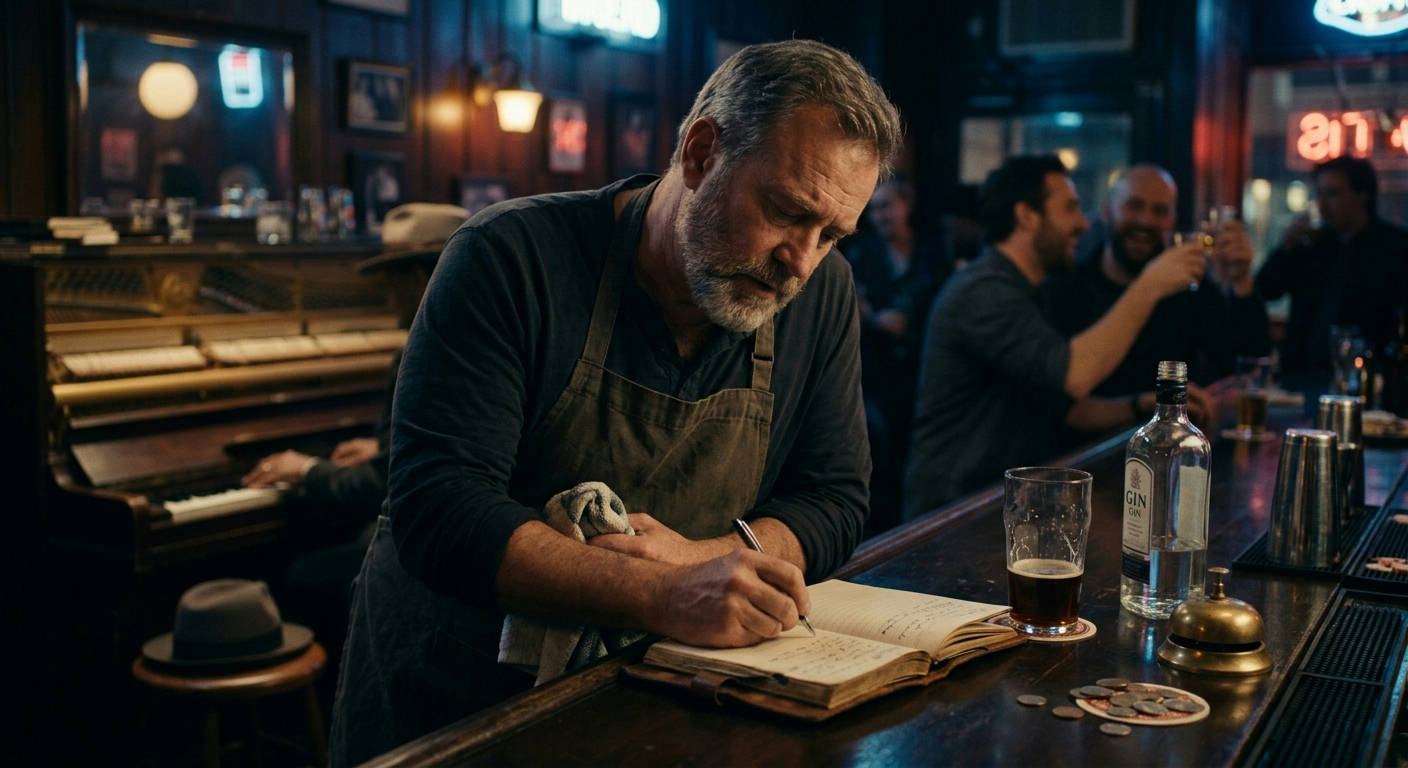
The song’s structure is a cycle. It introduces characters, swells into the unified chorus, and then returns to another vignette of a lonely soul. This loop mirrors the repetitive nature of the characters’ lives, night after night in the same bar.
“Piano Man” on Vinyl: The Way It Was Meant to Be Heard
In an age of sterile digital streams, there’s an undeniable magic to hearing a story-song like “Piano Man” on vinyl. The physical act of placing a needle on a record connects you to the music in a more tangible way.
The warmth and subtle crackle of an analog recording add a layer of authenticity that perfectly suits the song’s nostalgic theme. It feels like you’re in that bar with Bill Martin, hearing the song for the first time. The Piano Man album is a cornerstone of any serious record collection, a testament to the power of pure, unadulterated song writing.
“Music is an explosive expression of humanity. It’s something we are all touched by. No matter what culture we’re from, everyone loves music.” – Billy Joel
Getting the full, rich sound that the artist and producer intended requires a decent setup. You don’t need to break the bank, but a quality turntable makes all the difference. If you’re looking to upgrade your listening experience in 2026, exploring some of the best turntables under £300 in the UK is a fantastic place to start. A good player will pull out details in the recording you’ve never noticed before.
Ready to add this classic to your collection? You can find the Piano Man album on vinyl through this Amazon search link, which helps support our work at Vinyl Gold UK: https://www.amazon.com/s?k=Billy+Joel+Piano+Man+vinyl&tag=vinylgolduk-21.
Cultural Echoes: The Song’s Enduring Legacy
Why has this specific song endured for over five decades? Because the Billy Joel Piano Man lyrics tap into a universal truth. The feeling of being stuck, of dreaming of a different life, is timeless. The song became an anthem for the everyman.
A Global Campfire Song
“Piano Man” has a unique ability to turn any room—from a tiny pub to a massive stadium—into an intimate, unified space. When the chorus hits, thousands of strangers link arms and sing in unison. It’s a moment of pure, uninhibited connection.
The song’s structure is built for this. The call-and-response nature of the chorus invites participation. It’s a secular hymn, a piece of music that belongs to everyone who sings it.
Pop Culture Placement
The song has been used in countless films and television shows, often to signify a moment of communal bonding or underlying melancholy. It might play in a scene where characters are drowning their sorrows, or during a wedding reception where everyone joyously sings along.
Its use in popular media has introduced it to new generations, cementing its status as a piece of the cultural bedrock. As confirmed by numerous sources, including its Wikipedia entry, its influence is widespread and has been since its release.
Common Questions and Misinterpretations
Like any iconic song, the Billy Joel Piano Man lyrics have been subject to debate and misinterpretation over the years. Let’s clear up a few common points of confusion.
What Does the Microphone Smell Like?
The line “And the microphone smells like a beer” is one of the most evocative sensory details in popular music. It’s a simple, literal observation, but it instantly transports you to the dive bar. You can almost smell the stale beer, cigarette smoke, and desperation. It’s a masterstroke of “show, don’t tell” song writing.
Is it “Real Estate Novelist” or “Real Estate Owner”?
A common misheard lyric is “Paul is a real estate owner.” The actual lyric is “novelist.” This distinction is critical to the character. An “owner” is a successful businessman. A “novelist” who works in real estate is an artist trapped in a day job, which is the entire point of his character.
What happened to the bar?
The Executive Room on Wilshire Boulevard, the birthplace of this iconic song, is long gone. It has since been replaced by other businesses, but its legacy is immortalized in the song. The physical location may have vanished, but the spirit of the place lives on every time “Piano Man” is played.
The Final Note
The Billy Joel Piano Man lyrics are more than just a nostalgic trip. They are a perfectly preserved time capsule of a specific moment in a musician’s life, capturing universal truths about hope, failure, and the strange comfort of shared loneliness.
The song’s power lies in its honesty. Billy Joel didn’t invent a fantasy; he reported what he saw. He gave voice to the quiet lives of the people around him, and in doing so, he created an anthem that would give voice to millions more for decades to come. So the next time you hear that harmonica, listen a little closer. The story is still there, waiting to be heard.