
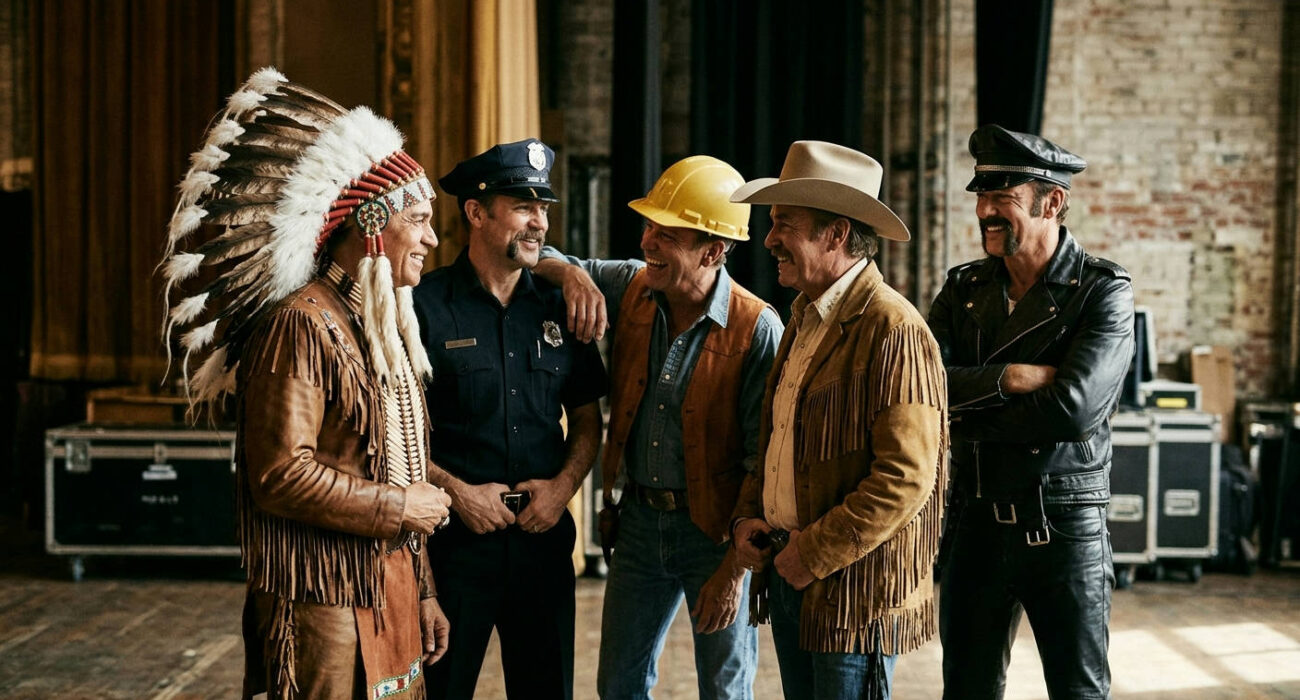
Think of The Village People, and a flash of iconic images hits you: the cop, the cowboy, the construction worker. They are a cultural institution, a staple of every wedding reception and sports event. But peel back the layers of leather, denim, and polyester, and the story gets far more complex. Who were The Village People original members, the actual individuals behind the larger-than-life personas? At Vinyl Gold UK, we’re here to cut through the myths and give you the definitive deep dive into the six men who defined a disco phenomenon.
The Architects: Jacques Morali and Henri Belolo
Before a single feather was donned or a hard hat was polished, there were two French producers with a vision. Jacques Morali, a composer, and Henri Belolo, his business partner, were the masterminds who conjured The Village People from the vibrant gay subculture of New York’s Greenwich Village in the late 1970s.
A Vision Born on the Dancefloor
Morali was fascinated by the archetypal, masculine figures he saw in the gay clubs of New York. He noticed patrons dressing up as cowboys, bikers, and construction workers—fantasies brought to life. He saw a gap in the market: a group that not only sounded like the peak of disco but also visually represented this specific, theatrical slice of American identity.
The concept was simple yet revolutionary. Assemble a group of performers, each embodying a different “macho” archetype, and aim the music squarely at the disco-loving gay audience. The genius was that the concept was so bold and campy that it sailed right over the heads of mainstream audiences, who simply saw a fun, costumed novelty act.
Crafting the Image, Finding the Voices
Morali and Belolo weren’t looking for a pre-existing band. They were casting a theatrical production. The initial plan was to use session singers for the recordings and hire dancers or actors to perform live. This is a critical point that often gets lost; the visual image was paramount from day one.
They held auditions, specifically seeking individuals who not only looked the part but could also move. The ability to sing was, initially, a secondary concern for most roles. The lead vocals were the exception, and for that, they needed a powerhouse. The entire project was a carefully constructed commercial enterprise, designed for maximum visual and auditory impact.
Unmasking The Village People Original Members
So, who were the men who brought this vision to life? The classic, most famous line up consisted of six key individuals. This group recorded and performed the hits that cemented their place in music history. Let’s meet the authentic, classic line up.
Victor Willis (The Cop / The Admiral)
If The Village People had a defining voice, it belonged to Victor Willis. He was the original lead singer and, crucially, a co-writer for nearly all their biggest hits, including “Y.M.C.A.”, “Macho Man”, and “In the Navy”. Willis was already an experienced singer and actor, having performed on Broadway, before being brought into the project.
His soulful, powerful vocals gave the group a musical legitimacy it might otherwise have lacked. He was the only member who consistently sang lead on the studio albums. Tensions over creative control and compensation eventually led to his departure in 1979, a move that significantly altered the group’s dynamic and arguably marked the beginning of the end of their chart dominance.
Felipe Rose (The Native American)
Felipe Rose is often considered the very first member, the catalyst for the entire project. The story goes that Jacques Morali spotted him in his Native American regalia, working as a dancer and bartender in a Greenwich Village club. Rose, who is of Lakota Sioux and Puerto Rican descent, was already incorporating his heritage into his performance art.
Morali was captivated and approached him with the concept for the group. Rose’s authentic connection to his persona gave the project an anchor in reality. He wasn’t just playing a character; he was extending a part of his own identity. His energetic dancing and percussive contributions were a staple of their live shows for decades.
Alex Briley (The G.I. / The Sailor)
Alex Briley is the ironman of The Village People. While he originally appeared as the G.I. in the classic line up, he’s also known for portraying the Sailor in later years. He was a close friend of Victor Willis, who brought him into the group.
Initially, Briley’s role was primarily as a background vocalist and dancer. However, his importance cannot be overstated. He has been the one constant member throughout the group’s entire, decades-long history, navigating countless line up changes and continuing to perform into 2026. He is the living link back to the group’s explosive origins.
Randy Jones (The Cowboy)
With his blonde hair and classic good looks, Randy Jones embodied the all-American Cowboy archetype perfectly. He was another of the original six who brought a vibrant energy and commitment to the role. Recruited through an ad, Jones was an integral part of the group during their peak years of 1977-1980.
He was the face on countless magazine covers and a fan favourite. After the disastrous reception of their 1980 feature film, Can’t Stop the Music, Jones chose to leave the group to pursue a solo career, feeling the original concept had run its course. His departure, along with Willis’s, marked a major turning point for the band.
David Hodo (The Construction Worker)
David “Scruff” Hodo was the man behind the hard hat and sunglasses. He was a trained actor and performer before joining The Village People. He auditioned for the group and was cast as the Construction Worker, a role he would inhabit for over three decades.
Hodo’s deadpan, tough-guy stage presence provided a perfect contrast to the more flamboyant members. Along with Briley and Rose, he formed a core part of the group that provided stability and consistency long after their initial chart run had ended.
Glenn Hughes (The Leatherman)
Glenn Hughes, with his formidable handlebar moustache and full leather gear, was perhaps the most visually striking and provocative member. He fully embraced the Biker/Leatherman persona, an image pulled directly from a prominent subculture within the gay community.
Hughes was a formidable presence on stage, known for his deep bass vocals in background harmonies and his imposing figure. He remained with the group until 1995, when he retired due to health issues. Tragically, Glenn Hughes passed away from lung cancer in 2001, but his iconic image remains one of the most enduring symbols of The Village People.
“We were a social phenomenon. We came out of a time of liberation, and we were the personification of that moment.” – Randy Jones, reflecting on the group’s cultural significance.
The Musical Engine Room
While the six frontmen were the public face, the musical power of The Village People came from a combination of Victor Willis’s song writing and a killer studio band that rarely got the credit they deserved.
The Pen of Victor Willis
It’s a common misconception that The Village People were purely a manufactured group with songs written for them. The reality is that Victor Willis was a key creative force. He co-wrote the lyrics for their biggest smashes, infusing them with the clever double entendres and infectious hooks that made them classics.
His dispute with Morali and Belolo was partly about getting proper credit and compensation for his song writing contributions. For years, his role was downplayed, but legal victories in the 2010s reaffirmed his status as co-author of the hits, rewriting a crucial part of the group’s history.
Gypsy Lane: The Unsung Heroes
The driving, funky, and impossibly tight rhythm tracks on The Village People’s albums weren’t played by the costumed members. They were laid down by a phenomenal group of studio musicians, primarily a band called Gypsy Lane. These session pros were the secret weapon.
Their musicianship provided the solid disco-funk foundation that made the songs so irresistible on the dancefloor. This was a common practice in the disco era, similar to how bands like Chic used session players to create their sound. Acknowledging these musicians is essential to understanding the full musical picture of The Village People original members. Their sound owed a huge debt to the traditions of funk, a genre expertly explored by groups like Parliament and Funkadelic, who also relied on a deep roster of incredible musicians. For more on that, check out our guide to Five Of The Best From Parliament And Funkadelic.
Why Did the Lineup Change So Often?
The “classic six” line up was relatively short-lived, lasting only from 1977 to 1979. The revolving door of members in the decades since has been a source of confusion for many.
### The End of an Era: Disputes and Departures
The first major crack appeared when Victor Willis left in 1979. His departure was a massive blow, as they lost not only their primary lead singer but also their main lyricist. The split was acrimonious, centred on conflicts over money and creative direction.
Randy Jones’s departure after the 1980 movie was another significant change. The film was a critical and commercial flop, and for some members, it felt like the party was over. Jones wanted to explore other opportunities rather than be tied to a concept he felt was becoming dated.
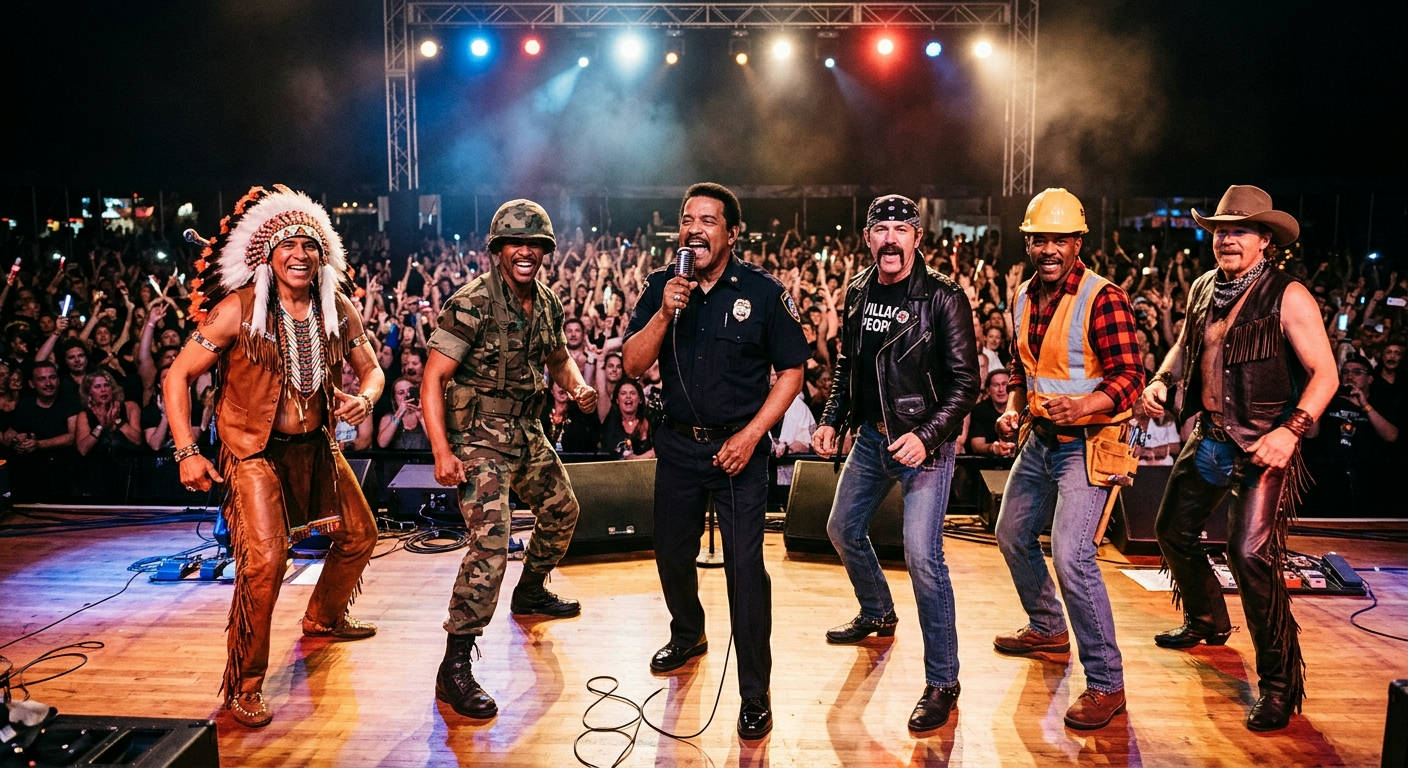
The Replacements and The Legacy Acts
In the wake of Willis’s departure, his role was filled by Ray Simpson, the brother of Valerie Simpson (of Ashford & Simpson fame). Simpson became the new Cop and lead singer, and he has fronted a version of the group for most of the years since.
Over the decades, dozens of other performers have stepped into the iconic roles. This has led to competing versions of the group touring simultaneously, and protracted legal battles over who has the right to use the name “The Village People.” As of 2026, Victor Willis tours with his own official version of the group, while another version featuring Ray Simpson and other long-standing members also performs. This ongoing drama is a complicated final chapter in the story of The Village People original members.
The Unstoppable Legacy of The Village People
Decades after their peak, the music and image of The Village People are more recognizable than ever. They have transcended their disco origins to become a permanent fixture in global pop culture.
From Niche Anthem to Global Standard
“Y.M.C.A.” is a perfect case study in cultural crossover. It began as a song full of coded references to the Young Men’s Christian Association as a popular cruising and hook-up spot for gay men. The lyrics, penned by Willis, were a subtle nod to this hidden aspect of urban life.
Yet, the song’s infectious melody, simple chorus, and iconic arm-motion dance allowed it to be adopted by the mainstream. It became a staple at sporting events, school dances, and political rallies, with most participants completely unaware of its origins. This journey is detailed in a fascinating study by the University of Michigan’s musicology department on protest and pop music. The song is a testament to how music can take on a life entirely its own. It’s the ultimate track for creating a fun, inclusive vibe, a key element we discuss in our guide to Music Styles To Create The Perfect Party Atmosphere.
### The Village People Original Members in 2026: Where Are They Now?
The story continues. As of early 2026:
- Victor Willis is actively touring with his officially licensed version of The Village People, performing the hits he co-wrote and sang.
- Felipe Rose and Randy Jones have pursued solo projects and make occasional appearances, often discussing their legacy with the group.
- Alex Briley continues to perform with the version of the group led by Ray Simpson.
- David Hodo retired from performing some years ago.
- Glenn Hughes, the iconic Leatherman, is fondly remembered by fans worldwide.
The ongoing legal battles over the band’s name and royalties are a stark reminder that even the most fun-loving pop acts have a serious business side.
“People didn’t quite get it at first. The mainstream audience just saw these characters. They didn’t see the satire or the commentary. They just heard a great beat.” – Felipe Rose
A Vinyl Collector’s Guide to The Village People
For any serious disco or pop collector, The Village People’s classic albums are essential. The original vinyl pressings capture the warmth and punch of that late-70s analogue sound. Here at Vinyl Gold UK, we believe their music is best experienced on a proper turntable.
Essential Albums for Your Collection
If you’re starting a collection, these are the non-negotiable LPs that feature The Village People original members in their prime:
- Cruisin’ (1978): This is the big one. It contains the global mega-hit “Y.M.C.A.” and is arguably their most definitive album. The production is slick, and the energy is palpable. A must-own.
- Macho Man (1978): Their second album, featuring the title track that became their first major hit. It solidified their image and sound, a perfect slice of high-energy disco.
- Go West (1979): The last studio album to feature the full classic lineup with Victor Willis on lead vocals. The title track and “In the Navy” are pure, unadulterated Village People joy.
Finding Authentic Pressings on Amazon
Hunting for vintage vinyl can be part of the fun. When searching, look for pressings on the Casablanca Records label, known for its iconic branding during the disco era. We’ve made it easy for you to start your search with these direct Amazon links.
- Find The Village People’s Cruisin’ on Vinyl: https://www.amazon.com/s?k=The+Village+People+Cruisin+vinyl&tag=vinylgolduk-21
- Search for the Macho Man LP: https://www.amazon.com/s?k=The+Village+People+Macho+Man+vinyl&tag=vinylgolduk-21
- Grab the Go West album: https://www.amazon.com/s?k=The+Village+People+Go+West+vinyl&tag=vinylgolduk-21
Remember, as per our Terms and Conditions, using these links helps support Vinyl Gold UK through the Amazon Associates program.
The story of The Village People is far more than a simple tale of costumes and catchy tunes. It’s a story of audacious marketing, genuine musical talent, cultural appropriation, and, ultimately, enduring joy. The men behind the masks—the true The Village People original members—were a unique collection of performers, writers, and visionaries who, for a brief, glorious moment, captured the entire world’s attention. Their music remains a powerful reminder of a time when disco reigned supreme, and everyone was invited to the party.