
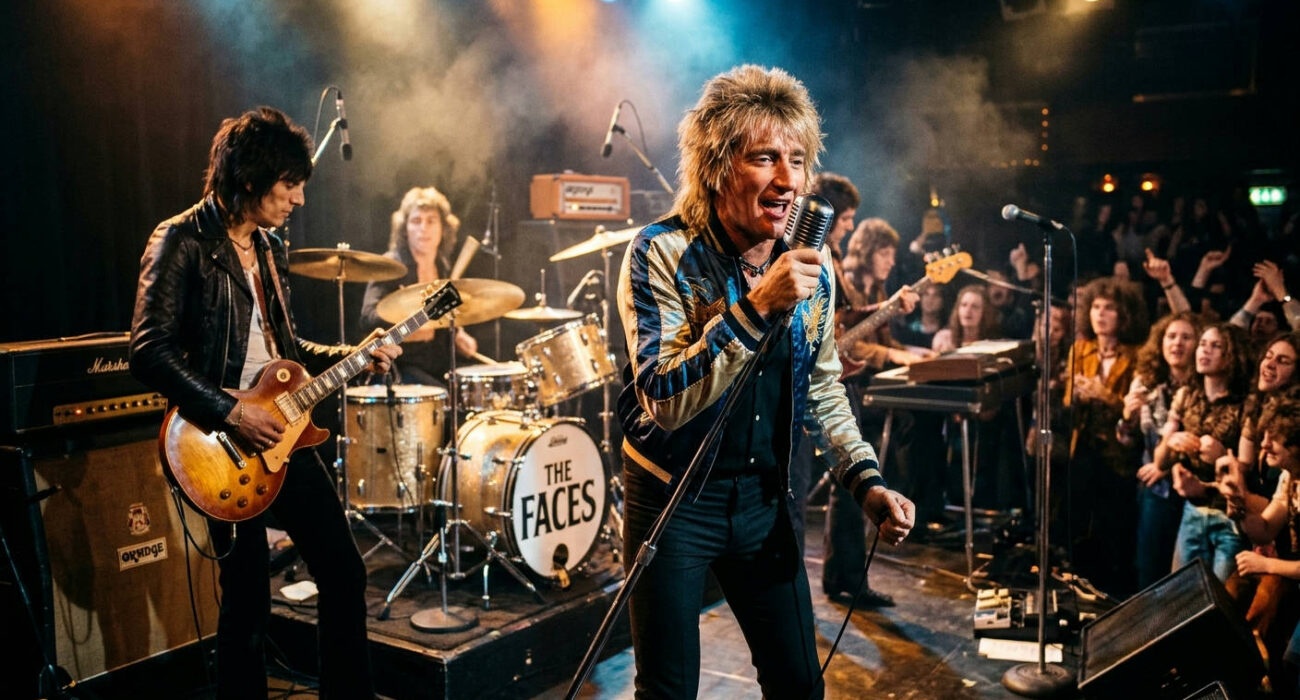
Let’s cut right to it. The magic of the Rod Stewart early albums 70s isn’t about the rockstar caricature that came later. It’s about a raspy-voiced troubadour who, for five glorious years, captured lightning in a bottle. This was the era of the scarecrow haircut, mandolins, and heartfelt stories of love and loss, all delivered with the swagger of a pub-rock poet at the absolute peak of his powers. From 1970 to 1974, Rod Stewart released a string of solo albums on the Mercury label that stand as some of the finest rock and roll records ever made.
At Vinyl Gold UK, we believe these records are essential. They’re not just a prelude to his later fame; they are the main event. This is where you’ll find the raw, honest, and brilliant artist before the sheen of superstardom took over. Forget the spandex and the disco beats for a moment; we’re taking a deep dive into the folksy, soulful, and utterly brilliant foundation of his career.
The Mercury Years: Forging a Solo Identity
Before he was a global superstar, Rod Stewart was pulling double duty. He was the charismatic frontman for the boozy, brilliant rock band the Faces, while simultaneously carving out a name for himself as a solo artist. This juggling act is crucial to understanding the sound and feel of his first few records.
From Bandmate to Solo Star
Stewart’s solo deal with Mercury Records came while he was still the singer for the Faces, who were signed to Warner Bros. This contractual quirk meant his solo work and band work developed on parallel, yet deeply intertwined, tracks. Many of his Faces bandmates, particularly guitarist and co-writer Ronnie Wood, played all over his solo material.
This created a unique creative environment. The solo albums weren’t a complete departure from the Faces, but they were a different beast. They allowed Stewart to explore his folk and acoustic influences more deeply, acting as a more personal, and often more introspective, outlet than the full-throttle party rock of his main band.
An Old Raincoat Won’t Ever Let You Down (1970)
His debut, known as The Rod Stewart Album in the US, was the blueprint. It was a rough-and-ready mix of acoustic folk, heavy blues-rock, and soulful interpretations. You can hear an artist throwing everything at the wall to see what sticks, and most of it does.
The album established his genius as a song interpreter. His cover of Mike d’Abo’s “Handbags and Gladrags” is definitive, transforming it into a poignant, world-weary anthem. The originals, like “Cindy’s Lament,” show off his burgeoning song writing talent, painting vivid pictures of working-class life. It’s a raw, unpolished gem that sets the stage perfectly.
Gasoline Alley (1970)
Released just a few months later, Gasoline Alley doubled down on the folksy, Americana-tinged sound of the debut. The production is a bit warmer, the confidence a bit higher. Stewart’s voice is front and centre, telling stories with incredible empathy and character.
The title track is a masterpiece of nostalgic storytelling, while his covers of Bob Dylan’s “Only a Hobo” and Elton John’s “Country Comforts” feel so natural they might as well be his own. This album proved the debut was no fluke. The Rod Stewart early albums 70s were shaping up to be a defining run in rock history.
The Zenith: A Deep Dive into the Rod Stewart Early Albums 70s
If the first two albums were the setup, 1971 and 1972 were the knockout punches. This is when Rod Stewart went from being a critically acclaimed singer to one of the biggest rock stars on the planet. He did it not by compromising, but by perfecting the very sound he had been cultivating.
Every Picture Tells a Story (1971): The Masterpiece
This is the one. Every Picture Tells a Story is a flawless album, a desert-island disc for anyone who loves rock and roll. It simultaneously topped the album charts in the UK and the US, a rare feat at the time, and cemented his superstar status. The album feels like a ramshackle, joyous party captured on tape.
The track that did it, of course, was “Maggie May.” A sprawling, mandolin-driven story about a young man’s affair with an older woman, it was famously relegated to the B-side of “Reason to Believe.” DJs and the public knew better, and its organic explosion onto the airwaves made it an all-time classic. But the album is so much more. From the blistering cover of The Temptations’ “(I Know) I’m Losing You” to the tender title track, there isn’t a wasted second.
“It was a song that was written in ten minutes and it’s lasted me a lifetime. I could never have imagined the success that it was going to have.” – Rod Stewart on “Maggie May”
If you only own one of the Rod Stewart early albums 70s on vinyl, this is the one to get. The warmth of the analog recording brings out every strum of the acoustic guitar and every crack in Stewart’s voice.
- Find it on Amazon: Search for Every Picture Tells a Story on vinyl
Never a Dull Moment (1972): The Victorious Follow-Up
How do you follow a perfect album? With another near-perfect one. Never a Dull Moment radiates the confidence of an artist at the top of his game. The formula is similar to its predecessor—a mix of stellar originals, perfectly chosen covers, and a loose, infectious energy—but it feels bolder and more self-assured.
“You Wear It Well,” a spiritual cousin to “Maggie May,” was the big hit, another brilliant piece of folk-rock storytelling. His roaring take on Sam Cooke’s “Twistin’ the Night Away” is pure joy, and his version of Jimi Hendrix’s “Angel” is a moving tribute. The album title was no lie; Stewart was on an unstoppable creative roll.

The Sound and the Story: What Made These Albums Timeless?
What was the secret sauce? Why do these specific records from over 50 years ago still sound so fresh and vital in 2026? It was a magical combination of voice, song, and a unique musical approach that nobody has quite replicated since.
The “Scarecrow” Vocal Style
Rod Stewart’s voice in the early 70s was a magnificent instrument. It wasn’t classically trained or technically perfect. It was better. It was a gravelly, soulful rasp that could convey a lifetime of experience in a single phrase.
He could be a tender folk singer one moment and a wailing rock god the next. This versatility allowed him to inhabit the characters in his songs, whether it was the naïve young man of “Maggie May” or the weary traveller of “Gasoline Alley.” That voice is the heart and soul of the Rod Stewart early albums 70s.
Lyrical Themes: Lad’s Tales and Poignant Portraits
The stories in these songs felt real. Stewart wasn’t singing about dragons or cosmic journeys; he was singing about getting your heart broken, looking back on your youth, and sharing a drink with mates. He was a master storyteller with an everyman’s touch.
He also had an uncanny ability to choose cover songs and make them entirely his own. He wasn’t just singing the words; he was interpreting the emotion. His reverence for songwriters like Bob Dylan and Tim Hardin is evident in his heartfelt renditions of their work, which sit seamlessly alongside his own compositions. For a deeper look into a songwriter who similarly mastered this kind of personal narrative, check out our piece on the incredible Joni Mitchell.
The Acoustic-Electric Blend
The musical backing on these albums is just as important as the voice. The sound was a rich, organic stew of rock, folk, blues, and even a little bit of country. It was a world away from the slick production of other major artists of the time.
The instrumentation was key. You had Ronnie Wood’s greasy slide guitar riffs rubbing up against mandolins, fiddles, and pedal steel. This combination of loud, electric rock with acoustic, rootsy instruments gave the music a timeless, earthy quality. It was the sound of a band playing together in a room, loose and alive.
Collecting Rod Stewart’s 70s Vinyl: A Guide for 2026
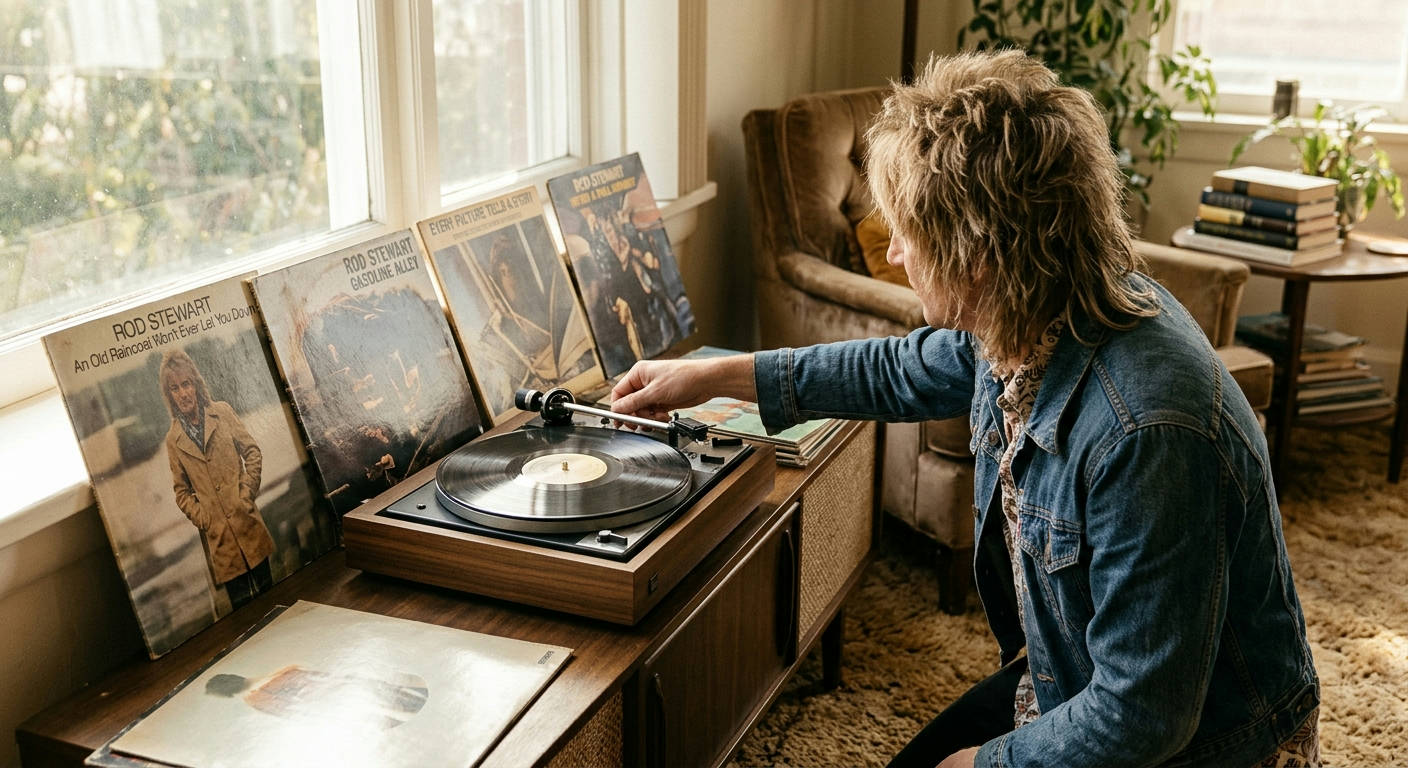
To truly appreciate the sonic texture of these albums, you need to hear them on vinyl. The warm, analogue production was made for the turntable. Here at Vinyl Gold UK, we’re passionate about getting these records into people’s hands.
Why Vinyl is the Definitive Format
The organic production of the Rod Stewart early albums 70s benefits immensely from the vinyl format. Digital versions can sound a bit thin in comparison. On a good turntable setup, the acoustic instruments breathe, the bass has a round warmth, and Stewart’s voice sits perfectly in the mix.
Plus, the album art and gatefold sleeves of the original pressings are a huge part of the experience. The photos and liner notes pull you deeper into the world the music creates. If you’re looking to get started or upgrade your setup, our guide to the best turntables under £300 in the UK is a fantastic resource.
Identifying First Pressings vs. Reissues
For collectors, finding an original UK pressing is the holy grail. Here’s what to look for:
- The Label: The first four solo albums were on the Vertigo label in the UK, famous for its “swirl” design. Every Picture Tells a Story has a unique “spaceship” design on the Vertigo label for its first pressing.
- Matrix Numbers: The definitive way to identify a first pressing is by checking the stamped codes in the run-out groove (the blank space at the end of the record). A quick search on a site like Discogs can help you decipher these codes.
- Sleeve Details: Early pressings often have unique features, like the textured sleeve of Gasoline Alley or the special tear-off “ticket” gatefold of Every Picture Tells a Story.
Reissues are also a great option. Modern audiophile pressings from the last few years often use the original master tapes and can sound absolutely stunning, offering a clean, quiet playing surface that can be hard to find with 50-year-old originals.
- Find it on Amazon: Search for Never a Dull Moment on vinyl
- Find it on Amazon: Search for Gasoline Alley on vinyl
The Faces Connection: A Parallel Universe
You can’t talk about Rod’s early solo career without talking about the Faces. The two were inextricably linked, sharing members, a general vibe, and even a few songs. Understanding the relationship between them enriches the listening experience for both.
How the Faces Sound Differed
While there was significant overlap, there was a clear distinction. The Faces were a band, a gang. Their music was a glorious, boozy racket—pure bar-band rock and roll with a ton of heart and swagger. Think “Stay With Me” or “Ooh La La.”
Rod’s solo albums were his chance to be the auteur. They were generally more arranged, featured a wider sonic palette with more acoustic instruments, and often delved into more reflective and romantic themes. It was the singer-songwriter side of the rock and roll frontman.
Crossover and Collaboration
The lines were blurry. Ronnie Wood co-wrote “You Wear It Well” and played on almost everything. Drummer Kenney Jones and keyboardist Ian McLagan also appeared frequently. Some songs, like “True Blue” from Never a Dull Moment, sound like they could have been lifted directly from a Faces album.
This cross-pollination was a huge part of the magic. The rowdy energy of the Faces bled into the solo records, keeping them from ever becoming too polite or overly polished. It was the best of both worlds.
The Transition to Warner Bros. and a New Direction
All golden eras must come to an end. For the classic Rod Stewart early albums 70s sound, the curtain came down around 1974-1975 as he changed labels, moved countries, and embraced a new sonic identity.
Smiler (1974): The End of the Mercury Era
Smiler was the last album for Mercury Records and is often seen as the runt of the litter. It has its moments, particularly a great cover of Chuck Berry’s “Sweet Little Rock ‘n’ Roller,” but it lacks the consistent inspiration of the four albums that preceded it.
It feels like the end of a chapter. The formula, while still present, was starting to wear a little thin. It’s a decent record, but it doesn’t reach the dizzying heights of Every Picture or Never a Dull Moment. It pointed towards a need for change.
Moving to LA and Atlantic Crossing (1975)
The change was seismic. Rod Stewart moved to Los Angeles, signed a massive new deal with Warner Bros., and recorded Atlantic Crossing with legendary producer Tom Dowd and the famous Muscle Shoals Rhythm Section.
The raw, folksy sound was gone, replaced by a slick, polished, and professional American studio sound. The album was split into a “fast half” and a “slow half,” and it produced the monumental hit “Sailing.” This was the beginning of a new Rod Stewart, one geared towards stadiums and global pop charts. This shift solidified his status as one of the Best Selling English Artists of all time.
Appreciating the Shift
Many die-hard fans of the early work see this as the moment he “sold out.” That’s a bit unfair. Artists need to evolve, and Stewart was clearly interested in exploring a different side of his musicality. While Atlantic Crossing and subsequent albums like A Night on the Town are sonically worlds away from Gasoline Alley, they contain fantastic songs.
The key is to appreciate the two eras for what they are. The Mercury years were about raw, heartfelt, British folk-rock. The Warner Bros. years were about slick, soulful, international pop-rock. Both have their merits, but the early 70s period remains a singular and unrepeatable moment of creative brilliance.
The Lasting Legacy of the Rod Stewart Early Albums 70s
The influence of this brief but brilliant period continues to echo through music today. It wasn’t just a collection of great songs; it was a sound and an attitude that proved deeply influential.
Influence on Later Artists
The blend of acoustic intimacy and electric swagger laid a groundwork for much of what would become heartland rock and Americana. Artists like The Black Crowes and Ryan Adams built their careers on a similar mix of rock and roll energy and rootsy instrumentation.
In the UK, you can hear echoes of Stewart’s storytelling and vocal phrasing in everyone from Paul Weller to the Britpop bands of the 90s. He showed that you could be a massive rock star without losing that personal, man-of-the-people touch.
As noted by rock historian Barney Hoskyns in The Guardian, Stewart’s early work represented a “perfectly-poised amalgam of folk, rock, blues and soul,” a formula many have tried to replicate but few have mastered.
### Why the Rod Stewart Early Albums 70s Remain His Definitive Period
Decades later, after countless hits and reinventions, this five-year run for Mercury Records is still what many critics and fans point to as his creative peak. It was the perfect storm. The voice was at its most expressive. The song writing, both his own and his chosen covers, was impeccable. The band of musicians, drawn from the Faces and other friends, was a world-class unit with undeniable chemistry.
These albums are the sound of an artist finding his voice and using it with absolute conviction. They are messy, beautiful, funny, and heart breaking all at once. They are human. While his later career brought him more fame and fortune, the raw, undeniable magic is captured right here.
If you want to understand the genius of Rod Stewart, don’t start with “Da Ya Think I’m Sexy?”. Start here. Put Every Picture Tells a Story on the turntable, turn it up, and let the music tell its story. It’s one you’ll want to hear again and again.