
Joni Mitchell stands as one of the most transformative artists in music history. Few musicians have dared to reinvent themselves as boldly, or as successfully. From spare acoustic folk to avant-garde jazz explorations, her discography traces a restless creative mind that refused to stand still. This guide walks you through every studio album in her remarkable career, unpacking what made each one matter — and why her music continues to captivate listeners more than five decades on.
What You Need to Know About Joni Mitchell
Is Joni Mitchell still performing in 2026?
Yes — and her return to the stage has been nothing short of extraordinary. After surviving a life-threatening brain aneurysm in 2015, many feared Joni Mitchell would never perform again. She defied those fears completely. Her intimate “Joni Jams” sessions, held at her Los Angeles home and attended by fellow musicians and close friends, became the launchpad for a full public comeback. Her headline appearance at the Newport Folk Festival in 2022 moved audiences to tears, and she has continued making live appearances since, reminding the world that her voice — weathered and deepened by time — carries more emotional weight than ever.
What is Joni Mitchell’s best-selling album?
Court and Spark (1974) holds that title. It reached number two on the Billboard 200 and produced some of her most beloved songs, including “Help Me” and “Free Man in Paris.” The album struck a rare balance — sophisticated enough to satisfy critics and accessible enough to win a mainstream audience. It remains her commercial high-water mark and a masterclass in pop-jazz song writing. For many listeners, it serves as the perfect entry point into her wider catalogue.
Why did Joni Mitchell change her guitar tunings?
Joni Mitchell contracted polio as a child, and the illness left lasting effects on her left hand, limiting her finger strength and dexterity. Rather than working within standard guitar tuning — which demands significant left-hand strength — she developed her own system of open tunings that allowed her to voice chords in entirely new ways. Over the course of her career, she created more than 50 unique tunings, each one unlocking different harmonic colours and emotional textures. This limitation, in effect, became one of her greatest creative gifts, producing a guitar sound unlike anything else in popular music.
What happened to Joni Mitchell’s daughter?
In 1965, at the age of 21, Joni Mitchell gave birth to a daughter named Kelly Dale Anderson. Struggling financially and unmarried, she made the painful decision to place her daughter for adoption. The separation haunted her for decades and surfaced in her music in veiled but emotional ways. In 1997, after years of searching, her daughter — now known as Kilauren Gibb — found her. The reunion was widely reported and deeply emotional for both women, finally closing a chapter that had quietly shaped so much of Joni Mitchell’s art and identity.








The Folk Era
Song to a Seagull (1968)
Joni Mitchell launched her recording career with this purely acoustic debut, produced by David Crosby of Crosby, Stills & Nash. The album divides neatly into two halves: “I Came to the City” and “Out of the City and Down to the Seaside.” Together, they paint a vivid portrait of a young woman navigating urban life and wide-open natural spaces. Crosby’s light production touch served Mitchell well, keeping the focus on her voice and guitar. The arrangements are sparse, the imagery poetic, and the emotional honesty already fully formed. Commercially, the album made little impact at the time. However, it established Joni Mitchell as a singular voice in the emerging singer-songwriter movement. Looking back, you can hear the seeds of everything that followed — the intricate guitar work, the literary lyrics, the refusal to write anything less than the truth. It remains an essential document for anyone tracing her extraordinary artistic development.
Clouds (1969)
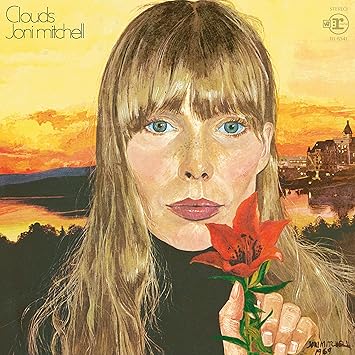
With Clouds, Joni Mitchell won her first Grammy Award — for Best Folk Performance — and introduced her music to a significantly wider audience. The album features “Both Sides, Now,” a song she originally wrote for Judy Collins and which became one of the defining compositions of the 1960s. Her own version here is quieter and more considered than Collins’ recording, stripping the song back to its emotional core. Additionally, “Chelsea Morning” would later become famous when Bill and Hillary Clinton named their daughter after it. Produced by Mitchell herself, Clouds showcases her growing confidence as a visual and lyrical artist. The cover features her own self-portrait, establishing a practice she would continue across several albums. Ultimately, this record cemented Joni Mitchell’s reputation not merely as a gifted songwriter, but as a complete and self-directed artist.
Ladies of the Canyon (1970)
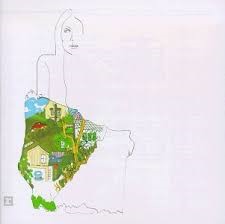
Ladies of the Canyon marks a pivotal turning point in Joni Mitchell’s sound. For the first time, she incorporated piano prominently alongside guitar, broadening her tonal palette considerably. The results were stunning. “Big Yellow Taxi” delivered her environmental message with an irresistibly catchy melody — its chorus remains instantly recognisable today. “Woodstock,” her account of the legendary festival she never actually attended, became one of the era’s defining anthems after Crosby, Stills, Nash & Young turned it into a rock classic. Meanwhile, the title track and “The Circle Game” revealed a songwriter with an extraordinary gift for character-driven storytelling. Joni Mitchell was no longer simply painting self-portraits; she was capturing entire communities of women and rendering them with warmth and precision. Consequently, this album broadened her audience while deepening her artistic ambitions, sitting at the crossroads between her folk origins and the experimental work that lay just ahead.
Blue (1971)
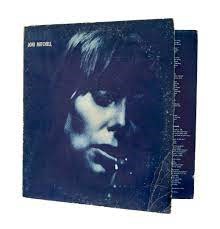
Simply put, Blue is a masterpiece. Widely regarded as the greatest confessional album ever recorded, it set a standard for emotional honesty in popular music that few artists have matched since. Joni Mitchell wrote every track during a period of intense personal upheaval — travelling through Europe, ending relationships, and confronting her own contradictions with unflinching candour. Songs like “River,” “A Case of You,” and “California” are so achingly personal that listening feels almost intrusive. Yet paradoxically, that intimacy is precisely what makes the album universal. James Taylor, Graham Nash, and Stephen Stills all appear, but their contributions serve rather than overshadow Mitchell’s vision. Furthermore, her guitar and dulcimer work reached a new level of sophistication here, each tuning chosen to unlock a specific emotional frequency. Decades on, Blue continues to appear at the top of every serious list ranking the greatest albums of all time.
The Experimental & Pop Transition
For the Roses (1972)
For the Roses finds Joni Mitchell in a state of deliberate transition, trading the raw vulnerability of Blue for something cooler and more sophisticated. Jazz influences began seeping into her arrangements, lending the album a restless, searching quality. “You Turn Me On, I’m a Radio” became her first genuine Top 25 hit, offering radio programmers something they could actually play. Nevertheless, the deeper cuts — “Electricity,” “Let the Wind Carry Me,” “Barangrill” — reward patient listeners far more richly. Throughout the album, Mitchell interrogated the costs of fame and creative compromise with sharp, unsentimental clarity. She recorded it largely while living in a remote cabin in British Columbia, and that solitude permeates every track. As a bridge between her folk past and the jazz-inflected future she was building, For the Roses remains a fascinating and underappreciated chapter in the Joni Mitchell story.
Court and Spark (1974)
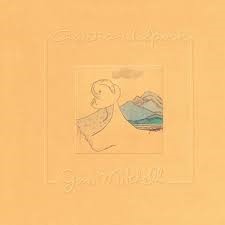
Court and Spark represents the commercial and artistic peak of Joni Mitchell’s career. Blending jazz-influenced arrangements with melodic pop song writing, she created something that satisfied critics and casual listeners in equal measure. The album reached number two on the Billboard 200 — her highest chart position — and produced the hit single “Help Me,” which climbed to number seven. Tom Scott and the L.A. Express provided the jazz instrumentation, giving the record a warm, sun-drenched Californian feel. “Free Man in Paris,” “Down to You,” and “The Same Situation” demonstrate Joni Mitchell at the absolute height of her lyrical powers. Moreover, the album’s sophisticated production still sounds remarkably fresh today, resisting the datedness that affects much mid-seventies pop. For anyone approaching her catalogue for the first time, Court and Spark remains the most welcoming entry point — and one of the finest albums of the entire decade.
The Hissing of Summer Lawns (1975)
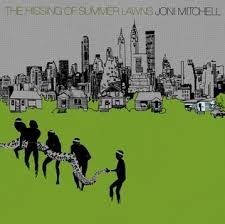
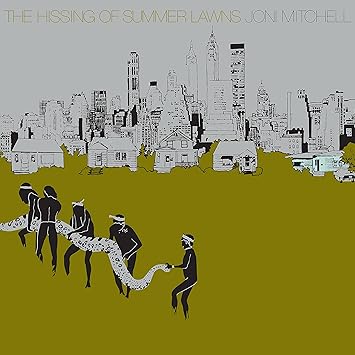
Critics initially dismissed The Hissing of Summer Lawns, and they were wrong. Joni Mitchell pushed boldly into avant-garde territory here, incorporating Burundi drumming, atmospheric soundscapes, and lyrics of striking sociological complexity. Where her earlier work turned inward, this album looked outward — dissecting suburban conformity, consumerism, and gender politics with a sharp and sometimes merciless eye. “The Jungle Line” layered her vocals over tribal percussion in a way that anticipated world music by nearly a decade. Furthermore, “Edith and the Kingpin” and “The Boho Dance” demonstrated a novelist’s eye for character and milieu. Joni Mitchell was no longer interested in writing songs people could easily digest. Instead, she was making art that demanded repeated listening and genuine engagement. Time has been extremely kind to this record. Today, many critics consider it one of her most visionary albums — a work that was simply too far ahead of its moment.
The Jazz Explorations
Hejira (1976)
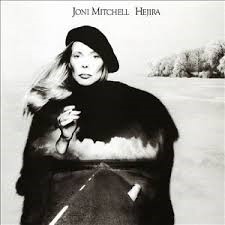
Joni Mitchell wrote Hejira during a solo cross-country road trip, and the album carries the restless, open spirit of that journey in every note. The title — an Arabic word meaning “flight from danger to safety” — perfectly captures its emotional register. Jaco Pastorius, widely considered the greatest electric bassist in jazz history, contributed fretless bass lines of astonishing fluidity and invention. His playing became inseparable from Mitchell’s vision, weaving through the tracks like a second melody. Lyrically, Mitchell was at her most imagistic and elliptical, describing landscapes both external and internal with breath taking precision. “Coyote,” “Amelia,” and the title track stand among the finest songs of her career. Additionally, the guitar tunings she employed across the album produced harmonic textures of remarkable originality. Hejira divided audiences on release but has since earned recognition as one of Joni Mitchell’s most perfectly realised artistic statements.
Don Juan’s Reckless Daughter (1977)
Don Juan’s Reckless Daughter is Joni Mitchell at her most adventurous — and, for many listeners, her most challenging. The double album stretches across rhythmically complex jazz-funk territory, with lengthy tracks that demand patience and surrender. Jaco Pastorius and Wayne Shorter returned, alongside a percussion-heavy ensemble that pushed the music toward something genuinely polyrhythmic and unpredictable. The centrepiece, “Paprika Plains,” extends across an entire album side, blending jazz improvisation with orchestral passages and spoken word. Mitchell appeared on the cover dressed as a Black man — a provocative artistic statement that generated significant controversy at the time. Nevertheless, the album rewards those willing to enter its world on its own terms. Joni Mitchell was testing the outer limits of what a singer-songwriter could do, and while the experiment divided critics, it demonstrated an artistic fearlessness that few of her contemporaries could match.
Mingus (1979)
Mingus stands as one of the most extraordinary creative collaborations in jazz history. Legendary bassist and composer Charles Mingus — facing terminal illness from ALS — invited Joni Mitchell to set his final musical ideas to words. Together, they worked on the project until his death in January 1979. The album blends Mingus’s compositions with Mitchell’s lyrics, creating something that belongs fully to neither jazz nor folk, but occupies its own remarkable space. Musicians including Herbie Hancock, Wayne Shorter, and Peter Erskine contributed performances of exceptional quality. Joni Mitchell’s voice navigates the complex harmonic terrain with confidence and sensitivity. Moreover, the album functions as a moving elegy — a document of two major artists meeting at the boundary between life and death. It remains one of the most genuinely unusual records in Joni Mitchell’s catalogue and a deeply affecting tribute to a giant of American music.
The 80s & 90s Pop/Rock Phase
Wild Things Run Fast (1982)
Wild Things Run Fast marked Joni Mitchell’s return to a more accessible, upbeat sound after her jazz experiments. She married bassist Larry Klein during the recording sessions, and the album carries a romantic warmth that distinguishes it from her more introspective work. Her cover of Elvis Presley’s “(You’re So Square) Baby I Don’t Care” demonstrated a playful side that surprised many longtime fans. Meanwhile, original tracks like “Chinese Café/Unchained Melody” revealed Joni Mitchell reflecting on the passage of time and the persistence of memory with her characteristic emotional intelligence. Critically, the album received a mixed response — some welcomed the return to accessibility, while others missed the adventurousness of her jazz period. Nevertheless, it remains an enjoyable and underrated entry in her catalogue, showcasing a relaxed confidence and genuine joy that her more cerebral earlier work sometimes kept at arm’s length.
Dog Eat Dog (1985)
Dog Eat Dog finds Joni Mitchell channelling her frustration with the state of the world into some of her most explicitly political song writing. The album targets televangelism, corporate greed, and environmental destruction with barely concealed anger. Thomas Dolby co-produced the record, and his influence is audible — the heavily synthesised arrangements reflect the sonic landscape of mid-eighties pop, for better and for worse. “Tax Free” directly attacked American televangelists, while “Shiny Toys” skewered consumer culture with acid wit. Although the production has dated more than almost anything else in the Joni Mitchell catalogue, the song writing underneath remains sharp and prescient. Furthermore, her willingness to engage with political subject matter at a time when most pop artists were retreating into escapism demonstrated a moral seriousness that deserves more credit than the album typically receives.
Chalk Mark in a Rain Storm (1988)
Chalk Mark in a Rain Storm takes a collaborative approach, featuring an extraordinary cast of guest vocalists including Peter Gabriel, Willie Nelson, Tom Petty, and Billy Idol. Joni Mitchell wove their voices through the album’s thematic concerns — mythology, violence, cultural displacement, and the natural world. The production, again synthesiser-heavy by the standards of the era, has aged unevenly. However, the song writing retains genuine power, particularly on “The Reoccurring Dream” and “Lakota,” which addresses the displacement of Native American communities with empathy and directness. Joni Mitchell consistently demonstrated an ability to engage with subjects beyond personal experience, bringing imaginative rigour and moral weight to each one. Additionally, the sheer range of collaborators on this album underlines her standing within the broader musical community — artists of wildly different styles all wanted a place in her world.
Night Ride Home (1991)
Night Ride Home signalled a welcome return to simplicity for Joni Mitchell. After the dense, synthesiser-driven productions of the mid-eighties, she stripped her arrangements back and allowed her song writing to breathe again. The result is one of the warmest and most immediately accessible albums of her later career. “Come in from the Cold” and “Passion Play” deploy acoustic guitars and understated arrangements to devastating emotional effect. Lyrically, Mitchell reflected on love, spirituality, and the bittersweetness of middle age with a candour that felt earned rather than performed. Furthermore, the album demonstrated that she had lost none of her melodic gifts during the experimental years — these songs are beautifully constructed and linger long after a single listen. For fans who had struggled with the more abrasive textures of Dog Eat Dog and Chalk Mark, Night Ride Home offered a deeply satisfying and human reconnection with classic Joni Mitchell.
Turbulent Indigo (1994)
Turbulent Indigo earned Joni Mitchell her second Grammy Award — this time for Best Pop Album — and with good reason. The album is dark, painterly, and uncompromising, addressing abuse, war, environmental collapse, and personal loss with the unflinching directness that has always distinguished her best work. The title track draws a direct parallel between Mitchell herself and Vincent van Gogh — both artists misunderstood and undervalued in their own time. “Sex Kills” delivers exactly what the title promises: a furious, wryly cynical survey of societal collapse. Moreover, the production — handled by Mitchell and her then-husband Larry Klein — achieves a lean, guitar-driven sound that suits the material perfectly. By the mid-nineties, many of her contemporaries had faded from view. Yet Turbulent Indigo proved definitively that Joni Mitchell remained a vital, essential, and utterly irreplaceable creative force.
Taming the Tiger (1998)
Taming the Tiger brought Joni Mitchell’s run of studio albums of original material to a close — at least for nearly a decade. The album reflects on creativity, mortality, and the strange relationship between an artist and her audience. Mitchell played almost all the instruments herself, using a guitar synthesiser to generate orchestral textures without sacrificing the intimacy of solo performance. Tracks like “Lead Balloon” and the title song grapple with the difficulty of sustaining artistic vision against commercial pressure. Additionally, “Love Puts on a New Face” offers a rare moment of uncomplicated romantic warmth. The album was not a commercial success, and critics largely overlooked it on release. Nevertheless, Taming the Tiger rewards close attention — it is the work of an artist making deeply considered art for her own reasons, on her own terms, and answerable to no one but herself.
The Final Bows
Both Sides Now (2000)
Both Sides Now marked Joni Mitchell’s return to the studio after a two-year gap, and it arrived as something genuinely new in her catalogue: a collection of jazz standards and two of her own songs, performed with full orchestral backing. Vince Mendoza arranged the lush, cinematic strings, creating a soundscape of considerable beauty. Mitchell’s voice — deeper and more weathered than in her youth — proved perfectly suited to the material, lending interpretations of “At Last” and “A Case of You” an autumnal emotional weight that younger singers simply could not replicate. The conceptual thread running through the album traces the arc of a love affair from beginning to end. Furthermore, the project gave Joni Mitchell an opportunity to position herself within the jazz vocal tradition she had long admired. It remains one of the most beautiful and quietly devastating albums of her career — and one of the most overlooked.
Travelogue (2002)
Travelogue is an ambitious two-disc orchestral re-imagining of Joni Mitchell’s career, revisiting songs from across her entire catalogue with sweeping new arrangements. Vince Mendoza again provided the orchestration, this time working on an even grander scale. Hearing “Woodstock,” “The Circle Game,” and “Hejira” transformed by full orchestra reveals the extraordinary structural sophistication that always underpinned Mitchell’s compositions. Songs that seemed intimate in their original form revealed themselves as genuinely cinematic in scope. Joni Mitchell’s voice moved through the material with authority and deep personal ownership — these were not covers but lived-in revisitations. Additionally, the project served as a kind of retrospective, demonstrating the remarkable coherence of a body of work spanning three and a half decades. For any listener approaching Joni Mitchell’s catalogue without knowing where to start, Travelogue offers an invaluable, beautifully rendered overview.
Shine (2007)
Shine closed Joni Mitchell’s studio career with a record rooted in environmental urgency and spiritual reflection. Returning to original song writing for the first time since Taming the Tiger, she addressed climate change, war, and human folly with the characteristic blend of fury and compassion that defines her best work. The title track, used in Al Gore’s An Inconvenient Truth, demonstrated her ongoing relevance in public discourse. Musically, Shine combines acoustic guitar, subtle electronic textures, and restrained orchestration in a way that feels timeless rather than period-specific. “If I Had a Heart” and “Strong and Wrong” carry a quiet devastation. Moreover, “This Place” opens the album with a meditation on the natural world that matches anything in her earlier catalogue for sheer lyrical beauty. As a final statement, Shine is graceful, angry, and deeply human — a fitting close from one of music’s most extraordinary voices.
A Legacy Beyond Category
Joni Mitchell’s discography does not fit neatly into any box — and that is precisely the point. She moved from folk to jazz to orchestral pop not out of commercial calculation, but out of an insatiable need to follow the music wherever it led. The result is a body of work of extraordinary range, depth, and emotional honesty. From the raw confessions of Blue to the jazz architecture of Hejira, from the political fire of Dog Eat Dog to the autumnal beauty of Both Sides Now, she never made the same record twice. And she never made a dishonest one. In an era when artists are increasingly defined by algorithm and audience approval, Joni Mitchell’s career stands as a powerful reminder of what becomes possible when a musician trusts their own vision completely — and has the courage to see it through.